Table of Contents
- Siding Replacement vs Repair: Key Differences
- Signs of Siding Water Damage and When Repair Is Possible
- When to Choose Full Siding Replacement
- Average Cost of Siding Replacement vs Repair
- DIY Siding Repair vs Professional Installation
- Material-Specific Repair and Replacement Considerations
- How Siding Damage Affects Home Value and Insurance
- Your Decision Framework: Repair or Replace
Last Updated: August 8, 2026
Siding Replacement vs Repair: Key Differences
The decision between siding replacement vs repair often comes down to one critical factor: whether the damage is localized or systemic. A single crack or small section of moisture infiltration might warrant a targeted repair. But if water damage has compromised the substrate, underlayment, or structural integrity across multiple areas, replacement becomes the more cost-effective and durable choice.
This distinction matters because repair costs can spiral quickly. What starts as a small localized damage assessment often reveals hidden problems once contractors inspect beneath the surface. At DGK Home Solutions, we’ve found that homeowners who understand this difference upfront make faster, more confident decisions about their siding investment.
The real question isn’t "which option is cheaper?" It’s "which option protects my home and preserves its value?" That answer changes based on the extent of damage, the age of your siding, and your long-term plans for the property.
Localized damage (cracks, small holes, minor water stains) usually calls for repair. Widespread moisture infiltration, dry rot, or damage affecting more than 30% of your siding typically justifies replacement.
Signs of Siding Water Damage and When Repair Is Possible
Water damage in siding manifests in specific ways. Look for soft spots when you press on the siding, visible mold growth, or dark staining that suggests moisture has penetrated the exterior. Warping, buckling, or curling of siding panels are also red flags. The key distinction is whether the damage is surface-level or has reached the substrate and underlayment beneath.
If water has only damaged the siding panel itself, repair is usually viable. Self-adhesive patch kits like the Mendyl Vinyl Siding Repair Kit can address cracks and small holes in vinyl siding quickly. These patches cost under ten dollars and require no special tools. For slightly larger damage, the Stepsaver Products Self-Adhesive Vinyl Siding and Fence Patch Combo Kit offers paintable patches that blend with your existing color once you apply paint.
But here’s where most homeowners get it wrong: they assume that visible water stains mean only surface damage. In reality, water often travels behind the siding. If moisture has reached the underlayment, housewrap, or the wood substrate, the damage extends far beyond what you can see. This is when repair becomes a temporary band-aid on a larger problem.
Visual Inspection Checklist
Before deciding between repair and replacement, conduct a thorough inspection. Press firmly on different sections of your siding to detect soft spots that indicate rot or moisture damage. Check for visible cracks, holes, or blemishes. Look for mold growth, discoloration, or water stains that suggest moisture infiltration. Inspect the caulking and flashing around windows, doors, and roof lines, these are common entry points for water. Check for pest damage or infestation, which often follows moisture problems. Look at the underlayment and housewrap if any siding is already removed or damaged. Note the overall age of your siding and whether damage appears isolated or widespread across multiple sections.
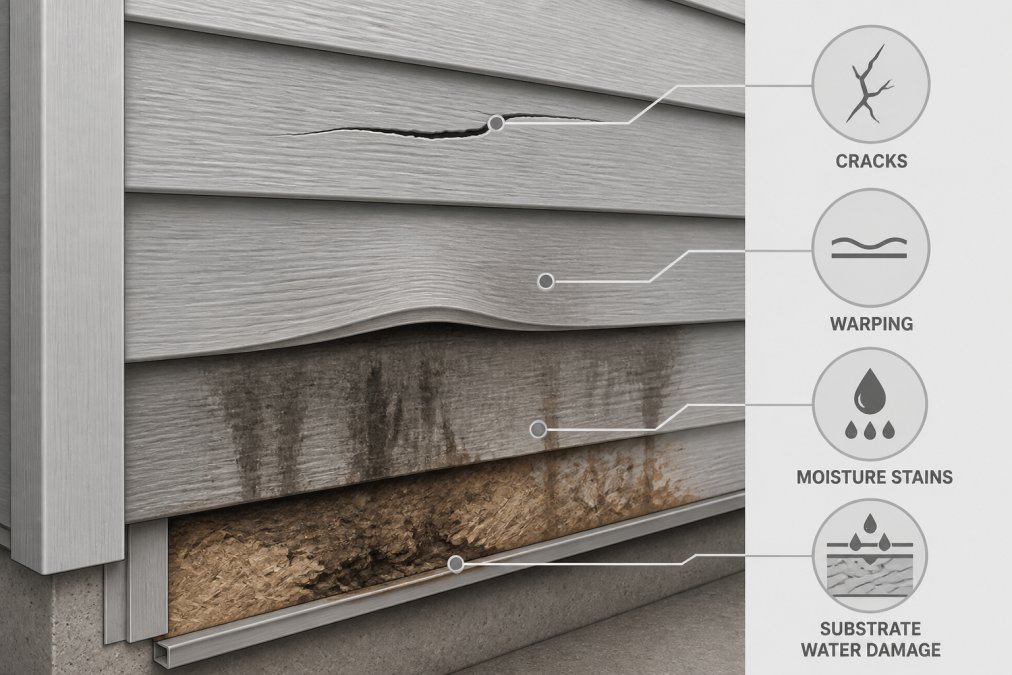
If your inspection reveals damage limited to one or two panels and the substrate appears dry and intact, repair is viable. If you find soft spots, widespread moisture, mold, or damage affecting more than 25-30% of your siding, replacement is the more reliable path.
When to Choose Full Siding Replacement
Full siding replacement makes sense when damage is extensive, when your siding has reached the end of its lifespan, or when repeated repairs suggest the underlying problem isn’t being solved. If you’re dealing with dry rot, a fungal decay that compromises the structural integrity of wood or fiber cement, repair won’t stop the progression. The rot will continue spreading behind the surface.
Age matters too. Most vinyl siding lasts 20-40 years depending on climate and maintenance. Fiber cement typically performs better, often lasting 25-30 years. If your siding is in its third or fourth decade and showing multiple problem areas, replacement is usually more economical than chasing repairs.
Consider replacement if you’re planning to sell your home in the near term. New siding significantly improves curb appeal and can influence buyer perception of your home’s overall condition. Replacing siding also gives you the opportunity to upgrade to materials with better insulation R-value, which can reduce energy costs and improve home comfort.
Another trigger for replacement: if your current siding is failing due to poor installation or inadequate underlayment, repairs will be temporary. Once you understand the root cause, maybe the original housewrap wasn’t installed correctly or flashing was missed, replacement with proper installation prevents the same problems from recurring.
Average Cost of Siding Replacement vs Repair
Repair costs are typically measured in hundreds of dollars. A small patch kit costs under ten dollars. Professional repair for localized damage, say, replacing a few damaged panels or repairing water-damaged sections, generally runs several hundred to a few thousand dollars depending on accessibility and the extent of work needed.
Siding replacement is a larger investment. Costs depend on your home’s square footage, the material you choose, your home’s complexity, and local labor rates. The Modernize Siding Cost Calculator and Grennan Construction Siding Cost Calculator both offer free estimates to help you understand the ballpark range for your specific situation. These tools let you adjust for material type, home size, and add-ons like housewrap or soffit replacement.
For accurate pricing tailored to your property in Liberty Twp, contact DGK Home Solutions for a free quote. Our team provides honest assessments of whether repair or replacement makes sense for your situation, and we walk you through the actual costs involved, no surprises.
| Scenario | Typical Cost Range | Best Choice | Timeline |
|---|---|---|---|
| Small crack or hole in vinyl | Under $500 (DIY) or $300-800 (professional) | Repair | 1-2 days |
| Water damage to 1-2 panels | $500-2,000 | Repair | 1-3 days |
| Extensive water damage (25%+ of siding) | $3,000-8,000+ | Replacement | 5-10 days |
| Full siding replacement (2,000 sq ft home) | Varies by material and labor | Replacement | 7-14 days |
The real cost comparison isn’t just the upfront price. It’s the longevity. A repair might cost $1,500 today but require another $2,000 repair in three years if the underlying issue isn’t addressed. Replacement costs more initially but solves the problem permanently.
DIY Siding Repair vs Professional Installation
DIY repair works for small, straightforward damage. If you’re patching a crack in vinyl siding or replacing a single damaged panel, you can handle it yourself with basic tools and a patch kit. The Mendyl kit or Stepsaver combo kit are designed for homeowner application, peel, stick, paint. No special equipment needed.
But here’s the limitation: DIY repair doesn’t address water damage that’s already behind the siding. If moisture has reached the underlayment or substrate, you’re not solving the problem. You’re just covering the visible symptom. Professional inspection reveals what’s actually happening beneath the surface.
Professional installation matters for replacement. Proper installation includes correct flashing around windows and doors, adequate underlayment, appropriate caulking, and attention to ventilation. These details prevent future moisture infiltration. A contractor with experience in your area understands local climate challenges, and professionals account for that in material selection and installation technique.
DGK Home Solutions handles both repair and replacement work, and our team provides honest assessment of whether DIY is realistic for your situation or whether professional work is necessary to prevent future problems. We’ve seen too many homeowners waste time and money on DIY attempts that didn’t address the root cause.
Material-Specific Repair and Replacement Considerations
Different siding materials have different repair and replacement profiles. Vinyl siding is relatively forgiving for small repairs, patches adhere well and paint covers them. But vinyl becomes brittle in cold climates and can crack from impact or freeze-thaw cycles. Once vinyl reaches 20-30 years old, brittleness increases and repairs become less reliable.
Fiber cement (like James Hardie products) offers superior durability and typically lasts longer than vinyl. But fiber cement is heavier, requires more specialized installation, and is more expensive to replace. Repairs to fiber cement are possible but often require professional work because the material is rigid and demands precision cutting and fitting.
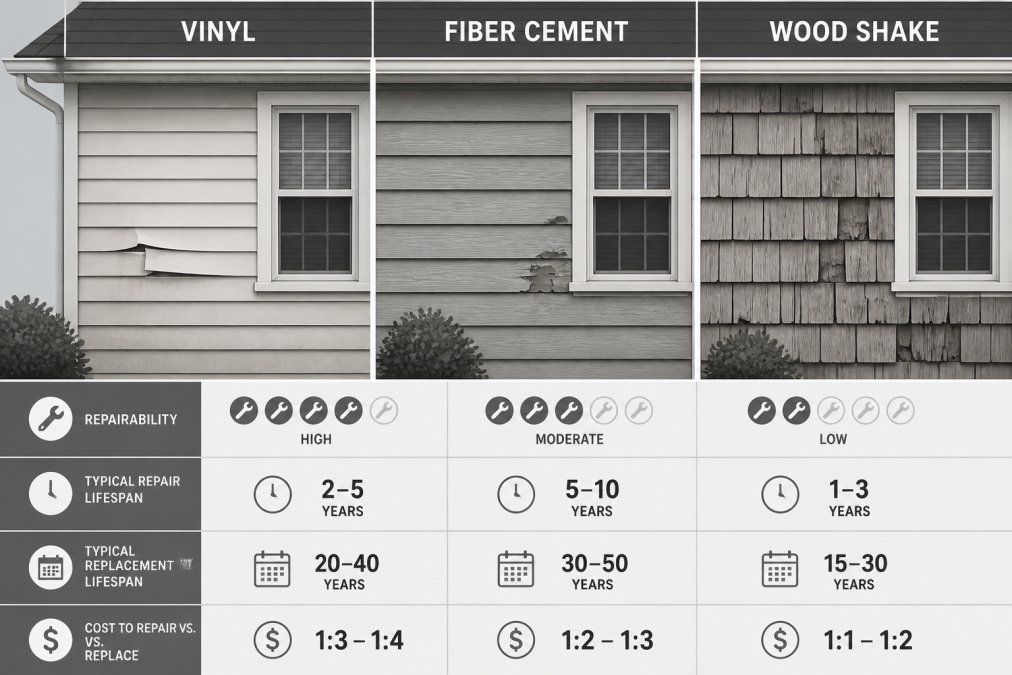
Wood and wood shake siding are beautiful but demand consistent maintenance. They’re vulnerable to moisture infiltration, pest damage, and rot. Repairs to wood siding are common but ongoing. If you choose wood for aesthetic reasons, budget for regular maintenance and expect shorter intervals between repairs.
Metal siding (aluminum or steel) resists moisture well but can dent and rust if the protective coating is compromised. Repairs are possible but cosmetic results vary. Replacement with modern metal or alternative materials often makes more sense than repeated repairs.
The material you choose for replacement affects both immediate cost and long-term maintenance burden. Fiber cement costs more upfront but requires less maintenance. Vinyl is affordable but may need replacement sooner. Wood is beautiful but demands regular attention. Your choice should align with your maintenance tolerance and how long you plan to stay in the home.
How Siding Damage Affects Home Value and Insurance
Siding damage directly impacts home value. Buyers notice exterior condition before they step inside. Visible water damage, mold, warping, or deterioration signals potential structural problems and raises red flags during inspections. If you’re selling your home in Liberty Twp within the next few years, addressing siding damage, ideally through replacement rather than visible repairs, strengthens your position.
Insurance coverage for siding damage depends on the cause. Storm damage (hail, high wind, falling debris) is typically covered under homeowners insurance. But damage from poor maintenance, age-related wear, or gradual water infiltration is usually not covered. This distinction matters when you’re deciding between repair and replacement.
If your siding damage resulted from a covered event, a storm, for example, your insurance may cover replacement costs after you meet your deductible. DGK Home Solutions assists with insurance claims, helping you document damage, navigate the claims process, and ensure you receive fair coverage. We’ve worked with homeowners across Ohio and Indiana who faced uncertainty about what their insurance would cover, and we help translate that uncertainty into clear answers.
One critical insight: if you delay repairs after storm damage, insurance companies may deny claims, arguing that you failed to mitigate further damage. Act promptly. Get a professional assessment and document everything.
Your Decision Framework: Repair or Replace
Start with a professional inspection. You need to know whether damage is localized or systemic. A contractor should assess whether water has penetrated beyond the visible surface. This is the foundation of a sound decision.
Next, consider the extent of damage. If it affects less than 20% of your siding and the substrate is dry and intact, repair is reasonable. If damage is more widespread or the substrate is compromised, replacement is more economical long-term.
Factor in the age of your siding. If it’s already 20+ years old and showing multiple problem areas, replacement prevents you from pouring money into a system that’s near the end of its lifespan anyway.
Consider your timeline. Are you selling soon? New siding improves curb appeal and buyer confidence. Are you staying long-term? Replacement is an investment in durability and peace of mind.
Think about material choice. If you’re replacing, this is your opportunity to upgrade to a more durable or lower-maintenance material. Fiber cement costs more but lasts longer. Vinyl is budget-friendly but may need replacement sooner. Wood is beautiful but demands regular attention.
Finally, get multiple quotes. Different contractors may assess damage differently and offer different solutions. A second opinion helps you make a confident decision. At DGK Home Solutions, we provide free quotes and honest assessments, no pressure, just clear information about what your home needs and what makes financial sense.
The decision between siding replacement vs repair isn’t always obvious. But with a clear inspection, an understanding of the damage extent, and realistic cost expectations, you can make a choice that protects your home and aligns with your financial situation.
Siding damage doesn’t resolve itself, and temporary fixes often cost more over time than addressing the problem properly. Whether you need repair or replacement, getting a professional assessment from a team with deep experience in your area is the first step. DGK Home Solutions has served residential and commercial clients across the Greater Cincinnati area for over 20 years, providing honest siding assessments, quality repairs, and complete replacements with top-quality materials and workmanship. Get your free quote today and understand exactly what your home needs.
Frequently Asked Questions
How do I know if my siding needs to be replaced or repaired?
Minor damage like small cracks, isolated holes, or localized fading can usually be repaired. Look for widespread issues: large areas of warping, buckling, or curling; persistent moisture infiltration despite caulking; mold growth; or structural damage affecting multiple panels. If damage covers more than 30% of your siding or compromises the underlayment, replacement is typically more cost-effective. A professional inspection can identify whether your substrate and flashing are still sound.
Is it cheaper to repair or replace siding?
Repairs are cheaper upfront, DIY patch kits cost under $10, while professional repairs run $200-$800. Full siding replacement costs significantly more and depends on material, home size, and labor. However, if repairs are temporary fixes for deteriorating siding nearing the end of its lifespan, replacement often makes sense as a long-term investment. Calculate whether you'll spend more on repeated repairs over the next 5-10 years than a single replacement would cost.
Does insurance cover siding replacement or repair?
Insurance typically covers siding damage from sudden, accidental events like storms, hail, or impact, not gradual wear or poor maintenance. File a claim with photos and a professional assessment. Deductibles apply, and coverage depends on your policy. DGK Home Solutions assists with the insurance claim process, helping document damage and work with your adjuster to maximize coverage. Contact your insurer immediately after storm damage to start the claim.
What's the difference between DIY vinyl siding repair and hiring a professional?
DIY patch kits (like Mendyl or Stepsaver) work for small cracks and holes, they're self-adhesive and paintable but won't match faded siding perfectly. Professionals assess underlying moisture and structural issues, replace damaged underlayment, ensure proper flashing, and guarantee workmanship. For localized cosmetic damage, DIY is adequate; for water damage, pest entry, or warranty concerns, professional installation prevents costly secondary damage and protects your home's structural integrity.
How long does siding typically last before needing replacement?
Vinyl siding lasts 20-40 years; fiber cement, 25-40 years; wood, 20-40 years; metal, 40-70 years. Lifespan depends on climate, maintenance, and installation quality. Regular caulking, cleaning, and preventative maintenance extend durability. If your siding is nearing the end of its expected life and showing signs of water damage or structural issues, replacement is wiser than ongoing repairs. Upgrading to a more durable material also improves energy efficiency and curb appeal.
This article was written using GrandRanker