Table of Contents
- Best Siding Materials for Curb Appeal: Quick Comparison
- Fiber Cement Siding: Premium Durability and Aesthetic Appeal
- Vinyl Siding: Budget-Friendly Curb Appeal with Minimal Upkeep
- Engineered Wood Siding: Wood Aesthetics Without the Maintenance Burden
- Natural Wood, Cedar Shake & Stone Veneer: Premium Architectural Style
- Siding Cost vs. Value: ROI and Long-Term Investment
- Low Maintenance Siding Options for Busy Homeowners
- Choosing Siding Materials: Regional Climate & Style Matching
Last Updated: July 25, 2026
Best Siding Materials for Curb Appeal: Quick Comparison
When evaluating siding materials for curb appeal, you’re making one of the most visible decisions about your home’s exterior. At DGK Home Solutions, we’ve spent over 20 years helping homeowners in Liberty Twp, OH understand how different siding options transform a property’s appearance while delivering durability against Ohio’s weather patterns, humid summers, freezing winters, and freeze-thaw cycles.
The best siding materials balance three factors: visual appeal, long-term durability, and maintenance demands. Some deliver stunning aesthetics but require constant upkeep. Others stay beautiful for decades with minimal effort. Premium options do both, though at higher upfront cost.
Below, we break down every major siding material available, comparing strengths, limitations, costs, and ideal use cases. Whether you’re drawn to cedar shake, fiber cement, or vinyl, you’ll find the information needed to make a confident choice for your home’s style and regional climate.
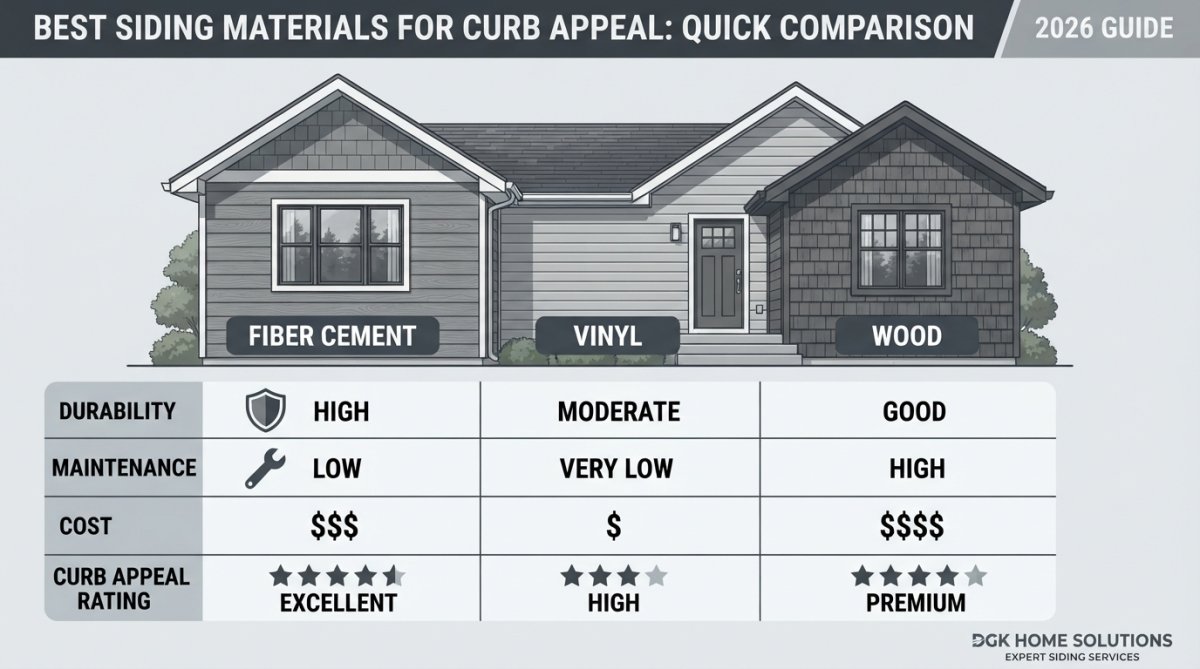
Comparison Table: Materials, Cost, Durability & Maintenance
| Material | Installed Cost Range | Lifespan | Maintenance Level | Best For |
|---|---|---|---|---|
| James Hardie Fiber Cement | $5-$15 per sq ft | 30-50+ years | Low | Premium durability & curb appeal |
| LP SmartSide Engineered Wood | $4.50-$9 per sq ft | 20-30 years | Moderate | Wood look without constant upkeep |
| CertainTeed Vinyl | $4.50-$9 per sq ft | 20-40 years | Very Low | Budget-conscious homeowners |
| Boral Versetta Stone Veneer | $17-$21 per sq ft | 50+ years | Very Low | Luxury stone appearance |
| Cedar Shake | $7-$16 per sq ft | 20-40 years | High | Historic homes & rustic aesthetics |
| Natural Wood (Cedar/Redwood) | $3-$10 per sq ft | 20-40 years | High | Authentic wood character |
| Brick Veneer | $6-$15 per sq ft | 50-100+ years | Very Low | Classic, timeless appeal |
Fiber Cement Siding: Premium Durability and Aesthetic Appeal
Fiber cement delivers the best combination of curb appeal and longevity among mainstream siding materials. James Hardie Fiber Cement mimics natural wood’s warmth while resisting fire, pests, moisture, and extreme weather that would destroy traditional materials.
Fiber cement comes in lap siding, panels, shingles, and vertical board profiles with depth and texture vinyl cannot match. ColorPlus Technology provides a factory-applied finish backed by a 15-year warranty against chipping, fading, and cracking, meaning you won’t repaint every seven years.
Durability is the real advantage. Fiber cement lasts 30 to 50+ years, double the lifespan of engineered wood and significantly longer than standard vinyl. In Ohio’s humid summers and freeze-thaw cycles, fiber cement’s moisture resistance prevents the rot and decay that plague wood siding.
The trade-off is weight and installation complexity. Fiber cement requires skilled installers who understand proper fastening and caulking, driving labor costs higher than vinyl. DGK Home Solutions has the expertise to handle fiber cement correctly, ensuring flashing and sealing prevent failures.
If installing fiber cement over old wood siding, have the underlying structure inspected first. Hidden moisture damage can compromise the new installation’s performance.
Why Fiber Cement Leads in Long-Term Value
Fiber cement costs $5 to $15 per square foot installed. Over 40 years, one fiber cement installation costs less than two vinyl replacements or three paint jobs on wood siding. Fiber cement’s resistance to UV fading, moisture, and impact damage means fewer repairs over time.
Fiber cement’s authentic wood grain texture and color depth create visual warmth vinyl cannot replicate. Real estate agents consistently report that homes with fiber cement or natural stone siding command higher asking prices than those with basic vinyl.
Vinyl Siding: Budget-Friendly Curb Appeal with Minimal Upkeep
Vinyl siding remains the most installed material in North America. It’s affordable, requires virtually no maintenance, and comes in extensive color, texture, and profile options. CertainTeed and Alside manufacture widely available products, with premium shake and architectural profiles looking substantially better than basic lap siding.
Vinyl requires only occasional rinsing with a garden hose. No painting, staining, or sealant reapplication. For busy homeowners or those with limited budgets for ongoing upkeep, this is decisive.
But vinyl has real limitations. In extreme cold, vinyl becomes brittle and cracks. UV exposure gradually fades color, even with premium products. Vinyl expands and contracts with temperature swings, leading to gaps at seams and nail pops over 15-20 years. Once these cosmetic issues appear, they’re visible and difficult to repair seamlessly.
Insulated vs. Standard Vinyl: Energy Efficiency Trade-offs
Insulated vinyl adds rigid foam backing that improves thermal performance and reduces sound transmission, costing $1-$2 more per square foot. It requires different fastening techniques and adds $2,000-$4,000 to installation costs for a 2,000-square-foot home.
Energy savings typically range from 5-15%, translating to $200-$400 annually in Ohio’s climate. Payback period is 5-15 years, making it reasonable for long-term homeowners. Standard vinyl remains better for short-term ownership or tight budgets.
Engineered Wood Siding: Wood Aesthetics Without the Maintenance Burden
LP SmartSide engineered wood occupies the middle ground between natural wood’s beauty and vinyl’s low maintenance. Made from wood strands bonded with zinc borate-infused resin, it resists termites, fungal decay, and moisture while retaining authentic wood character.
Engineered wood accepts stain and paint beautifully, allowing customization vinyl cannot match. It comes in lap siding, panels, and shake profiles that look genuinely like traditional wood. For craftsman, farmhouse, or colonial homes, engineered wood delivers authentic curb appeal at a fraction of natural wood’s maintenance cost.
Durability falls between vinyl and fiber cement at 20-30 years. Properly maintained engineered wood requires caulking at seams, attention to flashing, and periodic repainting or restaining every 7-10 years. LP’s ExpertFinish factory-prefinished products eliminate on-site painting and reduce initial maintenance burden.
Installed cost runs $4.50-$9 per square foot, placing it between basic vinyl and fiber cement. For Liberty Twp homeowners seeking wood aesthetics without cedar’s demanding maintenance, engineered wood is pragmatic.
Engineered wood requires careful installation with proper flashing, caulking, and ventilation. Moisture intrusion at seams can cause swelling or decay. Professional installation matters, DIY mistakes compound over time.
Natural Wood, Cedar Shake & Stone Veneer: Premium Architectural Style
These materials deliver distinctive character that transforms a home’s visual presence, with corresponding maintenance demands and costs.
Cedar and Shake: Timeless Character with High Maintenance
Cedar shake and shingles offer unmatched visual warmth and texture. Each shake is slightly different, creating depth and shadow play manufactured materials cannot replicate. For historic homes, cottages, or homeowners prioritizing authentic character, cedar is incomparable.
The maintenance reality is equally real. Cedar requires regular inspection for moisture, insect damage, and decay. It must be sealed, stained, or painted every 5-7 years. In Ohio’s humid climate, cedar demands vigilance. Neglected cedar deteriorates rapidly, with rot and insect damage becoming expensive to repair.
Installed costs run $7-$16 per square foot. Over 40 years, cumulative repainting, sealing, and repairs often exceed the cost of a single fiber cement installation. Cedar suits homeowners who view siding maintenance as part of home stewardship.
Stone and Brick Veneer: Luxury Look, Lighter Installation
Boral Versetta Stone offers luxury stone appearance without the weight, complexity, or cost of traditional masonry. These mortarless panels mimic natural stone’s color variation and texture.
The visual impact is substantial. Stone veneer transforms a home’s presence, conveying permanence and quality. Installation is faster and lighter than traditional brick or stone, reducing structural requirements and labor costs. At $17-$21 per square foot, stone veneer costs less than full masonry but more than most other siding options.
Durability is excellent. Stone veneer resists fading, requires no painting or sealing, and lasts 50+ years with minimal maintenance. For homeowners seeking premium curb appeal without natural wood’s maintenance demands, stone veneer is the answer.
Brick veneer offers similar benefits, with 50-100+ year durability and low maintenance. Real brick’s color variation develops character over decades. Installation is labor-intensive but the long-term value is exceptional.
Siding Cost vs. Value: ROI and Long-Term Investment
A new siding installation typically recovers 70-80% of its cost at resale. A $20,000 project might add $14,000-$16,000 to market value, varying by market, home style, and material choice.
Fiber cement and brick veneer command the highest premiums in resale markets. Vinyl recovers a lower percentage but requires lower initial investment. Engineered wood falls between these extremes.
For long-term ownership, the calculation shifts. A homeowner staying 30 years cares less about resale recovery and more about durability and maintenance costs. A single fiber cement installation lasting 40 years becomes more economical than replacing vinyl twice.
In Liberty Twp’s humid continental climate with significant freeze-thaw cycles, materials with superior moisture resistance, fiber cement, brick, stone, outperform vinyl and wood by avoiding costly water damage repairs. Premium materials cost more upfront but deliver lower lifetime costs and better curb appeal retention.
Low Maintenance Siding Options for Busy Homeowners
If your schedule doesn’t accommodate regular painting, staining, or inspections, your choices narrow to vinyl, fiber cement with factory finish, stone veneer, and brick.
Vinyl requires only occasional rinsing. Fiber cement with ColorPlus factory finish needs no painting, though you’ll caulk seams periodically. Stone veneer and brick require virtually nothing, no painting, sealing, or staining. They weather naturally, developing patina many homeowners find attractive.
Engineered wood with factory finishes falls into the low-maintenance category for 10-15 years, after which repainting becomes necessary. Natural wood and cedar shake require active maintenance from year one.
The lowest-maintenance siding materials are fiber cement with factory finish, stone veneer, brick, and vinyl. If you choose natural wood or cedar, budget time and money for regular maintenance.
Choosing Siding Materials: Regional Climate & Style Matching
The best siding material depends on two factors: your regional climate and your home‘s architectural style.
Climate Considerations: Coastal, Cold, and High-Humidity Regions
Ohio’s climate presents specific challenges. Winters bring freeze-thaw cycles that stress siding through repeated expansion and contraction. Summers are humid, creating moisture infiltration risks. Spring and fall bring heavy rains that test flashing and sealing.
In this climate, materials with superior moisture resistance and thermal stability perform best. Fiber cement excels, it resists moisture penetration, doesn’t warp in freeze-thaw cycles, and handles temperature swings without cracking. Brick and stone veneer are equally durable. Vinyl’s brittleness in cold and moisture vulnerability in humid conditions make it a compromise choice.
Natural wood and cedar are vulnerable in Ohio’s climate. Without meticulous maintenance, moisture infiltration leads to rot within 10-15 years. Engineered wood fares better due to its moisture-resistant resin treatment, but it still requires vigilance.
For Liberty Twp homeowners, fiber cement, brick, or stone veneer represent the climate-appropriate choices.
Matching Siding to Your Home’s Architectural Style
Curb appeal depends on matching material to your home’s design language.
Fiber cement in lap siding works beautifully on colonial, craftsman, farmhouse, and transitional homes. Its wood-like appearance suits traditional architecture while its clean profiles work on modern designs.
Vinyl excels on ranch, split-level, and contemporary homes where clean lines dominate. Traditional homes can wear vinyl, but the visual impact is less distinctive than natural wood or fiber cement.
Engineered wood suits craftsman, farmhouse, colonial, and cottage styles. Its authentic wood character complements these architectural traditions better than vinyl.
Cedar shake belongs on cottage, rustic, and historic homes. On a modern ranch or contemporary design, cedar looks incongruous.
Stone and brick veneer enhance nearly any architectural style. Their timeless quality transcends design trends. Full-brick or full-stone exteriors suit traditional homes most naturally, though partial stone accents work on modern designs.
Match the siding material’s visual character to your home’s architectural language. This alignment creates cohesion and maximizes curb appeal.
Conclusion
Selecting the best siding materials for curb appeal requires weighing durability, maintenance, cost, and architectural fit. For homeowners in Liberty Twp and the Greater Cincinnati area, fiber cement with factory finish offers the best balance of premium curb appeal, long-term durability, and manageable maintenance. Stone or brick veneer delivers unmatched visual presence for those prioritizing luxury aesthetics. Vinyl remains the practical choice for budget-conscious homeowners prioritizing low maintenance.
Installation quality matters as much as material choice. Improper flashing, inadequate caulking, or rushed installation can undermine even premium materials. DGK Home Solutions’ 20+ years of experience ensures our team understands Ohio’s climate challenges, handles complex architectural details, and stands behind our work.
Ready to transform your home‘s curb appeal? Get a free quote from DGK Home Solutions and let our team assess your specific needs, architectural style, and climate considerations. We’ll recommend the siding material that delivers the curb appeal you want with the durability and performance your home deserves.
Frequently Asked Questions
What siding material gives the best curb appeal?
Fiber cement siding (like James Hardie) offers exceptional curb appeal with authentic wood aesthetics, superior durability, and UV protection that resists fading. Stone or brick veneer provides luxury appeal but at higher cost. For budget-conscious homeowners, vinyl siding delivers impressive visual variety with minimal maintenance. The best choice depends on your architectural style, climate, and long-term value priorities. Regional factors matter, coastal homes benefit from moisture-resistant fiber cement, while cold climates favor insulated vinyl.
How do I choose between low maintenance siding and premium options?
Low maintenance siding includes vinyl and fiber cement, requiring only occasional cleaning. Premium materials like cedar shake demand regular staining or painting every 7-10 years. Consider your lifestyle: busy homeowners benefit from vinyl or fiber cement; those valuing authentic aesthetics may accept cedar's maintenance demands. Fiber cement balances durability with minimal upkeep. Engineered wood offers a middle ground, treated for moisture resistance but may need repainting. Evaluate siding cost vs value over 20-30 years, not just initial installation cost.
Does new siding increase home value and curb appeal ROI?
Yes, quality siding replacement typically returns 75-80% of installation costs at resale. Fiber cement and brick veneer deliver stronger ROI than budget vinyl. Curb appeal matters, homes with updated, visually appealing siding sell faster and command higher prices. The ROI depends on material longevity: fiber cement lasts 30-50+ years (excellent value), while vinyl lasts 20-40 years. In the Greater Cincinnati area and beyond, professional installation matters more than material choice alone. Work with experienced contractors who understand regional weather demands.
What are common mistakes when selecting siding materials?
Avoid choosing based on upfront cost alone, engineered wood may seem cheaper than fiber cement, but fiber cement's 30-50 year lifespan offers better long-term value. Don't ignore regional climate needs; coastal properties require moisture-resistant fiber cement, while cold climates benefit from insulated vinyl. Neglecting architectural style matching wastes curb appeal potential, stone veneer suits modern homes, cedar suits cottages, vinyl suits traditional ranches. Skip unproven brands; established names like James Hardie, LP SmartSide, and CertainTeed have proven track records. Finally, underestimating installation expertise leads to premature failure, hire experienced professionals.
How do siding materials perform in different climates?
Fiber cement excels in coastal and high-humidity regions due to superior moisture resistance and decay prevention. Insulated vinyl performs well in cold climates, reducing energy costs. Cedar and natural wood struggle in wet climates without constant maintenance. Engineered wood (LP SmartSide) offers treated protection against fungal decay and termites in humid areas. Stone and brick veneer resist weather extremes but require proper installation. For the Greater Cincinnati area's moderate climate with seasonal moisture, fiber cement and quality vinyl both perform reliably. Always verify material ratings for your specific region's weather patterns.
This article was written using GrandRanker