Table of Contents
- Roof Repair vs Replacement Cost: Quick Comparison
- Signs You Need a New Roof
- Average Cost of Roof Repair
- Average Cost of Roof Replacement
- Key Factors That Influence Repair vs Replacement
- Homeowners Insurance and Roof Replacement Guidelines
- The Long-Term Value: Repair vs Replacement Investment
- How to Make the Repair or Replacement Decision
Last Updated: August 7, 2026
Roof Repair vs Replacement Cost: Quick Comparison
The decision between roof repair and replacement often comes down to one question: will I spend more money fixing this now or replacing it later? At DGK Home Solutions, we’ve helped hundreds of homeowners in the Greater Cincinnati area navigate this choice, and the answer is rarely straightforward. Your roof’s age, the extent of damage, your insurance coverage, and long-term energy efficiency all factor into the equation. This guide breaks down the costs, warning signs, and decision framework you need to choose correctly.
The fundamental tension is this: a repair feels cheaper upfront, but if your roof is nearing the end of its lifespan, you’re essentially throwing money at a problem that won’t stay fixed. Replacement is a larger investment, but it’s often the smarter long-term move. We’ll show you exactly how to evaluate both options and make a decision backed by real factors, not just gut instinct.
Signs You Need a New Roof
Your roof won’t announce when it’s time for replacement. Instead, it sends signals that most homeowners miss until the damage becomes expensive.
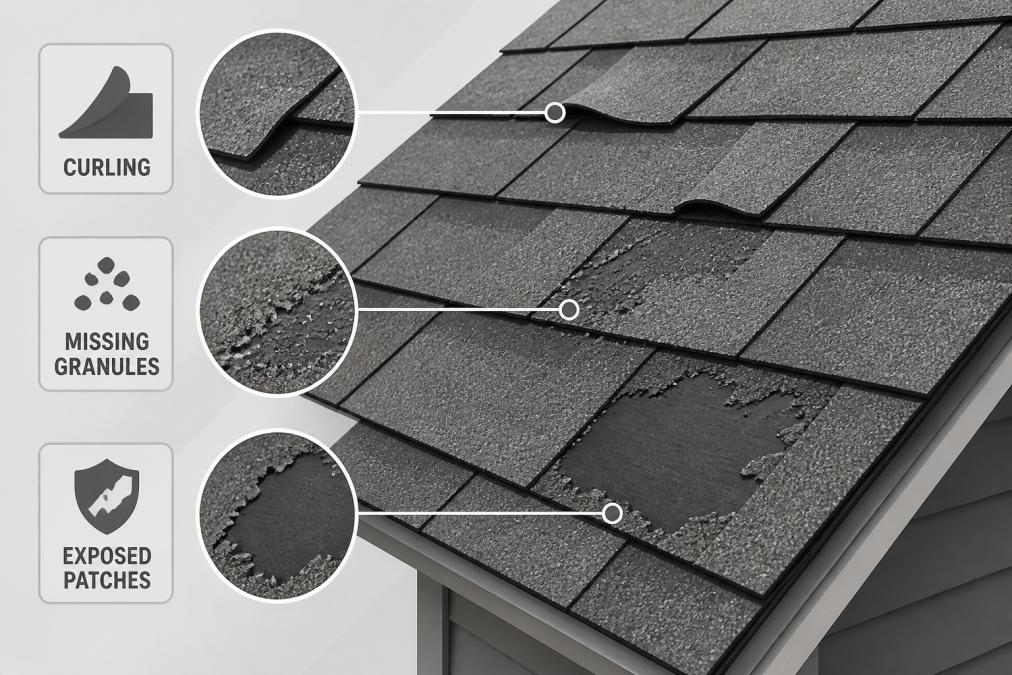
Visual warning signs are your first indicator. Look for curling shingles, the edges should lie flat, not curl upward. Missing granules (the small pebbles on shingle surfaces) are another red flag; you’ll notice bare spots or a patchy appearance. Sagging roofline is serious; it suggests the underlying roof decking has deteriorated and structural integrity is compromised. Moss or algae growth indicates moisture retention, which accelerates deterioration. In Liberty Twp and surrounding areas, where humidity and seasonal weather swings are common, these visual signs often appear earlier than in drier climates.
Performance indicators tell you more. Persistent leaks, especially if you’ve had the same area repaired multiple times, signal that the underlying problem isn’t a one-time fix. Water stains on interior ceilings or attic rafters mean moisture is getting through. Ice damming in winter (ice backing up under shingles at the eaves) suggests ventilation or insulation issues that repair alone won’t solve. Granule loss in gutters is subtle but important; if you’re cleaning gutters and finding excessive shingle material, your roof is actively shedding.
The most telling sign: if your roof is over 20 years old and showing any of these symptoms, replacement usually makes financial sense. Asphalt shingles typically last 15-25 years depending on climate and ventilation. Beyond that, you’re operating on borrowed time.
Average Cost of Roof Repair
Roof repair costs vary dramatically based on what’s broken and how accessible it is. Understanding the scenarios helps you anticipate what you might pay.
Common repair scenarios and expenses typically fall into three categories. Minor repairs, patching a small leak, replacing a few damaged shingles, or resealing flashing, are relatively inexpensive and can often be handled quickly. These are your best-case scenarios. Moderate repairs involve larger affected areas: replacing a section of shingles, fixing damaged underlayment, or addressing ventilation problems. These take longer and require more materials. Major repairs approach replacement territory: extensive shingle replacement, structural repairs to roof decking, or fixing water damage that’s spread through attic spaces.
The cost also depends on roof pitch (steeper roofs cost more to work on), square footage, and material type. Metal roofing repairs differ from asphalt shingle repairs. Slate or tile roofing is exponentially more expensive to repair because the materials are specialized and labor-intensive.
Location matters significantly. In Liberty Twp and the Greater Cincinnati area, labor costs and material availability are regional factors. Storm damage repairs often have different pricing than wear-and-tear repairs because they may involve emergency service calls or working around insurance adjusters.
One critical point: if you’re getting multiple repair quotes, they should be relatively close. If one contractor’s estimate is dramatically lower, ask detailed questions about what’s included. Cheap repairs often skip proper underlayment replacement or ventilation fixes, leaving you vulnerable to future leaks.
Average Cost of Roof Replacement
Replacement is a larger project, but it’s a one-time investment that eliminates uncertainty.
The cost depends on roof size (measured in squares, 100 square feet per square), material choice, complexity, and labor. A simple asphalt shingle replacement on a standard-pitched roof is the baseline. Metal roofing, architectural shingles, or tile roofing costs more. Steep pitches, multiple roof planes, skylights, and complex flashing all add expense. Structural repairs discovered during replacement, rotted decking, inadequate ventilation, or framing issues, increase the total.
Your location in Liberty Twp affects pricing. Regional material costs, contractor availability, and local labor rates all factor in. Seasonal timing matters too; spring and summer typically cost more because demand is higher.
Insurance coverage significantly impacts your actual out-of-pocket cost. If your roof was damaged by a covered event (storm, hail, wind), your homeowner’s insurance may cover most or all of the replacement cost, minus your deductible. This is where the repair-versus-replacement decision becomes clearer: if insurance is covering it, replacement becomes much more financially attractive.
One often-overlooked cost: disposal. Old roofing material removal and disposal fees are sometimes bundled into quotes, sometimes separate. Clarify this upfront.
Key Factors That Influence Repair vs Replacement
The decision isn’t purely financial. Several factors shift the balance toward one option or the other.
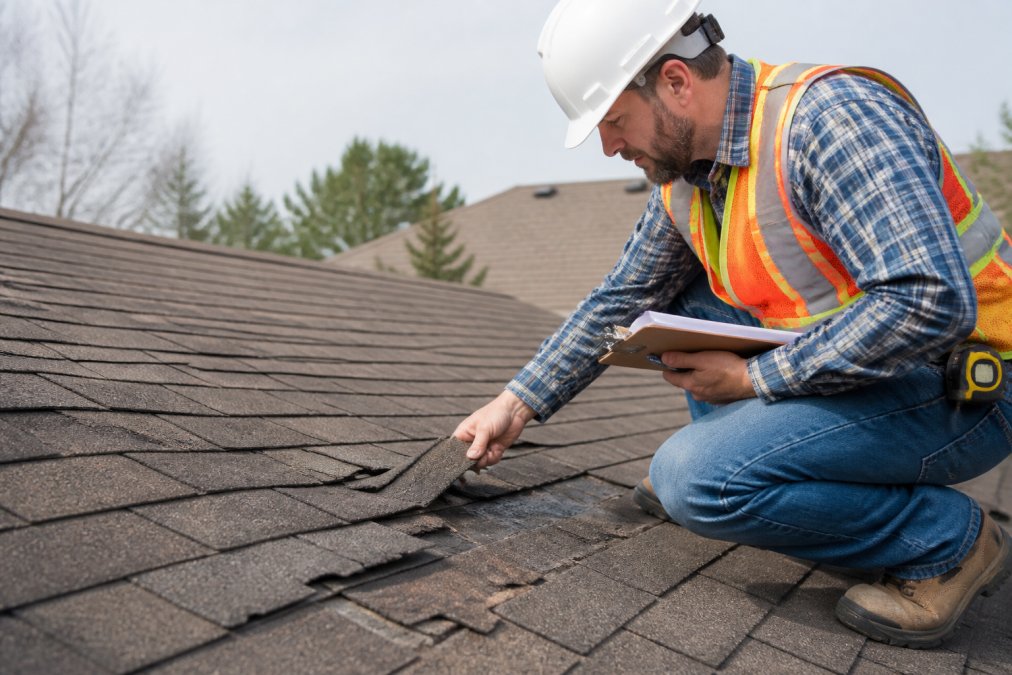
Roof age and lifespan is foundational. If your roof is under 10 years old, repair is almost always the right call unless the damage is catastrophic. A 15-year-old roof with localized damage? Repair makes sense. A 20-year-old roof showing multiple warning signs? You’re likely in replacement territory. The industry standard for asphalt shingles is 20-25 years, though climate and maintenance affect actual lifespan. In Ohio’s humid summers and freeze-thaw winters, roofs often deteriorate faster than the national average.
Extent of damage determines whether repair is even viable. If damage is isolated to one section or area, repair is feasible. If multiple areas are failing, if the damage is spread across 30% or more of the roof, or if structural issues are involved, repair becomes a temporary band-aid. Ask yourself: am I fixing the problem or just delaying the inevitable?
Frequency of repairs and past damage reveals a pattern. If you’ve had the same area repaired twice in five years, or if you’re making multiple repairs across different sections, your roof’s underlying condition is deteriorating. Each repair is money spent on a declining asset. At some point, the cumulative repair costs exceed replacement cost, and you haven’t even solved the fundamental problem.
The rule of thumb: if repair costs exceed 50% of replacement cost, and your roof is over 15 years old, replacement usually makes more financial sense. You’re investing in a new 20-year asset rather than extending an aging one.
Homeowners Insurance and Roof Replacement Guidelines
Insurance changes the financial equation significantly, and understanding your coverage is essential.
What insurance typically covers depends on your policy and the cause of damage. Storm damage (hail, wind, falling trees) is usually covered. Wear-and-tear or poor maintenance is not. Age matters: many insurers have "roof age limits," refusing to cover roofs over 15-20 years old. Some require roof inspections before issuing or renewing coverage.
When you file a claim, the insurer sends an adjuster to assess damage. They determine whether repair or replacement is necessary and what portion they’ll cover. This assessment often differs from your contractor’s estimate, which can create tension. Insurance companies sometimes deny replacement claims for roofs they consider repairable, even if repair is only a temporary fix.
Insurance claim feasibility depends on several factors. First, confirm the damage is covered under your policy. Storm damage usually is; wear-and-tear is not. Second, check your deductible, this is what you pay out of pocket. A $2,500 deductible on a $15,000 replacement means insurance covers $12,500, and you cover $2,500. If your repair estimate is $3,000 and your deductible is $2,500, repair becomes more attractive financially.
Third, understand depreciation. Some policies pay replacement cost value (full cost to replace); others pay actual cash value (replacement cost minus depreciation). Older roofs receive lower actual cash value payments. If your 20-year-old roof is damaged, your insurance payout may be far less than full replacement cost.
Work with your contractor carefully. A reputable contractor like DGK Home Solutions handles insurance coordination, communicates with adjusters, and ensures your claim is properly documented. This reduces stress and increases the likelihood of fair coverage.
One insider tip: if you disagree with the adjuster’s assessment, you can request a re-inspection or hire an independent adjuster. This costs money upfront but can result in significantly higher claim payouts if the adjuster underestimated damage.
The Long-Term Value: Repair vs Replacement Investment
This is where the decision framework becomes clear: you’re not choosing between two equal options. You’re choosing between temporary relief and permanent solution.
Energy efficiency and ongoing maintenance differ dramatically between repair and replacement. A repaired roof still has underlying issues. If ventilation problems caused deterioration, repair doesn’t fix ventilation. If underlayment is compromised, repair addresses the symptom, not the cause. You’ll likely face recurring problems and additional repairs.
Replacement solves these systemic issues. Modern roofing materials and installation practices improve ventilation, reduce heat transfer, and extend lifespan. If energy efficiency matters to you, and it should, given heating and cooling costs, replacement is an investment in lower utility bills over 20 years.
Maintenance post-repair differs from post-replacement. After repair, you need vigilant inspection and maintenance to catch problems early. After replacement, your maintenance burden drops significantly for the first decade.
Consider the total cost of ownership. If you repair for $4,000 now, then repair again in 5 years for $3,500, then finally replace for $15,000 in 10 years, you’ve spent $22,500 total and still ended up with replacement. If you’d replaced initially for $15,000, you’d have a 20-year asset with minimal maintenance costs. The math often favors replacement, especially if insurance covers a significant portion.
How to Make the Repair or Replacement Decision
Use this framework to move from uncertainty to confidence.
Step 1: Get a professional inspection. Don’t rely on visual assessment alone. A qualified roofing contractor will identify issues you can’t see from the ground. They’ll assess structural integrity, ventilation, underlayment condition, and remaining lifespan. This inspection costs money upfront but provides clarity worth far more. DGK Home Solutions offers thorough inspections and honest assessments, we tell you what actually needs to happen, not what generates the biggest invoice.
Step 2: Determine your roof’s age. Check your home’s records or have a contractor estimate based on visible wear. If you don’t know the age, assume worst-case and plan accordingly.
Step 3: Assess damage extent. Is it localized or widespread? Is it isolated to one area or scattered across multiple sections? Localized damage favors repair. Widespread damage favors replacement.
Step 4: Check your insurance coverage. Review your homeowner’s policy. Call your insurer and ask about roof coverage, age limits, and whether damage is covered. If you have a recent claim, understand what was paid and what wasn’t.
Step 5: Compare total costs. Get repair estimates and replacement estimates. Factor in your insurance deductible and expected payout. Calculate the cost difference. If repair is significantly cheaper and your roof is young, repair wins. If repair and replacement costs are close, replacement wins because you’re solving the problem permanently.
Step 6: Consider long-term plans. Are you staying in this home for 10+ years? If yes, replacement becomes more attractive because you’ll benefit from the new roof’s lifespan. If you’re selling in 2-3 years, repair might be sufficient unless the roof condition impacts home value or sale feasibility.
Step 7: Make the decision. If your roof is under 15 years old with localized damage and repair costs are significantly lower than replacement, repair is the right choice. If your roof is over 18 years old, showing multiple warning signs, or if repair costs exceed 50% of replacement cost, replacement is the smarter investment.
| Decision Factor | Favors Repair | Favors Replacement |
|---|---|---|
| Roof age | Under 12 years | Over 18 years |
| Damage extent | Localized to one area | Widespread or multiple areas |
| Repair cost vs. replacement | Below 30% of replacement cost | Above 50% of replacement cost |
| Frequency of past repairs | First repair or rare | Multiple repairs in 5 years |
| Insurance coverage | Repair covered, replacement not | Full replacement coverage available |
| Long-term plans | Selling within 3 years | Staying 10+ years |
| Structural issues | None detected | Decking damage, ventilation problems |
The roof repair versus replacement decision hinges on your roof’s age, damage extent, and your long-term plans. If you’re in the Greater Cincinnati area and uncertain about your roof’s condition, DGK Home Solutions offers free inspections and honest assessments. We’ve guided homeowners through this decision for over 20 years, and we handle insurance claims from start to finish. Understanding homeowner’s insurance coverage helps you know what your policy actually covers. Get a professional evaluation, compare the numbers, and make a decision based on facts, not guesswork. Your roof protects everything beneath it, get this decision right.
Frequently Asked Questions
Is it better to patch a roof or replace it?
It depends on the extent of damage and your roof's age. A patch works for isolated damage on roofs under 15 years old. If your roof has multiple leak spots, widespread damage, or is nearing the end of its lifespan, replacement is the smarter investment. A professional inspection reveals whether your roof can handle patching or needs full replacement to prevent future water damage and structural issues.
Does homeowners insurance cover roof repair or replacement?
Most homeowners insurance covers roof damage from sudden events like storms, wind, or hail. However, coverage depends on your policy and the cause of damage. Insurance typically does not cover wear-and-tear repairs. For roof replacement, insurers often use the Actual Cash Value (ACV) method, which accounts for depreciation. Some policies offer Replacement Cost Value (RCV) for newer roofs. Always review your policy and contact your insurer before starting work to confirm coverage and claim eligibility.
What is the 25% rule for roofing?
The 25% rule states that if repair costs exceed 25% of your roof's replacement cost, replacement is the better financial choice. For example, if replacement costs $10,000 and repairs exceed $2,500, you should replace the roof instead. This rule prevents spending money on temporary fixes that will fail again soon. It also factors in the remaining lifespan: a repair on a 18-year-old roof may not justify the expense when the roof will need replacement in a few years anyway.
What signs indicate my roof needs replacement rather than repair?
Replace your roof if you see widespread shingle curling or missing granules, sagging sections indicating structural damage, multiple active leaks, or water stains across the attic. Age matters too: most asphalt roofs last 15-20 years. If your roof is nearing or past this age and shows damage, replacement prevents costlier water damage, mold growth, and structural rot. A professional roof inspection pinpoints whether repairs will hold or replacement is necessary.
This article was written using GrandRanker