Table of Contents
- Why Ohio’s Climate Demands Specific Siding Choices
- Siding Options Ohio Homeowners Should Consider
- Fiber Cement Siding Ohio: Performance in Freeze-Thaw Cycles
- Durable Siding Ohio: How Materials Handle Moisture and Humidity
- Siding Cost Ohio: Material Pricing and ROI Expectations
- Installation Quality and Professional Expertise in Ohio
- Regional Micro-Climate Variations Across Ohio
- Sustainability and Eco-Friendly Disposal of Old Siding
Best Siding for Ohio Climate: A 2026 Comparison Guide
Last Updated: July 26, 2026
Ohio’s weather presents a unique challenge for homeowners. Freeze-thaw cycles in winter, humid summers, and dramatic seasonal swings put serious stress on exterior materials. Choosing the best siding for ohio climate means understanding which materials actually withstand these conditions without premature failure, excessive maintenance, or hidden costs down the road.
At DGK Home Solutions, we’ve spent over 20 years helping Greater Cincinnati homeowners navigate this exact decision. We’ve seen fiber cement siding fail in ways manufacturers don’t advertise. We’ve watched vinyl become brittle in subzero temperatures. We’ve also seen engineered wood outlast expectations when installed properly. This guide breaks down what actually works in Ohio, where each material wins and loses, and how to avoid the mistakes that cost homeowners thousands in repairs.
Why Ohio’s Climate Demands Specific Siding Choices
Ohio’s climate is unforgiving. Winter temperatures drop to single digits or below, then warm into the 40s within days. Spring brings intense humidity and heavy rain. Summer heat pushes into the high 80s. Fall cools rapidly. This constant expansion and contraction stresses siding materials in ways that stable climates never do.
The freeze-thaw cycle is the real killer. When moisture gets behind siding and freezes, it expands. When it thaws, it contracts. Over dozens of cycles each winter, this movement cracks, warps, and separates siding from the house. Research from the National Association of Home Builders shows that siding failure is among the top five sources of water damage claims in the Midwest. Humidity levels in Ohio average 65-70% year-round, which means moisture is always present.
The best siding for ohio climate isn’t just about aesthetics or initial cost. It’s about material science, choosing products engineered to handle repeated moisture infiltration, thermal expansion, and UV exposure without degrading. Some materials handle this naturally. Others require perfect installation to survive.
Siding Options Ohio Homeowners Should Consider
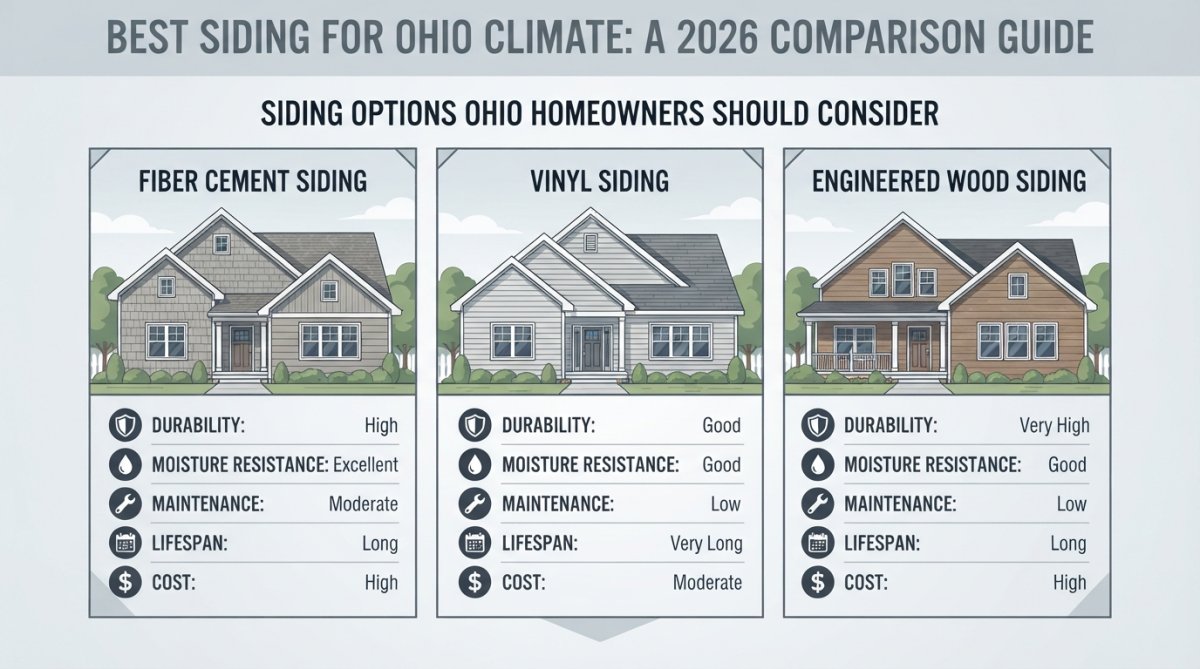
Four main siding types compete for Ohio homes. Each has genuine strengths and real weaknesses.
| Siding Type | Best For | Freeze-Thaw Performance | Maintenance | Durability |
|---|---|---|---|---|
| Fiber Cement | Premium durability, long-term value | Excellent | Low | 25-30 years |
| Insulated Vinyl | Energy efficiency, moderate budgets | Good | Very low | 20-25 years |
| Engineered Wood | Wood aesthetic, lower costs | Good | Moderate | 20-25 years |
| Traditional Vinyl | Budget-conscious buyers | Fair | Very low | 15-20 years |
Fiber Cement Siding: Premium Durability
Fiber cement siding is made from cement, sand, and cellulose fibers. James Hardie is the market leader, and their products dominate for a reason: they actually work in Ohio.
Fiber cement doesn’t expand and contract like vinyl. It resists cracking, warping, and insect damage. It won’t become brittle in subzero temperatures. It handles moisture infiltration better than any other material on this list. The ColorPlus finish offers a 15-year warranty against chips or finish damage. According to James Hardie technical specifications, their products withstand repeated freeze-thaw testing without significant expansion or contraction.
The downsides are real. Fiber cement is heavy, roughly twice the weight of vinyl. Installation requires skilled labor and specialized equipment. Poor installation creates gaps that allow moisture behind the siding, defeating the material’s advantages. Initial costs run higher than vinyl.
If you choose fiber cement, verify that your contractor has installed at least 50 projects with the material. Improper installation, especially inadequate caulking and flashing, is where fiber cement fails in Ohio. The material itself is durable. The installation determines whether you get 25 years or 10 years of performance.
Insulated Vinyl Siding: Energy Efficiency Focus
Insulated vinyl combines traditional vinyl with a layer of rigid foam insulation bonded to the back. Alside’s Ascend Composite Cladding and CertainTeed’s insulated lines are the primary options.
The insulation layer adds real thermal resistance and reduces heating and cooling costs, particularly noticeable in older homes with minimal insulation. The foam layer also dampens sound better than standard vinyl. Insulated vinyl is more affordable than fiber cement and easier to install than engineered wood. It requires minimal maintenance and resists moisture better than traditional vinyl.
But here’s the problem in Ohio: vinyl becomes brittle in extreme cold. When temperatures drop below zero, vinyl contracts sharply. If it’s under tension from improper installation, it can crack. Alside’s Charter Oak line is rated a Consumer Reports Best Buy for its performance and price point, but even premium vinyl has limits in harsh freeze-thaw cycles.
Insulated vinyl installed improperly, too tight, inadequate expansion gaps, will crack during Ohio winters. This isn’t a material defect. It’s an installation failure. Verify that your contractor accounts for thermal movement and leaves proper gaps at every fastening point.
Engineered Wood Siding: Wood Aesthetic, Lower Maintenance
Engineered wood siding like LP SmartSide offers the natural look of cedar or pine without the maintenance nightmare. The wood is treated to resist moisture, rot, and pests. It’s lighter than fiber cement and typically less expensive.
The aesthetic appeal is genuine. Installation is straightforward for contractors experienced with wood products. Performance in Ohio’s climate is respectable but not exceptional. Engineered wood resists rot and termites and handles freeze-thaw cycles better than traditional vinyl. However, it still requires periodic painting or staining, typically every 5-7 years in Ohio’s climate.
For homeowners who love the wood look and don’t mind repainting every 5-7 years, engineered wood makes sense. For those seeking true low-maintenance siding, it’s a compromise.
Traditional Vinyl Siding: Budget-Friendly Baseline
Standard vinyl siding is the cheapest option and requires virtually no maintenance. But it’s also the weakest performer in Ohio’s climate. Vinyl expands and contracts more than any other common siding material. In freeze-thaw cycles, this movement creates gaps that allow moisture behind the siding. UV exposure fades colors over time. Thin vinyl becomes brittle in cold temperatures.
Traditional vinyl works fine in stable climates. In Ohio, it’s a short-term solution. You’ll likely replace it within 15-20 years. When factoring in replacement costs, the initial savings disappear. If budget is tight, insulated vinyl is a better choice than traditional vinyl, the insulation layer and better construction justify the modest price increase.
Fiber Cement Siding Ohio: Performance in Freeze-Thaw Cycles
Freeze-thaw cycles are where siding materials either prove themselves or fail catastrophically. Fiber cement’s performance here is exceptional. The material doesn’t absorb moisture the way wood does. It doesn’t expand and contract like vinyl. When water gets behind fiber cement and freezes, the expansion pressure doesn’t crack or warp the siding itself.
Testing data from ASTM International freeze-thaw standards shows that fiber cement products rated for freeze-thaw exposure maintain their integrity after 50+ cycles. Most Ohio winters deliver 20-30 freeze-thaw cycles. Fiber cement is overbuilt for this stress.
The catch: freeze-thaw failure typically isn’t the siding’s fault. It’s the installation. If flashing is inadequate, caulking is missing, or gaps exist at joints, water infiltrates behind the siding. When that water freezes, it expands and separates the siding from the house.
In Liberty Twp and the broader Cincinnati area, freeze-thaw cycles are intense enough that installation quality becomes the primary factor in long-term performance. A perfectly installed vinyl system might last 20 years. A poorly installed fiber cement system might fail in 10. The material matters, but the craftsmanship matters more.
Durable Siding Ohio: How Materials Handle Moisture and Humidity
Ohio’s humidity is relentless. Average humidity hovers around 65-70% year-round, with summer months regularly exceeding 80%. This constant moisture exposure tests siding materials in ways that dry climates never do.
Moisture infiltration is the silent killer. It starts at fastener holes, gaps in caulking, or poor flashing. Once water gets behind the siding, it finds no easy exit. It sits there, feeding mold growth, rotting wood sheathing, and creating conditions for structural damage.
Fiber cement resists moisture infiltration better than alternatives because the material itself doesn’t absorb water. Vinyl doesn’t absorb water either, but it conducts moisture to whatever is behind it. Engineered wood is more forgiving than you’d expect due to treatment processes, but it still absorbs and releases moisture. Traditional vinyl is the worst performer in humid climates, thin and flexible vinyl sags and creates pockets where water collects.
The real defense against moisture is installation. Proper flashing, adequate caulking, and correct ventilation matter more than material choice. But when installation is equal, fiber cement and insulated vinyl outperform traditional vinyl and engineered wood in Ohio’s humidity.
Siding Cost Ohio: Material Pricing and ROI Expectations
Cost is where the conversation gets complicated. Initial material cost tells only part of the story. Longevity, maintenance, and replacement cycles determine true cost over 30 years.
Fiber cement typically runs higher on installation costs due to the material’s weight and the skill required. But it lasts 25-30 years with minimal maintenance. Insulated vinyl costs less upfront and lasts 20-25 years. Energy savings from the insulation layer add value, particularly in homes with poor existing insulation.
Engineered wood costs less than fiber cement but more than traditional vinyl. The catch is maintenance, repainting every 5-7 years adds labor costs that accumulate over time. Traditional vinyl is cheapest upfront but requires replacement within 15-20 years, which eliminates the cost advantage.
Research from Remodeling Magazine’s Cost vs. Value Report shows that siding replacement recovers roughly 75-80% of costs at resale. This means siding is primarily a durability and livability investment, not a financial investment. Choose based on how long you’ll stay and what performance level you need.
Installation Quality and Professional Expertise in Ohio
Here’s what separates a 25-year siding installation from a 10-year failure: the installer’s skill and attention to detail.
Fiber cement requires precision. Fasteners must be spaced correctly to allow for thermal movement. Caulking must seal every joint. Flashing must be installed before the siding goes up. Vinyl installation seems simple but has hidden complexity, expansion gaps must account for thermal movement, and fasteners can’t be driven too tight or the siding can’t move. Engineered wood installation is forgiving compared to fiber cement, but it still requires proper technique.
At DGK Home Solutions, we emphasize this point to every client: the material is only as good as the installation. When evaluating contractors in the Liberty Twp area, ask for references from jobs installed 5+ years ago. Call those homeowners and ask about water infiltration, movement, or warranty claims. Ask contractors about their process for flashing, caulking, and thermal movement accommodation. If they give vague answers or seem dismissive of these details, move on.
Regional Micro-Climate Variations Across Ohio
Ohio isn’t monolithic. Micro-climates vary significantly by region, and the best siding for ohio climate depends partly on where in the state you live.
Northern Ohio, near Lake Erie, experiences more moisture and earlier freeze-thaw cycles. Fiber cement or insulated vinyl are safer choices here. Central Ohio has slightly milder winters but intense humidity, where traditional vinyl is riskier. Southwest Ohio, including the Cincinnati area, experiences moderate winters but significant freeze-thaw stress when it does occur, installation quality becomes absolutely critical. Southeast Ohio has more variable conditions with occasional extreme cold snaps, where fiber cement is the safest choice.
Local contractors understand these nuances. At DGK Home Solutions, we’ve adapted our recommendations based on 20+ years of seeing how different materials perform across the Greater Cincinnati region.
Sustainability and Eco-Friendly Disposal of Old Siding
Siding disposal is an often-overlooked environmental consideration. Fiber cement is inert and can be recycled or safely landfilled. However, older fiber cement products may contain asbestos, which requires specialized disposal. James Hardie’s modern products don’t contain asbestos, but if you’re removing siding installed before 2000, have it tested.
Vinyl is recyclable, but most old vinyl ends up in landfills. Engineered wood can be chipped and composted or landfilled. If sustainability matters to you, ask contractors about their disposal practices before signing a contract.
The most sustainable siding is the one that lasts the longest because it doesn’t require replacement. From this perspective, fiber cement is the most sustainable choice because it doesn’t need replacement for 25-30 years.
Choosing the best siding for ohio climate requires balancing material performance, installation quality, cost, and your specific situation. Fiber cement offers the highest durability and lowest maintenance but requires skilled installation. Insulated vinyl delivers energy efficiency and affordability. Engineered wood provides aesthetic appeal with moderate maintenance. Traditional vinyl is a budget option with limited longevity.
At DGK Home Solutions, we help homeowners in Liberty Twp and throughout the Cincinnati area make this decision based on their home’s condition, local climate patterns, and long-term plans. Our team provides honest assessments of what each material will deliver in Ohio’s challenging climate. We handle the complete installation process with attention to flashing, caulking, and thermal movement accommodation, the details that determine whether your siding lasts 15 years or 30 years.
Get a free quote from DGK Home Solutions and let our team assess your home’s specific needs and recommend the siding system that will protect your investment for decades.
Frequently Asked Questions
What type of siding is best for Ohio weather?
The best siding for Ohio climate depends on your priorities. Fiber cement excels in freeze-thaw cycles and durability but costs more. Insulated vinyl balances energy efficiency and affordability. Engineered wood offers wood aesthetics with lower maintenance than natural cedar. All three handle Ohio's humidity and temperature swings better than standard vinyl when properly installed. Your choice should factor in budget, maintenance tolerance, and desired curb appeal.
How does freeze-thaw cycling affect fiber cement siding Ohio?
Fiber cement siding performs exceptionally well in Ohio's freeze-thaw cycles because it resists cracking and warping that plague other materials. The cement-based composition doesn't expand and contract excessively when water freezes and thaws. James Hardie fiber cement, for example, is specifically engineered to withstand these cycles without significant dimensional changes, making it ideal for Ohio winters followed by humid springs.
What's the difference between durable siding Ohio and standard vinyl?
Durable siding options like fiber cement and insulated vinyl resist moisture infiltration, mold, and mildew better than standard vinyl. Fiber cement is heavier and more impact-resistant. Insulated vinyl adds an R-value layer for energy efficiency. Standard vinyl can become brittle in sub-zero temperatures if poorly installed. For Ohio's humidity levels and temperature extremes, upgraded materials provide longer service life and better performance, though at higher initial cost.
Does siding cost Ohio vary significantly by material type?
Yes. Fiber cement siding costs more upfront due to durability and installation complexity, but offers longer warranty coverage and lower lifetime maintenance costs, improving ROI. Insulated vinyl offers mid-range pricing with energy efficiency benefits. Engineered wood and traditional vinyl are more budget-friendly initially but may require more frequent maintenance or replacement. Pricing depends on your home's size, complexity, and material selection, contact DGK Home Solutions for a personalized quote.
Should I hire a professional for siding installation in Ohio?
Professional installation is strongly recommended, especially in Ohio's climate. Improper installation allows moisture infiltration, compromises thermal expansion tolerance, and voids warranties. Fiber cement requires specialized handling due to weight. Vinyl installation in freezing temperatures demands expertise. Professional installers understand regional micro-climate challenges and building codes. DGK Home Solutions' 20+ years of experience ensures correct installation that protects your home's exterior and maintains warranty coverage.
This article was written using GrandRanker