Table of Contents
- Understanding Roof Inspection Cost in Ohio
- What Is Included in a Professional Roof Inspection
- Factors Affecting Roof Inspection Cost in Ohio
- Free Roof Inspection in Ohio vs. Paid Options
- How Often Should You Get a Roof Inspection in Ohio
- Roof Inspection Checklist for Ohio Homeowners
- Roof Inspection vs. General Home Inspection
- Insurance Claims and Roof Inspection Reports
Last Updated: July 17, 2026
Understanding Roof Inspection Cost in Ohio
When you’re a homeowner in Ohio, understanding roof inspection cost in ohio is essential for protecting one of your biggest investments.
At DGK Home Solutions, we’ve helped thousands of homeowners navigate this process with clarity and confidence. The cost of a professional roof inspection varies based on multiple factors, but knowing what to expect helps you make informed decisions about your home‘s maintenance and insurance needs.
A comprehensive roof inspection typically ranges in price depending on your home’s size, roof complexity, and the inspector’s expertise level.
Many homeowners are surprised to learn that investing in a professional assessment can actually save thousands in potential water damage repairs down the road. Below, we’ll break down everything you need to know about roof inspection costs in Ohio, what’s included in a thorough evaluation, and when to schedule one.
The real value of a roof inspection isn’t just the cost, it’s the peace of mind and early detection of problems that could become expensive repairs if left unaddressed.
What Is Included in a Professional Roof Inspection
A professional roof inspection goes far beyond a quick glance from the ground. When a certified inspector evaluates your roof, they examine multiple components that work together to protect your home from Ohio’s variable climate conditions.
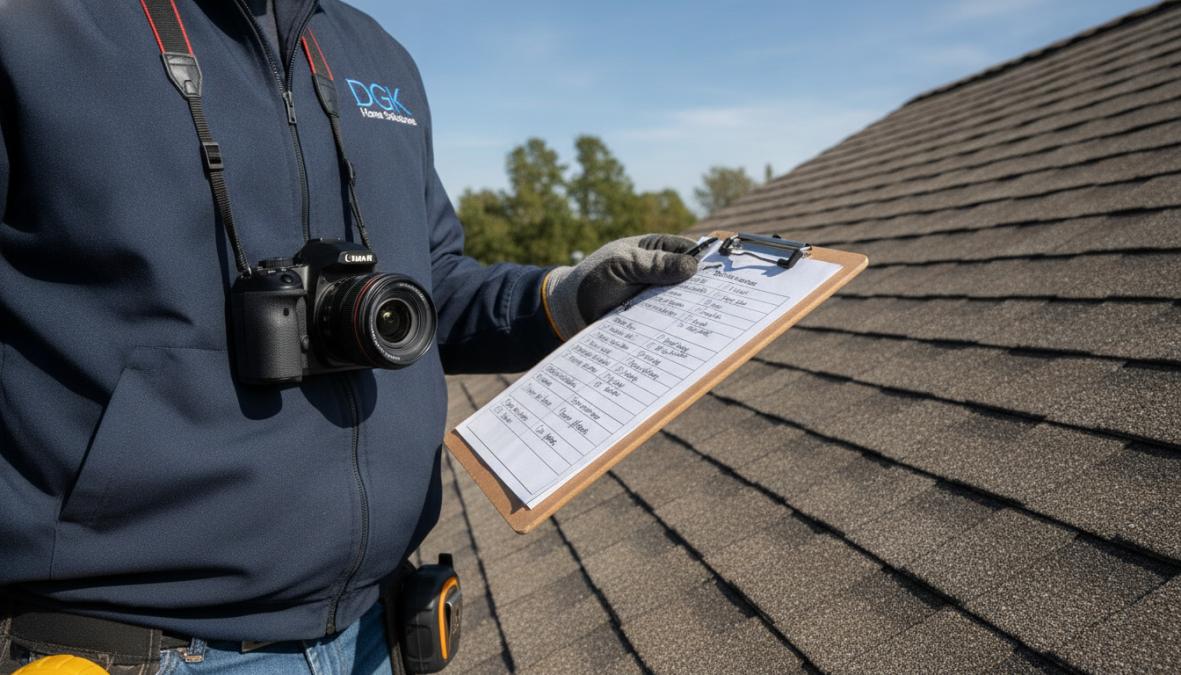
The inspection covers your roofing materials, whether asphalt shingles, metal panels, or other materials, assessing their condition, age, and remaining lifespan.
Inspectors check flashing around chimneys, skylights, and vents where water intrusion commonly occurs. They evaluate gutters and downspouts for proper drainage, examine the soffit and fascia for damage or deterioration, and assess attic ventilation to ensure proper airflow that prevents moisture buildup and premature aging.
A thorough inspection includes checking for signs of storm damage, examining the roof pitch and structural integrity, and looking for evidence of leaks or water damage inside the attic space. The inspector documents the overall condition of your roofing system and provides a detailed report with photographs and recommendations for any necessary repairs or maintenance.
Ask your inspector for a written report with photos. This documentation becomes invaluable if you need to file an insurance claim or sell your home, it provides objective evidence of your roof’s condition at a specific point in time.
Factors Affecting Roof Inspection Cost in Ohio
Several specific variables influence what you’ll pay for a professional roof inspection in your area. Understanding these factors helps you get accurate quotes and avoid surprises.
Roof Size and Pitch
Your roof’s square footage is one of the primary cost drivers. Larger homes require more time to inspect thoroughly. Roof pitch, the steepness of your roof’s slope, also matters significantly. A steep roof requires specialized equipment, safety precautions, and additional time, which increases the inspection cost. Flat or low-pitch roofs are faster to inspect and typically cost less.
Roof Age and Material Type
Older roofs often require more detailed inspection since inspectors need to assess remaining lifespan and look for age-related deterioration. Different roofing materials demand different expertise.
Metal roofing, slate, wood shakes, and asphalt shingles each have unique inspection requirements. A roof nearing the end of its expected lifespan may warrant a more comprehensive evaluation, affecting the overall inspection cost.
Regional Climate and Storm Damage Assessment
Ohio’s climate presents specific challenges. The state experiences significant seasonal temperature variations, heavy snow and ice in winter months, and occasional severe storms.
Inspectors in Ohio pay special attention to storm damage assessment, checking for hail impact, wind damage, and ice dam formation. Regions that experienced recent severe weather often see higher inspection demand and may have slightly higher costs due to increased inspector workload.
Digital and Drone Inspection Technology
Modern roof inspection increasingly incorporates digital technology and drone inspections.
Drone inspections provide detailed aerial photography and thermal imaging that can detect hidden problems like poor ventilation or moisture accumulation. This advanced technology typically costs more than traditional ground-based inspections but offers comprehensive documentation and can be safer for inspectors working on steep or difficult-to-access roofs.
Avoid inspectors who refuse to get on the roof or only conduct ground-level visual inspections. A thorough assessment requires close examination of shingles, flashing, and structural elements, shortcuts mean missing problems that could lead to expensive repairs later.
Free Roof Inspection in Ohio vs. Paid Options
Many Ohio homeowners wonder whether to pay for a professional inspection or take advantage of free options offered by roofing contractors.
Free inspections are often provided by roofing contractors hoping to secure repair or replacement work. While these inspections can identify obvious problems, they may lack the objectivity and thoroughness of a paid, independent inspection.
The contractor performing a free inspection has financial incentive to recommend repairs or replacement, even when minor maintenance would suffice. Free inspections rarely include detailed written reports with photographs and recommendations.
Paid inspections by independent certified inspectors provide unbiased assessments. These inspectors have no financial stake in recommending repairs, so their recommendations focus solely on your roof’s actual condition. Paid inspections include comprehensive written reports, photographs, and detailed findings. This documentation proves invaluable for insurance claims and property sales.
For insurance claim situations, a paid inspection from a certified professional carries more weight than a contractor’s free assessment. Insurance companies and adjusters respect the objectivity of independent inspections. When selling your home, a professional inspection report demonstrates transparency to potential buyers and can justify your asking price.
| Inspection Type | Cost | Objectivity | Documentation | Best For |
|---|---|---|---|---|
| Free Contractor Inspection | None | Lower, contractor has repair incentive | Basic or minimal | Initial assessment only |
| Paid Independent Inspection | Variable | Higher, no financial stake in repairs | Comprehensive written report | Insurance claims, home sales, accurate condition assessment |
| Drone/Digital Inspection | Higher | High | Detailed photos and thermal imaging | Complex roofs, hard-to-access areas, detailed documentation |
How Often Should You Get a Roof Inspection in Ohio
Scheduling regular roof inspections prevents small problems from becoming major expenses. Most roofing professionals recommend inspecting your roof at least once annually, ideally in fall after summer storms and before winter weather arrives.
Ohio homeowners should prioritize inspections after severe weather events, heavy snow, ice storms, hail, or high winds. Storm damage may not be immediately visible, but water intrusion can begin within days of damage occurring. An inspection within 48 hours of severe weather can catch problems before they cause interior damage.
If your roof is over 15 years old, consider inspections every six months. Older roofs deteriorate more rapidly, and catching problems early extends their remaining lifespan. New roofs under 5 years old typically need inspections annually unless storm damage occurs.
Inspections are also essential when buying a home, when filing insurance claims, and before major renovations or additions that affect your roof structure. Some insurance companies offer discounts for homeowners who maintain documented inspection records, the inspection cost may pay for itself through lower premiums.
Roof Inspection Checklist for Ohio Homeowners
When preparing for a professional roof inspection, understanding what inspectors evaluate helps you ask informed questions and understand their findings.
A thorough inspection examines these key areas:
- Roofing material condition, checking for missing, cracked, curled, or damaged shingles; assessing color fading and granule loss indicating age
- Flashing integrity, inspecting seals around chimneys, vents, skylights, and where roof planes meet for gaps or deterioration
- Gutter and downspout function, ensuring proper drainage and checking for debris, damage, or improper slope
- Attic ventilation, assessing airflow to prevent moisture accumulation and premature aging
- Structural integrity, looking for sagging, water stains, or signs of structural problems
- Soffit and fascia condition, checking for rot, damage, or pest entry points
- Underlayment assessment, evaluating the protective layer beneath shingles for damage or deterioration
- Roof pitch and slope, determining if water drains properly from all areas
- Evidence of leaks or water damage, examining interior spaces for stains, mold growth, or moisture damage
- Storm damage assessment, checking for hail impact, wind damage, or other weather-related harm
- Roof age estimation, determining expected remaining lifespan based on materials and condition
- Preventative maintenance needs, identifying maintenance that extends roof life and prevents problems
DGK Home Solutions uses this comprehensive approach to provide homeowners with complete understanding of their roof’s condition and specific recommendations for maintenance or repairs.
Roof Inspection vs. General Home Inspection
Many homeowners confuse roof inspections with general home inspections, but they serve different purposes and provide different levels of detail.
A general home inspection covers your entire house, foundation, structure, electrical systems, plumbing, HVAC, and roofing.
The roofing portion of a general inspection is typically limited to a visual assessment from the ground or from a ladder, checking obvious damage or deterioration. General inspectors may not climb onto the roof or examine details like flashing, underlayment, or attic ventilation thoroughly.
A dedicated roof inspection focuses exclusively on your roofing system, providing in-depth evaluation of materials, structural integrity, ventilation, drainage, and condition assessment.
Roof inspectors are specialists with expertise in roofing materials, installation standards, and regional climate considerations. They spend significantly more time examining details and provide detailed written reports with photographs and specific recommendations.
For home purchases, you typically need both, a general inspection for overall property condition and a specialized roof inspection if the general inspector identifies concerns or if your roof is older. For maintenance purposes, dedicated roof inspections provide the detailed information needed for proper care decisions.
If a general home inspector identifies potential roof problems, get a specialized roof inspection before making repair decisions. Specialists often catch issues general inspectors miss, potentially saving you thousands in unnecessary repairs.
Insurance Claims and Roof Inspection Reports
When filing an insurance claim for roof damage, a professional inspection report becomes your most important documentation. Insurance companies require objective evidence of damage before approving claims.
A detailed inspection report with photographs provides the documentation insurers need to process claims efficiently. The report should document the specific damage, its extent, the likely cause (storm, age, defect), and estimated repair costs. Inspectors familiar with insurance claim processes understand what information adjusters require.
Timing matters significantly. Most insurance policies require claims to be filed within a specific timeframe after damage occurs.
A prompt inspection, ideally within 48 hours of storm damage, ensures accurate damage assessment before secondary damage like mold growth or water intrusion occurs. This timing also demonstrates that you took reasonable steps to prevent additional damage, which insurance companies expect.
If your initial claim is denied, a detailed professional inspection report provides the foundation for appealing the decision. The objective assessment from a certified inspector carries significant weight in claim disputes.
For homeowners in Ohio, maintaining inspection records creates a documented history of your roof’s condition. This documentation proves valuable if you need to justify replacement costs or if you’re selling your home. Buyers and their lenders often require inspection documentation before finalizing transactions.
| Scenario | Inspection Type | Documentation Needed | Timing |
|---|---|---|---|
| Insurance claim for storm damage | Professional certified inspection | Detailed report with photos of damage | Within 48 hours of damage |
| Home sale | Professional roof inspection | Comprehensive condition report | Before listing or during inspection period |
| Maintenance planning | Annual inspection | Condition assessment and recommendations | Fall or spring annually |
| Roof replacement decision | Specialist inspection | Age, condition, and remaining lifespan estimate | Before replacement quotes |
Protecting your Ohio home starts with understanding your roof’s condition through professional inspection. Whether you’re preparing for a sale, managing insurance coverage, or planning maintenance, a certified roof inspection provides the objective assessment you need.
DGK Home Solutions has helped homeowners throughout the Greater Cincinnati area make confident decisions about their roofs through comprehensive inspections and honest assessments. Get a free quote today to schedule your professional roof inspection and understand exactly what your home needs.
Frequently Asked Questions
How much does a roof inspection typically cost in Ohio?
Roof inspection cost in Ohio depends on several factors including roof size, pitch, age, and materials. Rather than a fixed price, costs vary based on your specific property. Contact DGK Home Solutions for a free quote to get an accurate estimate tailored to your home's unique characteristics and inspection needs.
Are free roof inspections truly free in Ohio?
Free roof inspections in Ohio are typically offered by roofing contractors as a sales tool. While there's no upfront cost, the inspector may recommend repairs or replacements.
These inspections are legitimate for initial assessments, but a paid professional inspection provides more detailed documentation, useful for insurance claims or real estate transactions. DGK Home Solutions offers free quotes to help you understand your roof's condition.
What factors affect roof inspection cost in Ohio?
Key factors affecting roof inspection cost in Ohio include roof square footage, pitch angle, material type (asphalt shingles, metal, etc.), roof age, accessibility, and whether drone inspection technology is used.
Regional Ohio climate considerations, such as storm damage assessment, may also influence pricing. Additional services like chimney inspection, attic ventilation assessment, or structural integrity evaluation can increase the total cost.
How often should you get a roof inspection in Ohio?
Most experts recommend roof inspections annually or after severe weather events in Ohio.
Given Ohio's variable climate with potential ice dams, heavy snow, and severe storms, regular preventative maintenance through inspections helps identify water damage, mold growth, and other issues early. New roofs may need less frequent inspections, while older roofs benefit from yearly assessments to monitor roof warranty coverage and structural integrity.
What should be included in a roof inspection checklist in Ohio?
A comprehensive roof inspection checklist for Ohio should cover asphalt shingles or roofing materials condition, flashing around chimneys and skylights, gutters and downspouts, soffit and fascia, underlayment integrity, attic ventilation, signs of leaks or water damage, mold growth, roof pitch assessment, and overall structural integrity. The inspection report should document findings clearly and recommend preventative maintenance or repairs with post-inspection repair cost estimates.
This article was written using GrandRanker