Table of Contents
- Best Time to Replace Roof: Overview of Seasonal Factors
- Fall: The Ideal Season for Roof Replacement
- Spring Roof Installation: Pros and Cons
- Summer Roofing: Benefits and Drawbacks
- Signs You Need a New Roof and Damage Assessment
- Roof Replacement Weather Conditions and Installation Windows
- Roof Replacement Cost and Financial Planning
- Roofing Contractor Availability and Booking Timeline
Best Time to Replace Roof: Season-by-Season Guide
Last Updated: July 21, 2026
Best Time to Replace Roof: Overview of Seasonal Factors
Finding the best time to replace your roof affects labor costs, material availability, installation quality, and project timeline. According to National [Roofing Contractor(/how-to-choose-the-right-roofing-contractor/)s Association guidelines | nrca.net], proper installation conditions are critical when determining your replacement window. Temperature and humidity during installation directly impact how well thermal sealing works on asphalt shingles. A roof installed in poor conditions may develop leaks or premature wear within years, even with quality materials and workmanship.
The sweet spot for roof replacement in Liberty Twp, OH and surrounding areas is typically fall through early spring, when temperature conditions optimize shingle adhesion without summer heat risks or winter precipitation challenges.
Why Timing Matters for Your Roofing Project
Timing your roof replacement protects your investment. Temperature, humidity, wind, and rain all affect how well new shingles bond to the substrate. Peak season brings higher labor rates and longer wait times, while off-season projects often cost less but present their own challenges. Your timing decision should balance weather conditions, contractor availability, material costs, and personal circumstances.
When replacing a roof in Liberty Twp, local climate patterns matter significantly. The region experiences cold, wet winters and hot, humid summers, both presenting challenges for roofing installation.
Fall: The Ideal Season for Roof Replacement
Fall stands out as the best season for roof replacement. Temperatures typically range between 50-70°F, ideal for asphalt shingle installation. At these temperatures, the adhesive strips on shingles activate properly without the brittleness of winter or softening of summer heat.
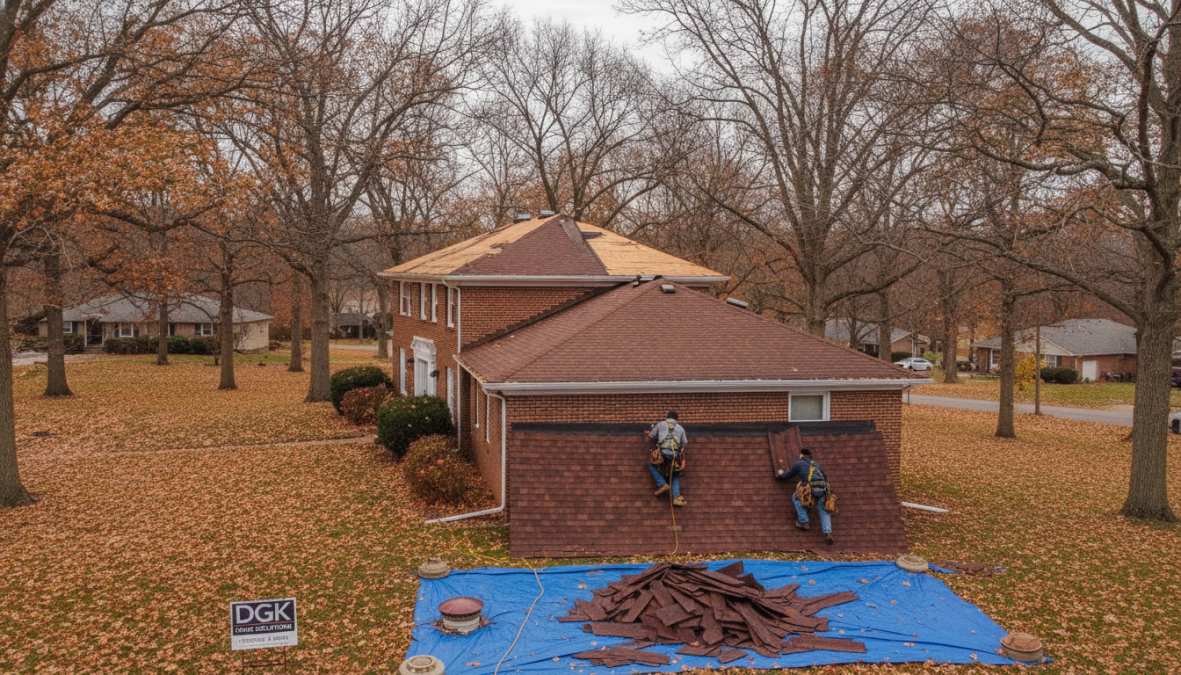
Temperature Stability and Shingle Adhesion
Asphalt shingles require specific temperature conditions to seal properly. The self-adhesive strips need heat to activate, but not excessive heat. Fall temperatures create the perfect balance. When shingles are installed in 50-70°F conditions, the adhesive activates gradually and creates a strong, lasting bond.
Summer installation can cause adhesive to activate too quickly, leading to uneven sealing. Winter installation presents the opposite problem, the adhesive may not activate sufficiently, leaving shingles vulnerable to wind damage and water infiltration. Research from GAF Materials Corporation technical guidelines emphasizes that shingle temperature during installation directly affects thermal sealing. When installation occurs below 50°F, manufacturers often recommend waiting for warmer weather before walking on the roof.
Lower humidity in fall also means less moisture absorption during installation, preventing buckling or premature deterioration.
Contractor Availability in Peak Season
Fall is peak season for roofing contractors throughout Ohio. While labor costs may be slightly elevated, contractor availability is at its highest. You’re more likely to book your preferred contractor quickly rather than waiting months for an opening. Experienced contractors schedule their most important projects during fall, meaning you’re more likely to get a crew with proven expertise.
Waiting until spring to replace your roof risks winter weather damage. A damaged roof can lead to interior water damage, mold growth, and structural deterioration. Emergency repair costs often exceed fall installation costs.
Spring Roof Installation: Pros and Cons
Spring presents a mixed picture for roof replacement. Temperatures are warming and contractor availability is increasing, but spring brings unpredictable weather patterns that complicate installation.
Weather Conditions and Moisture Barriers
Spring weather in Liberty Twp is notoriously inconsistent. Rain delays are more common in spring than any other season, extending project timelines and increasing labor costs. When moisture barriers and underlayment are exposed during installation, spring rain can cause buckling, mold growth, or premature deterioration.
Temperature swings in spring also affect shingle adhesion. A morning installation at 45°F followed by afternoon warming to 65°F creates inconsistent sealing conditions. Later spring (May-June) brings more stable weather patterns. If your roof replacement is urgent and fall is too far away, late spring can work, but avoid early spring weather chaos.
Summer Roofing: Benefits and Drawbacks
Summer seems ideal for outdoor construction, but presents serious challenges for roof replacement. Extreme heat is the primary concern. When temperatures exceed 85°F, asphalt shingles become soft and pliable. Installers must walk carefully to avoid damage, and adhesive activates too quickly, sometimes creating uneven bonds. In peak summer heat (90°F+), many roofing contractors won’t install shingles due to quality risks.
Material delivery also becomes problematic in summer. Asphalt shingles can warp or become damaged during transport in extreme heat. Summer is peak season for emergency repairs from storm damage, meaning longer wait times for new installations.
The one genuine advantage of summer roofing is extended daylight hours, allowing faster project completion. If your roof replacement is urgent and your contractor specializes in summer installations, it can work, but expect premium pricing.
Signs You Need a New Roof and Damage Assessment
Most asphalt shingle roofs last 20-25 years under normal conditions, but damage accelerates deterioration. Common signs include missing or damaged shingles, visible granule loss, sagging areas, and interior water stains. Curling or buckling shingles indicate age-related failure.
In Liberty Twp, weather-related damage is common. High winds can lift shingles and expose the moisture barrier. Ice dams in winter can force water under shingles, causing interior leaks.
How Roof Inspection Reveals Replacement Urgency
A professional roof inspection from a qualified roofing contractor reveals true roof condition and determines urgency. During inspection, contractors look for structural integrity issues, moisture damage, and deterioration signs not visible from the ground. Many homeowners wait for obvious problems, but by then damage has spread to underlying structure. An inspection catches problems early, when replacement is still an option.
An inspection also documents your roof’s condition for insurance purposes. If storm damage occurs, recent inspection photos strengthen your insurance claim.
A professional roof inspection typically costs $200-400 but can save thousands by identifying problems before they become catastrophic. Schedule one every 3-5 years, or immediately after severe weather.
Roof Replacement Weather Conditions and Installation Windows
Weather conditions during installation determine how well your new roof performs. Beyond temperature, wind, rain, and humidity all affect installation quality and shingle adhesion.
Temperature Thresholds for Asphalt Shingles
Most manufacturers recommend asphalt shingle installation between 50-85°F. Below 50°F, adhesive doesn’t activate properly, leaving shingles vulnerable to wind damage. Above 85°F, adhesive activates too quickly and can create uneven bonds. In Liberty Twp, these ideal conditions typically occur during fall (September-October) and spring (May-June). Winter temperatures frequently drop below 50°F, making winter installation risky unless your contractor has specialized cold-weather procedures.
Rain, Wind, and Thermal Sealing
Rain during installation compromises the entire project. Water on the roof surface prevents proper adhesive contact between shingles and underlayment. Even light rain can delay installation by a full day or more. Wind presents similar challenges. Strong winds can interfere with shingle placement and prevent proper adhesive activation. Many contractors won’t install shingles in winds exceeding 15-20 mph.
Thermal sealing requires specific conditions. Moisture, cold, and wind all interfere with this critical process. When thermal sealing is incomplete, your roof’s resistance to wind uplift and water infiltration is compromised.
Roof Replacement Cost and Financial Planning
Cost is often the primary factor in timing decisions. Roofing material costs fluctuate throughout the year, typically 5-15% between peak and off-season pricing. What changes more dramatically is labor availability and pricing. During peak season (fall), contractors charge premium rates because demand exceeds supply. During slow seasons, contractors may offer discounts to fill schedules.
However, this discount rarely compensates for risks of off-season installation. A roof installed in poor conditions may fail prematurely, requiring expensive repairs. Material availability also varies by season. During peak season, suppliers maintain larger inventories, ensuring access to quality materials. During slow seasons, specialty materials may be on backorder, delaying your project.
Insurance Claims and Timing Strategy
If your roof replacement is driven by storm damage, insurance claim timing becomes critical. Filing a claim immediately after damage is documented gives you the strongest position. Insurance adjusters assess damage based on the roof’s pre-damage condition. If you wait months to file, the adjuster may attribute additional damage to normal wear rather than the original storm event, reducing your claim payout.
When planning roof replacement around an insurance claim, work with your contractor to coordinate timing. Many contractors assist with insurance claims and understand how to document damage properly. The best time to replace your roof after storm damage is as soon as the claim is approved.
| Timing Factor | Best Season | Impact on Project |
|---|---|---|
| Temperature conditions | Fall (50-70°F) | Optimal shingle adhesion and thermal sealing |
| Contractor availability | Fall | Shorter wait times, experienced crews |
| Weather delays | Fall/Spring | Less rain than spring, more stable than summer |
| Material costs | Spring/Summer | Slightly lower, but minimal savings |
| Labor costs | Winter/Spring | Potential discounts, but quality risks |
| Insurance claim processing | Year-round | Faster approval in fall when contractors aren’t backlogged |
Roofing Contractor Availability and Booking Timeline
Contractor availability often determines your actual installation date more than any other factor. Contractors have more flexibility during off-season months (January-March, June-August) and may offer faster scheduling and discounted rates. However, off-season availability comes with trade-offs. Experienced contractors stay busy year-round by maintaining strong reputations.
Book your roof replacement 2-3 months before your target installation date. This gives contractors time to schedule you during their preferred season while ensuring you get your preferred crew. In Liberty Twp, many homeowners book roof replacements in July-August for September-October installation.
Call roofing contractors in early summer if you want fall installation. By August, many contractors are already fully booked for September and October. Early booking gives you scheduling flexibility and often better pricing.
The best time to replace your roof ultimately depends on balancing weather conditions, contractor availability, and your personal circumstances. For most homeowners in Liberty Twp and the Greater Cincinnati area, fall represents the optimal window. Temperature conditions ensure proper shingle adhesion, contractor availability is at its peak, and weather delays are minimized.
However, individual circumstances may dictate different timing. If your roof is damaged and needs immediate replacement, prioritize getting it done safely rather than waiting for ideal season conditions. If you’re selling your home and need curb appeal, spring or early summer replacement ensures your roof looks fresh for showings.
At DGK Home Solutions, we help homeowners navigate this decision with honest assessments and expert guidance. Our team has over 20 years of experience managing roof replacements in Liberty Twp and surrounding areas. We provide stress-free processes, clear communication about project timelines, and assistance with insurance claims. Get expert guidance on roof replacement timing from DGK Home Solutions and receive a free quote to understand your options.
Frequently Asked Questions
What is the best month to replace a roof?
Fall (September through November) is generally the best time to replace your roof. Temperatures are moderate, allowing proper thermal sealing of asphalt shingles without excessive heat. Roofing contractors have better availability than in summer peak season, and weather is typically more predictable. Spring is a secondary option, though rain and moisture can complicate installation. Winter and summer present challenges with temperature extremes affecting shingle adhesion and underlayment installation.
Can you replace a roof in cold weather?
Roof replacement in cold weather is possible but challenging. Most asphalt shingles require temperatures above 50°F for proper thermal sealing and adhesion. In winter, shingles become brittle and may crack during installation. If emergency roof replacement is needed due to damage, experienced roofing contractors can work in colder conditions using specialized techniques, but expect extended timelines and potentially higher costs. Plan winter replacements only when damage is urgent.
How far in advance should I book a roof replacement?
Book your roof replacement 4-8 weeks in advance during peak season (fall) and 2-4 weeks during off-season months. If you need insurance claim assistance, contact your roofing contractor immediately after damage occurs, they can help document the damage and coordinate with your insurer. Early booking ensures your preferred contractor is available and allows time for roof inspection, estimates, and material ordering, reducing delays and securing your installation window.
Does replacing a roof increase home resale value?
Yes, a new roof significantly improves curb appeal and home value. Buyers view a new roof as a major asset, eliminating concerns about structural integrity and future repair costs. A roof replacement before selling is especially valuable if your existing roof shows visible damage or is nearing the end of its roofing lifecycle. This investment typically recovers 60-80% of costs at resale and can accelerate your home's sale, making it a smart financial decision when timing aligns with market conditions.
This article was written using GrandRanker