Table of Contents
- What You’ll Need Before You Start Your Roof Insurance Claims
- How to Document Storm Damage for Insurance
- The Roof Damage Insurance Claim Process in Ohio
- Hiring a Roofing Contractor for Insurance Claims
- Average Roof Insurance Claim Settlement Time
- Common Mistakes That Sink Roof Insurance Claims
- Frequently Asked Questions
Last Updated: September 12, 2026
What You’ll Need Before You Start Your Roof Insurance Claims
Roof insurance claims are formal requests to your insurer to cover the cost of repairing or replacing storm-damaged roofing, and the outcome depends far more on preparation than most homeowners expect. At DGK Home Solutions, we’ve walked many Greater Cincinnati homeowners through this process, and the pattern is consistent: claims that get approved cleanly are the ones where the paperwork was assembled before anyone picked up the phone.
A common mistake is calling the insurer first. The insurer’s clock starts the moment you file, and you want your evidence ready before that happens.
Here’s what to gather:
- Your homeowners policy number and declarations page
- Photos of the damage taken from the ground and up close
- A written timeline of when the storm hit and what you noticed afterward
- Any receipts for emergency repairs, such as tarps or temporary patching
- Your mortgage statement, since your lender is often named on the payout
The Ohio Department of Insurance homeowners guide explains the policy language around covered perils, and it’s worth reading before you speak with an adjuster.
Photograph your roof before storm season each year. Pre-storm images give your adjuster a baseline, which makes it much harder for an insurer to argue that damage was pre-existing.
How to Document Storm Damage for Insurance
Documentation is the single strongest lever you control in the claims process. Insurers rely on evidence, and vague descriptions of “hail damage” without images or dates give an adjuster room to deny or minimize.
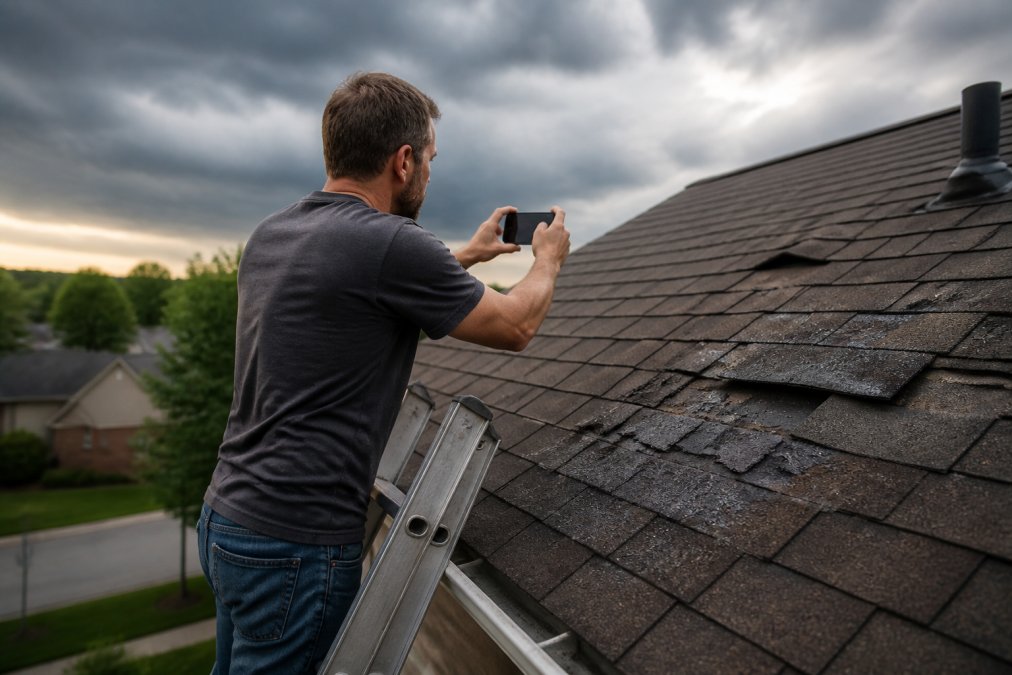
Capturing these visual details provides the necessary foundation for the subsequent storm damage insurance steps required to initiate your formal recovery process.
Start wide and work inward. Take full-roof shots from each corner of the property, then close-ups of individual damaged shingles, dents in gutters, and any interior water stains. Date-stamp everything.
Keep a written log too:
- Date and time the storm passed through your area
- What you observed immediately after
- Any neighbors with similar damage, which supports a widespread-event claim
- Names of anyone who inspected the roof before the adjuster arrived
What most guides miss is that interior damage matters as much as the roof itself. Water stains on ceiling drywall, bubbling paint, and warped attic decking all corroborate that water entered through the roof rather than through a window or plumbing failure.
The Roof Damage Insurance Claim Process in Ohio
The roof damage insurance claim process in Ohio follows a defined sequence: file the claim, schedule the adjuster inspection, receive the settlement offer, then complete repairs within the policy’s timeframe. Knowing the order matters because each step has its own deadline.
Once you file, your insurer typically assigns an adjuster and contacts you to schedule an inspection. You have the right to be present, and you should be. Walk the roof with the adjuster if it’s safe, point out every area you documented, and ask what they’re measuring.
After the inspection, the insurer issues a settlement that usually includes two payments: an actual cash value payment up front and a recoverable depreciation payment once the work is complete. That second payment surprises a lot of homeowners who assumed the first check was the full amount.
Never sign a contractor’s “direction to pay” or assignment of benefits form without reading it fully. Signing can transfer your right to negotiate the claim to the contractor, leaving you with little recourse if the work or the payout goes wrong.
For questions about what Ohio law requires of insurers and contractors, the Ohio Department of Insurance consumer complaint process is the right place to start.
Hiring a Roofing Contractor for Insurance Claims
Hiring a roofing contractor for insurance claims comes down to three things: licensing, documentation habits, and whether they’ll put their scope of work in writing before you sign anything. A contractor who handles claims regularly will know how to photograph damage, how to read an adjuster’s report, and how to supplement a claim when the initial offer misses items.
Ask directly whether they’ve worked claims in Liberty Twp and the surrounding Butler County area. Local experience matters because adjusters, storm patterns, and permitting offices vary by jurisdiction.
| What to Check | Why It Matters | Red Flag |
|---|---|---|
| Written scope before signing | Locks in what’s covered | Verbal promises only |
| Local references from claim jobs | Proves claim experience | No local addresses |
| Willingness to meet your adjuster | Prevents missed damage | Avoids the inspection |
| Clear warranty terms | Protects you after the job | Vague or none |
| No upfront full payment | Keeps use yours | Demands full cost first |
The Ohio Attorney General’s consumer protection resources outline your rights around home improvement contracts, including the three-day right to cancel.
A customer we worked with put it simply: “The sales team was professional and friendly. They gave an honest assessment of the state of our roof and what was needed.” That’s the standard to hold any contractor to.
Average Roof Insurance Claim Settlement Time
Most roof insurance claims settle within a few weeks to a few months, depending on claim volume, weather events in the region, and how complete your documentation is. After a major hailstorm or wind event, adjuster schedules back up quickly, and that delay is often the largest single factor.
The timeline usually breaks down like this:
- Filing to adjuster contact: a few days to two weeks
- Inspection scheduling: one to three weeks in normal conditions, longer after a regional storm
- Settlement offer after inspection: one to three weeks
- Final payment after completed work: varies with your contractor’s invoicing
You can shorten your own side of the timeline considerably. Respond to every request the same day, keep your documentation in one folder, and follow up in writing rather than by phone so there’s a record.
If the offer seems low, you can request a re-inspection or bring in a licensed contractor to document items the adjuster missed. This is common and not adversarial; adjusters work from a standard scope and often overlook interior or gutter-related damage.
Common Mistakes That Sink Roof Insurance Claims
The mistakes that sink claims are almost always procedural, not factual. Homeowners rarely lose a claim because the damage wasn’t real. They lose it because they waited too long, signed the wrong document, or let a contractor speak for them.
The biggest one is waiting. Policies contain prompt-notice requirements, and a claim filed months after a storm invites a denial on those grounds alone.
Others to avoid:
- Making permanent repairs before the adjuster sees the damage
- Accepting the first offer without reviewing the line items
- Letting a contractor negotiate the claim on your behalf
- Skipping the recoverable depreciation follow-up after the work is done
- Failing to document interior damage alongside the roof
Your claim is only as strong as your records. Photographs, dates, written communication, and a contractor who documents as carefully as you do will carry a claim further than any argument at the inspection.
If something goes wrong after the work is finished, a written warranty and a contractor who answers the phone matter more than anything else. Ask who you call if a leak appears six months later, and get the answer in writing.
Storm damage never arrives at a convenient time, and the claims process rewards homeowners who prepare before they need to. DGK Home Solutions has spent over 20 years helping residential and commercial property owners across the Greater Cincinnati area document damage, work with adjusters, and complete repairs with top-quality materials and workmanship. Our team provides honest assessments, clear communication, and hands-on help with insurance claims from the first photo to the final inspection. Get started with DGK Home Solutions and request your free quote today.
Frequently Asked Questions
Does homeowners insurance cover roof replacement in Ohio?
In Ohio, homeowners insurance typically covers roof replacement if the damage is from a sudden event like a storm, hail, or fallen tree. Normal wear and tear or lack of maintenance is usually not covered. Policies vary, so review your specific coverage or ask your insurer. If damage is storm-related, filing a roof insurance claim can help cover repair or replacement costs.
What is the typical process for filing a roof insurance claim?
The process starts with documenting damage through photos and notes, then contacting your insurer to file a claim. An adjuster will inspect the roof, and you’ll receive a settlement offer. If approved, you hire a licensed roofing contractor for insurance claims to complete repairs. In Ohio, you can file a claim directly with your insurer, and they will guide you through the steps.
How long do I have to file a roof claim after a storm in Ohio?
Ohio law generally requires you to file a claim within a reasonable time, often one year from the date of damage, but your policy may have a shorter deadline. Check your policy documents or contact your insurer promptly. Delays can jeopardize your claim, so document storm damage for insurance as soon as possible and submit your claim quickly.
Should I call a roofing contractor or my insurance company first?
Contact your insurance company first to report the damage and start the claim. They will schedule an adjuster visit. However, you can also call a roofing contractor for insurance claims to get a professional assessment and documentation to support your claim. Many contractors, like DGK Home Solutions, offer free inspections and can help you navigate the process.