Table of Contents
- Why Checking for Storm Damage Matters
- Signs of Wind Damage on Shingles
- Hail Impact and Dent Damage
- Water Intrusion and Interior Signs
- How to Document Roof Damage for Insurance
- When to Call a Professional Roofer After a Storm
- DIY Safety and Immediate Mitigation Steps
- Conclusion
Last Updated: August 12, 2026
Why Checking for Storm Damage Matters
Severe storms compromise roof integrity in minutes, but damage may not be immediately visible. Wind, hail, and debris create slow leaks, moisture buildup, and costly structural problems if left unaddressed. Undetected roof damage leads to water intrusion, mold growth, and compromised ceiling integrity. Insurance claims require documented evidence, and catching damage early ensures you can file while the event is fresh in adjusters’ minds. At DGK Home Solutions, we’ve helped homeowners in Liberty Twp document and repair post-storm roof damage. This guide walks you through specific signs of storm damage, how to safely assess your roof, and when professional inspection becomes necessary.
Signs of Wind Damage on Shingles
Wind uplift is one of the most common forms of storm damage. High winds create pressure differences that lift shingles away from the roof deck, breaking the seal and exposing underlying layers.
Curling and Lifting Shingles
Curling happens when wind forces shingles upward at their edges. Look for shingles where edges are bent upward or corners are no longer adhered to the roof surface. Lifted shingles expose nails and underlying tar strips that seal the shingles in place. Once that seal breaks, water seeps under the shingles into the roof structure.
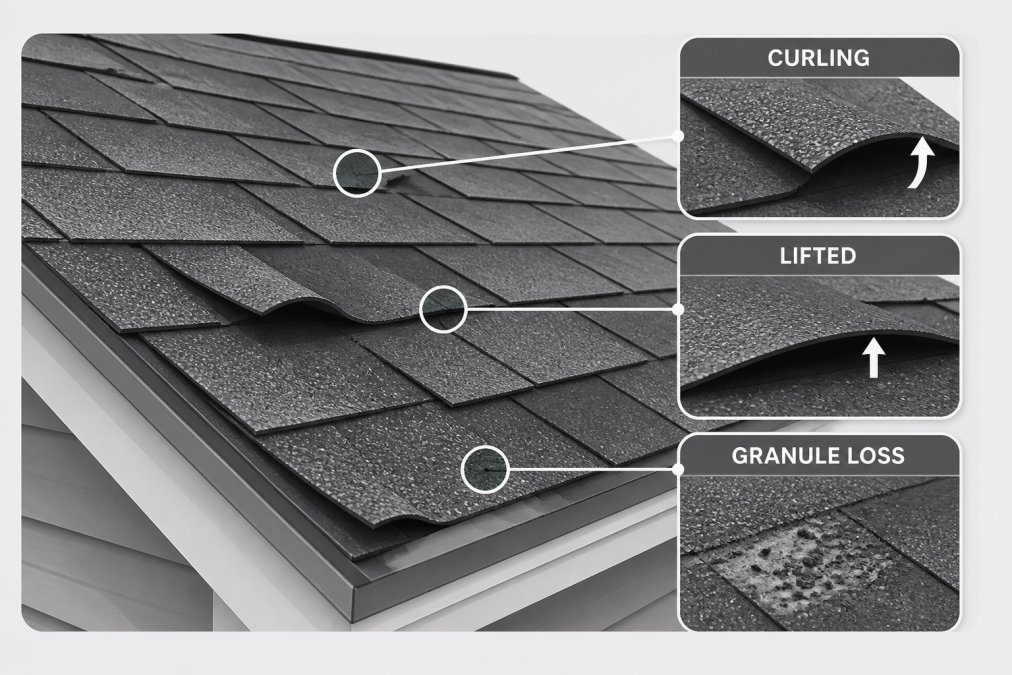
Walk around your property and look at your roof from ground level with binoculars, looking for shingles that don’t lie flat or have a slight wave at the edges. Pay special attention to edges and corners where wind pressure is strongest. In Liberty Twp, wind damage often concentrates on south and west-facing sides.
Once a shingle curls, it’s compromised. Even if pressed back down, the seal is broken and water will find its way underneath. Curled shingles should be replaced, not repaired.
Missing or Torn Shingles
Missing shingles are the most obvious sign of wind damage. High winds can tear shingles completely away, leaving exposed underlayment or roof deck. Torn shingles show splits, cracks, or partial separation.
Check your roof after significant wind events. Look for bare spots and scan the ground for shingle fragments, which often end up in gutters, yards, or driveways. Missing shingles require immediate attention, exposed roof deck is vulnerable to water penetration with even light rain. Temporary tarping can buy time until professional repair, but this is not permanent.
Granule Loss and Discoloration
Granules are small colored particles embedded in asphalt shingles that protect the asphalt from UV damage. Hail and severe wind dislodge granules, leaving asphalt exposed. You’ll notice bare patches on shingles or granule concentration in gutters and downspouts.
Granule loss accelerates aging and shingle deterioration. Discoloration, darker or lighter patches, can indicate impact damage or areas where granules have worn away.
Check your gutters and downspouts after storms. A sudden accumulation of granules (which look like coarse sand) is a red flag for roof damage, often concentrated near downspout openings.
Hail Impact and Dent Damage
Hail causes bruises, dents, and impact marks on shingles and metal roof components. Look for round or irregular dents on shingles, typically with a darker ring around the impact point. On metal components, gutters, vents, flashing, fascia, hail creates visible dents and dimples.
Hail damage is cumulative. Multiple impacts weaken shingles and create pathways for water. Insurance claims hinge on photographic evidence of impact patterns. Document damage immediately with photos showing dents and impact marks clearly.
Dented flashing around vents, chimneys, and roof penetrations is especially concerning because flashing is critical for preventing water intrusion where the roof meets vertical structures.
Don’t assume hail damage is minor. Hail-damaged shingles fail faster than undamaged shingles, and insurance companies expect documentation shortly after the event. Waiting weeks makes it harder to prove damage was storm-related rather than age-related.
Water Intrusion and Interior Signs
The real danger from roof damage isn’t always visible from outside. Water intrusion happens gradually, and by the time you notice interior damage, water has already compromised insulation, framing, and structural components.
Ceiling Stains and Attic Moisture
Water stains on ceilings appear as brown, yellow, or dark patches on drywall or plaster, indicating water has penetrated the roof and reached the interior. By the time you see a stain, water has been in the structure for hours or days.
Go into your attic after a storm and check for wet insulation, water dripping or pooling, and dark stains on wood framing or roof decking. Moisture buildup creates conditions for mold growth within 24-48 hours. Attic moisture also affects roof ventilation, reducing soffit and fascia vent effectiveness and leading to ice dam formation in winter.
Flashing and Seam Damage
Flashing is metal material installed where the roof meets vertical structures, chimneys, vents, skylights, and wall intersections. Storm damage to flashing often goes unnoticed because damage may be on the underside or hard to see from the ground.
Wind can bend flashing, separate it from the roof, or crack seams. Hail can dent flashing and create gaps where water enters. Water intrusion at flashing points travels directly into the structure because there’s no insulation barrier.
Inspect flashing after storms by looking at seams and joints where metal meets shingles or vertical surfaces. Look for gaps, separation, bent edges, or dents. Flashing damage requires professional repair because proper installation is critical.
Most interior water damage traces back to flashing failure or damage at roof penetrations. These areas are harder to inspect from the ground but are critical to check after storms.
How to Document Roof Damage for Insurance
If you’re filing an insurance claim, documentation is everything. Insurance adjusters need photographic evidence to approve claims and authorize repairs.
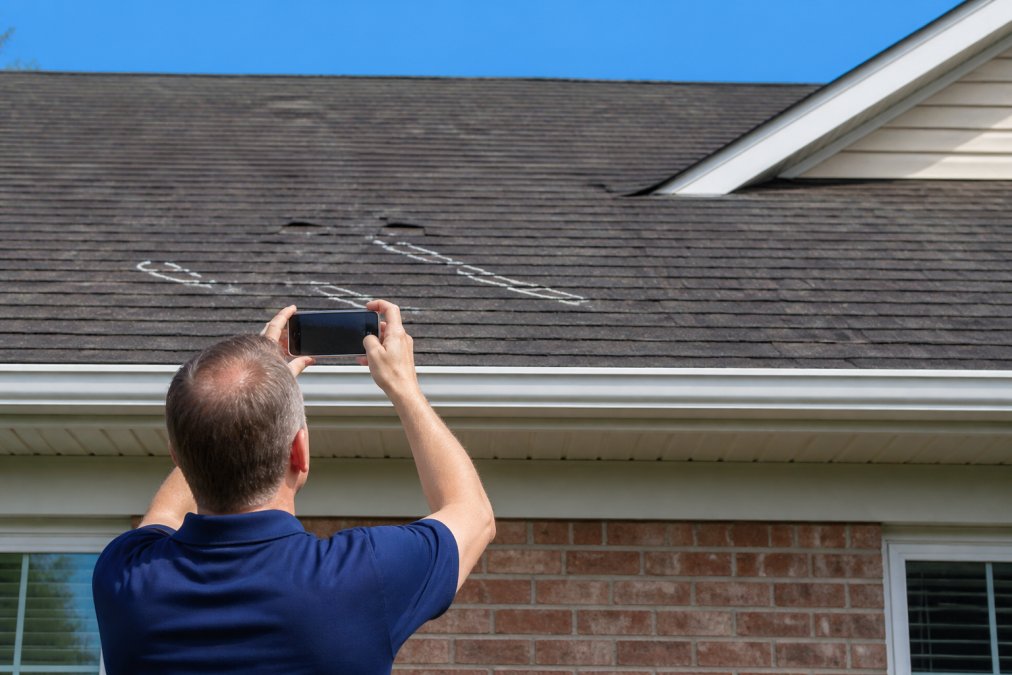
Take photos from the ground using wide-angle shots to show overall damage patterns, then zoom in on specific areas showing individual shingles, dents, or missing sections. Include photos from multiple angles and distances.
Document the date and time of the storm and when you took photos. Write down weather conditions, wind speed, hail size, and storm duration. Note specific damaged areas and which direction they face. Take interior photos as well, ceiling stains, attic moisture, or water damage strengthen your claim by proving the roof damage is causing actual harm.
Keep all documentation organized and accessible. DGK Home Solutions can assist with insurance documentation and claim support. Create a written inventory of damage, listing each damaged area, describing what you see, and noting the location on your roof. Before-and-after photos prove what the roof looked like before the storm and what changed after.
When to Call a Professional Roofer After a Storm
Call a professional roofer if you notice missing shingles, significant granule loss, or visible dents and impact marks. If you see ceiling stains or attic moisture, professional inspection is mandatory, interior water damage indicates active roof failure requiring immediate attention.
Professional roofers have tools and training homeowners lack. They assess whether damage is repairable or requires replacement, which affects insurance claims and repair costs.
When calling for inspection, provide details about the storm, date, wind speed, hail size, and duration. Describe any damage you’ve noticed. Professional roofers in Liberty Twp typically offer free inspections after storms and can help with insurance documentation.
Professional inspection costs are minimal compared to undetected roof damage costs. Water intrusion lasting months can cause thousands of dollars in damage to insulation, framing, and interior finishes.
Homeowners with any visible damage, interior water signs, or uncertainty about roof condition. Professional inspection is especially important if you plan to file an insurance claim.
DIY Safety and Immediate Mitigation Steps
If you have missing shingles or active water intrusion and weather is forecast, temporary mitigation can prevent additional damage while you arrange professional repair. However, roof work is dangerous, safety is your first priority.
Never climb on a wet roof, a roof covered with ice or debris, or a roof with steep pitch. Falls from roofs cause serious injury and death.
For temporary water mitigation, tarping is most effective. Use heavy-duty tarp (6 mil or thicker), secure it with rope or straps, and extend it well beyond the damaged area so water runs off rather than back under it. Tarping is temporary, buying days or weeks until professional repair.
Clear debris from your roof and gutters if you can do so safely from the ground. Document everything before mitigation work with photos of damage as it exists, then after mitigation so adjusters can see both original damage and prevention measures.
If considering ladder use, set it on level ground, have someone hold it steady, wear shoes with good grip, and keep three points of contact at all times. If you feel unsafe, don’t proceed, professional inspection is safer and more thorough.
Conclusion
Storm damage to your roof requires prompt attention. Missing shingles, curled or lifted shingles, granule loss, dents in metal components, and interior water signs all indicate damage needing professional assessment and repair. Documenting damage immediately protects your insurance claim and ensures repairs happen before secondary damage occurs.
DGK Home Solutions provides professional roof inspection, damage assessment, and repair services throughout Liberty Twp and the Greater Cincinnati area. Our team has over 20 years of experience identifying and repairing storm damage and works directly with insurance companies to ensure your claim is properly documented and approved. Contact DGK Home Solutions for a free inspection and honest assessment of your roof’s condition.
Frequently Asked Questions
How long after a storm should I check my roof for damage?
Inspect your roof as soon as it is safe to do so after a storm passes, ideally within 24-48 hours. Early detection prevents water intrusion from worsening and helps with insurance documentation. If weather remains dangerous or you're uncomfortable on a ladder, wait for calmer conditions and call a professional inspector instead.
What does wind damage look like on a shingle roof?
Wind damage on shingles appears as curling or lifting edges, missing or torn shingles, and granule loss that leaves bare spots. Severe wind uplift can expose the underlayment. Check flashing around vents and chimneys for separation or bending, and inspect soffit and fascia for dents or loosening. These signs indicate your roof has lost structural integrity.
Can I document roof damage myself for an insurance claim?
Yes, you can document damage with photos and video from the ground or a safe vantage point. Take wide shots showing the overall roof and close-ups of specific damage. Note the date and time, and keep detailed notes about the storm. However, professional inspections using thermal imaging and detailed assessments carry more weight with insurance adjusters and provide comprehensive evidence for your claim.
When should I call a professional roofer instead of inspecting myself?
Call a professional roofer immediately if you see obvious damage, experience interior leaks, or feel uncomfortable accessing your roof. Professionals have safety equipment, liability insurance, and expertise to spot hidden damage. They can also handle insurance coordination and provide documentation that adjusters trust, saving you time and reducing claim denial risk.
This article was written using GrandRanker