Table of Contents
- What Does It Cost to Patch a Roof Leak
- Small Roof Leak Repair Cost: When Patching Makes Sense
- Key Factors That Influence Roof Leak Repair Cost
- Emergency Roof Leak Repair Cost: What to Expect
- Roof Leak Repair vs. Roof Replacement: Which Costs Less
- How to Assess a Roof Leak Before Calling a Contractor
- Questions to Ask Your Roofing Contractor
- Frequently Asked Questions
Last Updated: October 10, 2026
What Does It Cost to Patch a Roof Leak
The average cost to patch a roof leak depends on several factors, but most homeowners can expect to pay between modest and moderate amounts for professional repairs. The actual price varies based on leak size, location, roof type, and labor complexity. Understanding these costs helps you budget for repairs and avoid surprise bills when you call a contractor.
At DGK Home Solutions, we provide honest assessments. Quick action on small leaks can save money, as delays allow water to spread and cause hidden damage, which can increase repair costs.
The key factors that drive pricing are straightforward:
- Leak size and severity
- Roof material (asphalt, metal, slate, tile)
- Roof pitch and accessibility
- Whether structural damage exists
- Labor rates in your region
- Emergency timing (nights, weekends, holidays cost more)
Most small leaks get patched in a few hours. Larger repairs or those requiring roof sections to be opened take longer. The longer the job, the higher your labor costs.
Call a contractor as soon as you spot a leak. Small repairs done quickly are far cheaper than water damage repairs done later. Many homeowners wait too long and end up replacing entire sections of roof.
Small Roof Leak Repair Cost: When Patching Makes Sense
A small roof leak repair is often the most cost-effective fix available. These repairs target minor damage, a cracked shingle, a loose flashing, a small hole. If caught early, patching makes sense financially and structurally.
Small leaks typically affect just one or two shingles or a localized area of flashing. The repair process is straightforward: remove the damaged section, seal or replace it, and reseal the area. This takes a few hours and uses minimal materials.
The work is fast because contractors don’t need to open large roof sections. They access the problem area, fix it, and leave. This speed keeps labor costs down.
When patching works best:
- Roof is less than 15 years old
- Damage is isolated to one small area
- No structural rot or water damage underneath
- Leak happened recently (not months ago)
- Roof material is still in good condition overall
If your roof is older or the leak has been active for months, patching may not be the right choice. Water spreads. Hidden damage grows. A contractor will recommend a larger repair or replacement after inspecting the damage.
Small, fresh leaks caught quickly are ideal candidates for patching. Waiting allows water to cause hidden damage that turns a small repair into a major project.
Key Factors That Influence Roof Leak Repair Cost
Several variables determine what you’ll pay for roof leak repairs. Understanding these helps you anticipate costs and have realistic conversations with contractors.
Roof Pitch and Accessibility
Steep roofs cost more to repair than low-pitch roofs. Steeper angles are harder to work on safely. Contractors need special equipment, harnesses, and extra time. A steep roof might add 20-30% to labor costs compared to a low-pitch roof.
Accessibility matters too. A leak near the peak is harder to reach than one near the eaves. Leaks surrounded by obstacles, chimneys, vents, skylights, take longer to access and repair.
Single-story homes are easier to work on than multi-story homes. Ground-level access is faster and safer than working from tall ladders or scaffolding.
In Liberty Twp and the surrounding area, many older homes have steeper roofs, which can increase repair costs compared to newer homes with lower pitches.
Material Type and Condition
Your roof material affects repair costs. Asphalt shingles are cheapest to repair. Metal roofs cost more. Slate, tile, and specialty materials cost the most.
Asphalt shingles are easy to remove and replace. Materials are inexpensive. Labor is straightforward.
Metal roofs require special tools and expertise. Sealing and fastening are different than asphalt. Fewer contractors work on metal, which can increase labor costs.
Slate and tile roofs are expensive to repair because:
- Materials are costly
- Skilled labor is hard to find
- Replacement pieces must match existing tiles
- Breakage during removal is common
Roof condition also matters. A newer roof in good shape is easier to work on. An older, brittle roof might have hidden damage. Shingles crumble when removed. Flashing is corroded. These surprises add time and cost.
Location of the Leak
Where the leak is located affects repair difficulty and cost. Leaks near the peak are harder to access. Leaks near valleys, where two roof sections meet, are common and can be complex to seal properly.
Leaks around penetrations (chimneys, vents, skylights) require careful flashing work. These areas are prone to leaks because flashing deteriorates or wasn’t installed correctly.
Leaks at the gutterline are often caused by clogged gutters or improper drainage. The repair might include gutter work, not just roof patching.
Leaks in valleys require careful attention to water flow. Water runs downhill through valleys. If the valley flashing is damaged, water enters the home. Repairing valleys often costs more because the work is precise.
Emergency Roof Leak Repair Cost: What to Expect
Emergency roof leak repairs, those done nights, weekends, or holidays, cost significantly more. Contractors charge premium rates for urgent calls because they disrupt their schedule.
Emergency repairs also happen when weather is bad. Rain, wind, or snow makes the work harder and slower. Safety concerns increase. The job takes longer.
Many emergency repairs are temporary. A contractor might patch the leak quickly to stop water entry. A permanent fix comes later when weather is better and costs are lower.
When you have an emergency leak:
- Call immediately, don’t wait for business hours
- Ask if the repair will be temporary or permanent
- Clarify pricing before work starts
- Get everything in writing
- Ask about follow-up work and costs
Temporary emergency patches often last weeks or months. Plan for a permanent repair once the emergency passes. That permanent repair will be less expensive than the emergency work.
Never ignore a roof leak, even a small one. Water damage spreads fast and costs multiply. What starts as a small repair can become a major project if you wait. Emergency repairs are expensive, catching leaks early prevents emergency calls.
Roof Leak Repair vs. Roof Replacement: Which Costs Less
Deciding between repair and replacement depends on your roof’s age, condition, and the extent of damage.
Repairs are cheaper upfront. You pay for the specific damage. If the leak is isolated and your roof is young, repair is the smart choice.
Replacement costs more but solves the problem permanently. If your roof is near the end of its lifespan, replacement makes financial sense. You won’t be back for repairs in a few years.
Consider replacement if:
- Roof is over 20 years old
- Multiple leaks exist
- Widespread damage is visible
- Shingles are curling, missing, or deteriorating
- You’re planning to stay in the home long-term
Consider repair if:
- Roof is under 15 years old
- Leak is isolated
- No widespread damage exists
- You’re selling the home soon
- Budget is tight
A contractor can assess your roof and recommend the best path. At DGK Home Solutions, we give honest assessments. If repair makes sense, we’ll repair. If replacement is the better investment, we’ll explain why.
How to Assess a Roof Leak Before Calling a Contractor
You can do a basic assessment before calling a professional. This helps you describe the problem clearly and understand what the contractor will find.
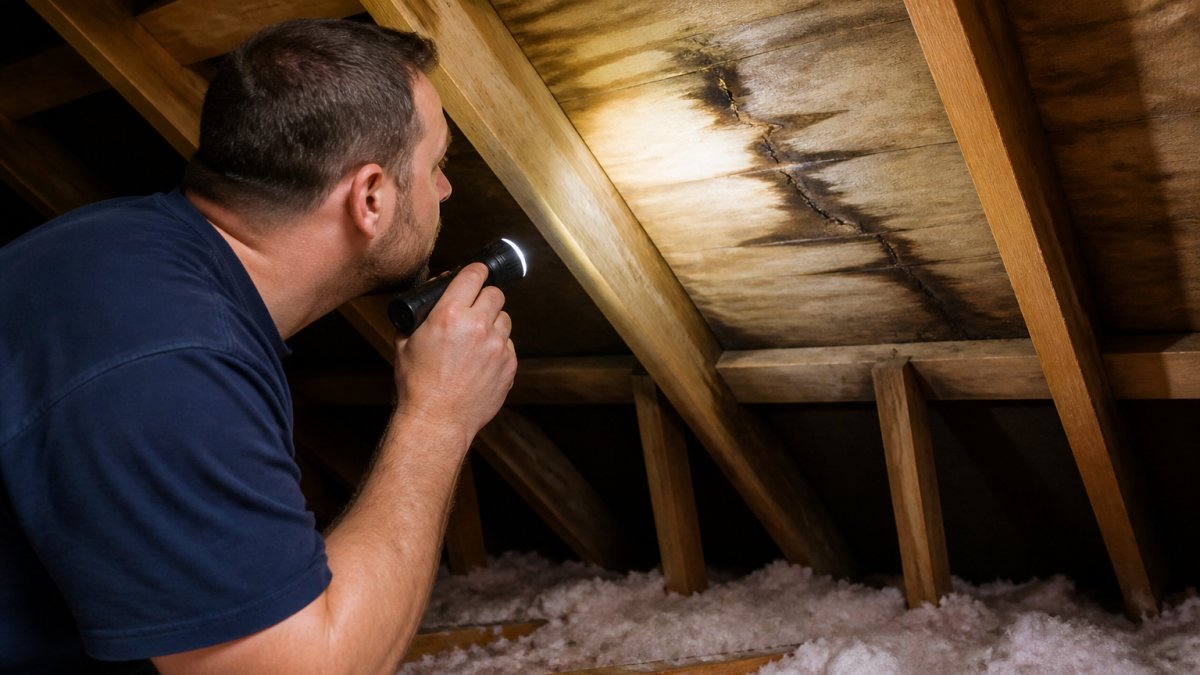
Start in the attic. Go up with a flashlight during daylight. Look for water stains on the underside of the roof decking. Stains show where water is entering. Water damage might be dark, discolored, or moldy.
Trace the stain upward. Water runs down. The entry point is higher than the stain. Look for holes, cracks, or gaps in the roof decking.
Check around penetrations, vents, chimneys, skylights. These are common leak sources. Look for deteriorated flashing or gaps where flashing meets the roof.
If you can safely access the roof, look for:
- Missing or cracked shingles
- Lifted or curled shingles
- Gaps in flashing
- Rust or corrosion on metal
- Debris accumulation around vents or valleys
Don’t walk on a wet roof or a steep roof. Safety first. If you can’t safely inspect, wait for a professional.
Take photos of any damage you see. Document water stains in the attic. Write down where you see problems. This information helps the contractor understand the issue before arriving.
Document the leak’s history. When did you first notice it? Does it only leak during heavy rain? Has it been active for weeks or months? This context helps contractors assess urgency and damage extent.
Questions to Ask Your Roofing Contractor
Before hiring a contractor, ask these questions. Clear answers help you understand the work and avoid surprises.
About the repair itself:
- Is this a temporary or permanent fix?
- Will you need to open roof sections or can you patch from outside?
- How long will the repair take?
- What materials will you use?
- Will the repair match my existing roof?
About damage:
- Is there water damage or rot underneath?
- Will you inspect the attic?
- Are there hidden problems I should know about?
- Could the leak have caused structural damage?
About cost:
- What’s included in your estimate?
- Are there potential additional costs?
- What happens if you find hidden damage?
- Do you offer warranties on the repair?
- How long will the repair last?
About the process:
- What’s your timeline?
- How will weather delays be handled?
- Will you clean up debris?
- Do you handle insurance claims?
- Who should I contact if problems arise after the work?
About the contractor:
- How long have you been in business?
- Are you licensed and insured?
- Can you provide references?
- Do you offer emergency service?
At DGK Home Solutions, we answer these questions clearly. We’ve been serving the Greater Cincinnati area for over 20 years. We handle residential and commercial roofing. We work with insurance companies on claims. Our team gives honest assessments and clear communication throughout the process.
Ask contractors about their experience with your roof type. Metal roofs, slate, tile, and asphalt shingles each need different expertise. A contractor experienced with your roof type will do better work.
Roof leaks demand quick attention. Small repairs caught early save money and prevent water damage. Understanding what influences repair costs helps you budget and make informed decisions. When you’re ready to address a leak in Liberty Twp or the surrounding area, get a professional inspection. A qualified contractor will assess the damage, explain your options, and provide honest pricing. DGK Home Solutions offers free quotes and over 20 years of experience with residential and commercial roofing. We handle the entire process, from assessment through insurance claims, so you can focus on protecting your home. Learn more about roof maintenance from the National Roofing Contractors Association to understand best practices. Contact us for a free assessment of your roof condition.
Frequently Asked Questions
What is the average cost to patch a roof leak?
Roof leak repair costs vary widely depending on the leak’s size, location, and your roof material. Small leaks around flashing or vents typically cost less than larger structural damage. The best way to get an accurate price is to have a professional inspect the damage and provide an estimate. Contact DGK Home Solutions for a free assessment of your specific situation.
How much does it cost to repair a small roof leak?
Small roof leaks are often the most cost-effective to repair since they require minimal materials and labor. However, even small leaks should be addressed quickly to prevent water damage to your attic, insulation, and interior walls. A professional inspection will determine whether patching is sufficient or if underlying damage requires more extensive work.
What factors affect the cost of roof leak repair the most?
The primary cost drivers are the leak’s location, your roof pitch, accessibility, and the extent of damage underneath. Leaks around chimneys, vents, or valleys cost more because they require careful flashing work. Steep roofs and homes with difficult access increase labor time. Water damage to decking or framing also adds to the final bill. A contractor’s assessment will reveal all factors affecting your repair cost.
Does homeowners insurance typically cover roof leak repairs?
Most homeowners insurance covers roof leaks caused by sudden events like storms or falling trees. Leaks from wear and tear, poor maintenance, or age are usually not covered. Your insurance company will send an adjuster to assess the damage. DGK Home Solutions can assist throughout the insurance claim process and help document damage for your claim.