Table of Contents
- What to Know About Roof Sealant for Emergency Repairs
- Best Roof Sealant for Wet Surfaces
- How to Seal a Roof Leak in the Rain
- Temporary Roof Leak Repair Solutions
- How Long Does Roof Sealant Last
- Common Mistakes to Avoid During Emergency Roof Repairs
- When to Call a Professional Instead of DIY Sealing
- Conclusion
- Frequently Asked Questions
Last Updated: October 8, 2026
What to Know About Roof Sealant for Emergency Repairs
When a roof leak strikes during a storm, you need a solution that works fast. Roof sealant for emergency repairs can stop water damage temporarily while you arrange professional help. But not all sealants perform equally in wet conditions or deliver lasting protection.
The key difference between emergency sealants and permanent repairs comes down to application conditions and durability. Some products work on wet surfaces. Others require dry conditions. Some last months. Others hold for years. Choosing the right roof sealant for emergency repairs depends on your roof type, weather conditions, and how quickly you need to act.
This guide breaks down the best roof sealant options, how to apply them in rain, and when DIY sealing makes sense versus when you need professional help.
Best Roof Sealant for Wet Surfaces
The most critical factor in emergency repairs is whether you can apply sealant while the roof is wet. Many standard sealants fail on damp surfaces because water prevents proper adhesion.
Liquid Rubber Waterproof Sealant stands out because it’s designed to adhere even when surfaces are wet. This product can be applied underwater, which makes it suitable for active leaks and rain. The strong adhesive capability means it bonds to wet shingles and flashing better than conventional options.
Geocel 2300 Tripolymer Sealant works well for targeted repairs around pipe boots, flashing edges, and shingle cracks. It’s a solid choice when you can isolate the leak location and apply sealant directly to the problem area.
For flat roofs or metal roofs where water tends to pool, silicone roof sealant performs better than acrylic alternatives. Silicone maintains flexibility in temperature swings and resists pooling water more effectively.
| Product | Best For | Application Surface | Durability |
|---|---|---|---|
| Liquid Rubber Waterproof | Active leaks, wet conditions | Wet or damp | 5-10 years |
| Geocel 2300 Tripolymer | Pipe boots, flashing, cracks | Dry preferred | 3-5 years |
| Silicone Roof Sealant | Flat/metal roofs, pooling areas | Dry preferred | 5-10 years |
| Gorilla Waterproof Tape | Quick patches, small areas | Dry or damp | 1-3 years |
| Flex Seal | Small isolated leaks | Dry preferred | 1-2 years |
Gorilla Waterproof Patch & Seal Tape offers a different approach. Instead of liquid sealant, you apply a self-adhesive tape directly over the damaged area. It works on damp surfaces and requires no curing time, making it ideal when you need an immediate barrier against rain.
How to Seal a Roof Leak in the Rain
Sealing a roof leak during active rain is possible but challenging. The key is working quickly and choosing products rated for wet conditions.
Safety and Preparation
Before you climb onto a wet roof, understand the risks. Wet surfaces are slippery. Rain reduces visibility. Wind can knock you off balance. If the leak is severe or the roof pitch is steep, professional help is safer and often faster.
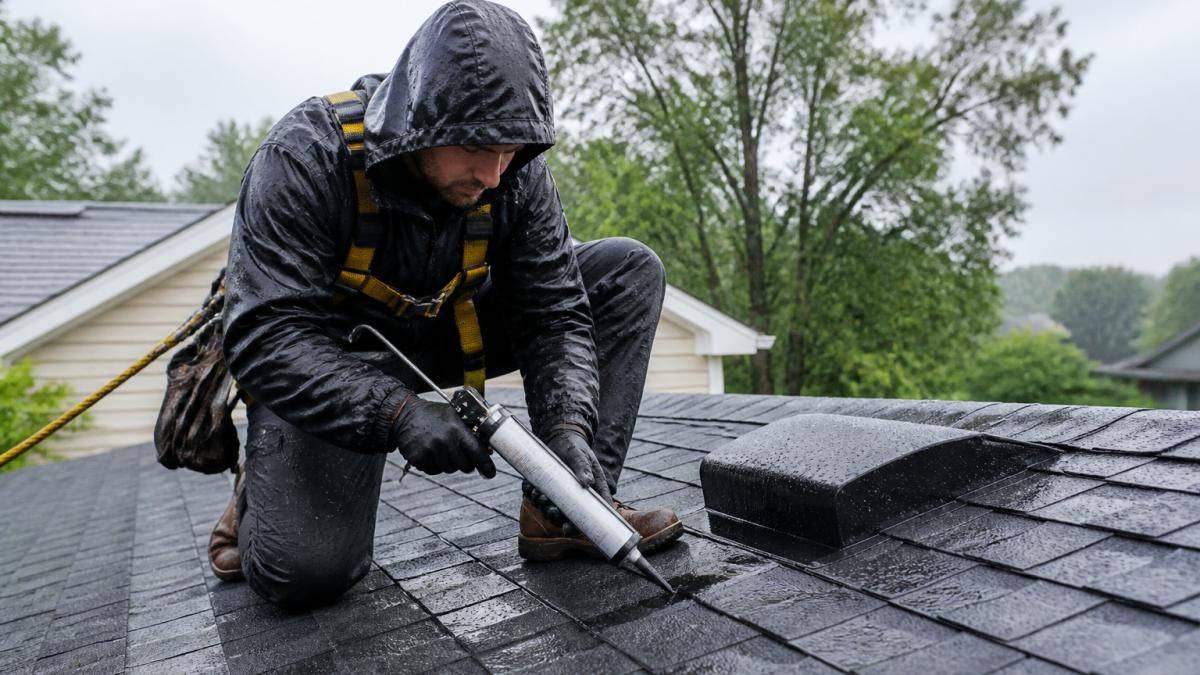
If you decide to proceed, gather safety equipment first. Wear non-slip shoes with good tread. Use a safety harness clipped to a roof anchor or ridge line. Have someone on the ground aware of what you’re doing. Never work alone on a roof during storms.
Prepare your materials before climbing. Have your sealant, application tools, and safety gear ready at ground level. Bring more product than you think you’ll need. Wet conditions waste material because water interferes with application.
Application Steps
Start by locating the leak source. Water often travels from the actual damage point, so trace it uphill. Look for missing shingles, cracked flashing, or holes around pipes and vents.
Clear debris from the area. Remove leaves, dirt, and loose material. If you’re using Liquid Rubber or another liquid sealant, rough up the surface slightly with sandpaper so the product grips better. This extra step improves adhesion even on damp surfaces.
Apply sealant generously but not excessively. For liquid products, use a caulking gun and create a continuous bead around the damaged area. Overlap the damage by at least 2-3 inches in all directions. Wet conditions mean you need more coverage to ensure the sealant reaches all the gaps.
If using tape, press it firmly for 10-15 seconds to ensure adhesion. Smooth out air bubbles. Tape works faster than liquid sealant and doesn’t require curing time, but it’s less durable long-term.
Allow proper curing time before heavy rain if possible. Liquid sealants typically need 24-48 hours to cure fully. Tape sets immediately but performs better after a few hours of drying. If rain is imminent, tape is your faster option.
Temporary Roof Leak Repair Solutions
Emergency sealant is temporary by nature. It buys you time to arrange professional repair, but it’s not a permanent solution. Understanding the difference between temporary and permanent repairs helps you plan your next steps.
Temporary best roof sealant for emergency repairs solutions typically last 1-3 years depending on weather exposure and product quality. They work best for small leaks, localized damage, and situations where professional repair will happen within weeks or months.
Tape products offer the fastest temporary fix. They’re ideal when you need to stop water immediately and don’t have time for sealant to cure. Liquid sealants provide better long-term temporary protection but require more time and dry conditions.
For homeowners in Liberty Twp and surrounding areas, seasonal storm damage often creates emergency situations. A temporary seal protects your interior while you file insurance claims and schedule professional work. DGK Home Solutions helps clients navigate this process by assessing whether temporary sealing is appropriate or whether professional repair should happen immediately.
Temporary sealants fail if you ignore the underlying damage. A seal over a cracked flashing will eventually fail because the flashing itself is compromised. Temporary fixes must be followed by professional inspection and repair within a few months.
How Long Does Roof Sealant Last
Durability varies significantly based on product type, roof material, and weather exposure.
Liquid sealants typically last 3-10 years depending on formulation. Silicone products outlast acrylic options because silicone remains flexible through temperature changes. Acrylic sealants become brittle and crack in cold weather, especially in regions with freeze-thaw cycles.
Tape products last 1-3 years. They’re not designed for permanent use. UV exposure degrades the adhesive, and temperature swings cause the tape to peel at edges. Plan to replace tape-based repairs annually or after severe weather.
Tripolymer sealants like Geocel 2300 typically last 3-5 years for small repairs. They perform well around flashing and pipe boots but aren’t ideal for large damaged areas.
The location matters as much as the product. Sealant on south-facing roofs gets more UV exposure and fails faster. Sealant in shaded areas lasts longer. Roofs with poor drainage where water pools create conditions that degrade sealant faster.
Temperature swings accelerate failure. In regions with cold winters, sealants contract and crack. In hot summers, they soften and lose adhesion. This is why silicone outperforms acrylic in variable climates.
Check your temporary seal every spring and after major storms. Early signs of failure include cracking, peeling edges, and water staining around the repair. Address failures immediately before they lead to interior damage.
Common Mistakes to Avoid During Emergency Roof Repairs
Most DIY roof sealing failures stem from a few predictable mistakes.
Applying sealant over wet surfaces without proper product selection is the biggest error. Standard caulk and sealants won’t bond to wet shingles or damp flashing. Water prevents adhesion, and the sealant fails within weeks. Always verify that your product works on wet surfaces before climbing onto a wet roof.
Insufficient coverage causes leaks to return quickly. Many people apply a thin bead of sealant directly over the damage. This misses the gaps where water actually enters. Extend your sealant 3-4 inches beyond the visible damage in all directions. Water travels sideways under shingles, so overlap is essential.
Ignoring the underlying cause creates repeat problems. A cracked flashing needs flashing repair, not just sealant. A missing shingle needs replacement, not patching. Temporary sealant covers the symptom but doesn’t fix the structural problem. You’ll be resealing the same spot in months.
Working on steep roofs without safety equipment puts you at serious risk. Wet roofs are slippery. Falls cause severe injuries. If your roof pitch exceeds 8:12 or you’re uncomfortable at heights, hire a professional. The cost of professional repair is far less than emergency room bills.
Choosing the cheapest product often backfires. Budget sealants fail faster and require more frequent reapplication. Mid-range products from established manufacturers deliver better durability and fewer reapplication cycles.
When to Call a Professional Instead of DIY Sealing
Some situations demand professional repair from the start.
If the leak is large or the damage is extensive, professional repair is faster and more reliable than DIY sealing. A missing section of roof, large holes, or multiple leak locations require structural repair, not sealant.
If you’re uncomfortable working at heights or on steep roofs, call a professional. Your safety is worth the cost. Professional roofers have equipment, training, and insurance to handle dangerous conditions safely.
If the leak is in a location you can’t safely access, professional equipment reaches it. If your attic is flooded or the damage is extensive, you need professional assessment to understand whether temporary sealing is appropriate or whether structural damage requires immediate repair.
When filing an insurance claim for storm damage, professional inspection and documentation strengthens your claim. Insurance adjusters trust professional assessments more than DIY evaluations. Professional photos and detailed damage reports help you receive fair settlement.
DGK Home Solutions offers emergency repair services for Liberty Twp and surrounding areas. Our team can assess whether temporary sealing buys you time or whether professional repair should happen immediately. We also handle insurance documentation, which simplifies the claims process considerably.
The best temporary sealant is one you apply correctly to a properly prepared surface. But temporary is temporary. Plan for professional repair within 3-6 months, especially if the damage is structural.
Conclusion
Emergency roof damage doesn’t always require immediate professional repair, but it always requires immediate action. The right best roof sealant for emergency repairs stops water from entering your home while you arrange permanent solutions. Liquid Rubber Waterproof Sealant works best in wet conditions. Tape products offer the fastest application. Silicone sealants outlast acrylic alternatives.
But temporary sealing is exactly that, temporary. Water will find new paths. Sealant will crack and peel. Within months, you’ll need professional repair.
When you’re ready for that repair, DGK Home Solutions provides expert residential roofing services across Liberty Twp and beyond. We assess storm damage honestly, handle insurance claims from start to finish, and deliver professional repairs with top-quality materials and workmanship. Get a FREE QUOTE and let our team determine whether your roof needs emergency sealing, professional repair, or both.
Frequently Asked Questions
Can you apply roof sealant to a wet roof?
Most standard roof sealants require a dry surface for proper adhesion and curing. However, some specialized products like Liquid Rubber Waterproof Sealant are formulated to work on wet surfaces. If your roof is actively leaking, wipe away standing water and excess moisture before applying any sealant. For heavy rain or ongoing water flow, temporary measures like tarping are more effective than sealant application.
What roof sealant works best in the rain?
Products designed for wet-surface application, such as Liquid Rubber Waterproof Sealant, perform better in rainy conditions than traditional acrylic or silicone sealants. Waterproof sealing tapes like Gorilla Waterproof Patch & Seal Tape can also be applied in damp conditions. For true emergency repairs during rain, tape-based solutions are more reliable than liquid sealants, which require drying time to cure properly.
How long does emergency roof sealant last?
Emergency roof sealants typically last 1 to 3 years depending on weather exposure, UV intensity, and the product type. Acrylic sealants generally last 3 to 5 years under normal conditions, while silicone sealants may last 5 to 10 years. Tape-based patches often hold for 1 to 2 years. Emergency repairs are temporary solutions; permanent fixes require professional installation to ensure long-term protection.
When should you call a roofer instead of using roof sealant?
Call a professional if the leak is widespread, involves structural damage, occurs in hard-to-reach areas, or affects multiple roof sections. Large holes, missing shingles, flashing damage, or leaks that persist after sealant application warrant professional assessment. Storm damage, ice dam issues, and roof age over 20 years also require expert evaluation. Professional roofers can identify hidden damage and provide permanent solutions that emergency sealants cannot.