Table of Contents
- When to Call a Professional for Roof Storm Damage Assessment
- What to Expect During a Roof Storm Damage Inspection
- Questions to Ask a Roofing Contractor Before Hiring
- Understanding Your Roof Damage Assessment Report
- Filing a Roof Insurance Claim After Storm Damage
- Common Mistakes to Avoid When Assessing Storm Damage
- What Happens After the Assessment: Next Steps
- Frequently Asked Questions
Last Updated: October 10, 2026
When to Call a Professional for Roof Storm Damage Assessment
Storms can damage your roof in ways that aren’t immediately obvious. Missing shingles, bent flashing, and hidden leaks often develop after high winds or hail pass through. The question isn’t whether you should hire a professional for a roof storm damage assessment, it’s how quickly you can get one.
Call a professional roofer as soon as possible after a storm. Don’t wait weeks. Insurance companies have strict timelines for filing claims, and damage can worsen with rain or more weather. A professional inspection protects your home and strengthens your insurance claim.
Here’s when you absolutely need to call:
- Your roof shows visible damage (missing shingles, dents, debris)
- You notice water stains on ceilings or walls after a storm
- Your gutters are clogged with granules from shingles
- You see sagging areas or soft spots on the roof
- Hail passed through your area, even if you don’t see damage yet
DGK Home Solutions handles roof storm damage assessments throughout the Greater Cincinnati area. Our team knows what insurance companies look for and how to document damage properly. We’ve worked with hundreds of homeowners in Liberty Twp and surrounding areas who discovered serious problems only during a professional inspection.
Many homeowners try to assess damage themselves first. This usually backfires. You might miss critical damage that affects your claim, or you could injure yourself on a steep roof. A professional inspection takes the guesswork out and gives you a detailed report you can share with your insurance company.
Waiting too long to inspect storm damage can result in claim denial. Insurance adjusters expect prompt reporting. Delays suggest the damage may have happened before the storm or resulted from poor maintenance.
What to Expect During a Roof Storm Damage Inspection
A professional roof storm damage assessment takes 30 minutes to two hours, depending on roof size and complexity. The inspector will examine every section of your roof, gutters, and downspouts.
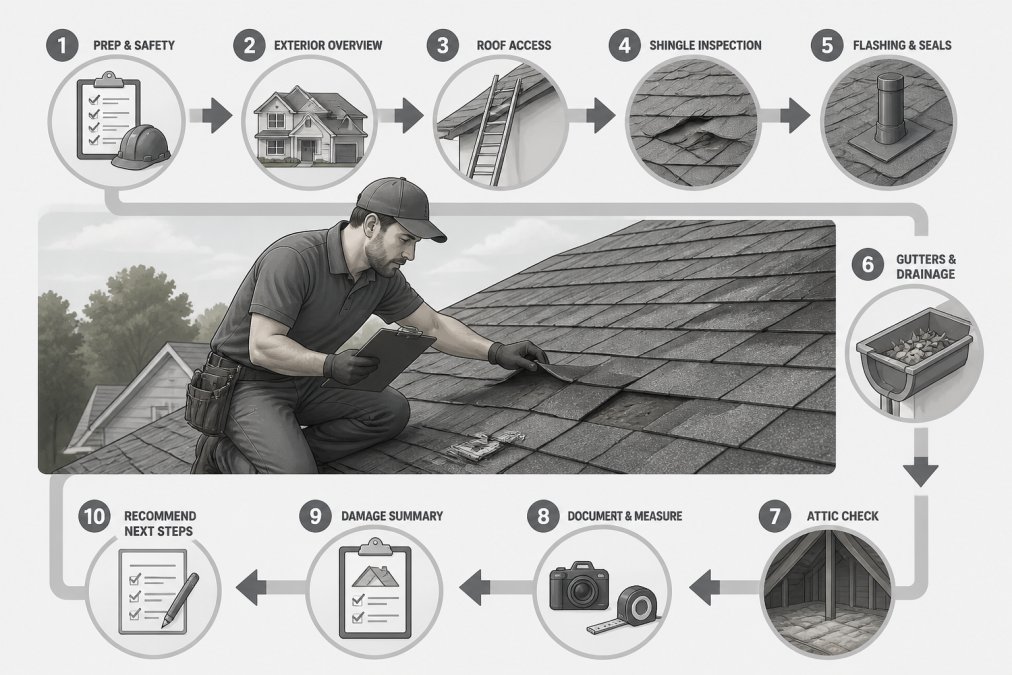
Here’s what happens during the inspection:
Outside inspection:
The roofer walks your entire roof (or uses a drone for steep pitches). They look for missing shingles, cracked tiles, bent metal flashing, and hail impact damage. They check gutters for debris and damage. They examine downspouts and the foundation area for water pooling.
Inside inspection:
The inspector checks your attic for leaks, water stains, and mold. They look at insulation for moisture damage. They examine the underside of the roof deck for soft spots or discoloration.
Documentation:
The roofer takes photos and measurements. They note the location, size, and type of damage. They document the roof age and current condition. This documentation becomes critical for your insurance claim.
Report:
You receive a detailed report with photos, damage descriptions, and repair recommendations. The report includes the roof’s age, materials, and condition. It explains what needs immediate attention and what can wait.
In Liberty Twp, many older homes have complex roof designs. Roofers familiar with historic homes and unusual angles understand how to assess damage on properties that standard inspections might miss.
Ask the inspector to explain damage as they find it. Understanding what you’re looking at helps when you talk to your insurance adjuster. Take your own photos too, you’ll need them for your claim.
Questions to Ask a Roofing Contractor Before Hiring
Not all roofers approach storm damage assessments the same way. Ask these questions before you hire:
Experience with insurance claims:
“How many storm damage claims have you documented?” A contractor with extensive claim experience knows exactly what insurance companies require. They understand the difference between cosmetic damage and structural damage. They know how to present findings in a way that supports your claim.
Licensing and insurance:
“Can you show me your contractor’s license and proof of liability insurance?” This protects you if something goes wrong during the inspection.
Inspection process:
“Will you inspect the attic and inside the home, or just the roof exterior?” A thorough assessment includes both. Many problems hide inside until water damage becomes visible.
Documentation:
“What will the inspection report include?” Ask for specifics. You need photos, measurements, damage descriptions, and repair estimates.
Timeline for repairs:
“If damage is found, how quickly can you schedule repairs?” Storm season creates backlogs. Knowing the contractor’s schedule helps you plan. Some companies prioritize insurance claims because they’re time-sensitive.
References from similar situations:
“Can you provide references from homeowners who had storm damage claims?” Ask to speak with people who’ve used this contractor for insurance claim documentation.
Cost of the assessment:
“What does the inspection cost?” Many reputable contractors offer free inspections if you’re considering repairs. Ask whether any fee applies to repair costs if you hire them.
In Liberty Twp and the Greater Cincinnati area, DGK Home Solutions offers free assessments for homeowners dealing with storm damage. Our team has over 20 years of experience with insurance claims.
The right contractor makes the claim process easier. They document damage thoroughly, communicate clearly with your insurance company, and answer your questions without rushing you.
Understanding Your Roof Damage Assessment Report
Your inspection report is your roadmap for repairs and your foundation for an insurance claim. Understanding what it says matters.
Damage descriptions:
The report lists each damaged area with location and severity. “Missing shingles on north slope, approximately 8 feet from peak, 3-4 shingles” is specific. “Some damage on roof” is not.
Roof age and condition:
The report states how old your roof is and its overall condition before the storm. This matters for insurance purposes.
Repair recommendations:
The report explains what needs fixing immediately and what can wait. Structural damage requires urgent attention. Missing shingles in a few spots can wait a few weeks if weather permits.
Cost estimates:
Repair estimates give you a ballpark for costs. These estimates help you understand the scope of damage. Insurance companies use them to determine claim amounts.
Photos and measurements:
Quality reports include photos showing damage location and severity. Measurements document the size of damaged areas. These visuals support your claim when you submit it to insurance.
Many homeowners receive assessment reports but don’t understand the technical language. Ask your inspector to explain anything unclear. You should understand what damage exists, why it matters, and what it costs to fix.
Filing a Roof Insurance Claim After Storm Damage
Your assessment report is the starting point for your insurance claim. Here’s how to move forward.
Contact your insurance company promptly:
Call within 24-48 hours of the storm. Report the damage and request a claim number. Insurance companies expect quick reporting.
Submit your documentation:
Provide your assessment report, photos, and repair estimates to your insurance company. Include the contractor’s detailed inspection report.
Schedule the insurance adjuster inspection:
Your insurance company will send an adjuster to assess damage independently. They’ll verify the contractor’s findings.
Coordinate with your contractor:
Let your contractor know when the adjuster is coming. Many contractors attend these inspections to answer questions and provide context. This coordination strengthens your claim.
Review the insurance estimate:
Your insurance company will provide their damage estimate and coverage determination. Compare it to your contractor’s estimate. If there’s a significant difference, ask questions.
Proceed with repairs:
Once your claim is approved, you can schedule repairs. Many contractors coordinate directly with insurance companies on payment.
DGK Home Solutions handles the entire claim process for homeowners in Liberty Twp and surrounding areas. We document damage thoroughly, attend adjuster inspections, and coordinate directly with insurance companies.
Never start major repairs before your claim is approved. Insurance companies may deny claims if you make repairs without authorization. They want to inspect damage before work begins.
Common Mistakes to Avoid When Assessing Storm Damage
Most homeowners make one or more of these mistakes when dealing with roof storm damage.
Delaying the inspection:
The longer you wait, the more difficult your claim becomes. Weather worsens damage. Memory fades about what happened when. Insurance companies expect prompt action.
Hiring unlicensed contractors:
An unlicensed roofer might offer cheaper inspections. Their reports often lack the detail insurance companies require. If something goes wrong, you have no recourse.
Skipping the attic inspection:
Some roofers only inspect the roof exterior. They miss water damage, mold, and structural problems inside.
Not documenting damage yourself:
Take your own photos and video before the contractor arrives. Walk around your property and document everything you see.
Accepting the first estimate:
Estimates vary based on experience and thoroughness. Understanding the full scope of damage is key. Don’t assume all contractors assess damage the same way.
Ignoring pre-existing damage:
If your roof had problems before the storm, the insurance company won’t cover those. A good assessment distinguishes between storm damage and pre-existing issues.
Failing to communicate with insurance:
Keep your insurance company informed throughout the process. Report damage promptly. Provide documentation quickly. Respond to adjuster requests immediately. Poor communication delays claims or results in denial.
The assessment process sets the tone for your entire claim. Do it right the first time by hiring a thorough professional and communicating clearly with your insurance company.
What Happens After the Assessment: Next Steps
After you have your assessment report, several paths forward are possible depending on damage severity.
Minor damage:
If damage is limited to a few missing shingles or small dents, repairs might be straightforward. Your contractor can provide a simple estimate.
Moderate damage:
Damage affecting larger roof areas requires coordination with insurance. Your contractor documents the damage. The insurance adjuster inspects. You receive an estimate and coverage determination. Repairs typically begin within 1-2 weeks of claim approval.
Severe damage:
Extensive damage affecting structural integrity requires urgent repairs. Your contractor may recommend temporary measures (tarping, water removal) to prevent additional damage while claims process. These emergency measures often qualify for separate insurance coverage.
Ongoing issues:
Some damage becomes apparent only after repairs begin. Your contractor might discover rot, mold, or structural problems during work. Document these discoveries.
Timeline expectations:
The entire process from inspection to repair completion typically takes 2-6 weeks depending on damage severity, insurance processing time, and contractor availability. Storm season creates backlogs.
For homeowners in Liberty Twp dealing with storm damage, DGK Home Solutions manages the entire process. We schedule inspections quickly, document damage thoroughly, coordinate with insurance companies, and complete repairs efficiently.
Contact DGK Home Solutions for a free roof storm damage assessment. We’ve helped hundreds of homeowners navigate insurance claims and restore their roofs after severe weather. Learn more about storm damage restoration from the National Roofing Contractors Association to understand industry standards for assessments and repairs.
Frequently Asked Questions
When should I hire a professional to assess storm damage to my roof?
Contact a professional immediately after a storm if you notice missing shingles, visible leaks, granule loss, or sagging areas. Don’t wait, additional water damage can occur within hours. If you’re unsure whether damage exists, a professional roof storm damage assessment will identify problems you might miss from the ground. Many homeowners find it helpful to call before filing an insurance claim to understand what they’re dealing with.
What should I ask a roofing contractor during a storm damage inspection?
Ask about their experience with insurance claims, whether they provide a written assessment, how they document damage, their warranty coverage, timeline for repairs, and if they handle insurance communication. Also request references from recent storm damage projects. These questions help ensure the contractor can guide you through both the assessment and claim process professionally.
Should I contact my insurance company or a roofer first after roof storm damage?
You can contact either first. Many homeowners hire a professional roofer for a roof storm damage inspection before filing a claim, this gives you a clear understanding of damage and helps support your claim. The roofer’s assessment report becomes valuable documentation for your insurance adjuster. Your insurance company will ultimately send their own adjuster, but having a professional assessment strengthens your position.
What documentation should I get after a roof damage assessment?
Request a detailed roof damage assessment report that includes photographs, descriptions of damage, repair cost estimates, and recommendations. This documentation is essential for insurance claims and protects you if disputes arise later. Ensure the report specifies storm-related damage versus pre-existing wear, as insurers distinguish between the two.
Storm damage to your roof doesn’t have to become a stressful experience. Hiring a qualified professional for your roof storm damage assessment protects your home and simplifies your insurance claim. DGK Home Solutions brings over 20 years of experience to every assessment, ensuring thorough documentation and clear communication with your insurance company. Get your free assessment today and move forward with confidence knowing your roof is properly evaluated and your claim is in capable hands.