Table of Contents
- Repair vs. Replacement: The Financial Comparison
- Slate Roof Repair Cost Per Square Foot: What to Budget
- How to Identify Damaged Slate Roof Tiles Before Calling a Contractor
- Factors That Influence Whether Repair Makes Financial Sense
- Hiring a Professional Slate Roofing Contractor: What to Expect
- Long-Term Value and Return on Investment
- Frequently Asked Questions
Last Updated: October 1, 2026
Repair vs. Replacement: The Financial Comparison
Historic slate roofing presents a unique financial puzzle. On one hand, slate roofs can last 75-150 years when properly maintained. On the other hand, a single repair can cost several hundred dollars, and a full replacement runs significantly higher. The question isn’t whether slate is durable, it clearly is, but whether repairing an aging slate roof makes financial sense compared to replacing it entirely.
The answer depends on the extent of damage, the roof’s remaining lifespan, and your long-term ownership plans. A few cracked tiles? Repair makes sense. Half the roof failing? Replacement may be the smarter investment. This guide breaks down the financial comparison so you can make an informed decision about your historic slate roof.
The decision hinges on how much of the roof is damaged and how many years you plan to stay in the home.
Slate Roof Repair Cost Per Square Foot: What to Budget
Slate roof repair costs vary widely based on damage severity and accessibility. Unlike standard shingle repairs, slate work requires specialized contractors who understand how to match existing materials and preserve the roof’s historic character.
Repair costs typically fall into a project-based structure rather than per-square-foot pricing.
What makes slate repair expensive isn’t just the material, it’s the expertise required. A contractor must carefully remove damaged tiles without harming surrounding ones, source matching slate if available, and ensure proper flashing and underlayment. This precision work takes time and specialized knowledge that most general roofers don’t possess.
If you’re in Liberty Twp or the Greater Cincinnati area, getting multiple quotes is essential. Costs vary based on roof pitch, accessibility, and whether the contractor can source matching slate from your roof’s original quarry. DGK Home Solutions provides honest assessments of repair feasibility before work begins, so you understand exactly what you’re paying for.
How to Identify Damaged Slate Roof Tiles Before Calling a Contractor
Knowing what to look for helps you assess whether your slate roof needs immediate attention or can wait. You don’t need to climb onto the roof, binoculars and a clear day are often enough to spot obvious problems.
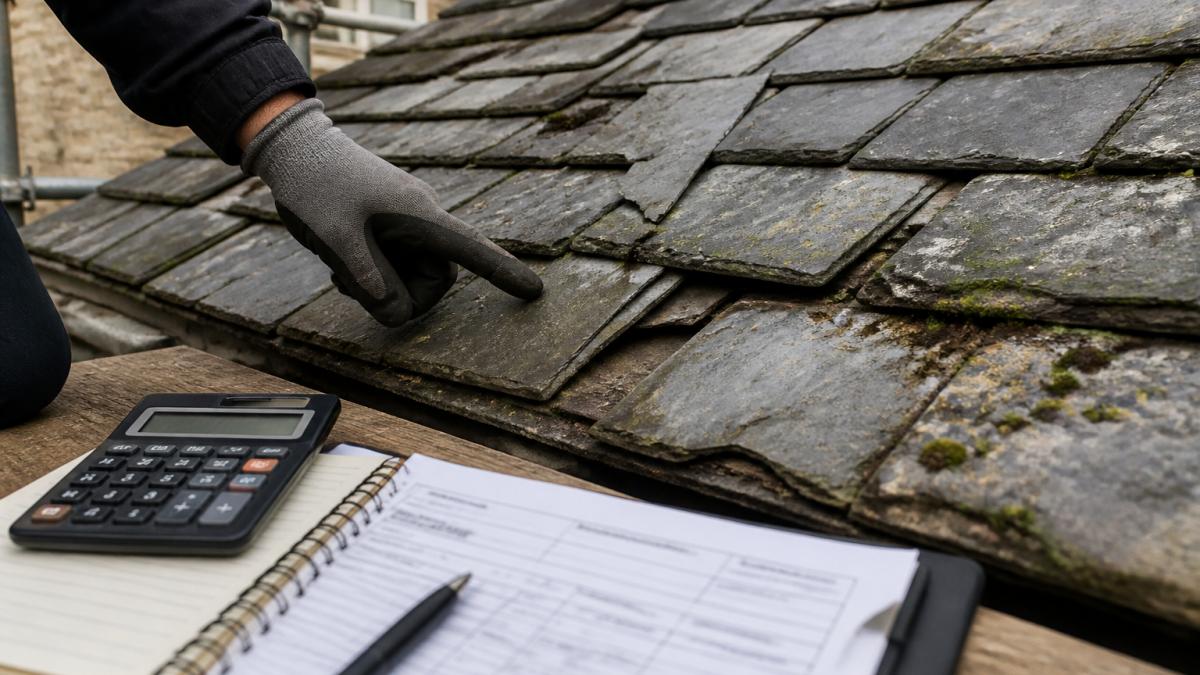
Look for these warning signs: cracked tiles that show visible fractures, tiles that are cupped or curling at the edges, missing pieces or chunks, and tiles that are slipping out of alignment. Moss or algae growth indicates moisture retention, which can accelerate deterioration. Flashing around chimneys and valleys should sit flush against the slate without gaps.
Pay attention to water damage inside your home as well. Stains on ceilings or upper-floor walls, especially after heavy rain, suggest active leaks. Interior damage often appears before exterior damage becomes obvious, so don’t ignore these signs.
One common mistake is assuming all slate roofs fail uniformly. They don’t. Slate from different quarries has different durability. Some sections of your roof may be in excellent condition while others show significant wear. This uneven aging pattern is normal and actually supports a repair strategy, you can address problem areas while preserving sound slate elsewhere.
If you spot damage in Liberty Twp or nearby areas, contact a slate specialist rather than a general roofing contractor. The difference in expertise, and in outcomes, is substantial. DGK Home Solutions can assess your roof’s condition and provide recommendations for your situation.
Factors That Influence Whether Repair Makes Financial Sense
Several key factors determine whether repairing is worth the cost or whether replacement is the smarter long-term investment.
Age and remaining lifespan. If your slate roof is 50 years old and well-maintained, it likely has another 50-100 years of life remaining. Investing in repairs now protects that future value. If the roof is 120+ years old and showing widespread failure, replacement might be inevitable within the next 5-10 years anyway.
Percentage of roof affected. A few isolated damaged tiles warrant repair. If 20-30 percent of the roof is failing, replacement becomes more cost-effective. Repairs on scattered damage extend the roof’s life. Repairs on widespread damage just delay the inevitable replacement.
Your timeline. Plan to stay in the home for another 10+ years? Repairs preserve value and function. Selling in 2-3 years? A full roof replacement increases curb appeal and removes buyer concerns, though the cost may not fully return in sale price.
Insurance and storm damage. If damage is storm-related, insurance often covers replacement rather than repair. Check your policy and file a claim before deciding. DGK Home Solutions assists with insurance claims.
Historic district requirements. If your home is in a historic district, local preservation guidelines may require repair over replacement. Synthetic slate substitutes are often prohibited, meaning you must use authentic slate. This constraint makes repair the only option in many cases, even if replacement would cost less.
Water damage underneath. If moisture has compromised the underlayment or decking, surface repair won’t solve the problem. You’ll need to address structural damage, which often justifies a full replacement rather than piecemeal repairs.
| Factor | Favors Repair | Favors Replacement |
|---|---|---|
| Roof age | 50-80 years old | 120+ years old |
| Damage extent | Under 15% of roof | Over 30% of roof |
| Ownership timeline | 10+ years planned | Selling soon |
| Structural integrity | Sound decking | Water damage present |
| Historic district rules | Slate required | Any material allowed |
Hiring a Professional Slate Roofing Contractor: What to Expect
Not all roofing contractors understand slate. Hiring the right specialist is critical for both repair quality and cost control.
A qualified slate contractor will assess your roof in person, not over the phone. They’ll examine not just visible damage but also flashing, underlayment, and structural support. They should explain what they find in clear terms and recommend repair or replacement based on your roof’s actual condition, not what maximizes their profit.
Ask for references from previous slate roof projects. A contractor comfortable with slate will have a portfolio of work on historic homes. They should be able to discuss quarry sourcing, color matching, and preservation techniques specific to slate.
Get multiple quotes. Pricing varies significantly based on contractor experience and local market rates. In Liberty Twp and the Greater Cincinnati area, expect established contractors to charge premium rates for slate work, that premium reflects genuine expertise.
Discuss timeline and weather contingencies upfront. Slate work can’t happen in rain or freezing conditions. If your roof fails mid-winter, temporary protection may be necessary while you wait for weather that allows repairs.
DGK Home Solutions brings over 20 years of experience to roofing projects of all types, including historic slate restoration. The team provides honest assessments of your roof’s condition and clear communication about timelines before work begins. This transparency helps you make decisions based on facts, not sales pressure.
Long-Term Value and Return on Investment
A historic slate roof is an asset, not just an expense. Understanding its long-term value helps justify repair costs today.
Slate roofs increase home value and appeal. Buyers recognize that a slate roof means decades of protection without replacement costs. This durability commands a premium, especially in historic neighborhoods where authentic materials matter.
A full slate roof replacement represents a major capital investment. However, the roof will outlast most other home systems, often outlasting the homeowner. This longevity means your repair investment today protects value for decades.
Consider the math over a 30-year ownership horizon. Repairs costing $3,000 now prevent a $15,000-$20,000+ replacement five years from now. Even if repairs are needed every 7-10 years, the total cost over 30 years remains lower than a single replacement. And your roof continues to function and protect your home’s structure throughout.
Historic homes in Liberty Twp and surrounding areas benefit from slate roofing in ways that extend beyond the roof itself. A well-maintained slate roof prevents water damage to walls, ceilings, and structural framing. It protects the home’s historic character and integrity. These benefits compound over time.
If you’re preparing to sell, a functioning slate roof is a major selling point. It removes buyer concerns about imminent roof failure and signals that the home has been properly maintained. A roof that clearly needs replacement becomes a negotiation point that reduces your sale price.
Historic slate roof repair is worth the cost when damage is limited, your roof has remaining lifespan, and you plan to stay in your home long-term. Replacement makes sense when damage is extensive, the roof is at end-of-life, or you need to remove buyer concerns before selling. The decision depends on your specific situation, not on blanket rules.
For homeowners in Liberty Twp and the Greater Cincinnati area, DGK Home Solutions provides honest roof assessments and clear recommendations on repair versus replacement. With over 20 years of experience, the team explains your options in plain terms and handles insurance claims. Contact DGK Home Solutions for a free quote and professional evaluation of your slate roof’s condition.
Frequently Asked Questions
How long does a historic slate roof last?
Natural slate roofs can last 75 to 150 years or longer with proper maintenance and timely repairs. Many historic slate roofs installed in the early 1900s are still performing well today. However, longevity depends on the slate quality, installation method, climate exposure, and how consistently repairs are made. Regular inspections and prompt attention to damaged tiles extend the roof’s functional life significantly.
Is it cheaper to repair or replace a historic slate roof?
Repair is almost always cheaper upfront than full replacement. However, if more than 30% of the roof is damaged or the underlying structure is compromised, replacement may offer better long-term value. A professional assessment determines which option makes financial sense for your specific situation.
What are the signs that a slate roof needs repair?
Watch for cracked, split, or missing slate tiles; visible water stains or leaks inside the attic; moss or algae growth indicating moisture retention; and tiles that are visibly curling or buckling. Slate tiles that have slipped out of position or flashing that’s deteriorated also signal the need for repair. If you notice any of these issues, have a professional inspect the roof promptly to prevent water damage and structural problems.
Does a slate roof increase home value in Ohio?
Yes, a well-maintained historic slate roof can increase home value, particularly in older neighborhoods and historic districts. Slate roofs are viewed as a premium, durable investment that appeals to buyers seeking quality and longevity. However, the value increase depends on the roof’s condition, the home’s age and style, and local market preferences. A damaged slate roof that requires immediate repair may actually reduce perceived value, so maintaining it in good condition is essential.