Table of Contents
- What Drives Roofing Costs for Historic Homes
- Historic Home Roof Replacement Cost Ohio: What to Expect
- Best Roofing Materials for 100 Year Old Homes
- Historic Preservation Roofing Guidelines Cincinnati
- Grants, Tax Credits, and Financing for Historic Roofs
- How to Choose a Qualified Historic Roofing Contractor
- Conclusion
- Frequently Asked Questions
Last Updated: September 16, 2026
What Drives Roofing Costs for Historic Homes
Roofing costs for historic homes are shaped less by square footage than by what sits underneath the shingles. A 1920s Craftsman with a simple gable and a 1900s Queen Anne with turrets, dormers, and three rooflines can cover the same footprint and land thousands of dollars apart. This guide from DGK Home Solutions breaks down the real cost drivers, material choices, and preservation rules that apply to older homes around Liberty Twp, OH and the Greater Cincinnati area.
The first thing to understand: historic roofing is a restoration project, not a replacement project. You are matching profiles, pitches, and materials that may no longer be manufactured in standard sizes.
Roof Complexity and Steep Pitches
Complexity is the single biggest multiplier on any historic roof estimate. Every valley, dormer, chimney chase, and turret adds cutting, flashing, and labor time that a simple gable roof never touches.
Steep pitches compound the problem. Many historic roofs sit between 8:12 and 12:12, which means crews need staging, harnesses, and slower movement across the deck. Expect labor to climb sharply as pitch increases.
- Dormers and turrets: custom flashing at every intersection
- Multiple rooflines: more waste, more cuts, more fasteners
- Steep pitch: fall-protection staging adds time to every square
A common mistake is comparing a quote for a simple ranch roof to a quote for a complex historic roof. They are not the same job.
Specialized Labor and Custom Fabrication
Specialized labor is where historic roofing diverges most from standard work. Slate, copper, and wood shake all require hands-on skill that general roofers rarely carry, and the pool of contractors who do this work is small. Vetting these artisans requires a disciplined approach to hiring restoration contractors to ensure the structural integrity and aesthetic legacy of your property remain intact.
Custom fabrication adds another layer. Copper flashing, ornamental ridge caps, and matching slate profiles often have to be shaped on site or ordered from specialty suppliers. That means longer lead times and higher material costs.
Ask any contractor how many historic roofs they’ve completed in the last two years, and request addresses you can drive past. If they can’t name recent projects, they’re learning on your roof.
Historic Home Roof Replacement Cost Ohio: What to Expect
Historic home roof replacement cost Ohio varies widely by material, roof size, and accessibility. There is no single figure that fits every home, and any contractor who quotes one without seeing your roof is guessing.
What you can control is how the estimate is built. A transparent quote breaks out tear-off, decking repair, underlayment, flashing, and finish material separately. That structure lets you see where the money actually goes.
| Cost Factor | What It Covers | Why It Matters |
|---|---|---|
| Tear-off | Removing old layers | More layers = more disposal cost |
| Decking repair | Replacing rotted boards | Hidden rot found after tear-off |
| Underlayment | Water barrier | Critical on steep, complex roofs |
| Flashing | Valleys, chimneys, dormers | Custom work on historic homes |
| Finish material | Slate, copper, shake, or composite | Biggest single line item |
Accessibility matters too. A roof hemmed in by mature trees, narrow driveways, or steep drop-offs takes longer to stage and protect. That time shows up in labor.
Because pricing depends on your specific roof, DGK Home Solutions provides a free assessment rather than a phone estimate. You get numbers based on what’s actually up there.
Best Roofing Materials for 100 Year Old Homes
The best roofing materials for 100 year old homes are the ones that match the original roof’s profile, weight, and appearance while meeting current building codes. For most historic homes, that means slate, copper, or wood shakes, with modern composites as a practical alternative.
Slate, Copper, and Wood Shakes
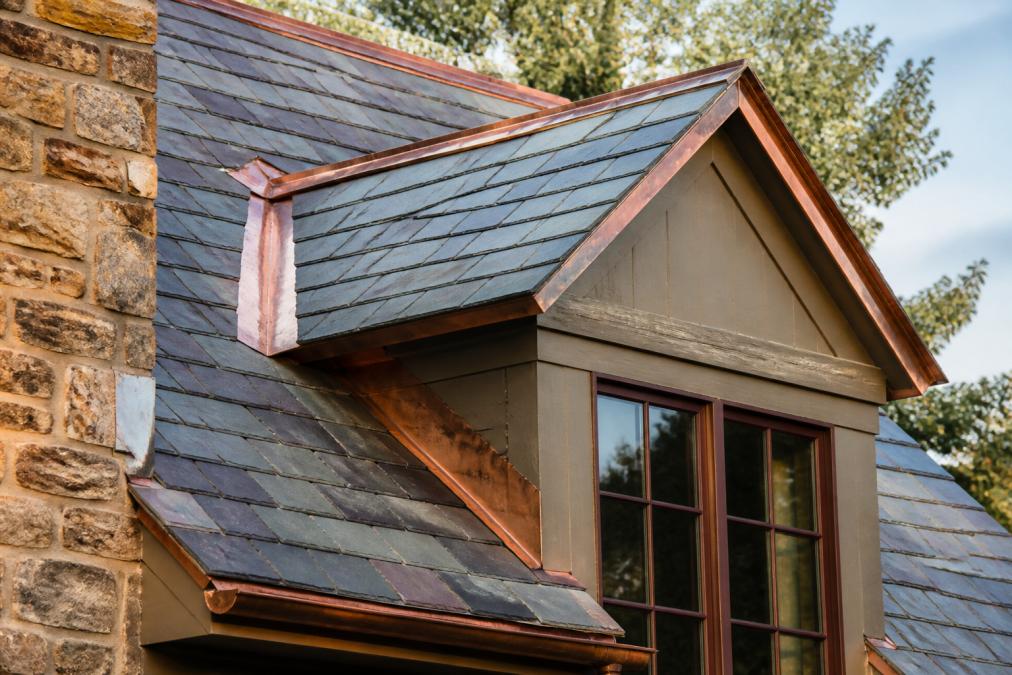
Slate is the gold standard for historic roofs. It lasts for generations, holds its color, and matches the original look of many pre-1930 homes. The trade-off is weight, cost, and the need for a structural review before installation.
Copper is typically used for flashing, valleys, and accent work rather than full roofs. It develops a distinctive patina over time and handles complex details better than almost any other material.
Wood shakes offer a warmer, more textured look that suits Craftsman and Tudor styles. They require more maintenance than slate and need periodic treatment to resist moisture and insects.
Modern Alternatives That Match Historic Looks
Synthetic slate and composite shakes have improved dramatically. From the street, many are hard to distinguish from the real thing, and they weigh far less, which can save money on structural reinforcement.
The honest limitation: composites won’t last as long as true slate, and some historic districts won’t approve them. Check local guidelines before committing.
Installing a modern material on a contributing historic structure without approval can trigger fines and force a redo at your expense. Confirm what’s allowed before you sign anything.
Historic Preservation Roofing Guidelines Cincinnati
Historic preservation roofing guidelines Cincinnati homeowners should know come from the National Park Service preservation standards, which set the baseline for most local historic districts. The core principle is simple: repair before replace, and match original materials whenever possible.
Local historic districts and overlay zones around Cincinnati often add their own review requirements. If your home sits in one, you may need a certificate of appropriateness before work begins. That review can take weeks, so plan for it.
What reviewers typically look for:
- Same material type and color as the original roof
- Matching profile, texture, and exposure
- Flashing details that don’t alter the visible roofline
- No changes to pitch, dormers, or trim
The rule of thumb preservationists use: if a change wouldn’t have been possible when the house was built, it probably won’t be approved now.
Grants, Tax Credits, and Financing for Historic Roofs
Funding help for historic roofs exists, but it’s specific and often tied to whether your home is listed or in a designated district. The most widely used federal incentive is the federal historic preservation tax incentive program, which is aimed primarily at income-producing properties rather than owner-occupied homes.
For homeowners, the practical paths tend to be:
- State or local preservation grants for designated districts
- Local historic foundation programs for eligible properties
- Standard home improvement financing or equity lines
- Insurance claim funding when damage is storm-related
Because eligibility rules and current amounts change, confirm details with the Ohio History Connection or your local preservation office before budgeting around any program. DGK Home Solutions can document storm damage for insurance claims, which is often the fastest route to funding a repair.
How to Choose a Qualified Historic Roofing Contractor
Choosing the right contractor matters more on a historic roof than almost anywhere else. The wrong crew can void preservation approvals, damage original details, or install materials that fail within a few seasons.
Use this checklist before you sign:
- Ask for recent historic roof projects with addresses
- Confirm they carry insurance and can provide a certificate
- Get the scope in writing, line by line
- Ask how they handle hidden rot discovered after tear-off
- Confirm who pulls permits and handles inspections
- Get the warranty terms in writing, including what’s covered
- Ask who to call if a leak shows up six months later
A common mistake is choosing on price alone. On historic roofs, the cheapest bid usually means unfamiliar materials or shortcuts in flashing, which is where most leaks start.
The best historic roofing contractor is one who has done this work before, documents it clearly, and explains the trade-offs instead of pushing the fastest option.
Conclusion
Historic roofs reward patience and punish shortcuts. Match the material to the house, confirm what your district allows, and hire a crew that has actually done this work before.
DGK Home Solutions has more than 20 years of experience with roofing, siding, and gutters across the Greater Cincinnati area, including historic and older neighborhoods in Liberty Twp and beyond. We provide honest assessments, clear communication, and help with insurance claims so the process stays stress-free from start to finish. Get started with DGK Home Solutions and a free quote for your historic roof today.
Frequently Asked Questions
Do historic homes in Liberty Twp require special roofing permits?
Yes, if your home is in a locally designated historic district, you’ll likely need a certificate of appropriateness before replacing the roof. In Liberty Township and surrounding areas, check with the local planning department or historic preservation commission. They review material, color, and profile to ensure changes match the home’s original character. Even outside a district, older homes may trigger code upgrades like improved ventilation. Always confirm permit requirements before work begins.
How does the cost of a historic roof replacement compare to a standard home?
Historic roof replacement typically costs more because of specialized materials like slate, copper, or cedar shakes, plus the labor to install them correctly. Complex roof angles, steep pitches, and decorative elements add time and skill. You may also need custom fabrication for flashing or trim. Standard asphalt roofs are faster and cheaper, but they can alter the historic look. For an accurate comparison, get a detailed quote from a contractor experienced with historic properties.
Are there tax incentives for historic home roof restoration in Ohio?
Yes, Ohio offers a historic preservation tax credit for income-producing properties, and some local programs assist owner-occupied homes. The federal historic tax credit applies to income-producing buildings. For private residences, check with the Ohio History Connection and your local preservation office. Additional grants may be available through community development groups. Consult a tax advisor to confirm eligibility and application deadlines.
How do I find a roofing contractor experienced with historic properties in the Cincinnati area?
Look for contractors who have completed similar projects in historic neighborhoods and can provide references you can call. Ask about their experience with slate, copper, and wood shakes, and whether they follow the Secretary of the Interior’s Standards for Rehabilitation. Verify licensing and insurance, and request a written estimate that details materials and labor. Local preservation groups or historical societies often maintain lists of trusted contractors.