Table of Contents
- What Storm Damage Homeowners Insurance Typically Covers
- What Storm Damage Homeowners Insurance Usually Does Not Cover
- How to File a Roof Insurance Claim After a Storm
- Roof Storm Damage Inspection Checklist for Homeowners
- How Long Do You Have to File a Storm Damage Claim in Ohio?
- Documenting Storm Damage: What Adjusters Need to See
- Frequently Asked Questions
Last Updated: September 16, 2026
What Storm Damage Homeowners Insurance Typically Covers
The short answer: standard homeowners insurance generally pays for storm damage caused by wind, hail, lightning, and falling objects, but not flooding. This guide from DGK Home Solutions breaks down exactly where coverage begins and ends, so you know what to expect before you call your insurer.
A typical HO-3 policy, the most common form of homeowners coverage in the United States, protects the structure of your home against specific “perils” listed in the policy (Am I Covered?). Windstorms and hail sit near the top of that list. When a storm tears shingles off your roof in Liberty Twp, the resulting damage is usually a covered loss, minus your deductible.
Storm damage is physical harm to a home or its exterior components caused by severe weather events such as high winds, hail, lightning, or falling debris. Insurers treat each peril separately, which is why the same storm can produce both covered and uncovered damage on the same property.
Wind, Hail, and Falling Tree Damage
Wind and hail claims are the most common storm claims homeowners file, and they’re also the ones insurers scrutinize hardest. Hail bruises shingles in ways that aren’t obvious from the ground, while wind lifts and creases them in patterns an adjuster can read like a fingerprint.
Falling trees are covered when a storm knocks one onto your house, garage, or shed. If the tree lands on the lawn without hitting a structure, most policies pay only to remove it if it blocks a driveway or accessibility ramp. That distinction surprises a lot of homeowners, and it’s worth checking your policy language before you assume removal is covered.
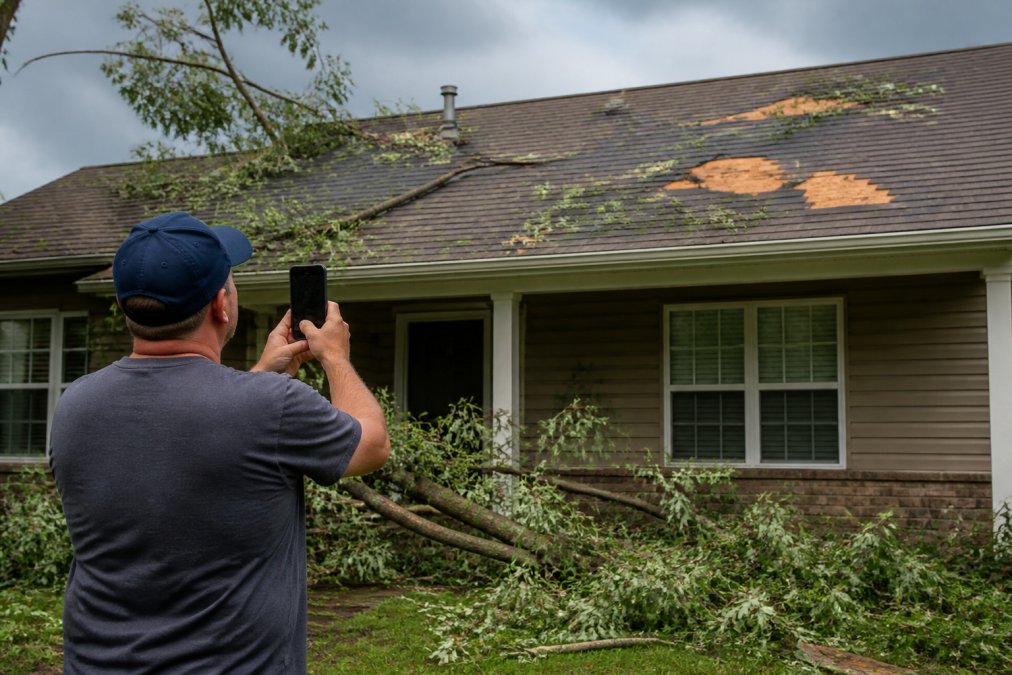
Lightning damage is almost always covered, including related fires and electrical surges. Water that enters through a storm-created opening, like a hole punched in your roof by hail, is typically treated as part of the storm loss rather than a flood. That distinction matters enormously, and it’s the single biggest reason claims get denied.
Wind, hail, lightning, and falling-object damage are the core covered perils. Flooding is not, and the difference between “storm water” and “flood water” decides most disputed claims.
What Storm Damage Homeowners Insurance Usually Does Not Cover
Flood damage is the biggest exclusion, and it’s absolute: no standard homeowners policy covers rising water, no matter how the water got there. You need a separate flood policy, typically through the National Flood Insurance Program or a private carrier, and there’s usually a 30-day waiting period before it takes effect.
Neglected maintenance is the second major exclusion, and it’s the one that catches homeowners off guard. If your roof was already 25 years old with curling shingles and visible granule loss, an insurer can argue that the storm didn’t cause the damage, it merely revealed it. Wear and tear, dry rot, and deterioration are excluded perils, and an adjuster who documents pre-existing conditions has grounds to reduce or deny the claim.
Other common exclusions include:
- Damage from sewer backup, unless you added a rider
- Mold remediation beyond a modest sublimit
- Damage to fences, pools, and detached structures beyond the policy’s separate limits
- Vehicles damaged by falling branches, which fall under auto coverage
Filing a claim on a roof that was already failing is the fastest way to get denied and flagged. An adjuster who finds undocumented pre-existing damage can reduce your payout to near zero, and the claim stays on your record.
How to File a Roof Insurance Claim After a Storm
Filing a roof insurance claim after a storm follows a predictable sequence, and skipping steps is what sinks most claims. Here’s the process that works:
- Document everything before you touch anything. Photograph the damage from the ground, the attic, and any interior leaks. Note the date and time.
- Call your insurer and open the claim. You’ll get a claim number and an adjuster assignment. Ask for the adjuster’s direct contact.
- Get a professional inspection. A licensed roofing contractor can identify damage an untrained eye misses, and their report becomes evidence.
- Meet the adjuster on-site. Have your contractor present. This is where claims are won or lost.
- Review the settlement letter line by line. Compare it against your contractor’s scope of work. Discrepancies are common and correctable.
- Negotiate before you sign. You can request a re-inspection if the numbers don’t match reality.
DGK Home Solutions handles this entire sequence for Greater Cincinnati homeowners, from the initial inspection through the final settlement. Our team meets adjusters on-site and documents everything they’ll ask for, which is why customers tell us the process felt stress-free from start to finish.
Roof Storm Damage Inspection Checklist for Homeowners
A roof storm damage inspection checklist helps you spot what adjusters look for and avoid missing damage that’s hard to see from the ground. Run through these items after any significant storm:
- Missing, cracked, or torn shingles on all roof planes
- Granules collecting in gutters and at downspout outlets
- Dented gutters, downspouts, vents, and flashing
- Bruised or soft spots on shingles, which indicate hail impact
- Lifted or creased shingle tabs, a signature of wind damage
- Damaged chimney flashing, pipe boots, and ridge caps
- Water stains on ceilings, walls, or attic decking
- Daylight visible through roof boards from inside the attic
- Debris, dents, or impact marks on siding and window screens
- Loose or missing ridge and hip cap shingles
Check your gutters first. Granule buildup at the downspout outlet is often the earliest visible sign of hail damage, and it’s the detail adjusters use to distinguish a storm loss from normal aging.
::: Documenting these specific indicators early provides the necessary evidence to support a claim for hail damage coverage when navigating the complexities of regional policy requirements.
How Long Do You Have to File a Storm Damage Claim in Ohio?
Ohio law gives you a reasonable window to file, but your policy controls the actual deadline, and it’s usually shorter than homeowners assume. Most Ohio policies require prompt notice of a loss, and many contain a one-year suit limitation clause for bringing legal action if a claim is denied.
The practical rule: file as soon as you notice damage. Waiting creates two problems. First, the insurer can argue the damage worsened due to your delay. Second, evidence disappears. Storms get followed by more storms, and a roof that was clearly hail-damaged in April looks like ordinary wear by October. Ohio does not have a single statewide filing deadline that overrides your contract, so read the “Duties After Loss” section of your policy carefully, and when in doubt, Ohio Department of Insurance consumer resources is a good place to confirm your rights.
If you’re searching for a storm damage roofer near me in Liberty Twp, the timing matters as much as the contractor. A roofer who understands Ohio claim timelines can tell you whether you’re still inside the window or already past it.
Documenting Storm Damage: What Adjusters Need to See
Adjusters approve claims based on evidence, not emotion, and the homeowners who document thoroughly get paid more consistently. What they need to see is a clear line from storm event to physical damage to repair cost.
Build a documentation file that includes:
| Evidence Type | What to Capture | Why It Matters |
|---|---|---|
| Wide photos | Full roof planes from multiple angles | Establishes scope and pattern |
| Close-up photos | Individual damaged shingles with a ruler or coin for scale | Proves impact type |
| Date-stamped images | Same-day photos before any cleanup | Ties damage to the storm |
| Video walkthrough | Slow pan of roof, gutters, and interior | Captures what photos miss |
| Contractor report | Written scope with photos and measurements | Independent professional assessment |
| Receipts | Emergency tarping, hotel, and repair costs | Supports additional living expense claims |
| Weather records | Local storm reports for the date of loss | Confirms a qualifying event occurred |
The photos matter more than the narrative.
Frequently Asked Questions
What types of storm damage are typically covered by homeowners insurance in Ohio?
Most Ohio homeowners policies cover damage from wind, hail, lightning, and falling trees or limbs. If a storm rips off shingles, dents siding, or sends a branch through your roof, your insurer will usually pay to repair or replace the damaged areas, minus your deductible. Flood damage from rising water is excluded and requires a separate policy. Review your declarations page to confirm exactly what your plan includes before storm season.
How do I document storm damage for an insurance claim?
Take dated photos and video of all damage from multiple angles before you clean anything up. Capture wide shots of the property and close-ups of individual damaged areas. Keep receipts for emergency repairs like tarps or board-up. Make a written list of every damaged item or structure. Your roof storm damage inspection checklist should include the roof, siding, gutters, windows, and any detached structures. Thorough documentation speeds up the adjuster visit and reduces disputes.
Will my insurance premium go up if I file a storm damage claim?
Filing a weather-related claim does not automatically raise your premium in Ohio. Insurers typically adjust rates based on regional storm activity and your overall claims history, not a single storm event. However, filing multiple claims in a short period can affect your rate or renewal eligibility. Ask your agent directly how a specific claim would affect your policy before you file, especially if the damage is close to your deductible amount.
How long do you have to file a storm damage claim in Ohio?
Ohio law generally gives you one year from the date of loss to file a lawsuit if a claim is denied, but most policies require you to report damage promptly, often within 30 to 60 days. Waiting too long can give your insurer grounds to deny the claim. File as soon as you notice damage, even if you are still gathering estimates. Contact your insurer first, then schedule a professional inspection to support your claim.