Table of Contents
- 1. Visible Cracks and Splits in Your Gutters
- 2. Sagging Gutters Pulling Away from the Roofline
- 3. Water Spilling Over the Sides (Inconsistent Flow)
- 4. Frequent Clogs and Blockages Despite Maintenance
- 5. Rust, Corrosion, and Deteriorating Seams
- 6. Peeling Paint and Water Damage on Fascia Boards
- 7. Water Stains in Your Attic or on Interior Ceilings
- 8. Mold, Mildew, and Musty Odors Around Your Home
12 Signs You Need New Gutters (2026 Guide)
Last Updated: July 30, 2026
When water pools around your foundation or stains creep up your fascia boards, your gutter system is failing. Understanding the signs you need new gutters is critical to protecting your home‘s structural integrity. Gutter failure cascades into foundation erosion, roof damage, and costly interior water damage.
1. Visible Cracks and Splits in Your Gutters
Small hairline fractures expand rapidly during freeze-thaw cycles. Water enters the crack, freezes, expands, and forces it wider. Within a single winter season in Liberty Twp, OH, a small crack becomes a gaping hole that renders your entire gutter section useless.
How to Inspect for Cracks
Walk around your home’s perimeter during or after heavy rain and look for water dripping from unexpected locations along the gutter line. Pay special attention to corner seams and joints where gutter sections connect, as these high-stress areas fail first. For detailed inspection, consider using a Ferret inspection camera for gutter assessment.
When a Crack Means Full Replacement
A single small crack might be repairable with Gorilla Waterproof Patch & Seal Tape for temporary gutter repairs, which costs roughly $13 for a 4-inch by 10-foot roll.
However, if you see multiple cracks across different sections or cracks reappear after repair attempts, replacement is the only permanent solution. Sectional gutters are particularly prone to repeated cracking because seams never achieve the structural integrity of seamless systems.
Check your cracks during winter if you live in Ohio or Indiana. [Freeze-thaw cycles accelerate](/hamilton-ohio/) crack propagation. If you see cracks in November, expect them to triple in size by March.
2. Sagging Gutters Pulling Away from the Roofline
Sagging gutters are a structural failure, they’re no longer holding water properly and are separating from your home. This happens because fasteners corrode or loosen, or because the waterlogged gutter’s weight pulls it down.
Gutter hangers typically last 15-20 years before corrosion weakens them. When fasteners fail, the gutter sags under the weight of standing water and debris, creating a vicious cycle that accelerates failure.
Standing water in sagging gutters becomes a breeding ground for mosquitoes and mold. The fix is straightforward: new gutters with proper pitch (a 1/8-inch drop per 12 feet of horizontal run) and new fasteners installed every 24 inches. At DGK Home Solutions, we ensure gutters are pitched correctly during installation, eliminating sagging entirely.
3. Water Spilling Over the Sides (Inconsistent Flow)
When water cascades over the sides of your gutters instead of flowing through downspouts, your system is failing. This happens when gutters are undersized, improperly pitched, or clogged with debris. Water spilling over erodes soil around your foundation, stains your siding, and can cause basement flooding.
Observe your gutters during moderate rain. If water spills over before the gutter reaches capacity, either the gutter is too small, the pitch is wrong, or the downspout is clogged.
A professional gutter inspection with a camera tool pinpoints the exact cause. If the gutter itself is the right size but water still overflows, replacement with larger gutters (typically 6-inch K-style instead of 5-inch) solves the problem.
Water spilling over gutters during normal rainfall indicates your system cannot handle your home’s roof area. Ignoring this leads to foundation settling, which costs $10,000-$50,000 to repair. Address overflow immediately.
4. Frequent Clogs and Blockages Despite Maintenance
If you’re cleaning gutters more than twice a year and they’re still backing up, the gutter system itself may be failing.
Recurring clogs often point to sagging in spots that create low points where water and debris accumulate. Professional gutter cleaning services like SkyVac gutter cleaning systems for debris removal can temporarily solve the problem, but they don’t address the root cause.
If clogs return within 2-3 weeks of cleaning, replacement is the only permanent fix. Seamless gutters with proper pitch eliminate most clogging issues because water and debris flow continuously without low spots to trap material.
5. Rust, Corrosion, and Deteriorating Seams
Visible rust stains, orange discoloration, or flaking metal are unmistakable signs you need new gutters. Rust indicates the protective coating has failed and the underlying metal is oxidizing. Once rust starts, it accelerates, the oxidation process feeds on itself and structural integrity declines rapidly.
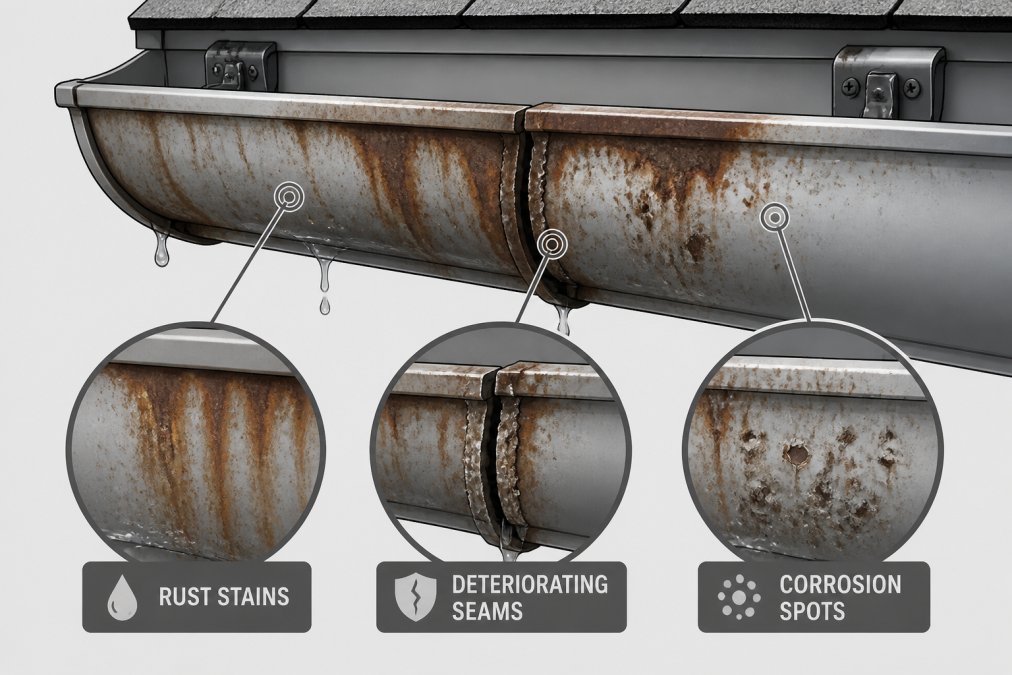
Steel gutters rust visibly within 10-15 years if not properly maintained. Aluminum gutters corrode more slowly but eventually develop white powdery oxidation. Copper gutters develop a protective green patina, but seams and fasteners corrode first. Vinyl gutters don’t rust but become brittle and crack in cold weather.
Deteriorating seams are particularly dangerous. When seams fail, water leaks behind the gutter, saturating the fascia board and soffit.
Geocel Tripolymer Gutter Sealant for seam repairs can temporarily seal failing seams, but if multiple seams are failing across your gutter system, replacement is more cost-effective. Seamless gutters eliminate seam failure entirely because they’re manufactured as one continuous piece.
Rust and corrosion are irreversible. Once the protective coating fails, the metal will continue to deteriorate. Sealant can buy you 1-2 years, but replacement is inevitable.
6. Peeling Paint and Water Damage on Fascia Boards
Your fascia board is the wooden trim along the edge of your roof, and it’s the first line of defense against water damage. When gutters fail, water leaks behind them and saturates the fascia. The first sign is peeling or blistering paint. Later signs include soft, spongy wood or visible mold and mildew growth.
Water damage to fascia boards is expensive to repair because the wood often needs complete replacement. Carpenter ants and wood-boring insects are attracted to wet wood, compounding the problem. If you notice peeling paint or soft spots on your fascia, have your gutters inspected immediately. At DGK Home Solutions, we often replace gutters and fascia boards together when water damage is present.
7. Water Stains in Your Attic or on Interior Ceilings
Water stains on interior ceilings or attic rafters indicate water has been leaking into your home for some time. Water stains on attic rafters mean water is penetrating your roof system. Gutter failure is often the culprit, water backs up in the gutters, overflows onto the roof, and seeps under the shingles.
Interior ceiling stains indicate water has traveled through your attic into living spaces below. To determine if the problem is your gutters or your roof, check for water stains around the perimeter of the attic near the eaves. If stains are concentrated along the edges where gutters are located, gutter failure is the likely cause.
8. Mold, Mildew, and Musty Odors Around Your Home
Persistent musty odors around your home’s exterior, especially near the foundation or basement walls, often indicate moisture problems caused by gutter failure. Mold and mildew thrive in damp environments, and failing gutters create ideal conditions.
Water spilling from gutters or leaking through seams saturates soil around your foundation. This moisture wicks up into foundation walls and into the basement, resulting in elevated humidity and mold growth. Addressing gutter failure stops water intrusion and allows the foundation to dry out. Once the moisture source is eliminated, mold problems typically resolve within weeks.
Gutter Replacement vs. Repair: When to Make the Call
The decision between repair and replacement depends on the extent of damage and the age of your gutter system.
| Condition | Best Action | Why |
|---|---|---|
| 1-2 small cracks in one section | Repair with sealant | Cost-effective, extends life 1-2 years |
| Multiple cracks across 3+ sections | Replace | Repairs will fail repeatedly; replacement is more economical |
| Sagging in isolated areas | Reinforce fasteners or replace that section | Full replacement if sagging is widespread |
| Rust or corrosion on 25%+ of system | Replace entire system | Corrosion will spread; piecemeal repair is inefficient |
| Gutters over 20 years old with any significant damage | Replace | Age + damage = imminent failure risk |
| Standing water despite cleaning and proper pitch | Replace with larger gutters | Current system undersized for your roof |
Most gutters last 20-25 years with proper maintenance. If your gutters are approaching this age and showing signs of failure, replacement is almost always better than repair.
Preventative Maintenance Checklist
Extending gutter life requires consistent maintenance:
- Clean gutters twice yearly (spring and fall) to prevent debris accumulation
- Inspect for visible cracks, rust, or corrosion during each cleaning
- Check that water flows freely through downspouts and doesn’t back up
- Look for sagging or separation from the roofline along the entire gutter run
- Examine fascia boards for peeling paint, soft spots, or mold growth
- Verify that water drains away from your foundation (not pooling against it)
- Check your attic after heavy rain for water stains or moisture
- Inspect seams and end caps for caulk deterioration or leaks
- Trim tree branches that hang over your roof to reduce debris
- Install gutter guards to reduce cleaning frequency (optional but effective)
Regular maintenance can extend gutter life by 5-10 years, but it cannot prevent age-related failure.
Impact of Climate and Geography on Gutter Lifespan
Your location significantly affects how quickly gutters deteriorate. In the Greater Cincinnati area and across Ohio and Indiana, freeze-thaw cycles accelerate gutter failure. Water enters small cracks, freezes, expands, and widens the crack. This cycle repeats dozens of times each winter, causing rapid deterioration.
High humidity also accelerates rust and corrosion. Steel and aluminum gutters oxidize faster in humid climates. Copper gutters perform better because the patina that forms actually protects the underlying metal. In Liberty Twp, aluminum and copper gutters typically outlast steel, and regular cleaning is essential to prevent freeze-thaw damage.
If you live in an area with significant seasonal temperature swings (like Ohio), seamless gutters are worth the extra cost. The lack of seams eliminates freeze-thaw failure points and reduces maintenance needs substantially.
Professional Inspection: When to Call an Expert
A professional gutter inspection provides clarity when you’re unsure whether your gutters need repair or replacement. Experts use specialized tools like gutter cameras to assess interior conditions, measure pitch accuracy, and identify hidden damage.
At DGK Home Solutions, we provide honest assessments of your gutter system’s condition and recommend repair or replacement based on what’s actually best for your home. A professional inspection typically costs $100-$300 but saves thousands by preventing costly water damage repairs.
Your gutters are one of the most important (and most overlooked) components of your home’s protection system. Water damage from gutter failure can compromise your foundation, rot your fascia boards, and create mold problems that affect your family’s health.
If you’re seeing any of the signs covered in this guide, cracks, sagging, rust, water stains, or overflow, don’t wait for the problem to worsen. Contact DGK Home Solutions for a free inspection and honest assessment of your gutter system.
With over 20 years of experience serving residential and commercial properties across the Greater Cincinnati area, our team delivers stress-free installation, top-quality materials, and clear communication throughout the process. Get your free quote today and protect your home with gutters that actually work.
Frequently Asked Questions
How often should gutters be replaced?
Most gutter systems last 20-25 years with proper maintenance. However, signs you need new gutters can appear sooner if you experience severe weather, poor drainage, or material deterioration. Aluminum gutters may need replacement every 15-20 years, while copper gutters can last 40+ years. Have a professional inspect your system every 3-5 years to assess condition and catch problems early.
What's the difference between gutter repair vs replacement?
Gutter repair vs replacement depends on the extent of damage. Repair works for isolated cracks, small leaks, or loose fasteners, typically costing less upfront.
Replacement is necessary when you have widespread rust, multiple failing seams, sagging sections, or water damage affecting your foundation and fascia boards. If repairs are needed frequently, replacement often proves more cost-effective long-term.
Can I repair my gutters myself instead of replacing them?
Minor repairs like sealing small cracks with waterproof sealant or tightening loose hangers are DIY-friendly. However, full gutter replacement requires precise pitch calculations, proper fastener placement, and seamless installation, best left to professionals.
DIY errors can lead to water pooling, foundation erosion, and costly structural damage. For significant damage, professional installation ensures your gutter system protects your home effectively.
What are the most common gutter problems?
The most common issues include frequent clogs from debris buildup, sagging gutters due to failed fasteners or weight, rust and corrosion from moisture exposure, and leaking seams. Water spilling over the sides indicates improper pitch or blockages.
Peeling paint on fascia boards and water stains in your attic signal serious leakage. Regular maintenance and professional inspections help catch these problems before they cause structural damage.
How does climate affect when I need new gutters?
Climate significantly impacts gutter lifespan. Areas with heavy rainfall, snow, or freeze-thaw cycles experience faster deterioration due to water pooling, ice damming, and expansion stress.
Coastal regions with salt spray accelerate corrosion. Humid climates promote mold and mildew.
In the Greater Cincinnati area, freeze-thaw cycles and seasonal heavy rains mean gutters need inspection every 2-3 years. Professional assessment considers your local climate when recommending repair or replacement.
This article was written using GrandRanker