Table of Contents
- Visible Cracks and Fractures in Your Siding
- Warping, Buckling, and Sagging Panels
- Signs of Water Damage Under Siding
- Rot, Soft Spots, and Moisture Infiltration
- Mold, Mildew, and Fungal Growth
- How to Inspect House Siding for Damage
- Siding Replacement Lifespan and Average Cost to Replace Siding
- Conclusion
Last Updated: August 13, 2026
Visible Cracks and Fractures in Your Siding
Visible cracks and fractures are entry points for moisture, insects, and weather damage that compromise your home’s structural integrity. Small cracks from temperature fluctuations, UV exposure, or impact expand over time as water seeps behind panels, freezes in winter, and pushes fractures wider.
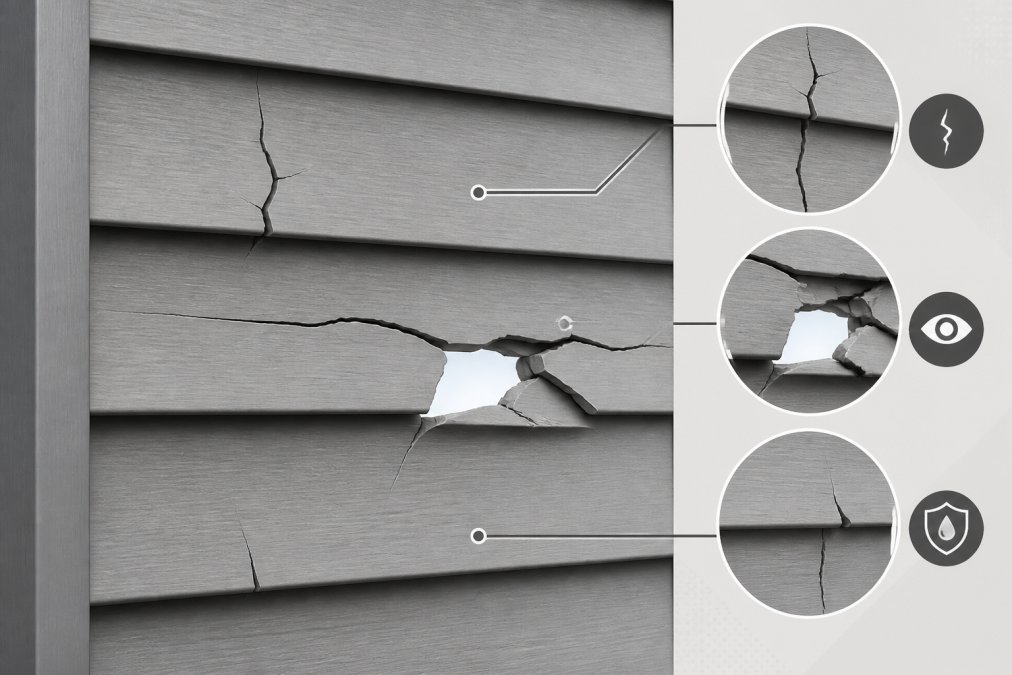
The danger lies in what happens underneath. Moisture penetrates the sheathing, insulation, and interior walls. By the time you notice interior damage, the problem is often extensive and expensive.
Cracks wider than one-eighth inch or vertical fractures typically indicate the siding has reached the end of its useful life. Caulking is temporary; widespread cracking requires replacement. Addressing water damage after the fact, replacing rotted sheathing, treating mold, reinstalling insulation, far exceeds the cost of early replacement.
Warping, Buckling, and Sagging Panels
When siding panels warp, buckle, or sag, the structural envelope is failing. Warping appears as wavy or rippled surfaces. Buckling shows panels bowing outward or inward with visible gaps. Sagging indicates sections that have literally dropped out of alignment.
All three share a common cause: water damage. Moisture penetrates through cracks, poor flashing, or failed caulk, saturating sheathing and framing. Wood swells when wet; as it dries and rewets seasonally, it expands and contracts unevenly. Vinyl and fiber cement expand in heat and contract in cold, and when the substrate is compromised, panels lose stability.
In cold climates, freeze-thaw cycles accelerate this damage. Sagging is particularly serious, it indicates structural support failure, not just siding age. Replacing only the siding won’t solve underlying problems like rotted sheathing or compromised framing.
Professional assessment is essential. DGK Home Solutions inspects not just the siding but the substrate and framing beneath it. Sometimes siding can be salvaged with minimal underlying damage; often, full replacement of both siding and damaged sheathing is necessary.
Signs of Water Damage Under Siding
Water damage under siding is the hidden crisis that turns cosmetic problems into structural ones. Interior signs include soft, spongy drywall along exterior walls, discolored patches that spread over time, and visible mold or mildew near the base of exterior walls.
From outside, look for bubbling or peeling paint on exterior trim, staining on foundations or basement walls corresponding to siding sections above, and rust stains from metal trim or fasteners. By the time these signs appear, damage is already extensive. Water wicks into sheathing, insulation, and framing, feeding mold growth and weakening structural integrity.
Professional inspection reveals problems invisible to the naked eye. A contractor probes sheathing with a moisture meter or awl; soft wood or high readings indicate active or recent moisture penetration. This changes the scope from siding replacement to also addressing sheathing repair, framing treatment, and potential interior damage.
Don’t delay if you notice water damage signs. The longer water sits in wall cavities, the more damage it causes.
Rot, Soft Spots, and Moisture Infiltration
Rot is the endgame of untreated moisture infiltration. Soft spots in siding or areas behind it indicate active rot. Wood rot typically starts in hidden places, behind siding, in sheathing, in the rim joist, and advances significantly before becoming visible.
Fiber cement can delaminate when moisture penetrates between layers. Vinyl won’t rot, but sheathing and framing behind it will. Moisture infiltration occurs through failed caulk at trim joints, gaps where siding meets windows or doors, cracks in siding, damaged flashing, poor foundation drainage, and overflowing gutters.
Once moisture gets behind siding, it doesn’t evaporate quickly. The enclosed cavity traps water, which wicks into wood. In warm, humid conditions, rot fungi thrive. In cold climates, freeze-thaw cycles force water deeper into the structure.
The fix depends on rot advancement. If confined to sheathing without reaching framing, replacing siding and affected sheathing suffices. If rot reaches rim joist or wall framing, the scope expands significantly. Professional assessment determines what’s compromised. Rot spreads horizontally and vertically; a soft spot on the surface may indicate much larger compromised areas behind it.
Mold, Mildew, and Fungal Growth
Mold and mildew on siding indicate moisture accumulation on or near the surface. While mold doesn’t necessarily require new siding, it warns that conditions exist that will eventually damage siding and underlying structure.
Mold appears as black or dark green patches in shaded areas where moisture lingers. Mildew is lighter and powdery. Both thrive where water pools, shade prevents drying, ventilation is poor, or gutters overflow. Their presence indicates water stays on the surface long enough for fungal colonization, either the siding isn’t shedding water effectively or water is being directed onto it.
Mold often signals a larger drainage problem. Gutters that don’t work properly, downspouts terminating too close to the house, or poor grading directing water toward the foundation cause water to run down siding. Cleaning mold is temporary; solving the drainage problem is the real solution.
If siding is old and no longer sheds water effectively, mold returns persistently. Older vinyl becomes porous; fiber cement absorbs water; wood siding with failing paint absorbs moisture rapidly. New siding, properly installed with good drainage, sheds water quickly and resists mold.
If persistent mold appears despite cleaning and siding is 15-20 years old, replacement is often more cost-effective than ongoing maintenance. DGK Home Solutions assesses whether drainage, siding, or both need attention.
How to Inspect House Siding for Damage
A thorough inspection requires a systematic approach. Start with a visual walk-around of your entire perimeter in daylight. Bring binoculars to examine hard-to-reach areas.
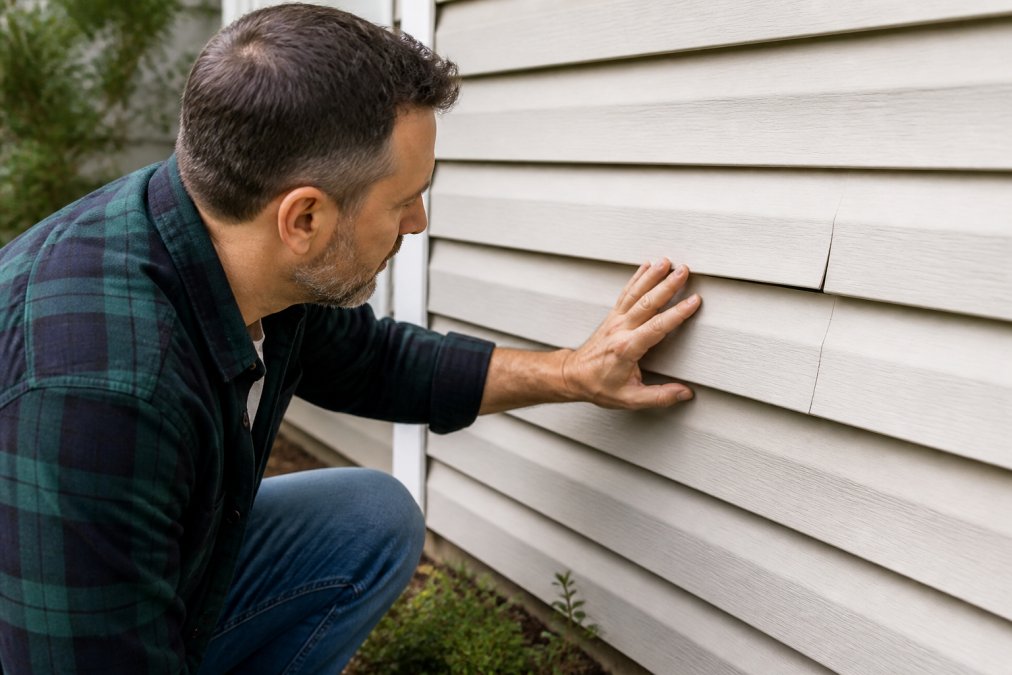
Look for: visible cracks, splits, or fractures; warping or buckling; loose or separated panels; holes from impact or pests; uneven discoloration or fading indicating UV or water damage. Check for water stains (particularly vertical streaks), soft or spongy areas, peeling paint on trim, and rust stains from fasteners or flashing. Examine where siding meets trim, windows, doors, and foundations for gaps, failed caulk, or separation. Look at the foundation base for water stains, siding too close to grade, or evidence of pooling water. Verify gutters are clean and downspouts direct water away from the house.
Isolated issues like a few small cracks or minor mold in one shaded area may be repairable. Multiple signs across different areas indicate widespread damage requiring professional assessment. DGK Home Solutions offers free inspections identifying not just visible damage but potential problems developing behind the siding.
Siding Replacement Lifespan and Average Cost to Replace Siding
Siding lifespan varies by material: vinyl typically lasts 20-40 years; fiber cement, 25-50 years; wood, 40-60 years; metal, 50+ years; asphalt shingle, 15-25 years. These timelines assume proper installation, regular maintenance, and typical weather. Extreme climates, intense UV, severe freeze-thaw cycles, and high humidity shorten lifespans.
Average replacement cost depends on home size, material choice, substrate condition, and local labor costs. Pricing depends on quantity, dates, and delivery. For current prices or a quote, please visit DGK Home Solutions’s website.
DGK Home Solutions provides free quotes after thorough assessment. Consider siding replacement as an investment in your home’s protection and value, it improves curb appeal, increases energy efficiency, and protects from weather damage.
Don’t base replacement decisions solely on age. A 30-year-old vinyl in good condition may not need replacement; 15-year-old siding showing significant damage should be replaced regardless of age. Understand what you’re looking at and make informed decisions based on actual condition.
| Siding Material | Typical Lifespan | Maintenance Level | Best For |
|---|---|---|---|
| Vinyl | 20-40 years | Low to moderate | Budget-conscious homeowners, most climates |
| Fiber Cement | 25-50 years | Moderate | Long-term durability, painted finishes |
| Wood | 40-60 years | High | Historic homes, traditional aesthetics |
| Metal | 40-50+ years | Low | Modern designs, high-wind areas |
| Asphalt Shingle | 15-25 years | Low | Temporary solutions, specific aesthetics |
Conclusion
Knowing the signs you need new house siding puts you in control of your home’s maintenance. Visible cracks, warping, water damage, rot, and mold are clear indicators that siding has failed or is failing. These problems compound rather than improve over time.
If you’re in the Liberty Twp area or Greater Cincinnati region and have noticed any of these signs, professional assessment is the next step. DGK Home Solutions has over 20 years of experience evaluating siding damage and helping homeowners understand their options. We provide honest assessments of what’s happening, what needs to be done, and what costs are involved.
The longer you wait after noticing damage, the more extensive and expensive underlying repairs become. Water penetrates deeper into your home’s structure every season that passes.
Get a free quote from DGK Home Solutions. We’ll inspect your siding, identify damage, and explain exactly what you’re looking at. Contact us today for a free inspection and discover what your siding really needs.
Frequently Asked Questions
How much does it cost to replace siding on a 2,000 square foot house?
The average cost to replace siding depends on several factors: the material you choose (vinyl, fiber cement, metal, or wood), your location, labor costs, and whether tear-off or repair work is needed. For a 2,000 sq ft home, mid-range vinyl siding typically costs around $17,200 installed, or about $8.60 per square foot. Premium materials like fiber cement cost more. Contact DGK Home Solutions for a free quote tailored to your specific home and material preferences.
How often should you replace siding on a house?
Most siding materials last 20 to 40 years depending on the type and climate. Vinyl siding typically lasts 20-25 years, fiber cement 25-30 years, and wood siding 20-40 years with proper maintenance. Severe weather, UV exposure, and moisture damage can shorten this lifespan. If you notice signs of water damage, rot, or significant visible wear, replacement may be necessary sooner. A professional inspection can determine if your siding is nearing the end of its useful life.
Is it worth replacing siding on a house?
Yes, replacing damaged siding protects your home's structural integrity and prevents costly water damage and pest intrusion. New siding improves energy efficiency, reduces heating and cooling costs, and enhances curb appeal if you're selling. While there's an upfront investment, the long-term savings on energy bills and protection against structural decay make it worthwhile. If you're experiencing water infiltration, thermal bridging issues, or visible deterioration, replacement prevents much larger expenses down the road.
What happens if you don't replace damaged siding?
Ignoring damaged siding allows moisture to infiltrate behind the exterior cladding, leading to dry rot, mold growth, and structural decay. This can compromise the integrity of your home's framing and insulation, resulting in higher energy bills and costly repairs. Pest intrusion becomes easier through cracks and gaps, and the damage spreads over time. What starts as a manageable siding issue can become a major structural problem requiring extensive remediation. Early replacement prevents these cascading problems and protects your home's value.
This article was written using GrandRanker