Table of Contents
- Why Preventative Maintenance for Commercial Roofs Matters
- The Real Cost of Skipping Maintenance: Emergency Repairs vs. Proactive Care
- How Routine Inspections Extend Your Roof Lifespan
- Commercial Roof Inspection Frequency and Best Practices
- Creating a Commercial Roof Maintenance Checklist You Can Actually Use
- Calculating ROI: What Preventative Maintenance Actually Saves
- Warranty Compliance and Long-Term Asset Protection
- Conclusion
Last Updated: August 14, 2026
Why Preventative Maintenance for Commercial Roofs Matters
A commercial roof is one of your largest capital assets, yet many property owners treat it like an afterthought until something breaks. At DGK Home Solutions, we’ve seen this pattern repeat across commercial properties in the Greater Cincinnati area: owners skip routine inspections, ignore early warning signs, and then face catastrophic emergency repairs that drain budgets and disrupt operations.
The cost of prevention is always lower than the cost of crisis. A small leak caught during a scheduled inspection costs hundreds to repair. That same leak left undetected becomes structural damage costing tens of thousands. Commercial roofing systems are more complex than residential roofs, with flat roofs, drainage systems, multiple penetrations, and extensive flashing creating more potential failure points. A proactive approach is the difference between a controlled expense and a financial emergency.
This guide covers everything facility managers and property owners need to understand about preventative maintenance for commercial roofs, how to implement it effectively, and what ROI you can expect.
The Real Cost of Skipping Maintenance: Emergency Repairs vs. Proactive Care
Most property owners only think about their roof when water starts dripping into the office. By that point, water infiltration has spread through insulation, structural framing, and interior spaces, turning a small membrane breach into a six-figure remediation project involving mold remediation, structural repairs, and material replacement.
Emergency repairs carry hidden costs that preventative maintenance eliminates. When your roof fails unexpectedly, you’re calling whoever can respond immediately at premium rates. You also face unplanned downtime, business interruption, and operational stress.
A routine inspection takes a few hours and costs a modest service fee. A contractor documents conditions and identifies manageable issues, allowing you to schedule repairs on your timeline with competitive quotes. Compare that to discovering a major leak on a Friday evening during a rainstorm, now you’re coordinating emergency mitigation, temporary tarping, and expedited repairs while tenants are affected and your insurance claim is pending.
Property owners who implement preventative maintenance programs report fewer surprise failures, more predictable budgeting, and better overall asset protection.
Schedule your first commercial roof inspection at the beginning of spring or fall when weather is stable and contractors have more availability. This timing allows you to identify seasonal damage before winter or summer stress occurs.
How Routine Inspections Extend Your Roof Lifespan
A commercial roofing system has a designed lifespan of 15-25 years depending on material and installation quality. Proper maintenance can extend it by 5-10 years or more. Neglect can cut it in half.
Routine inspections are the foundation of extended lifespan. During an inspection, a trained contractor evaluates the entire roofing system: membrane condition, flashing integrity, drainage performance, and structural support. Early detection of wear patterns allows you to address issues before they escalate. A small seam separation gets sealed before it becomes a leak. Debris accumulation gets cleared before it clogs drainage systems and causes ponding.
The key mechanism is early intervention. Roofing materials degrade gradually, but inspections identify degradation at the point where maintenance can extend life, rather than where replacement is the only option. Different roof types require different maintenance, a flat TPO or EPDM membrane requires different care than a metal roof or built-up asphalt system. Weather-related wear accelerates maintenance needs, particularly in the Greater Cincinnati area where seasonal temperature swings and frequent precipitation stress roofing materials.
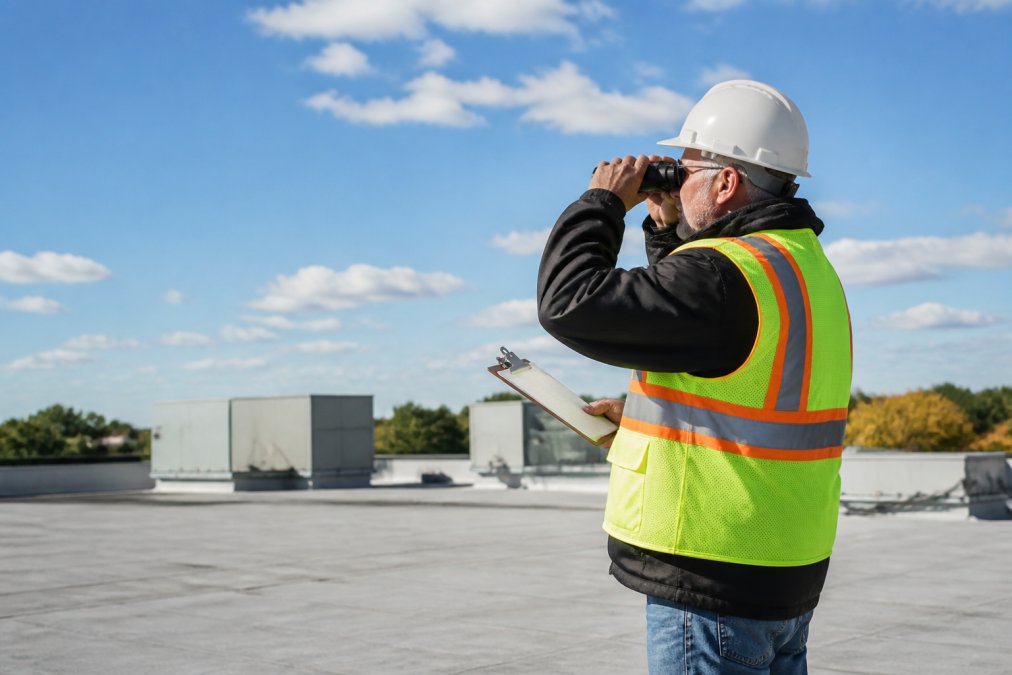
Property owners who commit to annual or semi-annual inspections consistently report roofs that perform well beyond typical lifespan estimates. The cost of inspections, typically a few hundred dollars per visit, is negligible compared to the years of additional roof life gained.
The single biggest factor in extending roof lifespan is catching problems while they’re still small. A membrane issue found during inspection costs hundreds to repair. The same issue found after it’s caused interior damage costs thousands.
Commercial Roof Inspection Frequency and Best Practices
How often should you inspect a commercial roof? Most commercial property owners should implement at least annual inspections, with a second inspection in spring or fall depending on your climate. Properties with severe weather, older roofs nearing the end of their lifespan, or roofs with a history of issues should move to semi-annual inspections.
A thorough inspection includes walking the entire roof surface, examining all penetrations and flashing, checking drainage systems, and documenting conditions with photos and notes. A complete inspection takes 2-4 hours depending on roof size and complexity.
Common commercial roof issues inspectors look for include membrane damage (cracks, blisters, tears, or weathering), flashing failures (separation, corrosion, or gaps), seam integrity problems, drainage issues (clogged gutters or ponding water), fastener corrosion, and interior evidence of leaks (water stains or mold).
Documentation is critical. Photos, measurements, and detailed notes create a historical record of roof condition, helping predict when major repairs or replacement will be needed and supporting insurance claims. Working with experienced contractors like DGK Home Solutions ensures thorough evaluations and identification of subtle signs indicating developing problems.
Delaying an inspection when you suspect roof damage is false economy. A small problem identified and fixed during a scheduled inspection costs a few hundred dollars. Waiting until damage becomes obvious often means the problem has already spread to underlying structures, turning a minor repair into a major one.
Creating a Commercial Roof Maintenance Checklist You Can Actually Use
A commercial roof maintenance checklist is your operational roadmap for protecting your roof. An effective checklist focuses on actions that extend roof life, organized by frequency.
Monthly or Quarterly Tasks: Visual inspection from ground level for obvious damage or debris, check interior spaces for water stains, clear gutters and downspouts.
Semi-Annual Tasks (Spring and Fall): Complete roof walkthrough documenting membrane condition, inspect all flashing and penetrations, check drainage systems, examine seams for separation.
Annual Tasks: Hire a professional contractor for a complete inspection, review historical inspection records, plan repairs needed for the coming year.
As-Needed Tasks: Inspect after severe weather, investigate water stains immediately, inspect surrounding areas if roof equipment is installed or modified.
The key to using a checklist effectively is assigning responsibility and tracking completion. Designate a facility manager as the owner of roof maintenance. Many property owners benefit from facility management software systems that track maintenance tasks, schedule inspections, and maintain historical records.
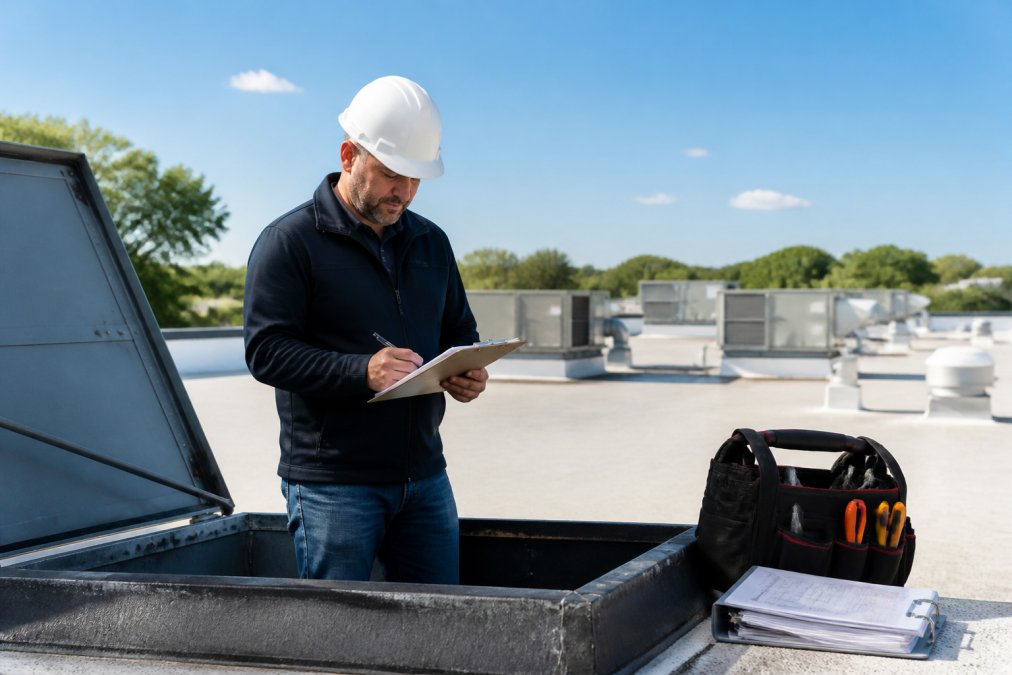
Your checklist should be specific to your roof type and location. Work with your contractor to customize it based on your specific situation.
Create a simple spreadsheet tracking your inspection dates, contractor findings, and any repairs completed. Over time, this record becomes invaluable for predicting when major maintenance or replacement will be needed and for supporting insurance claims if damage occurs.
Calculating ROI: What Preventative Maintenance Actually Saves
Property owners often hesitate on preventative maintenance because they see only the cost, not the savings. A preventative maintenance program costs roughly 1-2% of your roof’s replacement value annually. For a 20,000-square-foot commercial roof, that’s typically several hundred to a few thousand dollars per year. Emergency repairs cost 5-10 times more than preventative maintenance for the same underlying issues.
Consider a realistic scenario: a 20,000-square-foot commercial roof with a replacement cost of $300,000. A preventative maintenance program costs approximately $3,000-5,000 annually. Over 20 years, that’s $60,000-100,000 in maintenance investment. Without maintenance, the roof fails at year 15, requiring immediate replacement at $300,000. With maintenance, the roof performs to year 23, extending the replacement timeline and allowing you to budget strategically rather than in crisis mode.
Avoiding emergency repairs also means avoiding business interruption, tenant dissatisfaction, and operational disruption. Additionally, documented maintenance records strengthen insurance claims and often result in faster claim resolution.
Warranty Compliance and Long-Term Asset Protection
Most commercial roofing systems come with warranties of 10-20 years depending on material and contractor. But warranties have conditions. Many require documented preventative maintenance to remain valid. Skipping inspections or delaying repairs can void your warranty, leaving you unprotected if a covered failure occurs.
Warranty compliance means following the manufacturer’s and contractor’s maintenance requirements, which typically includes regular inspections, timely repairs of identified issues, and proper documentation. When you work with experienced contractors like DGK Home Solutions, warranty compliance becomes straightforward and detailed documentation supports your warranty claims.
Long-term asset protection goes beyond warranty compliance. Your roof is part of your building’s structural system. Protecting it protects your entire investment. Water infiltration from roof failures damages insulation, structural framing, mechanical systems, and interior finishes. For properties in the Greater Cincinnati area facing Ohio’s variable weather patterns, a maintenance program that accounts for seasonal challenges keeps your roof resilient through all conditions.
Conclusion
Why preventative maintenance for commercial roofs matters ultimately comes down to control: control over your budget, control over your building’s condition, and control over when major capital expenses occur. The alternative, reactive repairs driven by emergencies, costs more, disrupts operations, and puts your building at risk.
If you’re managing a commercial property in the Greater Cincinnati area and haven’t had a roof inspection in the past 12 months, that’s your starting point. DGK Home Solutions offers professional roof inspections and maintenance planning to help you understand your roof’s condition and develop a preventative program that protects your investment. Our team brings over 20 years of experience evaluating commercial roofing systems and working with property owners to implement maintenance programs that deliver results.
Get a free assessment of your commercial roof’s condition and a maintenance recommendation tailored to your property. Contact DGK Home Solutions today for a no-obligation consultation.
Frequently Asked Questions
How often should a commercial roof be inspected?
Most commercial roofing systems benefit from inspections at least twice per year, spring and fall, to catch seasonal weather damage and debris buildup. High-traffic areas, roofs over 10 years old, or properties in regions with severe weather should be inspected quarterly. After storms or extreme weather events, an emergency inspection protects your structural integrity and warranty compliance.
What are the primary benefits of a commercial roof maintenance program?
A preventative maintenance program extends your roof lifespan by 5-10 years, prevents costly emergency repairs that can exceed replacement costs, protects interior assets and inventory from water infiltration, maintains warranty compliance, and reduces unplanned downtime. Early detection of membrane damage, flashing issues, and drainage problems saves thousands in capital expenditure compared to reactive repairs.
Does preventative maintenance void a manufacturer's roof warranty?
No, in fact, most manufacturers require preventative maintenance to keep warranties valid. Neglecting routine inspections and documented maintenance can void coverage. Keeping detailed records of your commercial roof maintenance checklist, inspection dates, and repairs performed demonstrates warranty compliance and protects your investment if issues arise.
What are the most common causes of commercial roof failure?
The leading causes are poor drainage leading to standing water, thermal shock from temperature swings, weather-related wear from UV exposure and hail, flashing deterioration, membrane damage from foot traffic or debris, and lack of routine maintenance. Many failures are preventable through regular inspections that catch early signs of seam integrity issues before they become structural problems.
This article was written using GrandRanker