Table of Contents
- When Repair Makes Sense for Aluminum Siding
- Signs of Aluminum Siding Failure
- Painting Aluminum Siding Pros and Cons
- Cost to Replace Aluminum Siding
- Lifespan and Long-Term Maintenance
- Repair vs Replace Decision Framework
- Conclusion
Last Updated: August 27, 2026
When Repair Makes Sense for Aluminum Siding
Whether you should repair aluminum siding depends on the extent of damage, the age of the material, and your long-term plans for the home. At DGK Home Solutions, we’ve assessed thousands of older homes in the Greater Cincinnati area, and the answer isn’t always "replace everything." Sometimes targeted repairs make financial and practical sense.
The key is understanding what you’re actually looking at. A few dents or cosmetic wear doesn’t mean your siding has failed. Widespread corrosion, loose panels, or water penetration behind the material tells a different story. Repair becomes attractive when damage is isolated, a section hit by a branch, a few panels showing minor corrosion, or fading paint that a fresh coat can address. These situations let you extend the life of your siding without the disruption and expense of a full replacement.
Get a professional inspection before deciding. What looks like a cosmetic issue from the ground might hide water damage behind the panels. DGK Home Solutions offers free storm damage inspections with drone documentation, you’ll see exactly what you’re dealing with before committing to repairs or replacement.
The math works in favor of repair when you’re addressing specific damage rather than systemic failure. A patched dent or a repainted panel costs a fraction of replacing an entire wall. But if your siding is showing multiple failure signs across different areas, you’re likely delaying the inevitable replacement.
Signs of Aluminum Siding Failure
Not all damage to aluminum siding requires replacement. Some problems are fixable with targeted repair. Others signal that the material has reached the end of its useful life and replacement is the only practical option.
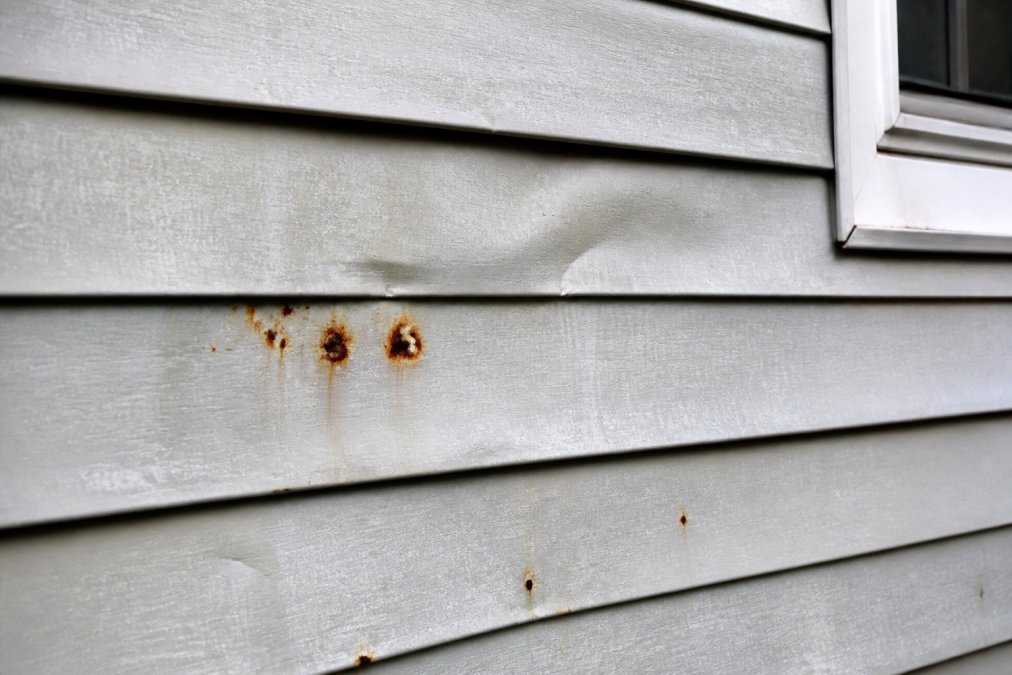
Dents, Holes, and Cosmetic Damage
Minor dents and small holes are among the easiest aluminum siding problems to repair. A dent caused by a falling branch doesn’t compromise structural integrity, it’s purely cosmetic. Small holes up to about a quarter-inch can be filled with Bondo Metal Reinforced Filler, a product designed for metal surfaces (peer-reviewed research). After cleaning and sanding to bare metal, you apply the filler, let it cure, sand smooth, and paint over it.
Larger holes, anything over a half-inch, or damage that goes through the siding into the wall cavity beneath is different. Holes that size allow water infiltration, which creates rot, mold, and structural damage. Those holes require panel replacement, not patching.
The distinction matters: cosmetic damage is repair territory. Damage that compromises the weather barrier is replacement territory.
Corrosion and Oxidation
Aluminum corrodes as white, chalky deposits on the surface or as pitting, small holes that develop in the metal itself. Light surface corrosion is cosmetic and responds well to painting. Heavy corrosion that creates pitting deep into the metal is different. Once pitting develops, the metal has lost structural integrity and water can penetrate through the pits.
Surface corrosion looks rough and discolored but doesn’t compromise the metal itself. Structural pitting creates visible holes and weakens the material. If you run your hand over the siding and feel deep, rough areas or actual holes, you’re looking at pitting that requires replacement. If it’s just discolored and chalky, painting addresses it.
Loose Panels and Separation
Aluminum siding panels are designed to interlock and overlap slightly. Over time, fasteners loosen, panels separate from the wall, or the interlocking seams fail. Loose panels can flap in wind, allow water behind the siding, and create gaps where insects enter.
Loose panels are repairable if the problem is isolated to one or two sections. Tightening fasteners or re-seating panels back into their proper position solves the problem. Widespread separation, where multiple panels have pulled away from the wall, suggests a systemic issue from structural settling or decades of expansion and contraction. When the problem is widespread, targeted repair doesn’t solve the underlying cause, and you’ll face loose panels again within a year or two. Replacement becomes the practical choice.
Painting Aluminum Siding Pros and Cons
Repainting is one of the most cost-effective ways to repair and refresh aluminum siding. It addresses fading, chalking, and light corrosion while giving your home an updated appearance. But painting aluminum siding isn’t a permanent solution, and it comes with specific requirements for success.
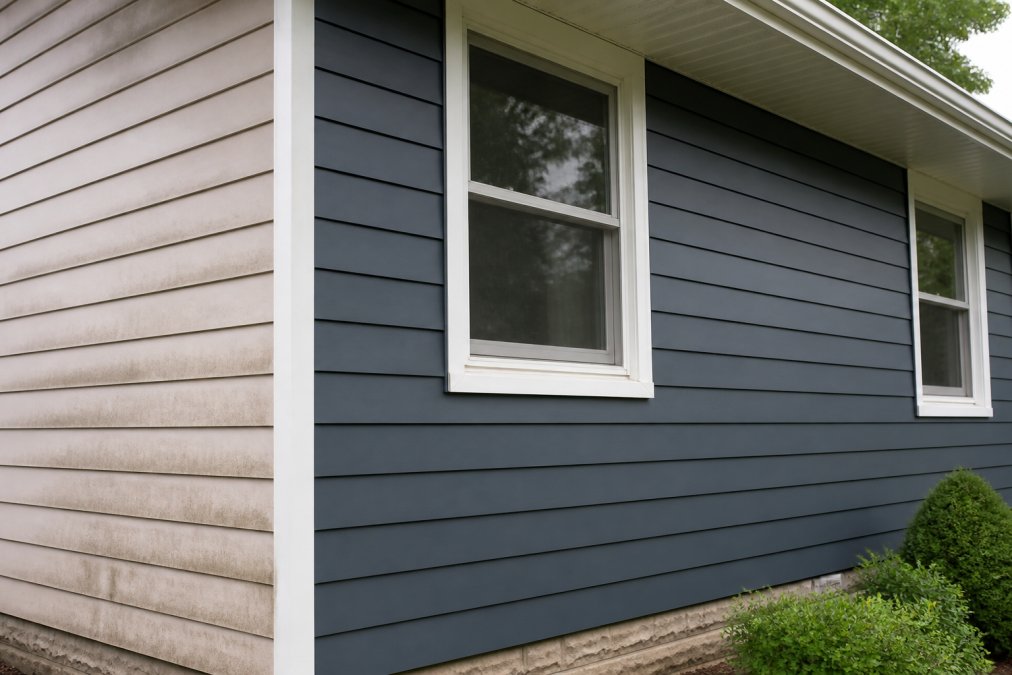
Pros of Painting Aluminum Siding:
Painting delivers immediate visual improvement at a fraction of replacement cost. Faded, chalky siding regains color and looks well-maintained. You can choose a new color scheme to update your home’s curb appeal. For homeowners preparing to list their property, a fresh paint job on aluminum siding is one of the highest-ROI exterior improvements available. Proper paint protects the underlying aluminum from UV damage and corrosion, extending the siding’s usable life by another 10-15 years (the EPA).
Cons of Painting Aluminum Siding:
Paint requires meticulous surface preparation to adhere properly. Aluminum’s smooth surface doesn’t hold paint naturally, so the siding must be pressure-washed, hand-washed, sanded, and primed before painting. Skipping these steps leads to peeling paint within a few years. Even with perfect preparation, exterior paint on aluminum siding typically lasts 7-10 years before fading, chalking, or peeling begins.
Painting doesn’t fix structural problems. If your aluminum siding has holes, widespread corrosion, or loose panels, paint masks the problems but doesn’t solve them. Water infiltration continues behind the paint and corrosion progresses underneath. Proper aluminum siding preparation and painting can take several days of labor, depending on the home’s size.
Paint aluminum siding when the damage is purely cosmetic, fading, chalking, or light surface corrosion, and the underlying siding is structurally sound. Don’t paint if you have active water infiltration, widespread corrosion, or loose panels. Painting won’t fix those problems.
Cost to Replace Aluminum Siding
Replacement is the appropriate choice when aluminum siding damage is extensive, when corrosion has compromised structural integrity, or when you’re tired of maintaining aging material. The cost of replacement depends on the size of your home, the quality of materials you choose, and the complexity of the installation.
The square footage of siding you’re replacing directly affects cost. The condition of the underlying wall matters too, if sheathing or framing is damaged from water infiltration, those repairs add cost before new siding goes on. Material choices affect price: basic aluminum siding is the least expensive option, while aluminum with thermal backing or higher-quality finishes costs more. Some homeowners upgrade to vinyl or fiber cement siding during replacement, which changes the cost equation entirely.
For accurate pricing on aluminum siding replacement, you need a site-specific assessment. DGK Home Solutions provides free estimates for siding replacement projects in Liberty Twp, OH, and the Greater Cincinnati area. Our team inspects the existing siding, evaluates the condition of the wall beneath, and provides a detailed quote based on your specific situation.
Homeowners whose aluminum siding shows widespread damage, multiple failure points, or has reached 30+ years of age. Replacement is also the right choice if you’re planning to stay in your home long-term and want to eliminate ongoing maintenance and repair costs.
Lifespan and Long-Term Maintenance
Aluminum siding typically lasts 25-40 years, depending on climate, installation quality, and maintenance (the CDC). In the Greater Cincinnati area, aluminum siding in good condition generally performs for 30-35 years before major replacement becomes necessary.
The lifespan of repairs is shorter. A patched dent or filled hole typically lasts 5-10 years before it needs attention again. Repainted siding lasts 7-10 years before fading or peeling requires repainting. These repairs buy time but don’t extend the overall lifespan of the siding itself.
Maintenance affects how long your aluminum siding lasts. Annual inspection for loose panels, corrosion, or damage catches problems early when repair is still viable. Keeping gutters clean prevents water from backing up and damaging siding. Pressure washing every 2-3 years removes dirt, mold, and chalky oxidation that can accelerate deterioration.
If your aluminum siding is 35+ years old, you’re in the replacement window regardless of current condition. Material this age is approaching the end of its design life, and investing heavily in repairs rarely makes financial sense.
Repair vs Replace Decision Framework
The decision to repair or replace aluminum siding comes down to a few key questions. Answering them honestly helps you avoid throwing money at a failing system or replacing siding that still has useful life remaining.
What’s the extent of damage? If damage is isolated to one or two panels or a specific section, repair is reasonable. If damage is scattered across multiple walls, replacement is more practical.
How old is the siding? Aluminum siding under 20 years old is typically worth repairing. Siding over 35 years old is usually better replaced. Siding in the 20-35 year range requires judgment based on overall condition.
What’s the underlying cause of the damage? If damage is from a one-time event like a storm, repair makes sense. If damage is from ongoing issues like poor drainage, you need to fix the underlying problem before repairing the siding.
Can you see water damage or rot behind the siding? If yes, replacement is necessary. Water damage means the weather barrier has failed and structural damage is likely progressing.
How long do you plan to stay in the home? If you’re selling within 5 years, cosmetic repair or painting improves curb appeal cost-effectively. If you’re staying 20+ years, replacement with durable material makes more sense.
What’s your budget? Repair costs less upfront but requires repeated maintenance and eventual replacement. Replacement costs more initially but eliminates ongoing repair expenses for 25-40 years.
| Decision Factor | Repair Makes Sense | Replace Makes Sense |
|---|---|---|
| Damage extent | Isolated to 1-2 panels | Multiple panels or widespread |
| Siding age | Under 20 years | Over 35 years |
| Damage cause | One-time event | Ongoing or systemic issue |
| Water damage present | No | Yes |
| Time in home | 5 years or less | 20+ years |
| Long-term cost | Lower upfront, higher long-term | Higher upfront, lower long-term |
Deciding whether to repair or replace aluminum siding requires honest assessment of damage, age, and your plans for the home. Cosmetic damage and isolated problems are repair candidates. Widespread damage, advanced age, and water infiltration point toward replacement. The team at DGK Home Solutions has helped homeowners in Liberty Twp, OH, and throughout the Greater Cincinnati area make this decision with confidence. We provide free inspections with detailed documentation so you can see exactly what you’re dealing with. Contact DGK Home Solutions for a free quote and honest assessment of your aluminum siding. Our team will explain what’s needed, what’s optional, and what makes financial sense for your specific situation, no pressure, no upsell.
=== FAQ ANSWERS (audit these too, same rules) ===
[1] Q: How long does aluminum siding typically last?
A: Aluminum siding typically lasts 20 to 40 years with proper maintenance. Factors like climate, exposure to salt or corrosive air, and how well it’s maintained affect its lifespan. Regular cleaning and prompt repairs to small damage can extend its life significantly.
[2] Q: What are the most common signs that aluminum siding needs to be replaced?
A: Common signs of aluminum siding failure include widespread corrosion or pitting, large dents or holes you cannot repair cosmetically, loose or separating panels, persistent water leaks behind the siding, and severe fading or chalking that painting won’t fix. If damage affects more than 30% of your siding or structural integrity is compromised, replacement is usually more cost-effective than repair.
[3] Q: Is it cheaper to repair or replace aluminum siding?
A: Repairs are almost always cheaper upfront than replacement. Painting aluminum siding can cost significantly less than full replacement. However, if your siding has widespread damage, multiple problem areas, or is nearing the end of its lifespan, replacement may be more economical long-term because repairs become frequent and costly. A professional inspection helps determine which option makes sense for your situation.
[4] Q: Can you paint old aluminum siding to improve curb appeal?
A: Yes. Painting aluminum siding can restore its appearance and protect it from further oxidation if the underlying structure is sound. Proper surface preparation, including pressure washing, sanding, and priming, is essential for paint adhesion and durability. This approach works well for faded or chalking siding but won’t fix structural damage, large holes, or severe corrosion.
Frequently Asked Questions
How long does aluminum siding typically last?
Aluminum siding typically lasts 20 to 40 years with proper maintenance. Factors like climate, exposure to salt or corrosive air, and how well it's maintained affect its lifespan. Regular cleaning and prompt repairs to small damage can extend its life significantly.
What are the most common signs that aluminum siding needs to be replaced?
Common signs of aluminum siding failure include widespread corrosion or pitting, large dents or holes you cannot repair cosmetically, loose or separating panels, persistent water leaks behind the siding, and severe fading or chalking that painting won't fix. If damage affects more than 30% of your siding or structural integrity is compromised, replacement is usually more cost-effective than repair.
Is it cheaper to repair or replace aluminum siding?
Repairs are almost always cheaper upfront than replacement. Painting aluminum siding can cost significantly less than full replacement. However, if your siding has widespread damage, multiple problem areas, or is nearing the end of its lifespan, replacement may be more economical long-term because repairs become frequent and costly. A professional inspection helps determine which option makes sense for your situation.
Can you paint old aluminum siding to improve curb appeal?
Yes. Painting aluminum siding can restore its appearance and protect it from further oxidation if the underlying structure is sound. Proper surface preparation, including pressure washing, sanding, and priming, is essential for paint adhesion and durability. This approach works well for faded or chalking siding but won't fix structural damage, large holes, or severe corrosion.
This article was written using GrandRanker