Table of Contents
- How to Identify Storm Damage from the Ground: Start Here
- Signs of Wind Damage on Roof: What to Look For
- Hail and Rain Damage Indicators You Can See from Ground Level
- How to Document Storm Damage for Insurance Claims
- When to Call a Roofer After a Storm
- Checklist for Your Post-Storm Roof Inspection
- Conclusion: Protect Your Home with a Professional Assessment
- Frequently Asked Questions
Last Updated: September 7, 2026
Identifying storm damage from the ground is a systematic process of scanning your roofline, gutters, siding, and yard for specific visual clues left by wind, hail, and heavy rain. You do not need to climb a ladder to determine whether a professional inspection is warranted. This guide from DGK Home Solutions walks through what to look for, how to document your findings, and when to call in an expert, saving you time and protecting your home from hidden water intrusion. The goal of storm damage identification is early detection, because a small issue ignored today becomes a major repair tomorrow. Below, we cover the specific indicators for each storm type, the documentation your insurer will expect, and a simple checklist you can use from the safety of the ground.
How to Identify Storm Damage from the Ground: Start Here
Start by walking a full perimeter of your home, about 10 to 15 feet away from the foundation, and scan systematically from the roofline down to the ground. The most common approach is to divide your home into four sides and examine each one completely before moving to the next, which prevents you from missing subtle signs on a complex roofline.
Begin with the obvious: loose or displaced shingles, dented gutters, and broken tree limbs. Then look for the less obvious signs like granule buildup in downspout splash blocks or a slight misalignment in a chimney cap. Many homeowners in Liberty Twp, OH, are surprised to learn that damage is often visible from the street or driveway long before any leak appears inside the attic.
Do not climb onto your roof to investigate. Wet shingles are dangerously slick, and roof surfaces can be damaged further by foot traffic. If you suspect damage, a ground inspection is the safe first step, but a professional assessment is still required for a complete picture.
Signs of Wind Damage on Roof: What to Look For
Wind damage presents distinct visual cues that are often visible from the ground, especially on shingled roofs (fema.gov). The primary indicators include lifted or curled shingle edges, missing shingles, and exposed nail heads where shingles have been pulled away.
Look for shingles that appear to have a “bubble” or raised edge, which indicates wind uplift. Also inspect the ridge caps along the peak of your roof, as these are the most vulnerable points during high winds. In severe cases, you might spot a section of roof decking that appears darker or slightly depressed, suggesting a shingle was completely torn off and the underlying material is now exposed.
A common mistake is focusing only on the front of the house. Wind-driven damage is often concentrated on the side of the roof that faced the storm’s primary direction. Check the roof from multiple angles, including from your backyard and across the street, to catch signs of wind damage on roof areas that are not visible from the front yard.
Hail and Rain Damage Indicators You Can See from Ground Level
Hail damage is identifiable by small, dark, circular bruises on asphalt shingles, which appear as random spots where the protective granules have been knocked off. From the ground, a pair of binoculars is your best tool for spotting these marks, which often look like small dimples or dark dots scattered across the roof surface. Rain damage, by contrast, is less about the shingles themselves and more about the secondary effects: stained soffits, peeling paint near the roofline, or water marks on exterior walls.
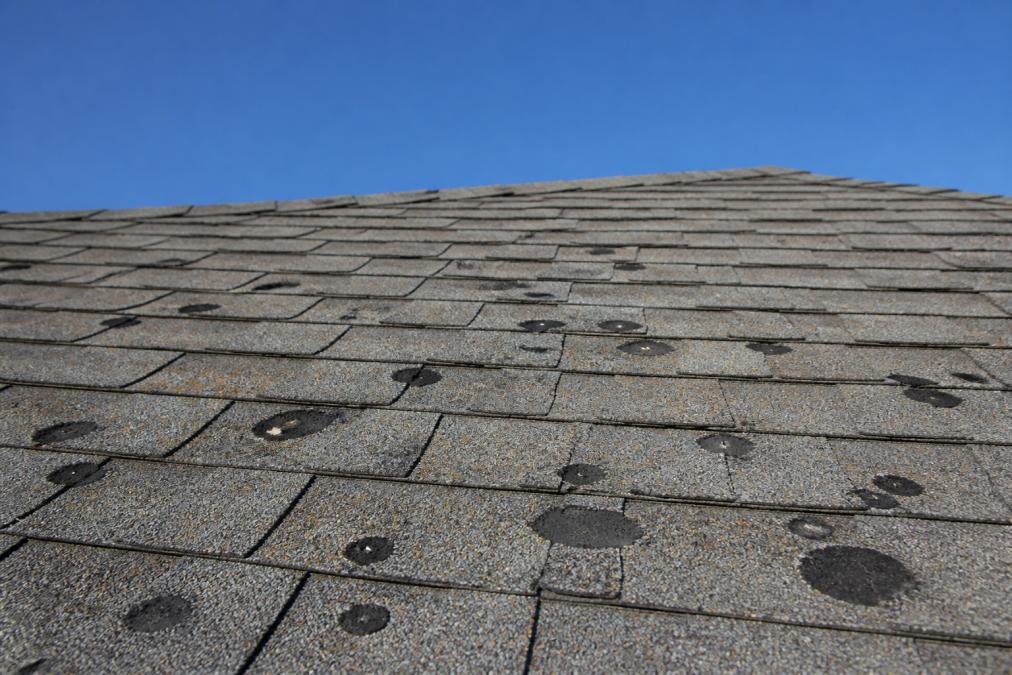
Look for granule loss in the gutters and on the ground below downspouts. After a hailstorm, you will often find piles of sand-like granules at the corners of your foundation or in window wells. This granule loss is a critical sign of hail and rain damage because it compromises the shingle’s ability to protect your home from UV rays and water. Also inspect metal components: dented gutters, downspouts, and roof vents with small circular dents are classic hail signatures.
Use a pair of binoculars (10x magnification works well) and scan the roof in a grid pattern (osha.gov). Start at the ridge, move down to the eaves, and overlap each pass by about a foot. This method catches roughly twice as many hail strikes as a casual glance.
How to Document Storm Damage for Insurance Claims
Documenting storm damage for insurance is a straightforward process of gathering dated photographic evidence and a written summary of what you observed. The quality of your documentation directly affects how smoothly your claim proceeds, so take the time to do it correctly.
Walk the perimeter again with your phone camera. Capture wide shots of each side of the house, then zoom in on every specific indicator you found: missing shingles, dented gutters, granule piles, and any debris. For each photo, include a common object like a coin or a tape measure for scale, and make sure the photo is date-stamped.
Keep a written log that lists each damage location, what you observed, and the date of the storm. This log does not need to be technical, but it should be organized. A simple table on a notepad or in your phone’s notes app works well. Your insurance adjuster will rely on this evidence to determine coverage, and a clear, organized record speeds up the approval process.
| Damage Indicator | Where to Look | Photo Tip |
|---|---|---|
| Missing or lifted shingles | Roofline, ridge caps | Include a neighboring intact shingle for contrast |
| Dented gutters or downspouts | Full gutter run, corners | Shoot at an angle to show the dent’s depth |
| Granule piles | Downspout splash blocks, window wells | Place a coin next to the pile for scale |
| Hail marks on shingles | Full roof surface | Zoom in from a low angle with binoculars |
When to Call a Roofer After a Storm
You should call a roofer for a professional assessment if you spot any missing shingles, visible granule loss, dented metal components, or if you notice water stains on your interior ceilings or walls. These are clear signs that the integrity of your roof has been compromised, and waiting will only worsen the damage.
The window for filing a claim is not unlimited, and the longer you wait, the higher the risk that a small leak leads to mold, rot, or structural issues (naic.org). For homeowners in Liberty Twp and the Greater Cincinnati area, the team at DGK Home Solutions offers honest assessments of property needs and can help you navigate the claims process with your insurance company. With over 20 years of experience, they handle projects of any size, from a single damaged shingle to a full roof replacement.
If you see damage from the ground, a professional roof inspection is not optional, it is the necessary next step. A roofer can identify issues you cannot see from the ground, such as compromised underlayment or weakened decking, and will provide the documentation your insurer requires.
Checklist for Your Post-Storm Roof Inspection
Use this checklist during your ground inspection to ensure you do not miss common damage indicators. Perform this walkthrough after every significant storm event, especially ones with high winds or hail.
- Walk the full property perimeter, scanning from roofline to ground.
- Check for missing, lifted, or curled shingles, especially on ridge caps.
- Look for exposed nail heads or dark spots indicating shingle loss.
- Inspect gutters and downspouts for dents, separation, or granule buildup.
- Examine siding for cracks, dents, or holes from wind-borne debris.
- Look for broken or split tree limbs resting on or near the roof.
- Check window wells and ground near downspouts for shingle granules.
- Look for water stains on exterior walls, soffits, or around chimney flashing.
- Photograph every finding with a date stamp and an object for scale.
- Note the storm date and your observations in a written log.
Conclusion: Protect Your Home with a Professional Assessment
Identifying storm damage from the ground is a critical skill for any homeowner, but it is only the first step in protecting your property. A ground-level inspection reveals the obvious signs, yet the full extent of the damage is often hidden beneath the surface. Partnering with a professional roofing contractor ensures nothing is missed and your insurance claim is handled correctly. DGK Home Solutions provides expert roofing, siding, and gutter services across the Greater Cincinnati area, offering prompt communication and a stress-free process from inspection to completion. Get started with DGK Home Solutions and secure a free quote for your property today.
Frequently Asked Questions
What does wind-damaged roofing look like from the ground?
From the ground, wind damage often shows as lifted or curled shingle edges, missing shingles, or exposed nail heads. You might also spot pieces of shingle debris scattered in your yard or gutters. Look for creased or bent shingles that don’t lie flat. If you see these signs of wind damage on roof, it’s wise to have a professional roofer assess the extent.
How do I document storm damage for insurance claims?
Start by taking wide-angle photos of your entire roof from each side of your home. Then take close-up shots of specific damage like missing shingles, dented gutters, or hail impacts. Capture any debris in your yard. Include a photo of your house number for reference. Record the storm date and note the damage type, such as wind or hail. This documentation helps your insurance adjuster and roofer understand what happened.
When should I call a roofer after a storm?
Call a roofer for an inspection as soon as it is safe after a storm, ideally within a few days. You should especially call if you see visible damage like missing shingles, exposed underlayment, or water stains on your ceiling. Even if damage isn’t obvious, a professional inspection is wise after a severe storm, since issues can worsen over time. Early assessment helps prevent leaks and supports a smoother insurance claim.
Can I see roof leaks from the ground?
You typically cannot see the leak itself from the ground, but you may see signs of one. Look for dark streaks or water stains on interior ceilings and walls. Check your attic for damp insulation or wet spots. From outside, look for lifted or missing shingles near valleys and chimneys, which are common leak points. These indicators suggest it’s time for a professional inspection to find the source.