Last Updated: October 24, 2026
Quick Summary
An emergency roof inspection identifies hidden storm damage like cracked flashing and compromised underlayment before they cause expensive water damage inside your home. Getting a professional assessment within 24-48 hours after severe weather documents damage for your insurance claim and prevents secondary damage that insurers won’t cover if you delay.
- Water finds its way through small roof openings, settling into insulation and structural framing where it causes mold and rot.
- Insurance companies expect you to take reasonable steps to prevent further damage or may deny water damage claims.
- Damage affecting more than 30% of the roof surface typically triggers replacement recommendations instead of repairs.
- Photograph storm damage from multiple angles with reference objects to help adjusters judge severity.
- Schedule your inspection before your insurance company does to understand what you’re dealing with first.
Table of Contents
- Why an Emergency Roof Inspection Matters After Storm Damage
- What to Include in Your Roof Inspection Checklist for Storm Damage
- Emergency Roof Tarping Services: Your First Line of Defense
- Roof Repair vs. Roof Replacement After Storm Damage
- How to Document Damage for Your Insurance Claim
- Getting Your Emergency Roof Inspection Scheduled
- Schedule Your Free Inspection Today
- Frequently Asked Questions
Why an Emergency Roof Inspection Matters After Storm Damage
Storm damage to your roof isn’t always obvious from the ground. Missing shingles, cracked flashing, and compromised underlayment can all hide beneath the surface, leading to leaks that develop days or weeks after the storm passes. An emergency roof inspection identifies these hidden problems before they become expensive water damage inside your home.
The real risk isn’t what you can see, it’s what you can’t. Water finds its way through the smallest openings, settling into insulation, drywall, and structural framing where it causes mold, rot, and deterioration that compounds over time. Getting a professional assessment within 24-48 hours after severe weather is the difference between a manageable repair and a catastrophic claim denial.
At DGK Home Solutions, we’ve helped hundreds of homeowners in the Greater Cincinnati area navigate this critical window. An emergency roof inspection serves two essential purposes: it documents the damage for your insurance claim, and it prevents secondary damage that insurers won’t cover if you delay. When storm damage occurs, time is your enemy.
What to Include in Your Roof Inspection Checklist for Storm Damage
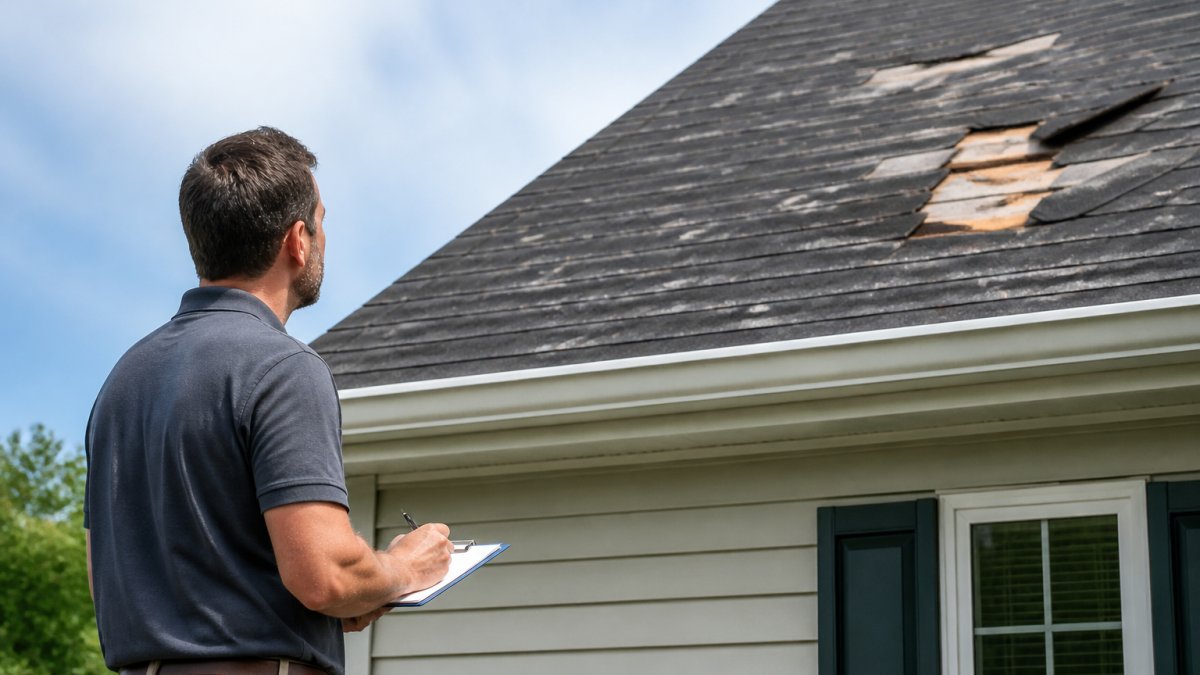
A thorough roof inspection checklist for storm damage goes beyond surface-level observation. Your inspector should document specific damage patterns that prove causation to your insurance company, not just “the roof is damaged,” but exactly what the storm did and where.
Start with the most visible damage: missing or curled shingles, exposed wood, and obvious leaks. But the checklist must also include less obvious items. Flashing around chimneys, vents, and skylights often sustains damage that leads to future leaks. Gutters and downspouts can be bent or clogged with debris. Soffit and fascia boards may be cracked or torn. Granule loss on shingles indicates impact damage even when the shingles haven’t split.
Document the direction and pattern of damage. Hail typically creates random impact marks across the roof. Wind damage often appears directional, with shingles lifted or torn in consistent patterns. This distinction matters because insurers use damage patterns to verify the claim.
Include interior inspection points too. Check attic spaces for water stains, wet insulation, or daylight penetration. Photograph any existing damage separately so the adjuster can distinguish storm damage from pre-existing conditions. This prevents insurers from denying valid claims based on “prior damage” they claim caused the new problems.
| Inspection Element | What to Document | Why It Matters |
|---|---|---|
| Shingles | Missing, curled, cracked, or granule loss | Proves impact or wind damage |
| Flashing | Lifted, separated, or corroded seams | Leads to future leaks if not repaired |
| Gutters & Downspouts | Dents, bends, debris accumulation | Water management failure risk |
| Soffit & Fascia | Cracks, splits, or impact damage | Structural integrity and water entry points |
| Attic Interior | Water stains, wet insulation, daylight | Proves water penetration has occurred |
| Chimney & Vents | Loose mortar, separated flashing, cracks | Common leak sources after storms |
Emergency Roof Tarping Services: Your First Line of Defense
When your roof sustains major damage, an emergency roof tarping service buys you time. A temporary tarp prevents water from entering your home while you coordinate inspections, insurance claims, and repair scheduling. This single step can save thousands in secondary water damage costs.
Tarping isn’t just about covering holes. Professional installation means securing the tarp so wind won’t tear it loose during aftershocks or secondary weather events. The tarp should extend well beyond the damaged area, with proper slope to direct water away from your home. Poor tarping installation actually accelerates damage by trapping moisture underneath.
Most homeowners don’t realize that insurance companies expect you to take reasonable steps to prevent further damage. If you leave a major roof breach unprotected and water damage spreads, adjusters may deny the water damage portion of your claim, arguing you failed to mitigate losses. A professional tarp installation documents your good-faith effort to protect your property.
Emergency tarping in Liberty Twp and surrounding areas should happen within hours of discovering major damage, not days. DGK Home Solutions coordinates emergency tarping as part of our comprehensive storm damage response, ensuring your home is protected while claims are processed.
Roof Repair vs. Roof Replacement After Storm Damage
Not every storm-damaged roof needs replacement. The decision depends on the extent of damage, your roof’s age, and what your insurance will cover. This is where honest assessment matters, and where some contractors create problems by overselling replacements.
A repair makes sense when damage is isolated to specific areas: a few missing shingles, localized flashing damage, or impact marks on a limited section. If your roof has 10+ years of life remaining, repairs are cost-effective and fully covered by most insurance policies. The key is ensuring the repair doesn’t just patch the problem but actually addresses the underlying cause.
Replacement becomes necessary when damage is widespread, when your roof is already near the end of its lifespan, or when multiple repairs would add up to replacement costs anyway. Storm damage that affects more than 30% of the roof surface typically triggers replacement recommendations. Additionally, if your roof has existing damage or deterioration, adjusters may deny repair claims and require replacement instead.
Here’s what most contractors won’t tell you: if you’re replacing the roof anyway, insurance may cover the full cost of replacement based on the storm damage, even if age-related wear contributed to the damage. Conversely, if you repair now and more damage appears later, you may face denial on the additional claim. Understanding this distinction protects you from both unnecessary spending and inadequate coverage.
How to Document Damage for Your Insurance Claim
Insurance adjusters work with incomplete information. They see what’s visible during a brief site visit. Your documentation fills the gaps and strengthens your claim significantly. Start photographing immediately after the storm passes, while damage is fresh and lighting conditions are still good.
Photograph from multiple angles and distances. Wide shots show the overall damage pattern; close-ups show specific damage details. Include reference objects in photos, a ruler, coin, or your hand next to impact marks, so adjusters can judge damage severity. Timestamp your photos if possible, or note the date you took them.
Document the sequence of events. When did the storm occur? When did you discover the damage? When did you call your insurance company? When did the adjuster visit? This timeline matters because it proves you acted promptly to report and mitigate damage.
Create a written inventory of damaged items beyond the roof. Learn detailed guidance on documenting damage and navigating the insurance claims process. Storm damage often affects siding, gutters, windows, landscaping, and exterior structures. Include replacement cost estimates for each item. Insurance adjusters focus on what’s documented; if you don’t list it, it won’t be covered.
Getting Your Emergency Roof Inspection Scheduled
When you call for an emergency roof inspection, timing is critical. Most reputable contractors offer same-day or next-day appointments after major storms. Don’t wait for your insurance company to schedule an inspection, get your own professional assessment first so you understand what you’re dealing with.
Prepare for the inspection by having photos ready, your insurance policy information accessible, and a list of visible damage you’ve noticed. The inspector will ask when the storm occurred, what weather conditions you experienced, and whether you’ve noticed any leaks or water stains inside.
Ask the inspector specific questions: What damage is storm-related versus age-related? What does your insurance likely cover? What’s the timeline for repairs? What’s the cost estimate? A thorough inspector provides clarity on all these points, not vague generalizations.
Schedule Your Free Inspection Today
Storm damage demands immediate action. Every day you delay increases the risk of secondary water damage that insurance won’t cover. DGK Home Solutions provides comprehensive emergency roof inspection services throughout the Greater Cincinnati area, including Liberty Twp, with same-day availability and transparent damage assessment.
We document your damage thoroughly for insurance purposes, explain your repair versus replacement options honestly, and coordinate with your adjuster to simplify the claims process. Our team has over 20 years of experience handling storm damage claims, and we understand how to present damage documentation that supports your claim.
Don’t navigate this alone. Contact DGK Home Solutions for your free inspection and let us handle the complexity while you focus on protecting your home.
Frequently Asked Questions
What should I do immediately after a storm damages my roof?
First, ensure your safety and that of your family by staying indoors and away from damaged areas. Document visible damage with photos and video from the ground if it’s safe to do so. Contact your insurance company to report the damage, then call a roofing contractor for an emergency roof inspection. If water is actively leaking into your home, place buckets to catch water and move valuables away from the affected area. Do not attempt roof repairs yourself, especially in wet or unstable conditions.
How quickly can I get an emergency roof inspection scheduled?
Most emergency roof inspection providers, including those serving the Greater Cincinnati area, offer same-day or next-day appointments for storm damage. Contact your chosen roofing company immediately after the storm hits, as demand for inspections typically surges after severe weather. Having your address, insurance information, and photos of visible damage ready will speed up the scheduling process.
What does an emergency roof inspection checklist for storm damage include?
A thorough storm damage inspection examines shingle damage (missing, curled, or cracked shingles), hail impact marks, flashing condition around chimneys and vents, gutter and downspout damage, soffit and fascia integrity, interior water stains or leaks, attic moisture or mold, and structural concerns. The inspector documents all findings with photos and measurements to support your insurance claim. They’ll also identify whether temporary tarping is needed to prevent further water intrusion while repairs are planned.
Should I get a roof inspection or emergency repair first?
Get an emergency roof inspection first. The inspection documents the full extent of damage, which your insurance company requires to process your claim. If there are active leaks, temporary emergency roof tarping services can be arranged during or immediately after the inspection to prevent interior damage. Once the inspection is complete and your insurance adjuster has reviewed it, you’ll have a clear picture of whether repair or full replacement is needed and what your coverage will be.
Storm damage creates a narrow window for action. The right inspection, documentation, and immediate protective measures determine whether you recover fully or face costly gaps in coverage. DGK Home Solutions brings expertise in roofing, insurance coordination, and emergency response to ensure your claim is handled correctly from start to finish. Get your free inspection scheduled today, your home’s protection depends on decisions made in the next 48 hours.
