Table of Contents
- 1. Keep Your Gutters Clean and Flowing
- 2. Inspect and Repair Flashing Around Chimneys and Vents
- 3. Replace Damaged or Missing Shingles
- 4. Check Your Roof Maintenance Checklist Before Storm Season
- Why Does My Roof Leak Only When It Rains Heavily?
- 5. Ensure Proper Attic Ventilation and Insulation
- 6. Schedule a Roof Inspection After a Storm
- 7. Know When to Call for Emergency Roof Leak Repair
- Frequently Asked Questions
Last Updated: October 6, 2026
1. Keep Your Gutters Clean and Flowing
Clogged gutters are the number one cause of roof leaks during heavy rain, making gutter maintenance essential to prevent roof leaks. When leaves, debris, and dirt build up in your gutters, water can’t flow properly. Instead, it backs up and seeps under your shingles, creating the perfect conditions for leaks.
Clean your gutters at least twice a year, once in spring and again in fall. If you live near trees, you may need to clean them more often. Remove all leaves, twigs, and dirt by hand or with a gutter scoop. After cleaning, flush the gutters with a garden hose to check that water flows freely.
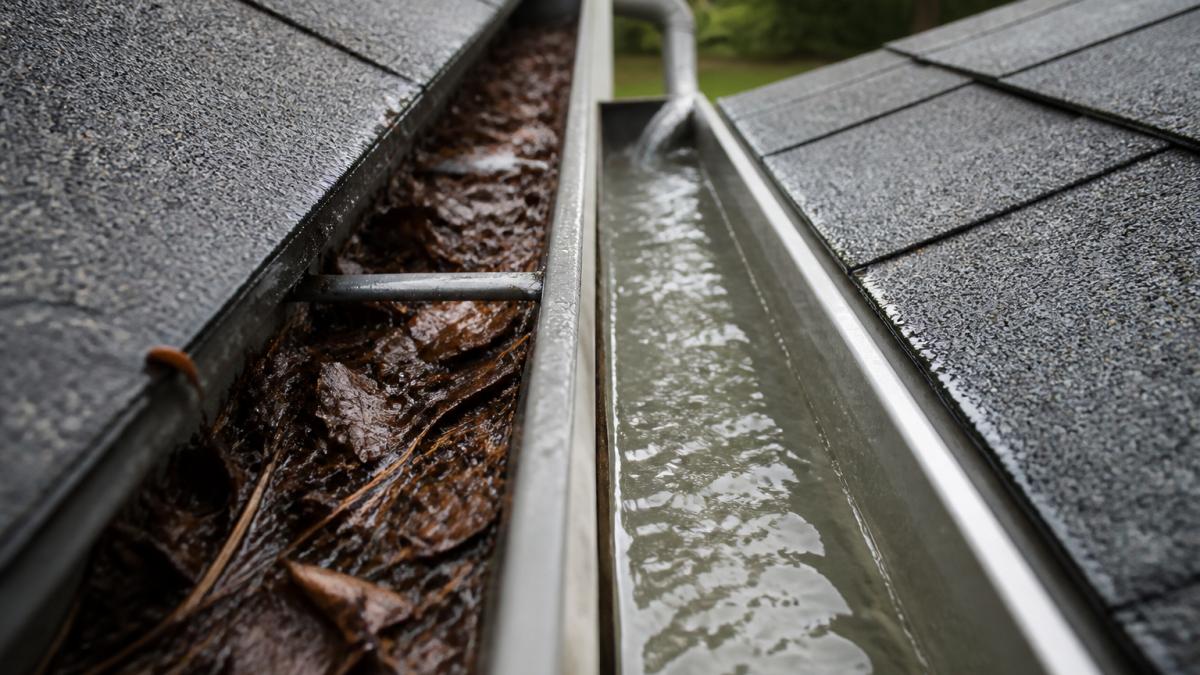
Pay special attention to downspouts. Make sure they extend at least 4-6 feet away from your foundation. Water that drains too close to your home can pool around the base and eventually seep into your basement or crawl space.
Consider installing gutter guards if cleaning is difficult for you. These screens prevent debris from entering while still allowing water through. They reduce maintenance and help water flow freely during storms.
Check your gutters after every major storm, not just seasonally. Heavy rain can loosen debris that clogs gutters days later, causing delayed leaks even after the weather clears.
2. Inspect and Repair Flashing Around Chimneys and Vents
Flashing is the metal material that seals the gaps where your roof meets chimneys, vents, and other structures. When flashing fails, water runs right into those gaps and leaks into your home. This is one of the most common sources of roof leaks during heavy rain.
Inspect your flashing at least once a year, especially before storm season. Look for:
- Gaps or separation from the roof
- Rust or corrosion on metal flashing
- Cracked or missing sealant
- Lifted edges where water can sneak underneath
If you spot damage, don’t wait. Small gaps become big problems during the next heavy rain. Resealing flashing with roofing cement is a quick fix for minor issues. For larger gaps or rust, you’ll need to replace the flashing entirely.
Never ignore lifted or peeling flashing. During heavy rain, water hits the roof at different angles and pressures. Even a small gap that seems dry on a regular day can leak heavily when rain comes down hard and sideways.
Have a professional inspect flashing if you’re not comfortable on your roof. Proper flashing installation is critical, it’s one of the details that separates a roof that lasts 20 years from one that leaks after five.
3. Replace Damaged or Missing Shingles
Shingles protect your roof from rain, wind, and sun damage. When shingles are cracked, curled, or missing, water penetrates directly to the wood underneath. This leads to rot, mold, and interior leaks.
Inspect your roof from the ground with binoculars or walk the roof safely if you’re comfortable doing so. Look for:
- Missing shingles (you’ll see bare wood or felt paper)
- Shingles with cracks or splits
- Shingles that are curled or lifted at the edges
- Bald spots where the granules have worn away
One or two missing shingles can usually be replaced affordably. But if you see widespread damage across your roof, it’s a sign your roof is reaching the end of its life. Patching individual shingles becomes expensive and temporary when the underlying roof is failing.
Replace damaged shingles before heavy rain arrives. A single missing shingle might seem minor, but during a downpour, water can find that gap and travel under surrounding shingles, affecting a much larger area.
4. Check Your Roof Maintenance Checklist Before Storm Season
A roof maintenance checklist keeps you organized and ensures nothing gets overlooked. Before storm season, work through this list to identify and fix problems:
- Clean gutters and downspouts
- Inspect flashing around chimneys and vents
- Check for missing, cracked, or curled shingles
- Look for signs of moss or algae growth
- Trim tree branches that hang over the roof
- Check attic for signs of leaks or water stains
- Inspect soffit and fascia for rot or damage
- Verify that attic vents are clear and unblocked
- Check roof valleys for debris or damage
- Inspect the condition of caulk around penetrations
Completing this checklist annually takes a few hours but can save thousands in water damage repairs. Many homeowners in Liberty Twp find that a spring checklist catches problems before heavy summer storms arrive.
If you’re not comfortable inspecting your roof yourself, hire a professional. DGK Home Solutions offers comprehensive roof inspections. We provide a detailed report of what we find and honest recommendations about what needs attention now versus what can wait.
Why Does My Roof Leak Only When It Rains Heavily?
Your roof might be perfectly dry during light rain but leak during downpours because heavy rain creates conditions that expose existing weaknesses. Light rain falls gently and often runs off your roof without finding small gaps. Heavy rain, however, comes down harder and at different angles.
Wind-driven rain during storms forces water sideways against your roof. This pressure pushes water into tiny gaps that wouldn’t leak under normal conditions. Heavy rain also saturates areas of your roof that normally dry quickly, allowing water more time to seep through small cracks.
Another reason: your gutters might handle light rain fine but overflow during heavy downpours. When gutters overflow, water backs up under shingles and into your home. This happens even if your gutters are clean, because the volume of water simply exceeds what they can handle.
Weak spots in your roof, like deteriorating flashing, lifted shingles, or thin patches of roofing material, only become obvious during heavy rain. That’s why many homeowners don’t notice roof problems until a major storm hits.
If your roof leaks only during heavy rain, the problem is usually an existing weakness that light rain doesn’t expose. The leak itself isn’t new, you’ve just found it. Address it before the next storm.
5. Ensure Proper Attic Ventilation and Insulation
Your attic plays a bigger role in roof health than most homeowners realize. Poor ventilation and insulation cause moisture to build up in your attic, which weakens the wood structure and makes leaks more likely.
Proper attic ventilation allows air to flow through your attic, removing moisture and heat. This keeps your roof cooler and prevents ice dams in winter. Without ventilation, moisture condenses on the underside of your roof, rotting the wood from the inside.
Check that your attic has:
- Soffit vents (openings under the eaves) that draw in fresh air
- Ridge vents or gable vents that let air escape
- Clear airflow between intake and exhaust vents
- No blocked vents or insulation covering openings
Insulation should not block ventilation. Many homes have insulation piled against soffit vents, which prevents air from flowing through the attic. This is a common mistake that reduces ventilation effectiveness.
If your attic is poorly ventilated or insulated, moisture will accumulate during heavy rain. This moisture weakens the roof structure and makes leaks worse. Upgrading attic ventilation and insulation is an investment that pays off in roof longevity and lower utility bills.
6. Schedule a Roof Inspection After a Storm
After any significant storm, schedule a professional roof inspection. Even if you don’t see obvious damage, storms can cause hidden problems that lead to leaks weeks or months later.
A professional inspector will check:
- Shingle damage from hail or high winds
- Flashing integrity after storm stress
- Gutter and downspout damage
- Chimney and vent damage
- Soffit and fascia condition
- Signs of interior water damage
Many homeowners wait until they spot a leak to call for help. By then, water has already damaged your attic, insulation, and ceiling. Catching problems early with a post-storm inspection prevents this damage.
DGK Home Solutions offers emergency roof inspections after storms throughout Liberty Twp and the surrounding area. We document all damage with photos and provide a detailed report. If you need to file an insurance claim, we can assist with that process.
Take photos of any visible storm damage yourself before calling for an inspection. This creates a record of damage timing, which helps with insurance claims. Document the date and time of the storm and when you first noticed problems.
7. Know When to Call for Emergency Roof Leak Repair
Some roof leaks require immediate attention. If you notice active leaks during or right after heavy rain, don’t wait. Water damage spreads quickly and becomes exponentially more expensive to repair.
Call for emergency repair if you see:
- Water actively dripping inside your home during rain
- Large water stains appearing on ceilings or walls
- Water pooling in your attic
- Soft spots or sagging areas on your ceiling
- Visible mold or mildew growth
Temporary fixes like tarps can help contain damage until a professional arrives. Move furniture and valuables away from the leak area. Place buckets under drips to protect your flooring.
Emergency repairs are more expensive than preventive maintenance, but they’re necessary to stop ongoing damage. A small leak that goes unrepaired for weeks can cause thousands of dollars in damage to insulation, framing, and drywall.
At DGK Home Solutions, we offer 24/7 emergency roof leak repair service. We understand that roof leaks don’t happen during business hours. Our team responds quickly to emergency calls and stabilizes the problem to prevent further damage. We work with your insurance company to help with your claim.
To prevent roof leaks, start with regular maintenance and quick action when problems appear. Clean gutters, inspect flashing, replace damaged shingles, and check your attic before storm season. These steps catch most problems before heavy rain turns them into disasters.
When you do spot damage or experience a leak, don’t delay. Contact DGK Home Solutions for a professional inspection and honest assessment of what needs repair. With over 20 years of experience serving Liberty Twp and the Greater Cincinnati area, we’ve helped countless homeowners protect their homes from water damage. Get your free quote today and let us help you keep your roof in top condition.
Frequently Asked Questions
Can clogged gutters cause roof leaks during heavy rain?
Yes. When gutters are clogged with leaves and debris, water backs up under the roof edge instead of flowing away from your home. During heavy rain, this pooled water seeps under shingles and flashing, causing leaks inside your attic and walls. Regular gutter cleaning every spring and fall prevents this common problem and protects your roof from water damage.
Why does my roof leak only when it rains heavily?
Light rain may not have enough volume or force to penetrate small gaps, but heavy rain increases water pressure against your roof. If you have minor damage like small cracks, loose shingles, or deteriorated flashing, the extra water volume during storms forces its way through. This is why your roof might seem fine in normal conditions but leak when rainfall is intense or sustained.
What should I do if my roof starts leaking during a storm?
First, move valuables away from the leak and place buckets to catch water. If the leak is active and spreading, call for emergency roof leak repair immediately, a professional can apply temporary protection to stop further damage. After the storm passes, schedule a full roof inspection to assess damage and plan permanent repairs. Document everything with photos for your insurance claim.
How often should I inspect my roof to prevent leaks?
Inspect your roof at least twice yearly: once in spring after winter weather and once in fall before heavy rain season. After storms with high winds or hail, inspect immediately for damage. Look for missing shingles, cracked flashing, sagging areas, and granule loss. If you’re uncomfortable on a ladder or roof, hire a professional to conduct a thorough roof inspection and provide a detailed report of any issues.