Table of Contents
- What Qualifies as Top-Quality Storm Damage Repairs
- How to Handle Roof Insurance Claims After Storm Damage
- Hail Damage Roof Inspection Checklist for Homeowners
- Understanding Storm Damage Roof Repair Costs
- Types of Storm Damage and Repair Methods
- What to Look for in a Storm Damage Contractor
- Warranty and Workmanship Guarantees
- Frequently Asked Questions
Last Updated: September 23, 2026
What Qualifies as Top-Quality Storm Damage Repairs
Top-quality storm damage repairs combine durable materials with skilled installation that withstands future weather events. For residential homeowners in the Greater Cincinnati area needing storm damage repairs, this means more than just patching a hole or replacing a few shingles. It means using materials engineered for local climate conditions and contractors who understand how wind, hail, and water interact with your specific roof structure.
At DGK Home Solutions, we’ve learned that quality starts with honest assessment. Many homeowners assume their roof survived a storm intact when hidden damage, granule loss on shingles, membrane tears, or flashing separation, creates vulnerability to future leaks. Top-quality repairs address both visible and structural damage, not just cosmetic fixes.
The difference between adequate repairs and excellent ones comes down to three factors: material grade, installation technique, and workmanship guarantees. A contractor using budget-grade shingles installed quickly will cost less upfront but fail sooner. Premium materials paired with meticulous installation, proper nailing patterns, sealed seams, flashing overlap, protects your home for decades.
When evaluating contractors, ask specifically about their material warranties and labor guarantees. A reputable company stands behind both. If they only guarantee materials but not workmanship, that’s a red flag.
How to Handle Roof Insurance Claims After Storm Damage
Filing an insurance claim after storm damage requires documentation, timing, and often contractor support. The process begins immediately after the storm passes, not weeks later when you finally get around to calling.
Start by documenting damage with photos and video before cleanup. Insurance adjusters need clear evidence of what the storm caused versus pre-existing conditions. Take wide shots showing the overall damage pattern, then close-ups of specific affected areas. This visual record becomes your strongest argument if the insurer underestimates damage.
Contact your insurance company within 24-48 hours. Most policies require prompt notice, and delays can complicate claims. When you call, provide the date of the storm, a general description of damage, and your policy number. Don’t exaggerate or minimize, stick to observable facts.
Here’s where contractor involvement matters. According to the National Association of Insurance Commissioners guidance on claim handling, homeowners benefit from having a professional assess damage alongside the insurance adjuster. Many contractors, including DGK Home Solutions, assist with the claims process by providing detailed damage assessments and repair estimates that insurers use to calculate payouts.
Avoid signing anything with the insurance company until you fully understand the settlement offer. Some adjusters underestimate damage or exclude certain repairs. A second opinion from your contractor protects you.
The adjuster will inspect your roof and typically issue a settlement within 10-15 business days. This settlement covers either actual cash value (depreciated amount) or replacement cost value (full repair cost). Most modern policies offer replacement cost coverage, which is significantly more favorable for storm damage claims.
Hail Damage Roof Inspection Checklist for Homeowners
Hail damage isn’t always obvious from the ground. Small dents in shingles, granule loss, and membrane damage can go unnoticed until water starts leaking into your attic months later. A thorough inspection protects you during insurance claims and reveals whether your roof needs immediate attention.
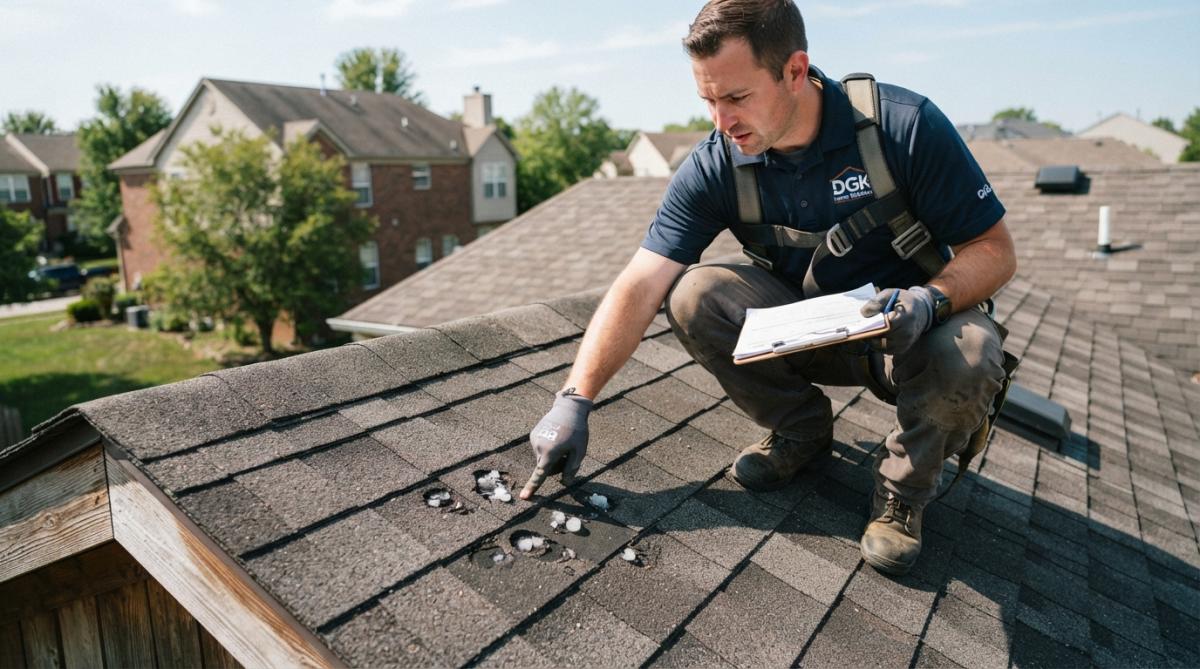
Use this checklist when inspecting your roof after hail or when preparing for an insurance claim:
- Check shingle surface for dents, cracks, or bruising (hail leaves visible impact marks)
- Look for granule loss (bare spots where protective coating has been knocked away)
- Inspect flashing around chimneys, vents, and skylights for separation or damage
- Examine gutters and downspouts for dents or punctures
- Check soffit and fascia for impact marks or damage
- Look for water stains on interior ceilings or attic framing (indicates leaks)
- Inspect siding and trim for dents or cracks matching hail pattern
- Document any visible damage with dated photos from multiple angles
The key is consistency. Hail damage typically appears in a pattern across your roof, not randomly. If you see dents on the south-facing slope but not the north side, that pattern supports a hail claim. Random damage scattered throughout suggests age-related wear, which insurers may not cover.
Many homeowners miss damage because they inspect from the ground. If you have a safe way to access your roof, climb up. If not, call a professional. If not, call a professional.
Understanding Storm Damage Roof Repair Costs
Storm damage repair costs vary dramatically based on damage extent, roof size, material choice, and whether you’re replacing sections or the entire roof. Understanding these variables helps you evaluate contractor quotes and insurance settlements.
Factors affecting repair costs include roof pitch (steeper roofs cost more to work on safely), material type (asphalt shingles cost less than metal or slate), and accessibility. A simple roof with easy access costs less than a complex roof with dormers, valleys, and multiple slopes. Labor represents 40-60% of repair costs, so contractor experience and efficiency matter significantly.
For hail damage affecting a portion of your roof, repairs typically address only damaged sections. This approach costs less upfront but creates a visual mismatch if new shingles don’t perfectly match aged ones. Full roof replacement eliminates this issue and provides complete protection, though at higher cost.
Water damage repairs extend beyond roofing. If leaks have damaged attic insulation, framing, or interior drywall, those repairs add substantially to total costs. This is why prompt action matters, water damage compounds quickly and becomes exponentially more expensive.
When comparing quotes, ensure all contractors are bidding the same scope of work. One quote might include only shingle replacement; another might include flashing repair, underlayment replacement, and gutter cleaning. The lowest quote often reflects incomplete scope, not superior efficiency.
Request itemized estimates that break down labor, materials, and specific services. This transparency lets you compare apples to apples and identify where costs differ between contractors.
Types of Storm Damage and Repair Methods
Different storm types cause different damage patterns, and each requires specific repair approaches. Understanding what your roof actually suffered helps you communicate clearly with contractors and insurance adjusters.
Wind Damage Repairs
High winds don’t always tear roofing away dramatically. Often they lift shingles, separate flashing, or create small openings that allow water infiltration. Wind damage appears as lifted shingles, missing shingles, or separated seams where water can enter.
Wind damage repairs focus on re-securing lifted shingles and resealing flashing. If shingles are lifted but intact, they can be re-nailed and sealed. If shingles are torn or missing, replacement is necessary. Flashing separation requires careful removal, inspection of underlying damage, and reinstallation with proper sealant.
The critical step in wind damage repair is preventing recurrence.
Hail Damage Repairs
Hail creates impact damage, dents, cracks, and granule loss, that weakens shingles and accelerates aging. Unlike wind damage, hail damage doesn’t always require immediate repair if damage is minor. But significant hail impact warrants replacement because damaged shingles deteriorate faster.
Water Damage and Leak Repairs
Water damage extends beyond the roof itself. Leaks that have saturated attic insulation, damaged framing, or created mold require remediation beyond simple roof repair. This is where collaboration with water restoration specialists becomes necessary.
What to Look for in a Storm Damage Contractor
Choosing the right contractor determines whether your repair succeeds or fails. A skilled contractor with quality materials produces results that last decades. A rushed contractor using budget materials creates problems that resurface within years.
Homeowners in Liberty Twp and surrounding areas should prioritize local contractors with established roots in the community. They understand regional weather patterns, local building codes, and have verifiable local references.
Warranty and Workmanship Guarantees
Warranties separate confident contractors from those cutting corners. Material warranties, typically 20-30 years for quality asphalt shingles, come from manufacturers regardless of who installs them. Labor warranties, however, reflect contractor confidence in their workmanship.
| Damage Type | Repair Method | Timeline | Best Addressed By |
|---|---|---|---|
| Wind-lifted shingles | Re-nail and reseal | 1-2 days | Roofing contractor |
| Missing/torn shingles | Shingle replacement | 1-3 days | Roofing contractor |
| Hail impact damage | Full section/roof replacement | 3-7 days | Roofing contractor |
| Flashing separation | Remove, inspect, reinstall | 1-2 days | Roofing contractor |
| Water damage/leaks | Roof repair + water restoration | 5-14 days | Roofing + restoration specialist |
| Attic insulation damage | Insulation removal and replacement | 2-4 days | Restoration specialist |
Frequently Asked Questions
How long do I have to file a storm damage insurance claim in Ohio?
Ohio homeowners typically have 1-3 years to file a storm damage claim, depending on your insurance policy and the specific damage type. However, filing promptly after a storm is critical, delays can complicate documentation and assessments. Contact your insurance agent immediately after discovering damage to understand your policy’s specific deadline and begin the claims process. Acting quickly also prevents secondary damage like mold or water intrusion from worsening your claim.
What are the most common signs of storm damage on a residential roof?
Common roof storm damage includes missing or curled shingles, visible dents or bruises on shingles and gutters, granule loss (dark spots or bare patches on shingles), cracked or split shingles, damaged flashing around chimneys or vents, and sagging roof sections. Wind can lift or remove shingles entirely, while hail creates impact marks. Water stains on ceilings or attic water indicate leaks. After severe weather, a professional roof inspection identifies damage you may not see from the ground.
How can a contractor assist with my insurance claim for storm damage repairs?
Professional contractors provide detailed damage assessments, take photographs and measurements for insurance documentation, prepare comprehensive repair estimates that align with insurer requirements, communicate directly with your insurance adjuster, and advocate for fair claim approval. Many contractors have experience navigating the claims process and understand what insurers require for approval. This support reduces stress and helps ensure you receive appropriate compensation. Always verify the contractor’s experience with insurance claims before hiring.
What materials offer the best durability for storm-prone areas?
High-quality asphalt shingles with impact resistance (Class 4 rated), architectural shingles, and metal roofing offer superior durability in storm-prone regions. Impact-resistant shingles resist hail damage better than standard shingles. Metal roofing withstands high winds and hail extremely well. Reinforced gutters and downspouts rated for heavy rainfall prevent water damage. Sealed and properly fastened components reduce wind uplift risk. A qualified contractor will recommend materials matched to your area’s specific storm risks and building codes.