Table of Contents
- What Roof Water Damage in Your Attic Looks Like
- How to Inspect Your Attic for Roof Leaks
- Common Causes of Roof Leaks That Lead to Attic Damage
- Identifying Signs of Mold in Attic from Roof Leak
- Understanding Attic Roof Leak Repair Cost and Next Steps
- When to Call a Professional
- Frequently Asked Questions
Last Updated: September 24, 2026
What Roof Water Damage in Your Attic Looks Like
Water damage in your attic is one of the most serious problems a homeowner can face. The tricky part is that signs of roof water damage in attic spaces often hide until they’ve caused significant structural damage. Early detection saves you thousands in repairs.
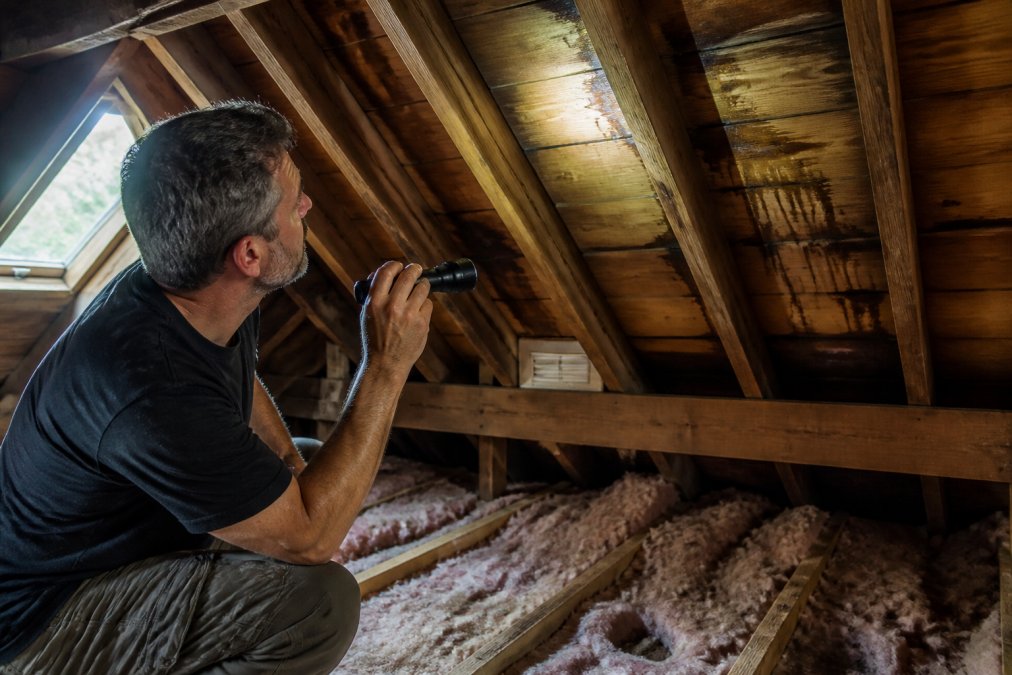
The most visible indicator is discoloration on wooden beams and rafters. Look for dark brown or yellowish stains that spread across the wood grain. These marks show where water has been sitting or dripping repeatedly.
Wet insulation is another major red flag. Insulation that feels damp or soggy has lost its ability to protect your home. It also becomes a breeding ground for mold. If you see insulation that’s compressed, darkened, or clumping together, water damage is likely present.
Sagging drywall or ceiling materials indicate serious water accumulation. When drywall absorbs water, it becomes heavy and weak. This sagging is dangerous because it can eventually collapse.
Wood rot is the most destructive sign. Affected wood becomes soft and crumbly when you press on it. Rot spreads quickly and weakens the structural integrity of your entire roof system. This is when professional intervention becomes urgent.
The homeowners who catch these signs early avoid catastrophic damage and expensive reconstruction. The ones who wait often face bills that exceed roof replacement costs.
How to Inspect Your Attic for Roof Leaks
Safety First: What You Need Before You Start
Before you climb into your attic, prepare properly. Attics are confined spaces with real hazards.
Wear a respirator mask rated N95 or better. Dust, insulation fibers, and mold spores are harmful to breathe. Wear long sleeves and pants to protect your skin from insulation irritation.
Bring a powerful flashlight or headlamp. Attics are dark, and you need to see clearly to spot water damage. A standard flashlight won’t provide enough light.
Wear gloves to protect your hands from insulation and contaminated materials. Keep a notepad handy to record what you find.
Never enter an attic during heavy rain or immediately after. You’ll slip on wet surfaces and miss important details. Wait at least 24 hours after rain stops.
Step-by-Step Inspection Process
Start at the entry point and work systematically across the attic. Don’t skip areas just because they seem dry.
Step 1: Check the roof decking and rafters. The roof decking is the plywood or boards directly under your shingles. Look for dark stains, soft spots, or visible mold growth. Press gently on suspicious areas with a screwdriver. If the wood is soft or crumbly, rot has set in.
Step 2: Examine all visible insulation. Water-damaged insulation looks darker than normal and feels wet or damp. Compressed insulation indicates water has been pooling. Trace any wet spots back toward the roof to find the leak source.
Step 3: Look at penetrations and valleys. Roof valleys are where two roof slopes meet. Water naturally flows toward these areas. Check around vent pipes, chimneys, and skylights. These are common leak points. Inspect the flashing (metal strips) around each penetration for gaps or corrosion.
Step 4: Check for mold and mildew. Mold appears as black, green, or white fuzzy growth. It thrives in damp conditions. Any mold visible in your attic indicates moisture problems that need immediate attention.
Step 5: Inspect attic vents and soffit vents. These vents allow air circulation. Blocked or damaged vents trap moisture. Look for debris, nests, or visible damage.
Step 6: Document everything with photos. Take clear pictures of all damage. Include wide shots showing the area and close-ups of specific damage. These photos are essential for insurance claims and contractor estimates.
Common Causes of Roof Leaks That Lead to Attic Damage
Most roof leaks stem from a handful of preventable problems. Understanding these causes helps you prevent future damage.
Damaged or missing shingles are the leading cause. Shingles crack, curl, and deteriorate over time. Missing shingles leave the decking exposed to direct water penetration. High winds frequently blow shingles off roofs in the Greater Cincinnati area.
Deteriorated flashing causes leaks around chimneys, vents, and skylights. Flashing is the metal barrier that directs water away from these penetrations. When flashing rusts, corrodes, or pulls away, water seeps in behind it.
Clogged gutters cause water to back up under the roofline. When debris blocks gutters, water has nowhere to go except under your eaves and into your attic. Regular gutter cleaning prevents this problem.
Ice dams form when snow melts and refreezes at the roof edge during cold winters. Water backs up under the shingles and leaks into the attic. This is especially common in older homes with poor attic ventilation. Persistent moisture trapped in these spaces often signals structural decay, making it essential to find roof leaks before they compromise the integrity of your rafters.
Poor attic ventilation traps warm, moist air. This moisture condenses on cold surfaces, creating water damage that looks like roof leaks but isn’t. Proper ventilation prevents this problem.
Roof penetrations like vents, skylights, and antennas are vulnerable points. If installed improperly or if the flashing fails, water enters easily.
Identifying Signs of Mold in Attic from Roof Leak
Mold growth is the secondary danger that follows water damage. Signs of mold in attic from roof leak require swift action because mold spreads rapidly.
Visible mold appears as black, green, or white fuzzy patches. It grows on wood, insulation, and drywall. Even small mold colonies indicate moisture is present and spreading.
A musty smell in your attic or upper floors suggests mold even if you can’t see it. Mold releases spores that create this distinctive odor. Trust your nose as an early warning system.
Discolored patches on insulation or wood often indicate mold growth. The discoloration may be subtle at first. Once you notice it, the mold has already been growing for weeks.
Respiratory symptoms when entering your attic suggest mold exposure. Coughing, sneezing, or itchy eyes indicate you’re breathing mold spores. This is a sign to stop the inspection and call a professional.
Mold spreads through moisture, so anywhere you find water damage, mold will eventually follow. The combination of water damage and mold requires professional remediation. DIY cleanup is risky because improper handling spreads spores throughout your home.
Understanding Attic Roof Leak Repair Cost and Next Steps
The cost of addressing attic roof leak repair cost varies dramatically based on the damage extent. A small localized leak caught early costs far less than widespread water damage.
Minor repairs like replacing a few shingles or resealing flashing are relatively inexpensive. These jobs take a few hours and prevent major damage.
Structural repairs become necessary when rot has compromised beams or rafters. Replacing rotted wood is labor-intensive and costly. This is why early detection matters so much.
Mold remediation adds significant expense. Professional mold removal requires specialized equipment and expertise. The longer mold grows, the more expensive the cleanup becomes.
Insurance often covers sudden water damage from roof leaks. Document everything with photos and keep detailed records. Contact your insurance company immediately when you discover damage. Many policies require prompt notification to approve claims.
Get multiple quotes from qualified contractors. Compare what each contractor recommends and why. The cheapest quote isn’t always the best choice. You want contractors who understand your specific situation and provide honest assessments.
We document damage thoroughly, communicate with your insurance adjuster, and ensure you understand every step of the repair process. Our team provides stress-free estimates and honest assessments of what needs to be fixed.
When to Call a Professional
Some roof inspections are safe DIY projects. Others require professional expertise and equipment.
Call a professional immediately if you find active water leaks during rain. Don’t attempt to fix this yourself. The leak location is often different from where water drips inside. Professionals have tools and knowledge to trace leaks accurately.
Call a professional if you find structural rot. Rotted wood is a safety hazard. Climbing on a roof with compromised structural support is dangerous. Professionals can safely assess the damage and recommend repairs.
Call a professional if you discover mold. Mold remediation requires proper containment and removal techniques. Disturbing mold without proper precautions spreads spores throughout your home. Professional mold removal prevents health risks.
Call a professional if the damage is extensive. Large areas of water damage, multiple leak points, or damage affecting multiple rooms requires professional coordination. Professionals manage complex repairs and insurance claims.
Call a professional if you’re uncomfortable in attics or afraid of heights. This is completely reasonable. Attic work carries real risks. Professionals do this safely every day.
DGK Home Solutions offers free inspections for homeowners in Liberty Twp and surrounding areas who suspect roof leaks. We climb into attics, identify damage, document findings, and explain what you’re looking at. Our honest assessments help you understand your options. We never pressure you into unnecessary repairs.
Water damage in your attic demands quick action.
Frequently Asked Questions
What are the most common signs of a roof leak in an attic?
The clearest signs include water stains on insulation or rafters, dark discoloration on wood, soft or sagging insulation, and a musty smell. You may also notice dripping water during heavy rain or wet spots on the attic floor. These indicators mean moisture is entering your attic and require prompt inspection to prevent structural damage and mold growth.
How do I know if my attic has mold from a roof leak?
Mold from roof leaks appears as dark spots, patches, or fuzzy growth on insulation, rafters, or plywood. It has a musty, earthy odor. Mold thrives in damp environments created by roof leaks. If you spot mold or suspect it, avoid touching it and contact a professional. Mold can affect air quality and requires proper remediation.
Can a small roof leak cause major damage to my home?
Yes. Small leaks that go undetected can cause significant structural damage over time. Water spreads through insulation, rots wooden beams, and creates conditions for mold and pest infestations. A leak that seems minor today can cost thousands in repairs if left unchecked. Early detection and repair prevent cascading damage and protect your home’s integrity.
What factors affect attic roof leak repair costs?
Repair costs depend on the leak’s location, size, and how long it has gone undetected. Structural damage, mold remediation, and insulation replacement all add to the expense. Your roofing material and the complexity of access also matter. For an accurate estimate, a professional inspection is essential, they can identify all damage and provide transparent pricing before work begins.