Table of Contents
- Why Early Detection of Roof Leaks Matters
- Visual Signs of Roof Water Damage Inside Your Home
- Exterior Signs That Indicate a Roof Leak
- How to Inspect Your Attic for Roof Leaks Safely
- Common Causes of Roof Leaks and How to Prevent Them
- Roof Maintenance Checklist for Ohio Homes
- When to Call a Professional Roofer
- Frequently Asked Questions
Last Updated: September 20, 2026
Why Early Detection of Roof Leaks Matters
A small leak today becomes a major repair tomorrow. Water infiltration spreads quickly through attics, insulation, and walls, damaging framing, creating mold, and weakening your home’s foundation. Learning to detect roof leaks early saves thousands in damage.
Most homeowners don’t notice leaks until visible water stains appear inside, by which time damage has progressed for weeks or months. Early detection lets you fix problems before they become emergencies. At DGK Home Solutions, we’ve helped homeowners in Liberty Twp and the Greater Cincinnati area avoid costly repairs by catching leaks at the first sign.
A small repair caught early might cost a few hundred dollars; the same leak ignored for a season can require roof replacement, drywall replacement, mold remediation, and structural repairs.
Check your attic after heavy rain or snowmelt. This is when leaks are most active and easiest to spot. Look for wet spots, staining, or moisture on rafters and sheathing, these are your early warning signs.
Visual Signs of Roof Water Damage Inside Your Home
Water damage inside your home is the most obvious signal that your roof is leaking. These signs appear on ceilings, walls, and in upper-floor spaces. Learn what to look for so you catch problems early.
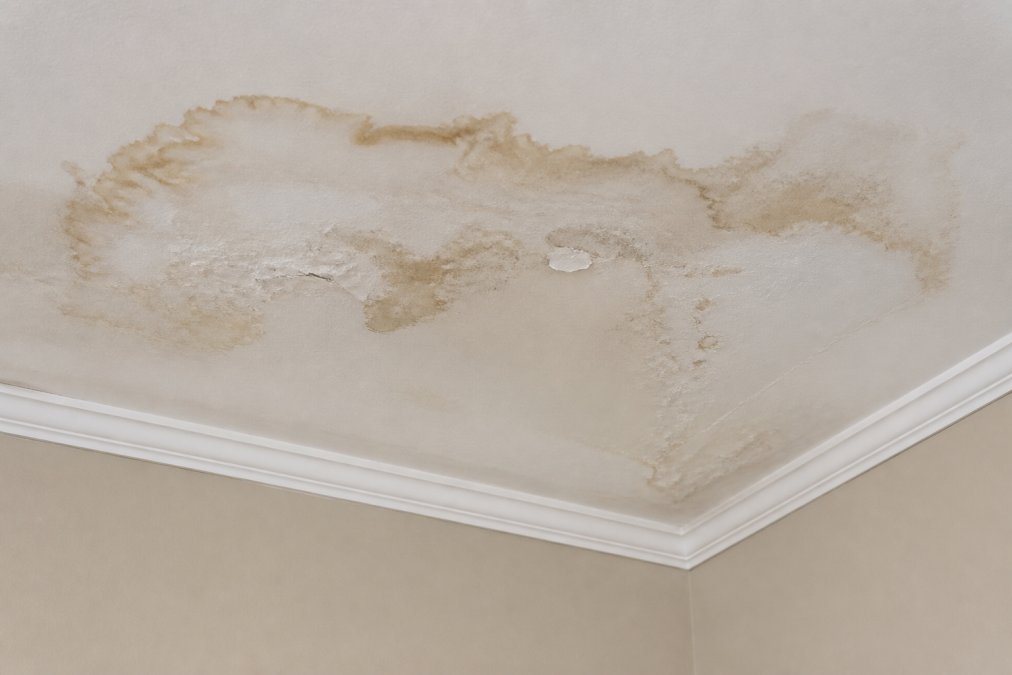
Water stains on ceilings and walls
Water stains are the most visible indicator of a roof leak. They appear as brown, yellow, or gray discolored patches on drywall or plaster, often growing larger over weeks.
Look for these patterns:
- Round or irregular shapes on ceilings
- Stains that grow after rain or snowmelt
- Multiple stains in the same area (sign of a persistent leak)
- Stains near exterior walls or under roof valleys
Peeling paint and sagging drywall
Peeling paint often follows water stains, occurring weeks or months after water first enters as moisture soaks into drywall and causes paint to lose adhesion.
Warning signs include:
- Paint bubbling or blistering before it peels
- Soft spots in drywall that indent when touched
- Visible sag or wave in the ceiling line
- Drywall edges that crumble or crease easily
Mold and musty odors
Mold grows wherever moisture persists, appearing as fuzzy black, green, white, or orange growth on attic rafters, insulation, or drywall.
Exterior Signs That Indicate a Roof Leak
You don’t have to wait for interior water damage. Exterior signs tell you a leak is coming. Regular roof inspections catch these problems before water enters your home.
Missing or damaged shingles
Missing shingles expose the underlayment and wood beneath, allowing water to enter immediately. Even one missing shingle can allow water into your attic.
Damaged shingles include:
- Shingles blown off by wind
- Shingles with cracks or splits
- Shingles curling or lifting at the edges
- Shingles with large missing sections
Deteriorated flashing and seals
Flashing is the metal or rubber seal around roof penetrations (pipes, vents, chimneys) that prevents water from entering these vulnerable spots.
Deteriorated flashing shows:
- Rust or corrosion on metal flashing
- Cracks or gaps in rubber seals
- Separation between flashing and the roof
- Visible gaps where water can enter
Granule loss and curling shingles
Granules are the small stones on asphalt shingles that protect underlying asphalt from UV damage. As shingles age, granules wash away into gutters and downspouts.
Exterior damage always precedes interior water damage. A missing shingle or curled edge today becomes a ceiling stain in weeks. Regular exterior inspection catches problems before they enter your home.
How to Inspect Your Attic for Roof Leaks Safely
Your attic is where leaks reveal themselves first. Water enters through the roof and soaks into insulation, rafters, and sheathing before it drips down to ceilings below. Attic inspection is the most reliable way to detect roof leaks early.
What to look for in your attic
Enter your attic with a flashlight and wear a mask. Attics contain dust, fiberglass, and potential mold. Bring a helper. Never walk on insulation alone, you can fall through the ceiling below.
Look for these signs:
- Dark spots or staining on rafters and sheathing
- Wet insulation or damp spots
- Mold growth (black, green, or white fuzzy patches)
- Rusted nails or metal fasteners
- Visible water trails on wood surfaces
- Soft or spongy wood when you press gently
Timing and seasonal considerations
Inspect your attic after heavy rain or snowmelt when leaks are most active and obvious. Timing your inspection right increases the chance of finding active leaks.
Seasonal inspection schedule:
- Spring: After winter snow and ice dam season
- Summer: After heavy thunderstorms
- Fall: Before winter weather arrives
- Winter: After significant snowfall (if safe to access)
Common Causes of Roof Leaks and How to Prevent Them
Understanding what causes leaks helps you prevent them. Most leaks result from predictable problems that proper maintenance can avoid.
Weather and storm damage
Wind, hail, and heavy rain damage roofs constantly. Strong wind lifts and tears shingles, hail cracks and punctures them, and heavy rain overwhelms gutters.
Prevention steps:
- Keep gutters and downspouts clear of debris
- Trim tree branches hanging over the roof
- Secure loose flashing before storms hit
- Replace damaged shingles promptly
- Have a professional inspect after major storms
Poor ventilation and ice dams
Poor attic ventilation traps moisture and heat. Warm, moist air condenses on cold roof surfaces. This moisture soaks into insulation and wood, creating ideal conditions for mold and rot.
Ventilation improvement prevents both problems:
- Install soffit vents to allow air intake
- Ensure ridge vents aren’t blocked
- Add attic fans if natural ventilation is inadequate
- Seal air leaks that let warm air escape into the attic
- Add proper insulation to reduce heat loss
Ice dam prevention in winter:
- Remove snow from eaves with a rake
- Install heated cable along eaves (temporary measure)
- Improve attic insulation and ventilation (permanent fix)
- Ensure gutters drain freely
Aging materials and lack of maintenance
Roofs age predictably. Asphalt shingles last 15-20 years, and lack of maintenance accelerates failure.
Maintenance prevents premature failure:
- Clear gutters twice yearly
- Remove debris from roof surface
- Trim overhanging branches
- Inspect after storms
- Replace damaged shingles promptly
- Check flashing annually
- Have a professional inspection every 3-5 years
Ignoring small problems creates big ones. A single missing shingle allows water into your attic. Within weeks, that water spreads to framing, insulation, and walls. By the time you notice ceiling stains, the hidden damage is extensive. A $200 shingle replacement prevents a $10,000 restoration.
Roof Maintenance Checklist for Ohio Homes
Ohio’s climate creates specific roof challenges. Heavy snow, ice dams, and spring thaw put stress on roofs. This checklist helps Liberty Twp homeowners maintain their roofs year-round.
Spring Maintenance (March-May):
- Clear winter debris from roof and gutters
- Inspect for ice dam damage
- Check for missing shingles or flashing damage
- Look for mold in attic after snowmelt
- Trim tree branches over roof
- Check gutters for proper drainage
Summer Maintenance (June-August):
- After storms, inspect for hail or wind damage
- Clean gutters mid-summer
- Check attic for moisture or leaks
- Inspect flashing around vents and chimneys
- Look for granule loss in gutters
- Document any damage with photos
Fall Maintenance (September-November):
- Clear leaves and debris from gutters
- Inspect roof for winter preparation
- Check attic ventilation
- Trim branches before winter storms
- Seal any gaps in flashing
- Have professional inspection before winter
Winter Maintenance (December-February):
- Remove snow from eaves to prevent ice dams
- Monitor for water stains after heavy snow
- Check attic after thaw periods
- Document any leaks or damage
- Plan spring repairs
When to Call a Professional Roofer
DIY inspection helps spot problems, but professional assessment is essential.Roofers have training and equipment to safely access roofs, identify hidden problems, and recommend the right repairs.
Call a professional roofer when you notice:
- Water stains on ceilings or walls
- Missing or damaged shingles
- Sagging drywall or peeling paint
- Mold in the attic
- Damaged flashing
- After major storms
- Before selling your home
- If your roof is over 15 years old
Homeowners who’ve noticed water stains, missing shingles, or attic moisture and want a professional assessment before problems worsen. Also ideal for homeowners preparing to sell or those with roofs over 15 years old who need a condition evaluation.
Frequently Asked Questions
What are the early warning signs of a roof leak?
Early signs include water stains on ceilings or walls, peeling paint, sagging drywall, and musty odors in your attic or upper floors. Outside, look for missing shingles, damaged flashing around chimneys and vents, and granule loss in gutters. Catching these signs quickly prevents water from spreading deeper into your home’s structure and insulation.
How can I inspect my roof for leaks without getting on a ladder?
Start by checking your attic during daylight with a flashlight. Look for water stains, mold, or wet insulation along the roof line. From the ground, use binoculars to examine shingles, flashing, and gutters for visible damage. If you spot concerning signs or feel unsafe climbing, contact a professional roofer who can safely assess the entire roof and identify leaks you might miss.
Does a small water stain on the ceiling mean I have a roof leak?
Not always. Water stains can also come from condensation, plumbing leaks, or HVAC issues. However, any unexplained stain warrants investigation. Check your attic above the stain for moisture, mold, or wet insulation. If the stain grows larger after rain or snow melts, a roof leak is likely. When in doubt, a professional inspection pinpoints the actual source and prevents small problems from becoming costly damage.
How often should I have my roof professionally inspected?
Most roofs benefit from a professional inspection every few years. After severe storms, hail, or heavy snow, schedule an inspection promptly to catch damage early. Regular maintenance and inspections extend your roof’s life and help you avoid unexpected leaks that damage your home’s interior and structure.