Table of Contents
- Why Is My Roof Leaking: Common Causes Explained
- How to Find a Roof Leak: Interior vs. Exterior Identification
- Emergency Roof Leak Patch: What to Do When You Find a Leak
- When to Replace vs. Repair Your Roof: A Practical Guide
- Roof Leak Repair Cost: Insurance Claims and Documentation
- Seasonal Maintenance Checklist to Prevent Future Leaks
- Conclusion: Protecting Your Home From Roof Leaks
Last Updated: July 13, 2026
Why Is My Roof Leaking: Common Causes Explained
Water stains on your ceiling or dampness in your attic signal a roof leak that requires prompt attention. At DGK Home Solutions, we’ve spent over 20 years identifying roof leak sources for homeowners across the Greater Cincinnati area. Most leaks result from multiple factors rather than a single failure point. Water finds gaps in flashing, works through cracks in shingles, or pools in valleys where drainage fails. The longer a leak persists undetected, the more damage spreads to your attic, insulation, and structural framing.
Broken or Missing Shingles and Tiles
Damaged shingles are the most visible cause of roof leaks. A single missing shingle exposes the underlayment beneath, the protective layer designed to shed water, not stop it. Wind, hail, age, and foot traffic all cause shingles to crack, curl, or blow away completely.
Look for curling or buckling edges, granule loss (bare spots where protective grit has worn away), cracks perpendicular to seams, blistering, or completely missing shingles. When shingles fail, water flows sideways under remaining shingles, traveling along the roof deck until it finds a gap. This lateral movement means the leak often appears far from the actual damage point.
Check your shingles from the ground with binoculars before climbing a ladder. Missing shingles and large bald patches are visible from below, avoiding the risk of a fall.
Tile roofs develop similar problems, with broken tiles cracking under impact or freeze-thaw cycles and requiring individual replacement.
Roof Flashing and Pipe Boot Failures
Flashing is the metal trim that directs water away from roof penetrations, chimneys, vents, skylights, and plumbing stacks. Pipe boots are rubber or metal sleeves that seal around vent pipes. These components are among the most common leak sources because they experience constant movement and UV exposure.
Flashing fails through rust or corrosion, separation from the roof surface as sealant deteriorates, improper installation, and missing or deteriorated caulk. Water doesn’t need much space to penetrate, a gap as small as 1/8 inch allows water to seep underneath during heavy rain or snowmelt, traveling 10-20 feet before appearing as a ceiling leak.
Never seal flashing with roof cement or caulk as a permanent fix. These materials harden and crack within 2-3 years. Proper flashing repair requires removal and reinstallation with appropriate overlap and fastening.
Clogged Gutters and Drainage Issues
When gutters clog with leaves and debris, water backs up and pools on the roof instead of flowing away. Standing water accelerates deterioration of shingles and creates ideal conditions for water intrusion.
Watch for water overflowing from gutters during rain, standing water visible days after rain, sagging gutters pulling away from the fascia, and moss or algae growing inside gutters. When gutters overflow, water cascades down the fascia and soffit, eventually finding its way into the attic through ventilation openings.
Clean gutters twice yearly, spring and fall, before leaves accumulate. This simple maintenance prevents 30-40% of water-related roof problems and extends roofing material life by years.
Age-Related Wear and Tear
Asphalt shingle roofs typically last 20-25 years. Tile and metal roofs last 40-50 years or more, but eventually fail. As roofing materials age, they lose their ability to flex and shed water effectively.
Age-related deterioration includes granule loss accelerating, shingles becoming brittle and prone to cracking, sealant strips hardening and breaking, and underlayment deteriorating. A roof that’s 20+ years old may appear fine from the ground, but internal deterioration is often advanced. If your roof is approaching the end of its expected lifespan, consider a professional inspection to assess remaining life.
Ice Damming and Winter Weather Damage
Ice dams form when warm air from your attic melts snow on the roof, but water refreezes at the cold roof edge before draining. This creates a wall of ice that traps meltwater behind it, forcing water under shingles and into your attic.
Ice dams develop when attic insulation is inadequate, ventilation is blocked, or gutters are clogged. Ice dams are particularly damaging because trapped water sits against your roof for hours or days, forcing its way through every small gap. Proper attic ventilation and insulation prevent most ice dam problems.
Roof Ventilation Problems and Moisture Intrusion
Roof ventilation removes heat from your attic in summer and maintains consistent cold temperatures in winter. Without proper ventilation, moisture accumulates, condensation forms, and underlayment deteriorates from below.
Ventilation problems include blocked soffit vents, ridge vents clogged with debris, insufficient vent area, and insulation blocking airflow. Check your attic ventilation by looking for air movement at soffit vents, clear ridge vents, absence of moisture stains or mold on roof decking, and dry insulation. Proper ventilation requires balance between intake (soffit vents) and exhaust (ridge or gable vents).
How to Find a Roof Leak: Interior vs. Exterior Identification
Finding the exact location of a roof leak requires both interior investigation and exterior inspection. The leak you see inside is rarely directly below the hole in the roof, water travels along the roof deck, sometimes 10-20 feet before dripping into your attic.
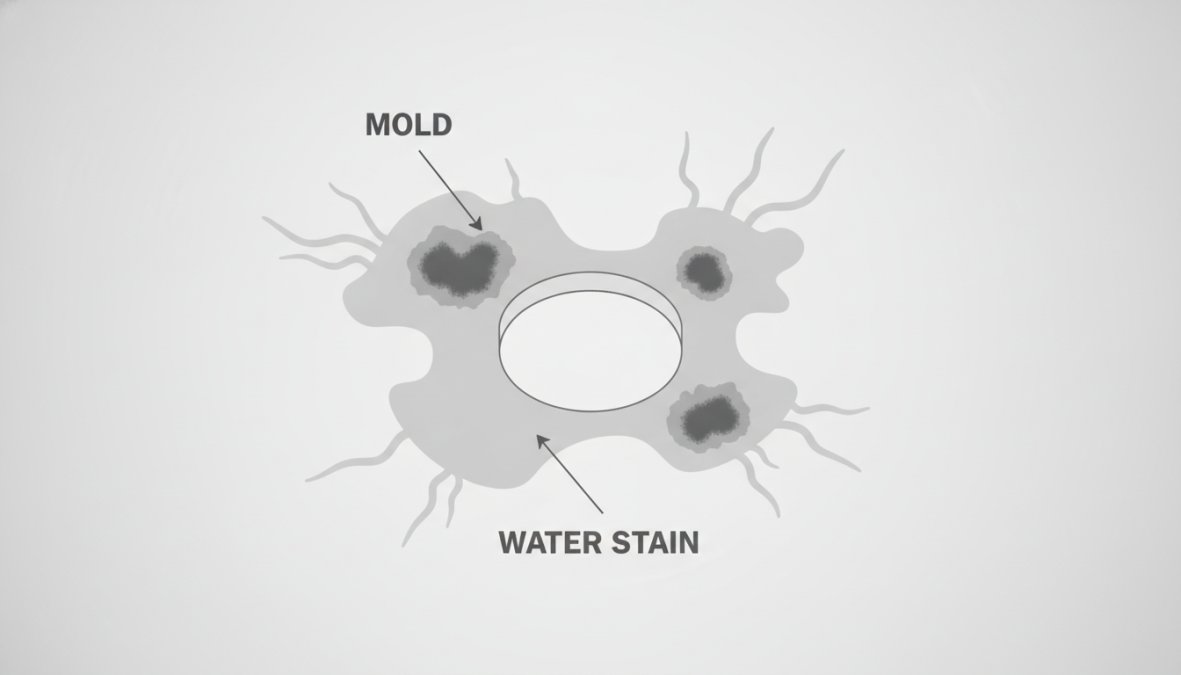
Signs Your Roof Is Leaking Inside Your Home
Start your investigation in the attic, where water enters your home first. Look for water stains on the roof deck, wet or damp insulation, mold or mildew growth on wood framing, discoloration on drywall ceilings, soft or sagging drywall, and musty odors.
The location of interior water damage provides clues about where to look outside. Water stains on the roof deck point toward the leak area. Timing matters too: a leak appearing only during heavy rain suggests a flashing problem, while a leak appearing after rain stops suggests ice damming or gutter overflow.
Inspecting Your Roof From the Outside
External inspection confirms what interior signs suggest. Start with binocular inspection of shingles for missing pieces, curling, or bald spots. Check flashing around chimneys, vents, and skylights for separation or corrosion. Inspect gutters for debris and sagging sections. Look at roof valleys for granule loss or debris accumulation.
Focus on areas where leaks commonly develop: within 3 feet of any roof penetration, along roof valleys, at the roof edge where gutters attach, and areas with visible shingle damage.
Safety Protocols for Roof Inspection
Climbing on a roof is dangerous. Never climb if the roof is wet or icy, the pitch is steeper than 6:12, you lack experience with heights, or weather is windy or unstable.
If you must access the roof, use a sturdy ladder with someone holding it, wear rubber-soled shoes, use a safety harness attached to a secure anchor point, and move slowly and deliberately.
A roof inspection injury is not worth the risk. If you’re uncomfortable with heights or your roof is steep, hire a professional. DGK Home Solutions offers free inspections without putting you in danger.
Emergency Roof Leak Patch: What to Do When You Find a Leak
When water is actively dripping into your home, immediate action prevents water damage to insulation, drywall, and structural framing.
Temporary Tarping and Containment Steps
Tarping is the most effective emergency measure. A properly installed tarp diverts water away from the leak area and gives you time to arrange permanent repairs.
Follow these tarping steps: (1) Locate the leak area using interior water stains and exterior inspection, marking it with chalk or a flag. (2) Gather heavy-duty tarp (at least 6 mil thickness), 2×4 lumber, roofing nails, and a hammer. The tarp should extend at least 4 feet beyond the leak in all directions. (3) Clear debris from the area around the leak. (4) Lay the tarp over the leak area, sloping downward toward gutters. (5) Secure the tarp using 2×4 boards along edges, nailing them to the roof. (6) Ensure water draining from the tarp flows into gutters and away from the foundation.
A temporary tarp typically lasts 2-4 weeks before deteriorating. Use this time to contact a roofing contractor for permanent repairs. Place buckets under active drips to prevent water damage to flooring.
Common Mistakes to Avoid During Emergency Repairs
Avoid using plastic sheeting instead of tarps, plastic is too thin and tears easily. Don’t secure tarps with just nails; use boards along edges to distribute pressure. Don’t ignore interior water damage; wet insulation and drywall develop mold within 24-48 hours. Don’t delay permanent repairs; temporary patches are just that, temporary.
An emergency tarp buys you time, not a permanent solution. Schedule professional repairs within a week of discovering a leak.
When to Replace vs. Repair Your Roof: A Practical Guide
Not every leak requires roof replacement. The decision depends on damage extent, your roof’s age, and repair cost versus replacement cost.
Evaluating Roof Age and Structural Integrity
Your roof’s age is the primary factor in the repair-versus-replace decision. Typical roof lifespans are: asphalt shingles (20-25 years), architectural shingles (25-30 years), metal roofing (40-50 years), and tile roofing (50+ years).
If your roof is within 5 years of its expected lifespan, replacement is usually more cost-effective than repair. Multiple repairs in a short timeframe signal that failure is accelerating.
Structural integrity assessment requires professional inspection. Your contractor should examine roof deck condition, underlayment condition, flashing and sealant, ventilation adequacy, and shingle condition. Water damage to the roof deck is a replacement indicator, if wood framing is soft, rotted, or significantly deteriorated, the structural support is compromised.
Repair vs. Replacement Decision Framework
| Factor | Repair Makes Sense | Replace Is Better |
|---|---|---|
| Roof Age | Under 15 years old | Over 20 years old |
| Damage Extent | Single localized area | Multiple areas or widespread |
| Structural Damage | None visible | Roof deck or framing affected |
| Recent Repairs | None or one previous | Multiple repairs in 5 years |
| Underlayment | Intact and dry | Deteriorated or water-damaged |
| Estimated Repair Cost | Under 50% of replacement | Over 50% of replacement |
Repair is appropriate when: your roof is under 15 years old, damage is localized to one area, the roof deck and underlayment are intact, this is the first repair needed, and repair cost is significantly less than replacement.
Replacement is appropriate when: your roof is 20+ years old, damage affects multiple areas, the roof deck shows water damage, you’ve had multiple repairs in the past 5 years, or repair cost approaches 50% or more of replacement cost.
Get multiple quotes for both repair and replacement. DGK Home Solutions offers free inspections and honest assessments.
Roof Leak Repair Cost: Insurance Claims and Documentation
Roof repairs and replacement are expensive. Understanding your insurance coverage and properly documenting damage can significantly reduce your out-of-pocket costs.
Documentation for Homeowners Insurance Claims
Insurance companies require evidence of damage before approving claims. Document damage immediately after discovery by taking interior and exterior photos, writing detailed descriptions, obtaining repair estimates from contractors, and contacting your insurance agent within days of discovery.
Most insurance companies require an adjuster to inspect damage before approving claims. Provide the adjuster with your photos and documentation, and be present during inspection to point out damage.
What Homeowners Insurance Covers
Standard homeowners insurance covers sudden roof damage from covered perils: wind, hail, ice dams, and falling objects. Coverage typically does NOT include wear and tear, lack of maintenance, gradual leaks from deteriorated flashing, or damage from poor ventilation.
Insurance companies distinguish between sudden damage and gradual deterioration. A roof that leaks because a storm ripped off shingles is covered. A roof that leaks because shingles have deteriorated over 20 years is not.
Report damage within days of discovery. Your policy includes a deductible (typically $500-$1,500) that you pay out of pocket.
Review your homeowners insurance policy annually. Understand your coverage limits, deductibles, and exclusions. If your roof is aging, consider increasing coverage or switching to a policy with better roof protection.
Seasonal Maintenance Checklist to Prevent Future Leaks
Regular maintenance prevents most roof leaks. A simple seasonal checklist catches problems before they cause water damage.
| Season | Task | Frequency |
|---|---|---|
| Spring | Clear gutters and downspouts | Once |
| Spring | Inspect roof for winter damage | Once |
| Summer | Check attic for moisture or mold | Once |
| Fall | Clear gutters before winter | Once |
| Fall | Inspect roof for loose or missing shingles | Once |
| Winter | Monitor attic for ice dam formation | Monthly |
Spring maintenance focuses on winter damage by clearing gutters and checking for missing shingles or damaged flashing. Summer maintenance prevents moisture problems by checking your attic for moisture accumulation or mold growth. Fall maintenance prepares your roof for winter by clearing gutters and inspecting shingles for damage. Winter maintenance focuses on ice dams by monitoring your attic temperature.
Professional inspections every 2-3 years catch problems your seasonal maintenance might miss. A contractor can assess underlayment condition, evaluate structural integrity, and identify aging components before they fail.
Roof leaks are preventable with proper maintenance and prompt repairs. The key is catching problems early, before water damage spreads to your attic, insulation, and structural framing. If you’ve discovered a leak or want a professional assessment of your roof’s condition, DGK Home Solutions offers free inspections and honest evaluations. With over 20 years of experience in residential and commercial roofing, our team can identify the cause of your leak, explain your repair options, and handle everything from emergency tarping to complete roof replacement.
Frequently Asked Questions
What are the most common causes of a roof leak?
The most common causes include broken or missing shingles, roof flashing failures around chimneys and pipe boots, clogged gutters causing water backup, age-related wear to the roof deck and underlayment, and ice damming in winter. Roof ventilation problems and moisture intrusion can also lead to leaks. Identifying which cause applies to your roof is the first step toward effective repair.
How do I find where my roof is leaking if I can't see it from outside?
Start by checking your attic during daylight, look for water stains, discoloration, and mold growth on the roof deck and underlayment. Trace water stains upward to find the entry point; leaks often travel along rafters before dripping. If the attic is inaccessible, look inside for ceiling stains, peeling paint, or damp insulation. Document photos for insurance claims and consult a roofing contractor if you cannot safely locate the source.
Will homeowners insurance cover a roof leak repair?
Coverage depends on the cause. Insurance typically covers sudden, accidental damage like storm damage or fallen branches, but excludes damage from neglect, age-related wear, or lack of maintenance. Document the leak with photos and dates, gather receipts for any temporary repairs, and contact your insurer promptly. A roofing contractor can help assess whether damage qualifies for a claim and provide documentation needed for your homeowners insurance.
Is a leaking roof an emergency that needs immediate repair?
Yes, roof leaks should be treated urgently to prevent structural damage, mold growth, and interior water damage. Apply emergency tarping if weather permits and the roof is safe to access, then contact a roofing contractor for professional assessment. Even small leaks can worsen quickly, especially during heavy rain or winter ice damming. Prompt action protects your home's structural integrity and reduces repair costs long-term.
This article was written using GrandRanker