Table of Contents
- Liquid Applied Roofing vs Single Ply Membrane: Overview
- Feature Comparison Table
- Installation Process and Complexity
- Durability, Lifespan, and Maintenance Requirements
- Commercial Roof Replacement Cost and Long-Term Investment
- Commercial Roof Maintenance Checklist for Both Systems
- Pros and Cons: Which System Wins for Your Project
- Recommendations Based on Project Type and Budget
Last Updated: August 19, 2026
Liquid Applied Roofing vs Single Ply Membrane: Overview
Choosing between liquid applied roofing and single ply membrane comes down to understanding what each system delivers. Both protect your building, but they work differently, cost differently, and perform differently over time. Liquid applied roofing is a seamless, spray-applied coating that bonds directly to your existing roof surface. Single ply membrane is a rolled sheet material, typically TPO, EPDM, or PVC, that gets mechanically fastened or adhered to your roof deck. Liquid applied systems eliminate seams entirely, reducing a major failure point. Single ply membranes offer proven durability over decades and come with extensive warranties. At DGK Home Solutions, we’ve guided property owners through this exact decision, and the right choice depends on your roof’s current condition, budget timeline, and maintenance tolerance.
Feature Comparison Table
| Feature | Liquid Applied Roofing | Single Ply Membrane | Winner |
|---|---|---|---|
| Installation Method | Spray-applied coating | Rolled sheets, mechanically fastened or fully adhered | Liquid (faster, fewer seams) |
| Seams | Seamless (monolithic) | Heat-welded or taped seams | Liquid (eliminates seam failure points) |
| Application Over Existing Roof | Yes (no tear-off needed) | Requires tear-off or overlay | Liquid (reduces waste, faster) |
| Flexibility | High (accommodates building movement) | Moderate to high (depends on material) | Liquid (better for movement) |
| UV Resistance | Excellent (acrylic formulations) | Excellent (all modern formulations) | Tie |
| Chemical Resistance | Good (varies by product) | Good (PVC superior to TPO) | PVC membrane |
| Puncture Resistance | Moderate (can be reinforced) | High (thicker membranes resist punctures) | Single ply |
| Maintenance Frequency | Annual inspections, recoating every 5-10 years | Annual inspections, minimal intervention | Single ply (lower maintenance) |
| Lifespan | 20-30 years (with recoating) | 25-40 years (depending on material) | Single ply (longer without recoating) |
| Initial Cost Range | Lower per square foot | Higher per square foot | Liquid (upfront savings) |
| Long-Term Cost | Higher (recoating required) | Lower (no recoating needed) | Single ply (lower lifetime cost) |
| Best For | Existing roofs, budget-conscious, complex geometries | New construction, long-term performance, minimal maintenance | Depends on priorities |
Installation Process and Complexity
Installation method determines how quickly your roof gets done, how much disruption you face, and whether you can occupy the building during work.
Liquid applied roofing installation is faster and simpler than single ply. A crew arrives with spray equipment, preps the existing surface, and applies the coating in one continuous pass. There’s no need to tear off the old roof. Application takes 2-5 days depending on roof size, and the system cures within 24-48 hours. Your building returns to normal operation quickly, which matters when managing occupied commercial space.
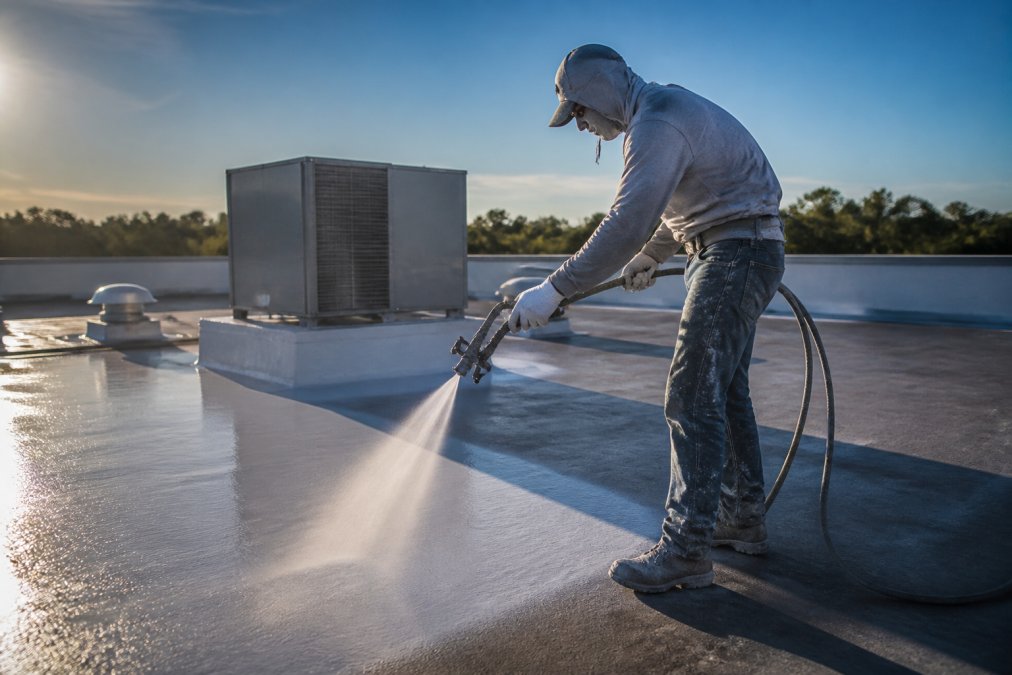
Liquid Applied Roofing Installation
Your roofing contractor inspects the existing roof, cleans debris and loose material, repairs any damage, and applies primer if needed. Then they spray the acrylic or polyurethane coating using commercial equipment. The coating self-levels, fills small cracks, and creates a seamless membrane across the entire roof surface with no seams to fail, no heat-welding equipment needed, and no fasteners to pop loose over time.
Weather matters. Liquid coatings require specific application conditions: temperatures between 50-85°F, low wind, and no rain during application or curing. If conditions aren’t right, your contractor waits, which can extend the project timeline unpredictably.
The real advantage is simplicity. No specialized welding equipment, no crews with advanced certification, and minimal equipment mobilization. Most commercial roofing contractors can apply liquid systems.
Single Ply Membrane Installation
Single ply installation is more involved. Your contractor must either tear off the existing roof completely or install the new membrane as an overlay. Tear-off creates debris and extends the project timeline. Overlay avoids the tear-off but adds weight to your structure, which your engineer needs to verify.
Once the deck is prepared, the membrane rolls out in wide sheets (typically 10-20 feet wide). The contractor either mechanically fastens the membrane using plates and fasteners, or fully adheres it using adhesive. Then comes the critical step: seaming. Seams are heat-welded (for TPO) or taped (for EPDM and some PVC). Heat-welding requires skilled technicians with specialized equipment. A weak seam is a leak waiting to happen.
Installation takes 5-10 days for a typical commercial roof. Your building is inaccessible during tear-off and the first 24 hours of installation. Single ply systems are more labor-intensive, which shows in the cost. Once installed correctly, single ply membranes require minimal intervention for 25-40 years.
Durability, Lifespan, and Maintenance Requirements
Liquid applied roofing lasts 20-30 years with proper maintenance. Your roof needs annual inspections to catch small damage early. Every 5-10 years, depending on weathering and UV exposure, you’ll need to recoat the system. This recoating extends the lifespan and refreshes the UV protection. Over a 30-year period, you’re looking at 3-5 recoating cycles, each one costing money and requiring your building to be partially unavailable.
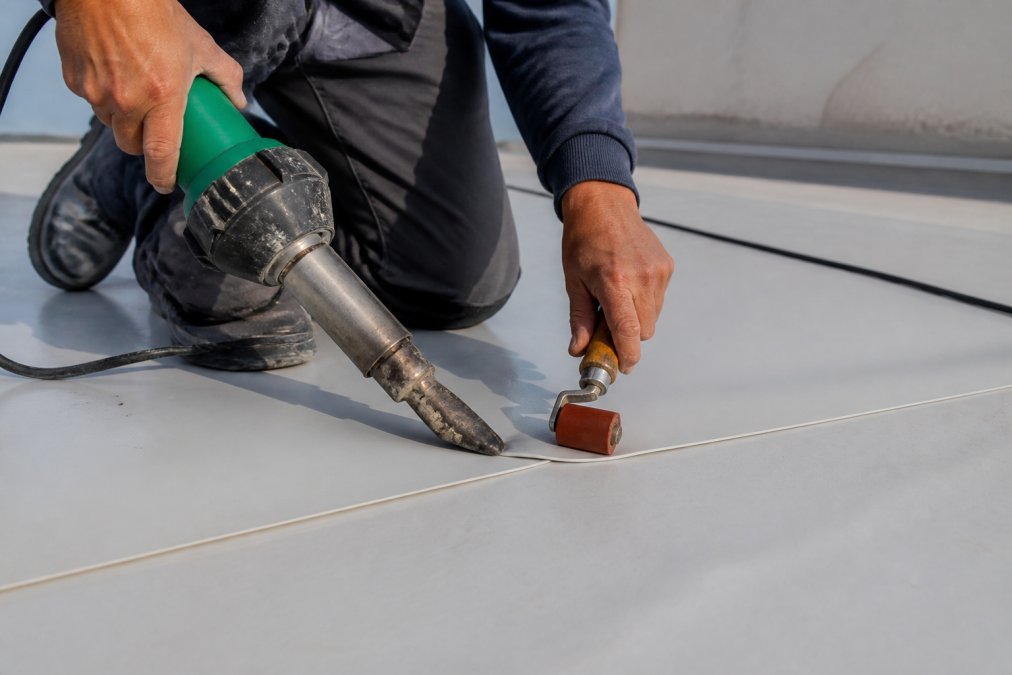
Single ply membranes last 25-40 years without recoating. EPDM (rubber) typically lasts 25-30 years. TPO (thermoplastic polyolefin) lasts 30-35 years. PVC (polyvinyl chloride) lasts 30-40 years. The membrane doesn’t degrade the way coatings do. You still need annual inspections and occasional repairs if something punctures or a seam fails, but you’re not committing to a major recoating project every 5-10 years.
Maintenance demands differ too. Liquid applied roofing needs regular cleaning to prevent algae and debris buildup, which can trap moisture and accelerate coating breakdown. Single ply membranes are more forgiving; they shed water effectively and don’t require the same level of preventive cleaning. A debris removal and visual inspection once or twice a year is usually sufficient.
If a section of liquid applied roofing gets damaged, repair is straightforward: clean the area and reapply coating. If a single ply membrane tears, the repair is more involved but still manageable. Both systems can be repaired, but single ply repairs are more durable because they’re mechanically bonded.
Commercial Roof Replacement Cost and Long-Term Investment
Budget is where many property owners make their decision, but you need to think in terms of total cost of ownership, not just the price tag on installation day.
Liquid applied roofing has a lower initial cost. Materials and labor are less expensive than single ply membrane installation, especially when you factor in the cost avoidance of not tearing off the old roof. For a 10,000 square foot commercial roof in Liberty Twp, liquid applied coating might cost less before you add in tear-off expenses.
But here’s where the math shifts over time. That lower initial cost assumes you’ll maintain the system properly. Annual inspections, occasional spot repairs, and recoating every 5-10 years add up. Over 30 years, you’re making multiple capital investments just to keep the roof functioning.
Single ply membrane costs more upfront. Tear-off, new membrane, seaming, and labor are significant expenses. But once it’s installed, your ongoing costs are minimal. Inspections are free or very cheap. Repairs are rare if the system was installed correctly. You’re not budgeting for a major recoating project in year 7. The long-term cost per year is lower, even though the upfront number looks higher.
For property owners planning to hold the building for 20+ years, single ply usually wins on total cost of ownership. For those who might sell or refinance in 5-10 years, liquid applied roofing’s lower upfront cost might be more attractive.
Commercial Roof Maintenance Checklist for Both Systems
Preventive maintenance keeps both systems functioning and extends their lifespan.
For Liquid Applied Roofing:
- Inspect roof twice yearly (spring and fall) for cracks, blisters, or peeling
- Remove debris, leaves, and standing water immediately after storms
- Clean the roof surface annually to prevent algae and mold growth
- Check all penetrations (vents, pipes, skylights) for separation or deterioration
- Document any damage with photos and contact your contractor for repairs
- Plan for recoating every 5-10 years based on UV exposure and weathering
- After hail or severe weather, schedule an inspection within 48 hours
- Keep records of all inspections, repairs, and maintenance performed
For Single Ply Membrane:
- Inspect roof twice yearly for punctures, tears, or seam separation
- Remove debris and standing water after storms
- Check all seams visually for gaps or deterioration
- Inspect all penetrations and flashing for damage
- Document damage with photos and contact your contractor immediately
- Avoid walking on the roof unnecessarily (footprints can weaken membranes)
- Keep records of all inspections and repairs
- Schedule professional inspection after major storms or hail events
Both systems benefit from a documented maintenance plan. Your insurance company may even offer discounts for properties with regular roof inspections and maintenance records.
Pros and Cons: Which System Wins for Your Project
Liquid Applied Roofing Wins When:
You have an existing roof in decent condition and want to avoid the cost and hassle of a full tear-off. You need the project done quickly and can’t afford extended downtime. Your roof has complex geometry, skylights, or irregular shapes that make seaming difficult. You’re budget-conscious and prioritize lower upfront costs. You’re comfortable with periodic maintenance and recoating as part of roof ownership.
The seamless nature of liquid applied systems means fewer failure points. There are no seams to separate, no fasteners to corrode, and no heat-welded joints that might fail.
Single Ply Membrane Wins When:
You’re installing a new roof on a building where tear-off is already planned. You want maximum lifespan with minimal ongoing maintenance. You’re willing to pay more upfront for 30+ years of reliable protection without recoating. You prefer a system with extensive warranties and proven long-term performance. Your building will be occupied for decades, and you want to minimize future roof-related disruptions.
Single ply membranes also offer better performance in specific conditions. PVC membranes handle chemical exposure better than acrylic coatings (important if your roof is near restaurants or industrial facilities). TPO offers excellent energy efficiency through solar reflectivity, which can reduce cooling costs.
The Real Trade-off:
Liquid applied roofing is the "pay less now, maintain more later" option. Single ply membrane is the "pay more now, maintain less later" option. Your choice depends on your financial priorities, how long you’ll own the property, and your tolerance for ongoing maintenance.
Recommendations Based on Project Type and Budget
For Budget-Conscious Property Owners:
If you’re managing cash flow tightly, liquid applied roofing makes sense. The lower upfront cost frees capital for other improvements. Just commit to the maintenance schedule: annual inspections and recoating every 7-10 years will keep the system functioning. Work with a contractor you trust to perform honest inspections and catch problems early.
For Long-Term Building Owners:
If you own the property outright and plan to hold it for 20+ years, single ply membrane is the better investment. The higher initial cost is offset by lower lifetime maintenance, fewer disruptions, and superior long-term performance.
For New Construction or Full Tear-off Projects:
Single ply membrane is the standard choice for new builds. You’re already removing the old roof, so the tear-off cost isn’t incremental. Install a system that will last 30+ years and minimize future maintenance headaches.
For Historic or Complex-Geometry Roofs:
Liquid applied roofing is often the better fit. Historic homes in Liberty Twp with unusual roof lines, multiple skylights, and irregular angles are difficult to cover with large membrane sheets. Liquid coating flows around obstacles, fills cracks, and creates a seamless protective layer without requiring custom seaming work.
For Commercial Properties with Specific Environmental Concerns:
If your building is near restaurants, manufacturing facilities, or areas with chemical exposure, specify a PVC single ply membrane. PVC’s superior chemical resistance will protect your roof longer than acrylic coatings. If energy efficiency is a priority, TPO’s reflectivity can reduce cooling costs.
Choosing between liquid applied roofing and single ply membrane requires understanding your building’s specific needs, your budget timeline, and your maintenance tolerance. Both systems protect your property effectively when installed and maintained correctly. DGK Home Solutions has installed both types across residential and commercial properties in Liberty Twp and the Greater Cincinnati area. We’ll assess your roof’s current condition, explain the trade-offs honestly, and recommend the system that makes sense for your situation. Get a free quote today and let’s find the right roofing solution for your property.
Frequently Asked Questions
What is the lifespan difference between liquid applied roofing and single ply membranes?
Liquid applied roofing systems typically last 10-20 years depending on the product and maintenance, with some offering unlimited lifespan through periodic recoating. Single ply membranes like TPO and EPDM generally last 20-30 years or longer with proper maintenance. Both can exceed their initial warranty periods if cared for properly, but single ply systems tend to offer longer initial warranties and more predictable long-term durability.
Which roofing system is more cost-effective for commercial buildings?
Liquid applied roofing typically costs less upfront ($2.80-$4.00 per square foot for a 10-15 year system) and eliminates tear-off costs by applying over existing roofs. Single ply membranes have higher installation costs but deliver longer lifespans and lower maintenance needs. For buildings in Liberty Twp seeking immediate budget relief, liquid applied systems win; for long-term value, single ply often proves more cost-effective over 30+ years.
Does liquid applied roofing require more maintenance than TPO or PVC?
Liquid applied roofing requires periodic inspections and recoating every 5-10 years to maintain warranty coverage and performance. Single ply membranes need less frequent maintenance but require careful seam inspection and prompt repair of any punctures or damage. Liquid applied systems demand more active upkeep; single ply systems are more forgiving once installed correctly.
Can liquid applied membranes be installed over existing single ply roofs?
Yes, liquid applied roofing can be applied over existing traditional systems without tearing off the old roof, reducing waste and labor costs. This makes liquid applied systems ideal for restoration projects where the existing roof is structurally sound but needs waterproofing renewal. Single ply membranes, however, typically require removal of the old roof before installation.
How do weather conditions in Liberty Twp affect installation of these systems?
Liquid applied roofing requires specific temperature and humidity conditions during application and curing, making installation sensitive to Ohio's seasonal weather swings. Single ply membranes are more forgiving and can be installed across a wider range of temperatures. Winter delays are more likely with liquid applied systems; single ply installations proceed more reliably year-round with fewer weather-related setbacks.
This article was written using GrandRanker