Table of Contents
- Why Siding Material Matters in Ohio’s Climate
- Vinyl Siding: Affordability and Low Maintenance
- Fiber Cement vs Vinyl Siding in Ohio Conditions
- Metal and Wood Siding: Durability Trade-Offs
- Signs of Siding Damage from Winter Weather
- Siding Installation Cost and Timeline in Liberty Township
- Material Comparison Table and Selection Guide
- Conclusion
Last Updated: August 18, 2026
Why Siding Material Matters in Ohio’s Climate
Ohio’s weather demands siding that withstands dramatic seasonal swings. Winter temperatures plunge below freezing, freeze-thaw cycles crack inflexible materials, and summer brings intense UV exposure. Spring and fall introduce moisture that seeps into poorly sealed joints. The right siding material protects your home for decades while keeping maintenance manageable.
Choosing the wrong material costs twice: once in repairs, and again while your home sits vulnerable. At DGK Home Solutions, we’ve helped homeowners in the Greater Cincinnati area select siding that performs in Ohio’s climate. The material you choose affects durability, maintenance demands, and structural damage risk if the siding fails. A cheap option that fails in five years costs far more than a premium choice lasting 40 years.
Ohio’s freeze-thaw cycles, UV exposure, and moisture are the three forces that damage siding fastest. Your material choice determines whether your home stays protected or needs costly repairs within a few years.
Vinyl Siding: Affordability and Low Maintenance
Vinyl siding is the most common choice in Ohio because it’s inexpensive and requires almost no maintenance. It doesn’t rot, doesn’t need painting, and won’t rust. When installed correctly, it sheds water reliably and won’t harbor insects or mold.
The problem emerges during Ohio’s extreme conditions. Vinyl becomes brittle below 20 degrees. A hard impact from ice, wind debris, or a ladder can crack panels that would flex in warmer weather. Once cracked, matching colors from different years is nearly impossible, forcing full section replacement.
UV exposure also degrades vinyl over time. After 15-20 years in Ohio’s summer sun, vinyl fades and becomes chalky. The cost advantage of vinyl disappears when factoring in replacement cycles. For homeowners staying 30+ years, vinyl becomes expensive when totaling replacements.
Never install vinyl siding in late fall or early winter. Cold temperatures make vinyl brittle during installation, and panels can crack during the process. Spring and summer are the only safe installation windows in Ohio.
Vinyl works best for homeowners planning to sell within 15 years or prioritizing lowest upfront cost.
Fiber Cement vs Vinyl Siding in Ohio Conditions
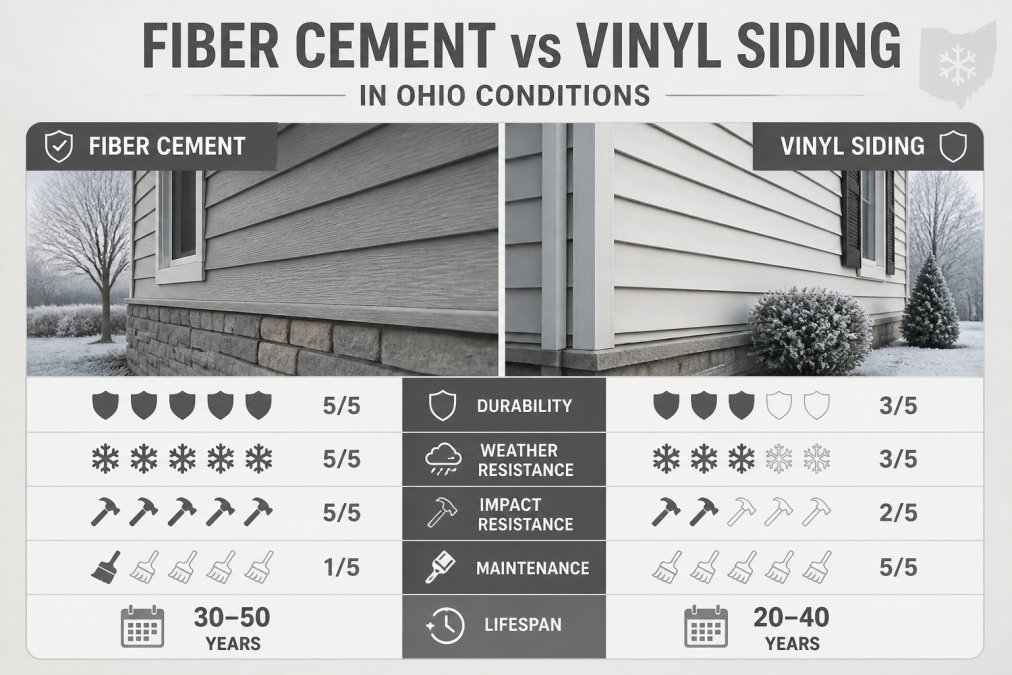
Fiber cement is a composite of wood fiber, cement, and sand, dense and rigid rather than flexible. This density makes it superior in Ohio’s climate. It doesn’t become brittle in cold, won’t warp, and won’t absorb moisture into the core. Fiber cement outlasts vinyl by decades.
The durability advantage comes with trade-offs. Fiber cement is heavier, requiring more labor and sometimes additional structural support. Installation is harder and drives up labor costs. Once installed, maintenance is minimal, similar to vinyl.
Fiber cement requires regular inspection for moisture intrusion at seams and trim. Proper installation with quality flashing and sealant prevents problems. The difference between a 50-year installation and a 15-year failure comes down to whether seams were sealed correctly.
Fiber cement typically costs 50-100% more than vinyl. Spread across 40+ years of ownership, the annual cost difference shrinks considerably. For most homeowners staying long-term, fiber cement is the smarter choice despite higher initial investment.
Metal and Wood Siding: Durability Trade-Offs
Metal siding, typically aluminum or steel, lasts 40+ years and reflects heat better than other materials, reducing cooling costs. The catch is maintenance. Metal dents easily from balls, branches, or pressure washing. Hail can dimple entire sections. Metal requires repainting every 10-15 years to prevent rust.
Wood siding is beautiful but demands constant attention. It requires painting or staining every 5-7 years in Ohio’s climate. UV exposure fades finishes, moisture seeps into wood, and freeze-thaw cycles cause checking and splitting. Insects and rot are real risks without proper sealing.
Metal makes sense for commercial properties or homes where the industrial look works. Wood makes sense for historic homes or homeowners committed to regular maintenance. For most residential properties in Ohio, fiber cement or vinyl are the practical choices.
If you’re drawn to wood siding but want low maintenance, fiber cement can be stained or painted to mimic wood grain, delivering the aesthetic without constant upkeep.
Signs of Siding Damage from Winter Weather
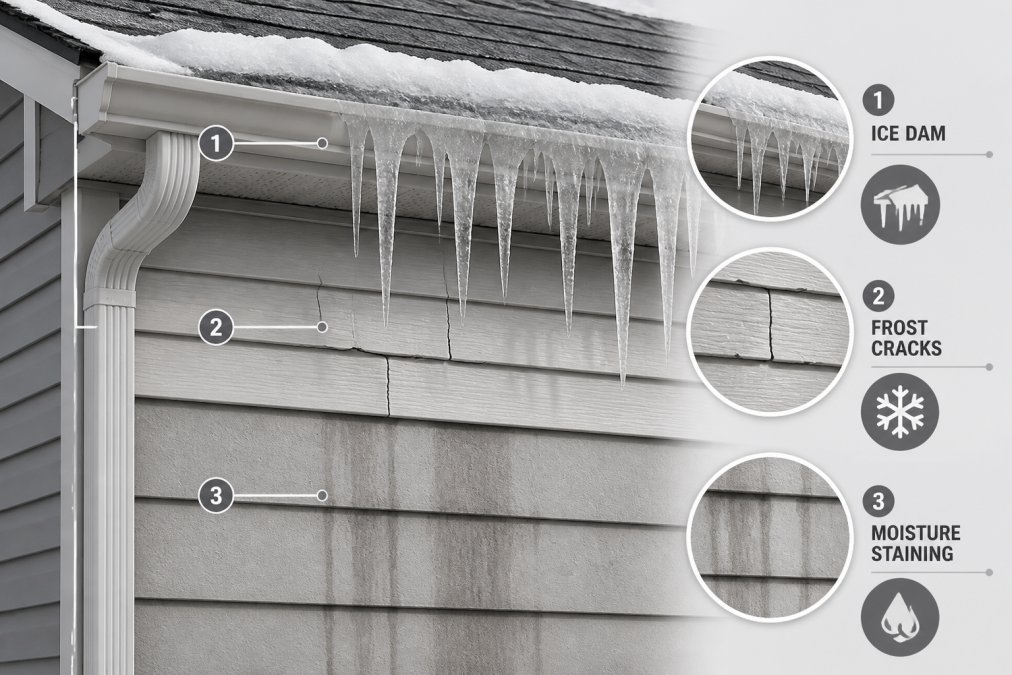
Ice dams form along rooflines when heat melts snow and water refreezes at eaves. The dam blocks drainage, and water backs up under the siding, leading to rot in sheathing and framing behind it.
Frost cracks appear as vertical lines in siding panels, most commonly in fiber cement and vinyl. These form when moisture enters the material, freezes, expands, and cracks the panel from inside, a sign water is getting behind the siding.
Moisture staining shows as dark streaks, usually on the north side where sun doesn’t dry things out. This indicates water is sitting against the siding rather than running off, often from clogged gutters or poor drainage.
Buckling or bulging in siding panels means water is trapped behind them and sheathing is swelling. This requires immediate attention, as water damage can compromise wall structural integrity.
Gaps at trim, joints, or around windows and doors are where water enters. Inspect these areas every spring and fall, and reseal if caulk is cracked or pulling away.
Siding Installation Cost and Timeline in Liberty Township
Installation cost depends on material, home size, and design complexity. Homes with multiple roof angles, dormers, or intricate trim cost more than simple rectangular homes.
Vinyl siding installation typically takes 3-5 days for an average home. Fiber cement takes 5-7 days due to more precise cutting and fitting. Once installers remove old siding, they often find rotted sheathing, damaged framing, or structural issues requiring repair before new siding installation. A detailed inspection before committing helps avoid sticker shock.
Spring through early fall is ideal for siding projects in Ohio. Winter installations are risky, especially with vinyl. Scheduling for May through September gives the best chance of completing on time without weather delays.
DGK Home Solutions has completed siding projects in Liberty Township and the Greater Cincinnati area. Our team handles everything from material selection to final inspection and communicates clearly about timeline and cost before work begins.
Material Comparison Table and Selection Guide
| Material | Durability in Ohio | Maintenance | Upfront Cost | Best For |
|---|---|---|---|---|
| Vinyl | 15-20 years | Minimal | Lowest | Budget-conscious, short-term owners |
| Fiber Cement | 40-50 years | Minimal | Mid-range | Long-term owners, durability priority |
| Metal | 40+ years | High (repainting) | Mid-range | Commercial, industrial aesthetic |
| Wood | 20-30 years | Very high | Mid-range | Historic homes, aesthetic priority |
Start by answering three questions: How long do you plan to stay? How much maintenance are you willing to do? What’s your budget?
If selling within 10 years, vinyl makes financial sense. If staying 20+ years, fiber cement delivers better value despite higher upfront cost. If maintenance is a dealbreaker, eliminate wood immediately. If budget is the primary constraint, vinyl is the only realistic option.
Check with your local building authority or homeowners association for restrictions. Some areas require specific materials or matching original siding types to maintain neighborhood character.
Fiber cement is the best overall choice for most homeowners in Ohio planning to stay long-term. It outperforms vinyl in freeze-thaw cycles, lasts decades longer, and requires minimal maintenance. The higher upfront cost is offset by avoiding replacement cycles that vinyl requires.
Siding protects everything behind it. Choose the wrong material, and you’re paying for repairs that could have been prevented. The best siding materials for Ohio weather balance durability, maintenance, and cost for your specific situation.
DGK Home Solutions has over 20 years of experience helping homeowners in Liberty Township and across the Greater Cincinnati area select and install siding that performs. We provide honest assessments of what your home needs, explain material trade-offs, and handle installation with the precision that makes the difference between a 15-year and 40-year siding. Get a free quote today.
Frequently Asked Questions
What is the most durable siding material for Ohio's freeze-thaw cycles?
Fiber cement siding performs best in freeze-thaw conditions because it resists moisture absorption and won't crack like vinyl when temperatures drop below freezing. Metal siding also handles temperature swings well, though it requires more maintenance. Vinyl becomes brittle in extreme cold and can crack if impacted. For maximum durability in Ohio's winter climate, fiber cement is the top choice despite higher upfront costs.
Is fiber cement siding better than vinyl for homes in this area?
Fiber cement outperforms vinyl in Ohio's climate due to superior moisture resistance and durability through freeze-thaw cycles. However, vinyl costs significantly less and requires minimal maintenance. The choice depends on your priorities: choose fiber cement if longevity and weather resistance matter most; choose vinyl if budget and ease of maintenance are your focus. Both options are viable, fiber cement simply lasts longer in harsh winters.
How often should I inspect my siding in Liberty Township?
Inspect your siding twice yearly, once in spring after winter weather and once in fall before cold months arrive. Look for cracks, moisture stains, loose panels, and signs of ice dam damage. After severe storms, do an immediate inspection. Early detection of damage prevents water infiltration and costly interior repairs. DGK Home Solutions can provide a professional assessment to catch issues before they worsen.
What happens if I find siding damage after a storm?
Document the damage with photos immediately for insurance purposes. Contact your insurer to file a claim, most homeowners insurance covers storm damage. Then reach out to a professional contractor like DGK Home Solutions who can assess the extent of damage and work directly with your insurance company. Prompt action prevents water damage and secondary issues that could cost more to repair later.
This article was written using GrandRanker