Table of Contents
- Understanding Why Roofs Leak
- Damaged or Missing Shingles
- Flashing Failures and Deterioration
- Signs of Roof Damage After a Storm
- How to Find a Roof Leak in the Attic
- Clogged Gutters and Drainage Problems
- Roof Repair Cost and When to Call a Professional
- Conclusion
Last Updated: August 17, 2026
Understanding Why Roofs Leak
A roof leak starts small but becomes catastrophic if left untreated. Water infiltration compromises insulation, rots structural beams, and creates conditions for mold growth that spreads through your home. The frustrating part? Most homeowners don’t realize they have a problem until the damage is already severe.
Understanding the common causes of roof leaks is your first line of defense. At DGK Home Solutions, we’ve spent over 20 years helping homeowners in the Greater Cincinnati area identify and address roof problems before they become expensive emergencies. The difference between a quick repair and a full roof replacement often comes down to catching the problem early.
Roof leaks don’t happen randomly. They occur at predictable weak points where water naturally seeks entry. Knowing these vulnerable spots helps you spot trouble during routine inspections and call a professional before water starts dripping into your living room.
The best time to inspect your roof is after a storm or heavy rain. Look for water stains on your attic ceiling or damp spots in the corners of upper-floor rooms. These are early warning signs that water has already found a way in.
Damaged or Missing Shingles
Missing or damaged shingles are the most visible cause of roof leaks, and they’re among the easiest to spot. When shingles crack, curl, or blow away entirely, they expose the underlying layers of your roof to direct water exposure. Even a single missing shingle creates a direct pathway for water to penetrate your home.
Shingles deteriorate for several reasons. Weather exposure breaks down the asphalt binder over time. High winds tear shingles loose, especially at edges and corners where they’re more vulnerable. Hail impact creates punctures that may not be obvious from the ground. Heavy snow and ice dams force water under shingles that would normally shed it.
What makes this problem tricky is that not all damage is visible from ground level. A cracked shingle on the back side of a roof pitch might go unnoticed for months while water slowly seeps underneath. This is why professional inspections matter, roofers can climb up and examine every surface, not just what you can see from your driveway.
If you notice missing shingles after a storm, don’t wait. Water will find its way in within days of heavy rain. Water damage to your attic, insulation, and roof decking costs thousands.
Asphalt shingles typically last 15-20 years depending on climate and sun exposure. If your roof is approaching this age and you see any curling or missing pieces, plan a replacement rather than patching individual shingles. Piecemeal repairs on an aging roof are temporary fixes that delay the inevitable.
Flashing Failures and Deterioration
Flashing is the metal trim that seals joints where your roof meets other structures, chimneys, skylights, vent pipes, and walls. It’s one of the most common leak sources because it experiences constant expansion and contraction as temperatures change, and it’s exposed to more weather stress than regular roof shingles.
Flashing fails in several ways. The sealant around flashing cracks and peels, allowing water to seep behind the metal. The flashing itself rusts through, especially if it’s older galvanized steel rather than modern aluminum or copper. Installation mistakes create gaps where water can flow underneath. Nails pull loose as the roof shifts, leaving holes that water exploits.
The problem is that flashing leaks often don’t show up immediately in your attic. Water can travel along the inside of the flashing and the roof structure for several feet before it drips down and stains your ceiling. By the time you notice the leak, the source may be far from where the water appears.
Professional roofers inspect flashing closely during routine maintenance because they know these are high-risk areas. If you’re in Liberty Twp or the surrounding region and notice water stains near a chimney or skylight, flashing is likely the culprit. Replacing flashing typically costs less than replacing roof sections, which is why catching these problems early saves money.
Proper flashing installation requires precise measurements, correct fastening, and quality sealant. This is not a DIY repair, improper installation creates more problems than it solves. A professional roofer ensures the flashing sheds water correctly and lasts another 20+ years.
Signs of Roof Damage After a Storm
Storm damage to your roof isn’t always obvious from the ground. High winds, hail, and heavy rain create damage that may take days or weeks to show up as interior leaks. Knowing what to look for helps you catch problems before they cause serious damage.
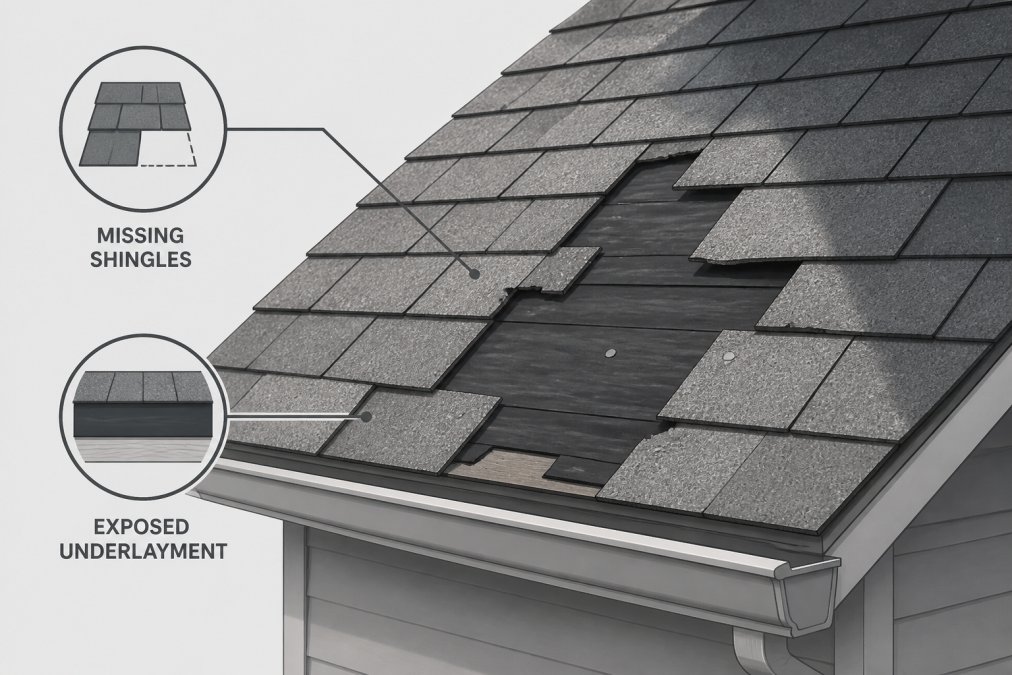
After a significant storm, look for these specific signs of roof damage. Missing shingles are the most obvious, you may see bare spots or shingles in your yard. Cracked or torn shingles appear as jagged splits in the asphalt. Dented or punctured shingles from hail look like small divots across the roof surface. Lifted or curled shingles indicate the sealant has failed. Granule loss (bare spots where the protective grit has worn away) accelerates deterioration.
The challenge is that some damage is only visible from the roof itself. If you’re uncomfortable climbing a ladder, hire a professional to inspect your roof within 24-48 hours of a major storm. Early documentation also helps with insurance claims, photos taken immediately after the storm provide evidence for your adjuster.
Interior signs matter too. Check your attic for water stains, wet insulation, or damp spots on the underside of the roof deck. These indicate water has already penetrated your roof structure. Even if you don’t see active dripping, moisture in the attic means your roof has failed and repairs are needed.
Storm damage often appears in clusters, one area of the roof may have multiple missing shingles while other areas are fine. This pattern helps distinguish storm damage from age-related wear, which is important for insurance claims.
How to Find a Roof Leak in the Attic
When water appears on your ceiling, finding the source isn’t always straightforward. Water travels along rafters and roof structure before dripping down, so the stain on your ceiling may be far from the actual leak location. Attic inspection requires patience and a systematic approach.

Start with basic tools: a flashlight, a moisture meter if you have one, and clean clothes (attic insulation is itchy and dirty). Turn off the attic lights and use your flashlight to examine the underside of the roof. Look for water stains, wet insulation, or visible moisture. These marks show where water has been entering.
Trace the stain upward toward the roof. Water stains often point toward the leak source, though the path may be indirect. Look for gaps in the roof structure, holes around vent pipes, or damaged flashing. If the attic is too cramped or insulation-heavy to navigate safely, stop and call a professional.
A key insight most homeowners miss: the leak source is usually higher on the roof than the stain appears. Water enters at a high point, travels down the underside of the roof deck, and drips where gravity pulls it down. You may need to examine the roof 5-10 feet above the visible stain to find the actual entry point.
If you can’t locate the leak visually, a professional roofer has tools to help. Thermal imaging cameras detect moisture in roof layers even when it’s not visible to the eye. Moisture meters measure water content in insulation and wood. These tools pinpoint problems that visual inspection alone might miss.
Document what you find with photos and measurements. Note the location relative to chimneys, vents, or other roof features. This information helps your roofer or insurance adjuster understand the scope of the problem.
Clogged Gutters and Drainage Problems
Gutters are your roof’s first line of defense against water damage. They channel water away from the roof edge and foundation. When gutters clog with leaves, dirt, and debris, water backs up and spills over the edge. This water then runs down the outside of your home and seeps into your foundation and basement.
But gutters also affect roof leaks directly. Standing water in clogged gutters creates ice dams in winter. Ice builds up at the gutter line and prevents water from draining. Water backs up under the shingles and leaks into your attic. This is especially common in the Cincinnati area where winter temperatures fluctuate above and below freezing.
Gutter maintenance is preventive care that costs almost nothing. Clean gutters twice per year, spring and fall, to remove accumulated debris. In areas with heavy tree coverage, you may need to clean them more often. Proper gutter slope (at least 1/4 inch per 10 feet) ensures water flows toward downspouts instead of pooling.
Downspouts matter too. They should extend at least 4-6 feet away from your foundation. Water dumped directly against your home foundation seeps into the soil and creates hydrostatic pressure that forces water into your basement. Extensions or splash blocks direct water away safely.
If you have older gutters with sagging sections or visible rust, they’re likely not draining properly. Replacement gutters with proper slope and secure fastening prevent water backup and reduce roof leak risk significantly. This is especially important in Liberty Twp and surrounding areas where heavy spring rains are common.
Roof Repair Cost and When to Call a Professional
Deciding whether to repair or replace your roof depends on several factors: the extent of damage, the age of your roof, and whether the problem is localized or widespread. A single damaged area might warrant a repair. Multiple problem areas suggest replacement is more cost-effective.
Small repairs, replacing a few shingles or resealing flashing, are relatively inexpensive and can be completed in a day. These make sense when the rest of your roof is in good condition and you have many years of life remaining. However, if you’re already patching multiple areas, replacement becomes the smarter choice.
The age of your roof is critical. Asphalt shingles typically last 15-20 years. If your roof is approaching or past this age, even a small leak signals that failure is coming. Investing in repairs buys you a few months or years at best. Replacement provides 15-20 more years of protection.
Insurance claims complicate the decision. If your leak resulted from storm damage, your homeowner’s insurance may cover replacement costs after you meet your deductible. Document damage with photos immediately after a storm. Contact your insurance company and request an adjuster inspection before hiring a roofer. Many insurers require this sequence.
A professional roofer provides honest assessment of your situation. They can tell you whether repair is viable or whether replacement is necessary. At DGK Home Solutions, our team in the Greater Cincinnati area provides free inspections and clear recommendations. We explain what we find and why we recommend specific solutions, so you understand the reasoning behind our assessment.
If your roof is less than 10 years old and the damage is limited to one area, repair is usually the right choice. If your roof is over 15 years old or damage is widespread across multiple sections, replacement provides better long-term value and peace of mind.
Don’t ignore roof leaks hoping they’ll resolve themselves. Water damage compounds quickly. Wet insulation loses its effectiveness, leading to higher heating and cooling costs. Mold growth creates health hazards. Structural rot weakens your home’s integrity. A small leak that costs a few hundred dollars to repair today becomes a multi-thousand dollar problem if left untreated.
When you need professional help, choose a roofer with experience in your area. Local contractors understand regional weather patterns and know which solutions work best for your climate. They’re familiar with local building codes and can ensure work meets all requirements. A roofer with years of experience has seen every type of problem and knows the best way to solve it permanently.
Roof leaks demand attention, but they don’t have to be catastrophic. Early detection and professional repair prevent water damage, protect your home’s structure, and save money in the long run. If you’re in the Greater Cincinnati area and concerned about potential leaks, the National Roofing Contractors Association provides guidance on finding qualified professionals. A qualified roofer can inspect your roof, identify problems, and recommend solutions tailored to your home’s specific needs.
DGK Home Solutions offers free roof inspections for homeowners in Liberty Twp and surrounding areas. Our team assesses your roof’s condition, explains what we find, and provides honest recommendations about repair versus replacement. With over 20 years of experience, we’ve helped countless homeowners protect their homes from water damage. Contact us today for a free quote and professional evaluation of your roof’s condition.
Frequently Asked Questions
What are the most common causes of roof leaks?
The most frequent culprits are damaged or missing shingles, deteriorated flashing around chimneys and vents, clogged gutters, and poor drainage. In winter, ice dams can force water under shingles. Aging roofs with brittle materials are also prone to leaks. A professional inspection identifies the exact cause and prevents costly water damage inside your home.
How do I know if my roof leak is an emergency?
A roof leak is urgent if water is actively dripping into living spaces, you notice large water stains spreading quickly, or there's visible mold growth. Leaks during heavy rain or after storms also require immediate attention. Don't wait, water damage compounds rapidly and can compromise structural integrity. Contact a professional right away to prevent thousands in repairs.
How often should I have my roof inspected?
Inspect your roof at least once yearly, ideally in spring after winter weather. Schedule additional inspections after severe storms, high winds, or heavy snow. If your roof is over 15 years old, consider annual professional inspections. Early detection of damage prevents small issues from becoming expensive leaks that damage insulation, drywall, and framing.
Does homeowners insurance cover roof leaks in Ohio?
Coverage depends on the cause. Sudden damage from storms, wind, or hail is typically covered, but gradual wear, age-related deterioration, or poor maintenance usually isn't. Review your policy and contact your insurer immediately after storm damage. Document everything with photos. A professional can help file your claim and ensure you receive fair compensation for repairs.
This article was written using GrandRanker