Table of Contents
- Understanding Residential Roof Replacement Cost in 2026
- Average Roof Replacement Cost by Material 2026
- Factors Affecting Roof Replacement Cost
- Roof Repair vs. Replacement Cost 2026
- Roof Replacement Financing Options 2026
- Insurance Claims and Roof Replacement Coverage
- Long-Term ROI and Environmental Impact of Roofing Materials
- Getting an Accurate Estimate for Your Roof Replacement
Last Updated: July 18, 2026
Understanding Residential Roof Replacement Cost in 2026
The residential roof replacement cost 2026 landscape has shifted significantly, with homeowners facing a complex mix of material choices, labor expenses, and regional variations.
Labor, permits, tear-off disposal, and structural repairs can easily add 40-60% to your initial material estimate. This article walks you through every cost factor so you can get an accurate estimate and avoid budget surprises.
Research from the National Association of Home Builders indicates that roofing projects remain among the top home improvement investments in 2026, with homeowners viewing them as critical to property protection and resale value.
Average Roof Replacement Cost by Material 2026
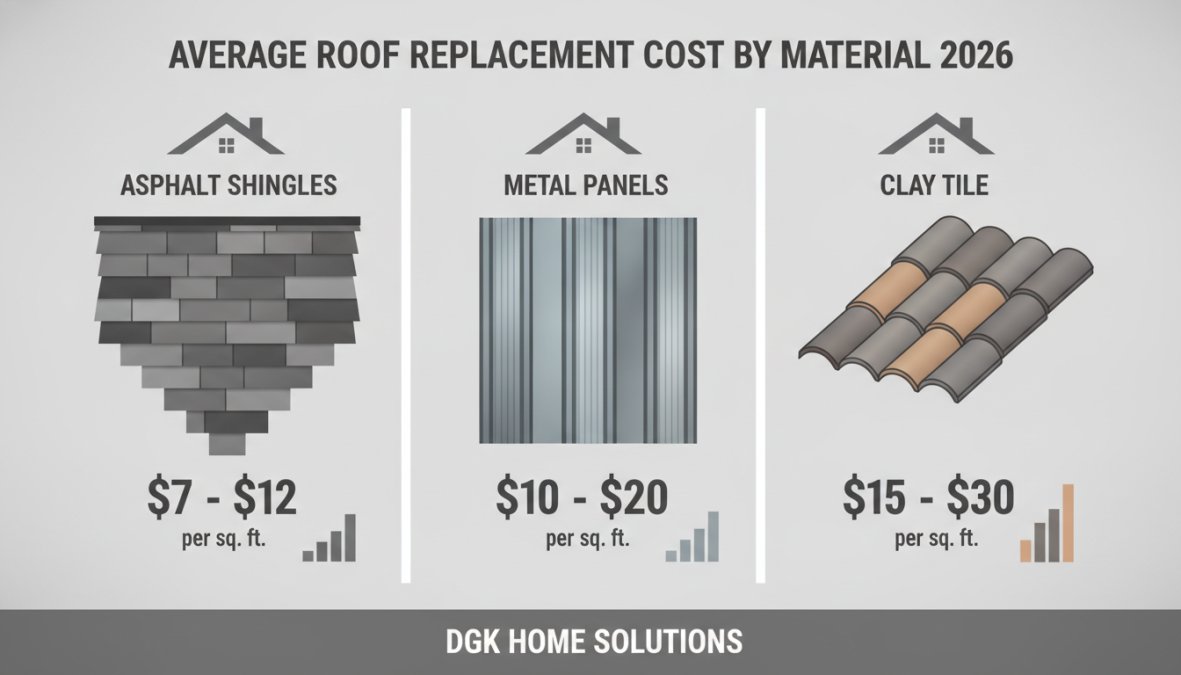
Your choice of roofing material is the single largest driver of residential roof replacement cost 2026. Different materials range dramatically in price, durability, and aesthetic appeal.
Asphalt Shingles
Asphalt shingles remain the most common roofing material for residential properties. They come in three grades: three-tab (15-20 year lifespan), architectural (20-25 years), and premium (25-30 years with enhanced wind and impact resistance).
Installation labor is straightforward, keeping total project costs down. However, asphalt performs poorly in extreme climates, intense heat, heavy snow, or frequent hail accelerate deterioration.
If you’re choosing asphalt, verify that your contractor is using current-generation shingles rated for your local climate.
Metal Roofing
Metal roofing has gained significant traction, particularly in areas with heavy snow, ice, or wind exposure. Standing seam metal roofing, where panels lock together vertically, is the most popular residential option.
Metal roofs typically last 40-70 years and reflect solar heat, reducing cooling costs by 10-20% depending on your climate. Installation is more specialized than asphalt, so labor costs are higher. Metal isn’t ideal for every home, in areas with less-frequent weather extremes, the long-term value proposition weakens, and some homeowners find the aesthetic doesn’t match their architectural style.
Tile and Slate Options
Tile and slate represent the premium end of residential roofing materials, delivering unmatched aesthetic appeal and lasting 50-100+ years. Slate is quarried natural stone, incredibly durable but also incredibly heavy, your roof structure must be engineered to support it, sometimes requiring reinforcement.
Tile, typically made from clay or concrete, offers similar longevity with slightly less weight. Both materials are resistant to fire, pests, and rot, but repair and replacement of individual pieces is expensive and requires specialized contractors.
Factors Affecting Roof Replacement Cost
Several variables beyond material selection dramatically impact your final bill.
Roof Size and Pitch Complexity
Roof size is measured in "squares," each square equals 100 square feet. A typical residential roof ranges from 20-30 squares.
Roof pitch, the steepness of your roof’s slope, affects both material waste and labor difficulty. A steep pitch (8:12 or higher) requires additional safety equipment, takes longer to install, and increases labor costs by 25-50%. Roofs with multiple angles, dormers, valleys, and irregular shapes also increase complexity and cost.
Before getting quotes, measure your roof size and pitch. This single piece of information helps contractors give you accurate estimates.
Labor Costs and Regional Variations
Labor represents 40-60% of your total roof replacement cost. Labor rates vary significantly by region, reflecting local market conditions, contractor availability, and cost of living.
Urban areas typically have higher labor costs than suburban and rural areas. Seasonal variation also affects pricing, spring and early summer are peak roofing season, so contractors may charge premium rates or have longer wait times. Off-season projects sometimes qualify for discounts.
Additional Costs: Permits, Tear-Off, and Disposal
Building permits typically cost $200-$500. Tear-off labor depends on roof size and material type, asphalt shingles tear off relatively easily, while multiple layers or slate take significantly longer.
Disposal of old roofing material typically ranges from $500-$1,500 depending on volume. Structural repairs discovered during tear-off, such as rotted decking or damaged flashing, can add unexpected costs.
Roof Repair vs. Replacement Cost 2026
Roof repairs address specific damage like missing shingles, localized leaks, or damaged flashing, typically costing $200-$1,000. Repairs make sense if your roof is relatively new (under 15 years old) and the damage is isolated.
Replacement becomes the better choice when your roof has reached the end of its lifespan, shows widespread damage, or has experienced multiple repairs. If your roof is over 20 years old and you’re facing a significant repair, replacement often makes financial sense. Factor in the likelihood of future repairs when making this decision.
Roof Replacement Financing Options 2026
Home equity lines of credit (HELOCs) offer competitive interest rates since your home secures the loan, though they put your home at risk if you can’t make payments. Personal loans don’t require collateral and close quickly, with interest rates higher than HELOCs but lower than credit cards.
Contractor financing programs sometimes offer promotional rates like "12 months no interest," but read terms carefully, interest often backdates if you don’t pay off the balance within the promotional period. A strategic loan for roof replacement often costs less than water damage repairs and structural restoration.
Insurance Claims and Roof Replacement Coverage
Insurance typically covers roof damage from sudden, specific events like storms, hail, or falling trees, but not wear and tear or age-related deterioration. File a claim immediately if your roof is damaged by a covered peril and document the damage with photos. Insurance typically pays for replacement only if the damage is deemed sudden and accidental.
At DGK Home Solutions, we assist clients with the insurance claim process from start to finish, documenting damage professionally and communicating directly with adjusters. Many homeowners don’t realize they can hire their own roofer to work with the insurance company.
Don’t accept the insurance company’s initial estimate without question. If you believe the damage assessment is incomplete, you can request an independent appraisal.
Long-Term ROI and Environmental Impact of Roofing Materials
Choosing a roofing material based solely on upfront cost misses the bigger financial picture. Asphalt shingles cost the least upfront but require replacement every 20-25 years, over 50 years, you might install asphalt roofing three times.
Metal roofing costs more initially but lasts 40-70 years, potentially requiring only one installation in your lifetime. Metal roofing also reflects solar heat, reducing cooling costs by 10-20% in warm climates, and qualifies for tax credits in some jurisdictions.
Asphalt shingles end up in landfills after 20-25 years. Metal roofing is fully recyclable and often contains recycled content. Slate and tile are natural materials that don’t degrade, making them effectively permanent.
| Material | Upfront Cost | Lifespan | Energy Efficiency | Environmental Impact | Total 50-Year Cost |
|---|---|---|---|---|---|
| Asphalt Shingles | Low | 20-25 years | Moderate | Landfill waste | High (3 replacements) |
| Metal Roofing | High | 40-70 years | Excellent | Recyclable | Moderate (1-2 replacements) |
| Tile | Very High | 50-100 years | Good | Permanent | Moderate (1 replacement) |
| Slate | Very High | 50-100+ years | Good | Permanent | Moderate (1 replacement) |
Getting an Accurate Estimate for Your Roof Replacement
Start by having your roof professionally inspected to identify existing damage and structural issues. When requesting estimates, provide contractors with consistent information: roof size, pitch, material preference, and any known issues.
Ask for itemized estimates that break down materials, labor, permits, tear-off, and disposal separately. Get at least three estimates from established contractors with local experience and good references. Beware of estimates significantly lower than others, which may indicate corners being cut.
Ask contractors about warranties. Material warranties typically cover defects for 20-50 years; workmanship warranties cover installation issues and typically last 5-10 years. Planning ahead and scheduling during off-season months sometimes qualifies you for discounts.
Request references from contractors and actually call them. Ask about quality of work, whether the project stayed on budget, and if they’d hire the same contractor again.
Residential roof replacement represents a significant investment and one of the most critical protective measures for your home. Understanding the true cost, including materials, labor, permits, and structural considerations, helps you make informed decisions and avoid budget surprises.
DGK Home Solutions brings over 20 years of roofing experience to every project, offering transparent estimates, professional installation, and direct assistance with insurance claims. Get a free quote from DGK Home Solutions today and protect your home with confidence.
Frequently Asked Questions
What is the average cost to replace a residential roof in 2026?
Residential roof replacement cost varies significantly based on material type, roof size, and labor rates in your region.
Asphalt shingles typically represent the most affordable option, while premium materials like slate or high-end metal systems command higher prices. Contact DGK Home Solutions for a free quote tailored to your specific home and location, our team can provide accurate estimates based on your roof's unique characteristics and current market pricing.
What factors affect the cost of residential roof replacement most?
The primary factors affecting roof replacement cost include roofing material choice, roof size measured in square footage, roof pitch and complexity, labor costs in your area, and additional expenses like permits, tear-off, and disposal.
Structural repairs discovered during installation, ventilation upgrades, and flashing replacements can also impact final pricing. Our experienced team at DGK Home Solutions assesses all these variables during your consultation to provide transparent, honest estimates without surprise costs.
Does homeowner's insurance cover roof replacement costs?
Insurance coverage depends on your policy and the cause of damage. Storm damage, hail, and wind typically qualify for coverage, while wear and tear from age or poor maintenance usually do not.
DGK Home Solutions has extensive experience assisting homeowners with insurance claims, we'll work directly with your insurance company, document damage thoroughly, and help ensure you receive fair coverage. Our team handles the claim process professionally, keeping you informed every step of the way.
How can I finance a new roof if the upfront cost is too high?
Several financing options exist for roof replacement, including personal loans, home equity lines of credit, roof-specific financing programs, and payment plans offered by roofing contractors.
Some financing options offer competitive rates and flexible terms. Discuss your budget constraints with DGK Home Solutions during your consultation, we can explore available financing solutions and help you understand what works best for your financial situation while ensuring quality materials and workmanship.
What's the difference between roof repair and replacement, and which saves money?
Roof repair addresses isolated damage and costs significantly less upfront, while replacement involves installing an entirely new roof system.
If your roof is over 15-20 years old, has widespread damage, or requires frequent repairs, replacement often provides better long-term value despite higher initial cost. Our honest assessment ensures you're not paying for unnecessary replacement, we'll recommend repair when it's the right choice and replacement when it protects your investment better.
This article was written using GrandRanker