Table of Contents
- Vinyl vs. Fiber Cement Siding: Quick Comparison Table
- How Each Material Performs in Midwest Weather Conditions
- Fiber Cement Siding Installation Cost in Cincinnati Area
- Vinyl Siding: Affordability and Long-Term Value
- Maintenance Requirements: What You’ll Actually Do Each Year
- Siding Replacement ROI in Ohio: Which Material Adds More Home Value
- Which Material Should You Choose?
- Conclusion
Last Updated: August 23, 2026
Vinyl vs. Fiber Cement Siding: Quick Comparison Table
When you’re standing in front of your Liberty Twp home deciding between vinyl and fiber cement siding, you’re really asking one question: how much durability do you need, and what’s it worth to you? The answer depends on what the Midwest climate actually throws at your house, and it throws plenty.
Here’s the head-to-head breakdown:
| Feature | Vinyl Siding | Fiber Cement Siding |
|---|---|---|
| Material Composition | PVC plastic | 90% sand, cement, cellulose |
| Freeze-Thaw Resistance | Moderate; can crack in extreme cold | Excellent; engineered for Zone 5 cycles |
| Hail & Impact Resistance | Low; dents easily | High; 5x thicker than vinyl |
| Fire Rating | Class C | Class A (non-combustible) |
| Lifespan | 20-30 years | 30-50+ years |
| Warranty | Limited (10-30 years) | 30-year non-prorated |
| Maintenance | Minimal; no painting | Occasional touch-ups every 8-12 years |
| Cost Range (installed) | $5-$8 per sq ft | $10-$22 per sq ft |
| Best For | Budget-conscious homeowners | Long-term durability and resale value |
The table tells a clear story: vinyl is cheaper upfront, fiber cement wins on durability and longevity. But in Ohio’s climate, that durability gap matters more than most people realize.
How Each Material Performs in Midwest Weather Conditions
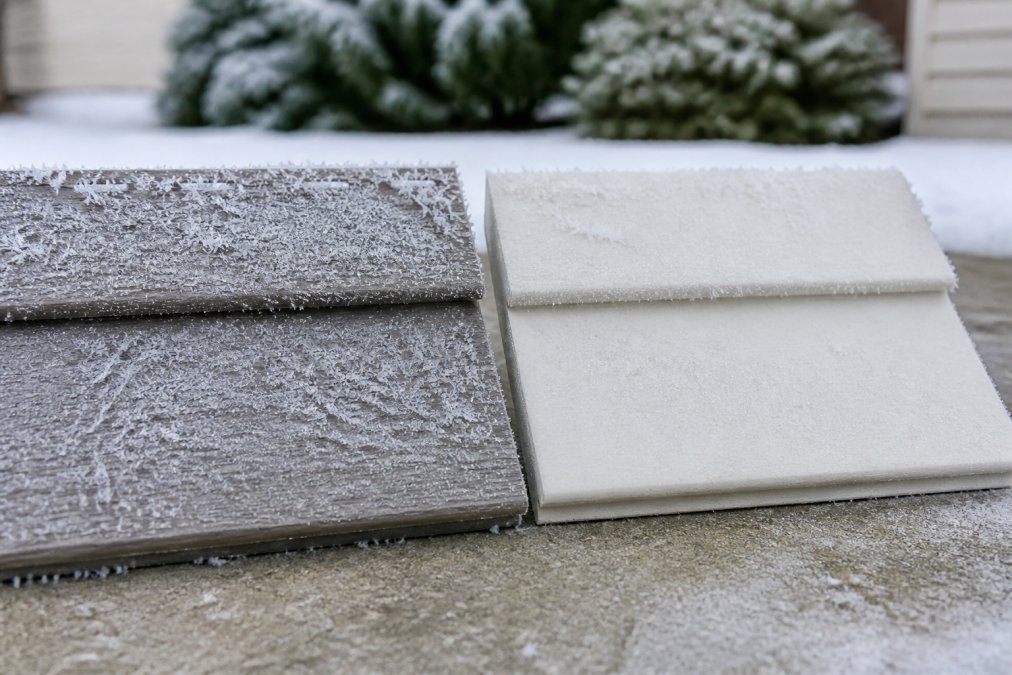
The Midwest doesn’t just have cold winters, it has brutal, repetitive freeze-thaw cycles that destroy materials that can’t handle the stress. Your siding experiences temperature swings of 40, 50, sometimes 60 degrees in a single week. That’s not just uncomfortable for people; it’s catastrophic for materials that expand and contract at different rates.
Freeze-Thaw Cycles and Temperature Swings
Vinyl siding shrinks and expands with temperature changes (the CDC). In theory, that flexibility is supposed to help it survive the cold. In practice, it means your seams open up, water gets behind the panels, and you’re looking at rot in the sheathing before you even realize there’s a problem.
Fiber cement, engineered specifically for Zone 5 climates like ours, handles this differently. James Hardie’s HZ5 product line uses a low-absorption mix and a drip-edge profile designed to shed water before it ever penetrates the material. The cement-based composition doesn’t expand and contract the way plastic does, it stays stable through the temperature swings that would crack vinyl.
What most homeowners miss is that freeze-thaw damage isn’t always visible until it’s expensive. You might not see the problem for three years, and by then, the water’s already working on your home’s structural framing.
Hail, Wind, and Storm Resistance
Ohio gets hail. Not every year, but often enough that it’s a real concern. A hailstone the size of a golf ball hits vinyl siding and leaves a permanent dent. Fiber cement, being 5 times thicker, shrugs off the same impact without a mark (jameshardie.com).
Wind is another story entirely. Vinyl can be blown off its fasteners in severe storms, not common, but it happens. Fiber cement’s weight and rigidity make it far more resistant to wind uplift. In a region that sees occasional severe thunderstorms and the rare tornado, that matters.
The trade-off is installation complexity. Vinyl goes up quickly because it’s lightweight and forgiving. Fiber cement requires specialized tools, more precise fastening, and experienced installers who understand how to work with the material. This is where DGK Home Solutions’ 20 years of experience in the Greater Cincinnati area becomes relevant, they know how to install fiber cement properly in conditions where mistakes are expensive.
Fiber Cement Siding Installation Cost in Cincinnati Area
Fiber cement installed in the Cincinnati area runs between $10 and $22 per square foot, depending on the product line, complexity of your home’s design, and current labor availability. For a 2,000-square-foot home, you’re looking at a material and labor investment that’s significantly higher than vinyl.
Here’s what affects that number: James Hardie HZ5 products sit at the higher end because they’re engineered specifically for freeze-thaw performance. The installation itself takes longer because the material requires careful handling, proper underlayment, and precise fastening patterns. A crew that rushes fiber cement installation will create problems, water infiltration, cracking, warranty issues.
The cost difference between fiber cement and vinyl is real, but it’s not as dramatic as some contractors make it sound. You’re paying roughly double the material cost, but the labor difference is smaller because the installation itself, while more technical, doesn’t take twice as long. The real question isn’t "Is fiber cement worth the extra cost?" but "What’s the value of not replacing your siding in 20 years?"
For homeowners in Liberty Twp planning to stay in their homes long-term, that math often favors fiber cement. For those planning to sell in five years, it’s a different calculation.
Vinyl Siding: Affordability and Long-Term Value
Vinyl’s strength is simplicity and upfront cost. Materials run $6-$8 per square foot, installation is straightforward, and the job moves quickly. For a 2,000-square-foot home, you’re looking at a total investment that’s roughly half what fiber cement costs.
Premium vinyl products like CertainTeed Monogram and Alside Charter Oak offer authentic wood grain textures and lifetime limited warranties, which changes the equation somewhat. These aren’t cheap vinyl, they’re engineered to look better and perform better than basic vinyl. But they’re still vinyl, which means they still shrink and expand, still can dent, and still have a 20-30 year lifespan instead of 30-50 years.
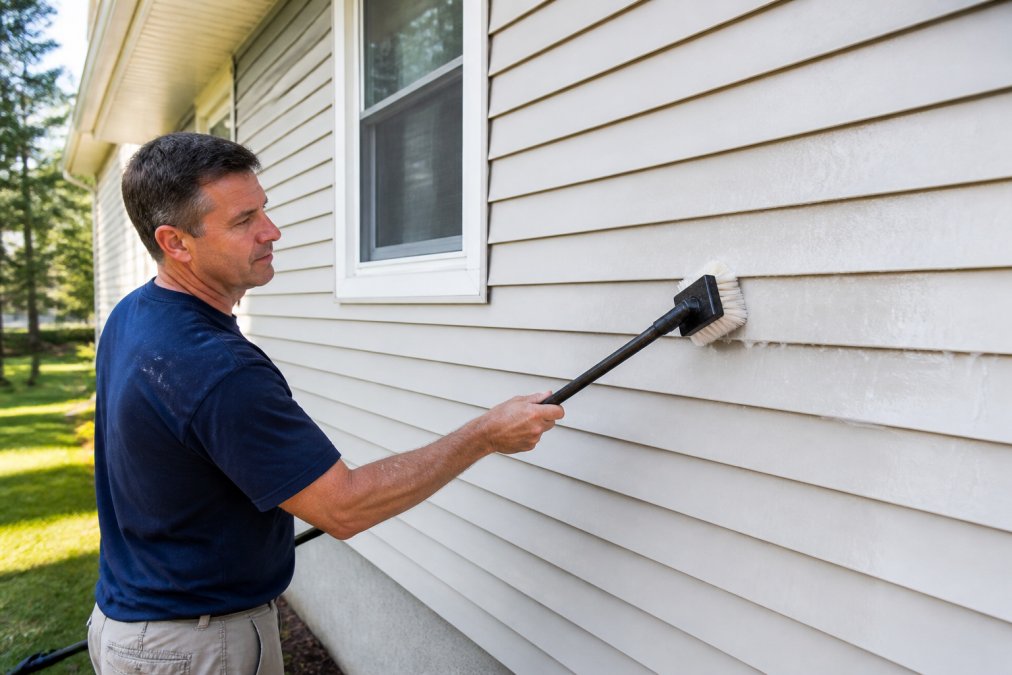
The maintenance advantage is real. Vinyl doesn’t need painting or staining. You hose it off occasionally, and it stays clean. Fiber cement, by contrast, needs repainting or re-staining every 8-12 years if you want to maintain its appearance and protective finish.
Where vinyl fails in the Midwest is durability through extremes. A particularly harsh winter, a bad hail season, or just the accumulated stress of decades of freeze-thaw cycles will age vinyl faster than fiber cement. By year 20, when fiber cement is just hitting its stride, vinyl is often showing serious wear, fading, brittleness, seam separation.
Maintenance Requirements: What You’ll Actually Do Each Year
Vinyl requires almost no maintenance, which sounds great until you realize that’s because there’s almost nothing you can do to maintain it. You can’t paint it (paint doesn’t adhere well), you can’t stain it, and if a panel gets damaged, you’re replacing the whole panel, not fixing it.
Fiber cement requires more attention, but it’s manageable. You’ll inspect it annually for cracks or damage, particularly after severe weather. Every 8-12 years, depending on climate exposure and sun exposure, you’ll need to repaint or re-stain it. This isn’t a catastrophic cost, a professional repainting job for a 2,000-square-foot home is a fraction of what a full siding replacement costs. And it keeps the material protected and looking good.
The real maintenance advantage of fiber cement is repairability. A damaged panel can often be patched or spot-repaired. Vinyl panels, once damaged, are done.
Here’s what homeowners often overlook: the maintenance you don’t do matters. If you skip painting fiber cement for 15 years, it will eventually fail. If you ignore vinyl for 15 years, it’s just… still there, looking tired. Neither approach is ideal, but the choice reflects how engaged you want to be with your home’s exterior.
| Maintenance Task | Vinyl | Fiber Cement |
|---|---|---|
| Annual inspection | Minimal | Recommended |
| Cleaning | Occasional (hose off) | Occasional (hose off) |
| Repainting/staining | Not recommended | Every 8-12 years |
| Repairs | Panel replacement | Patch or repair possible |
| Cost per occurrence | High (full panel) | Low to moderate |
Siding Replacement ROI in Ohio: Which Material Adds More Home Value
This is where the conversation gets interesting, because the answer depends entirely on your market and your timeline.
Fiber cement siding adds more perceived value at resale. Buyers in Ohio recognize it as a premium material, more durable, more fire-resistant, longer-lasting. If you’re selling a home in a competitive market where curb appeal matters, fiber cement signals that the home has been well-maintained and will last. Real estate agents in the Greater Cincinnati area will tell you that fiber cement siding is a selling point, especially on homes priced above $300,000.
Vinyl siding, particularly premium vinyl, adds value too, just less of it. Buyers see it as a practical choice, not a premium one. It increases curb appeal and signals that the home is move-in ready, but it doesn’t command the same price premium as fiber cement.
The catch: you only recoup about 70-88% of what you spend on siding replacement at resale, regardless of material (realtor.org). So if you spend $25,000 on fiber cement, you might see $17,500-$22,000 back in increased home value. With vinyl at $12,000, you might see $8,400-$10,560 back.
The real ROI comes from not replacing the siding again before you sell. If you install vinyl and need to replace it again in 18 years, you’ve lost money. If you install fiber cement and it lasts 40 years, you’re ahead.
For homeowners in Ohio who plan to stay 15+ years, fiber cement’s durability and resale value make the math work. For those planning to move within 10 years, vinyl’s lower upfront cost and lower maintenance might be the smarter choice.
Which Material Should You Choose?
Pick fiber cement if you’re staying long-term, prioritize durability, or live in an area with severe weather exposure. The Zone 5 freeze-thaw performance is genuinely superior, the fire rating is better, and the lifespan is longer. You’ll pay more upfront, and you’ll maintain it more actively, but you’re buying peace of mind and a siding system that will outlast your mortgage.
Pick vinyl if you’re budget-conscious, planning to sell within 10 years, or comfortable with replacing the siding again in 20-30 years. Premium vinyl products like CertainTeed Monogram and Alside Charter Oak offer good aesthetics and reasonable durability for the price. The maintenance is minimal, and the installation is straightforward.
The one scenario where neither wins outright: if you’re in a historic district in Ohio or have a home with unusual architecture, you may have restrictions on material choices. Check local codes first.
DGK Home Solutions can help you navigate this decision with an honest assessment of your home’s needs, your climate exposure, and your long-term plans. They’ve installed both materials extensively in the Greater Cincinnati area and can show you real examples of how each performs after 10, 15, and 20 years in local conditions. That experience matters more than any comparison table, you’re getting advice from people who see the results of these choices over decades, not just at installation.
The choice between vinyl and fiber cement siding for Midwest homes comes down to your priorities: upfront cost and simplicity versus long-term durability and value. Both materials work in Ohio’s climate when properly installed. The question is which trade-offs align with your home, your timeline, and your budget. Get a professional assessment of your current siding condition and your home’s exposure to weather. DGK Home Solutions offers a free quote and honest evaluation, they’ll tell you what your home actually needs, not what’s most profitable for them to install.
=== FAQ ANSWERS (audit these too, same rules) ===
[1] Q: Does fiber cement siding crack in freezing Midwest temperatures?
A: Fiber cement engineered for Zone 5 climates, like James Hardie’s HZ5 line, uses a low-absorption mix and drip-edge design to resist freeze-thaw cracking. The material is five times thicker than vinyl and composed of 90% sand and cement, making it more resilient to moisture-driven damage in cold conditions. Vinyl siding can become brittle and crack in extreme cold, especially below zero temperatures. For Midwest winters, fiber cement’s engineered formulation provides superior protection against the repeated freeze-thaw cycles that damage less specialized materials.
[2] Q: What is the cost difference between vinyl and fiber cement siding installation in the Cincinnati area?
A: Fiber cement siding typically costs $10-$22 per square foot installed, while quality vinyl siding ranges from $5-$8 per square foot for materials, with installation labor adding significantly to the total. A 2,000-square-foot home would see fiber cement costs roughly double or more compared to premium vinyl. However, fiber cement’s 30-50-year lifespan and minimal maintenance can offset the higher upfront investment over time. For an accurate quote tailored to your home’s size and style, contact DGK Home Solutions for a free assessment.
[3] Q: Which siding material offers better energy efficiency for Ohio winters?
A: Insulated vinyl siding options improve thermal performance by adding an insulation layer beneath the vinyl, reducing heating costs. Fiber cement does not provide inherent insulation but its density and tight installation can minimize air leakage. For maximum energy efficiency in Ohio winters, choose insulated vinyl siding or pair either material with proper house-wrap and air sealing during installation. The energy savings from insulated vinyl may help recover some of its lower upfront cost over 10-15 years of reduced heating bills.
[4] Q: Does fiber cement siding require more maintenance than vinyl in the Midwest?
A: Fiber cement requires periodic repainting or re-staining every 8-12 years. Vinyl siding needs occasional cleaning and can fade over time, especially darker colors. For Midwest homeowners prioritizing minimal upkeep, vinyl’s durability and color retention make it a lower-maintenance choice.
[5] Q: How much value does new siding add when selling a home in Ohio?
A: New siding typically returns 70-88% of its installation cost at resale, depending on the material and local market conditions. Fiber cement siding, with its premium appearance and durability reputation, may attract buyers willing to pay more for a home with long-lasting exterior protection. Vinyl siding offers good curb appeal and fresh appearance but may not command the same premium. In competitive Ohio markets, homes with recently replaced, high-quality siding sell faster and at higher prices than those with aging or damaged exteriors. For specific ROI guidance, consult with a local real estate agent or contact DGK Home Solutions for a professional assessment.
Frequently Asked Questions
Does fiber cement siding crack in freezing Midwest temperatures?
Fiber cement engineered for Zone 5 climates, like James Hardie's HZ5 line, uses a low-absorption mix and drip-edge design to resist freeze-thaw cracking. The material is five times thicker than vinyl and composed of 90% sand and cement, making it more resilient to moisture-driven damage in cold conditions. Vinyl siding can become brittle and crack in extreme cold, especially below zero temperatures. For Midwest winters, fiber cement's engineered formulation provides superior protection against the repeated freeze-thaw cycles that damage less specialized materials.
What is the cost difference between vinyl and fiber cement siding installation in the Cincinnati area?
Fiber cement siding typically costs $10-$22 per square foot installed, while quality vinyl siding ranges from $5-$8 per square foot for materials, with installation labor adding significantly to the total. A 2,000-square-foot home would see fiber cement costs roughly double or more compared to premium vinyl. However, fiber cement's 30-50-year lifespan and minimal maintenance can offset the higher upfront investment over time. For an accurate quote tailored to your home's size and style, contact DGK Home Solutions for a free assessment.
Which siding material offers better energy efficiency for Ohio winters?
Insulated vinyl siding options improve thermal performance by adding an insulation layer beneath the vinyl, reducing heating costs. Fiber cement does not provide inherent insulation but its density and tight installation can minimize air leakage. For maximum energy efficiency in Ohio winters, choose insulated vinyl siding or pair either material with proper house-wrap and air sealing during installation. The energy savings from insulated vinyl may help recover some of its lower upfront cost over 10-15 years of reduced heating bills.
Does fiber cement siding require more maintenance than vinyl in the Midwest?
Fiber cement requires periodic repainting or re-staining every 8-12 years. Vinyl siding needs occasional cleaning and can fade over time, especially darker colors. For Midwest homeowners prioritizing minimal upkeep, vinyl's durability and color retention make it a lower-maintenance choice.
How much value does new siding add when selling a home in Ohio?
New siding typically returns 70-88% of its installation cost at resale, depending on the material and local market conditions. Fiber cement siding, with its premium appearance and durability reputation, may attract buyers willing to pay more for a home with long-lasting exterior protection. Vinyl siding offers good curb appeal and fresh appearance but may not command the same premium. In competitive Ohio markets, homes with recently replaced, high-quality siding sell faster and at higher prices than those with aging or damaged exteriors. For specific ROI guidance, consult with a local real estate agent or contact DGK Home Solutions for a professional assessment.
This article was written using GrandRanker