Table of Contents
- Start Your Siding Storm Damage Claim the Right Way
- How to Photograph Storm Damage for Insurance So Adjusters Approve It
- Your Storm Damage Insurance Claim Checklist for Siding
- Build an Insurance Claim Documentation Template That Works
- What Happens During an Insurance Adjuster Siding Inspection
- Common Mistakes That Get Siding Claims Denied
- Conclusion
- Frequently Asked Questions
Last Updated: October 11, 2026
Start Your Siding Storm Damage Claim the Right Way
When hail or wind hits your home, the clock starts ticking. Most insurance policies require you to report damage promptly, and the evidence you gather in the first days carries more weight than anything you say later. Learning how to document siding storm damage for insurance is the difference between a paid claim and a denied one. At DGK Home Solutions, we’ve helped homeowners navigate this process for over 20 years, and the pattern is always the same: thorough documentation wins.
Here’s the hard truth most guides skip. Adjusters see dozens of claims after every storm. They can’t verify what they can’t see, and they won’t take your word for damage that isn’t clearly photographed. Your job is to make their job easy.
This guide walks you through exactly what to photograph, how to build a documentation template, and what happens during the adjuster’s inspection. The Ohio Department of Insurance consumer guide to filing claims outlines your rights as a policyholder, and we’ll connect those rights to real steps you can take today.
How to Photograph Storm Damage for Insurance So Adjusters Approve It
Photograph everything before you touch a single panel. That’s the rule. Once you remove debris or start repairs, you’ve destroyed the evidence an adjuster needs to approve your claim.
Start with wide shots from the street and the corners of your lot. These prove the overall condition of the home and show how the damage fits into the bigger picture. Then move closer.
Your camera roll should include:
- Full exterior shots from all four sides of the house
- Mid-range photos showing damaged sections in context
- Close-ups of cracks, dents, holes, and missing panels
- Photos of any debris that hit the siding
- Shots of interior water damage if the siding failed
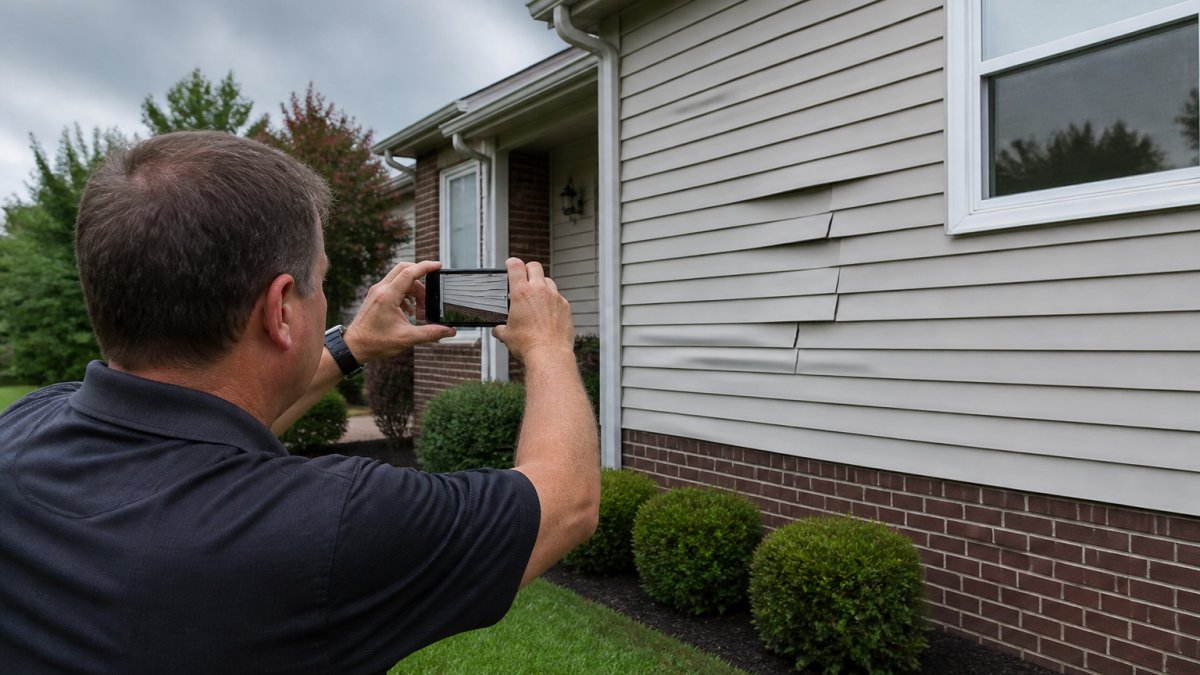
Wide Shots vs. Close-Ups: What Each Photo Proves
Wide shots establish location. They answer “where is the damage?” Close-ups establish severity. They answer “how bad is it?”
You need both, and you need them connected. A close-up of a crack means nothing if the adjuster can’t tell which wall it’s on. Take a wide shot first, then step in for the detail shot from the same angle.
Lighting, Angles, and Scale References That Make Damage Visible
Bad lighting hides damage. Shoot in indirect daylight when possible, and avoid harsh shadows that fall across the damaged area.
Angles matter too. Photograph damage straight on, not at a sharp angle. For scale, place a common object next to the damage, like a coin, a ruler, or your hand. This helps the adjuster judge the true size of a crack or hole.
Take a short video walking the perimeter of your home. Narrate what you see as you go. Adjusters often find video more convincing than stills because it shows the damage in context and proves the footage is recent.
Your Storm Damage Insurance Claim Checklist for Siding
A storm damage insurance claim checklist keeps you from missing steps when you’re stressed. Work through it in order, and don’t skip ahead.
- Photograph all damage before any cleanup or repair
- Write down the date and time of the storm
- Save receipts for emergency repairs like tarping
- Contact your insurer to open the claim
- Get a claim number and the adjuster’s contact info
- Keep a log of every call, email, and visit
- Get a professional inspection before you accept a settlement
Before You Touch Anything: Document First, Repair Second
Emergency repairs are allowed, and most policies expect you to prevent further damage. Tarping a hole or boarding a broken window is fine. But photograph the damage first, even if it’s raining.
The one exception is safety. If a section of siding is hanging loose over a walkway, secure it. Then document what you can.
Don’t sign anything from a contractor who shows up uninvited after a storm and offers to “handle your claim.” In Ohio, public adjusters and contractors must follow specific rules about how they can assist with claims. Signing over your rights too early can cost you control of the settlement.
Build an Insurance Claim Documentation Template That Works
An insurance claim documentation template is just a simple record you fill in as you go. You don’t need software. A notebook works.
Set up your template with these fields:
| Field | What to Record | Why It Matters |
|---|---|---|
| Date and time | When damage occurred and when you found it | Proves timely reporting |
| Location | Which side of the house, which room | Helps adjuster map the damage |
| Description | What the damage looks like | Creates a written record |
| Photos | File names or numbers | Ties images to entries |
| Receipts | Emergency repair costs | Supports reimbursement |
| Contacts | Names, dates, and what was discussed | Resolves disputes later |
Update it every time something happens. A claim can take weeks, and memory fades fast.
The Insurance Information Institute guide to homeowners claims recommends keeping a home inventory and claim log for exactly this reason. When you can show a clear timeline, you look organized and credible.
What Happens During an Insurance Adjuster Siding Inspection
An insurance adjuster siding inspection is a scheduled visit where the adjuster examines your home, reviews your photos, and estimates the cost to repair or replace the damaged siding.
Here’s what to expect:
- The adjuster walks the exterior and may climb the roof
- They take their own photos and measurements
- They compare your documentation to what they see
- They may ask about the storm date and any prior damage
- They’ll explain next steps and a rough timeline
Your photos should match what the adjuster finds. If they don’t, that’s a red flag for the claim. Keep your template handy during the visit and point out anything the adjuster might miss.
At DGK Home Solutions, we’ve stood beside homeowners during these inspections for years. Our team can walk your property before the adjuster arrives and flag anything that needs better documentation. If you’re searching for siding storm damage help near me, our free inspection gives you a clear picture before the claim is filed.
Common Mistakes That Get Siding Claims Denied
Most denials trace back to a handful of avoidable errors. Here are the ones we see most often.
- Cleaning up before documenting. Once the debris is gone, so is your proof.
- Waiting too long to report. Policies have deadlines, and delays raise suspicion.
- Skipping the wide shots. Close-ups alone don’t show where the damage is.
- Accepting the first settlement. Initial offers are often low. Get a second opinion.
- Letting a contractor file for you. You should stay in control of your claim.
- Ignoring interior damage. Water stains on ceilings and walls matter too.
One more mistake: assuming your claim will be denied if the damage looks minor. Small cracks and dents add up, and a professional inspection often finds more than you can see from the ground.
The single biggest factor in whether your siding claim gets approved is the quality of your documentation before anyone touches the damage. Photos, notes, and receipts beat memory every time.
Conclusion
Filing a siding claim after a storm is stressful, and the paperwork can feel endless. But the process gets much easier when you document first and repair second. DGK Home Solutions has helped homeowners across the Greater Cincinnati area and Ohio handle storm damage claims for over 20 years, with honest assessments, clear communication, and help coordinating with your insurance company from start to finish. If you’re not sure whether your siding damage is worth a claim, get a free quote and inspection from our team. We’ll tell you what we see and what to do next.
Frequently Asked Questions
Should I document siding damage before making temporary repairs?
Yes. Always photograph and video the damage before covering a broken window, tarping a roof, or patching siding. Insurance adjusters need to see the original condition. If you skip documentation, the insurer may dispute the extent of the damage or deny the claim because the evidence is gone. Take wide shots of the whole wall, close-ups of cracks or holes, and a photo showing the damaged area in context with the rest of the house. Save receipts for any emergency materials you buy, too.
What photos should I take of storm-damaged siding?
Start with wide shots of each exterior wall so the adjuster sees the full picture. Then take close-ups of cracks, dents, holes, or missing panels. Include a photo with a ruler or coin next to the damage for scale. Photograph any hail hits on siding, gutters, and downspouts. Capture shots from different angles and in good lighting. If you have before photos from a previous inspection or listing, include those for comparison. The goal is to show what happened, where it happened, and how bad it is.
How long do I have to report storm damage to my homeowners insurance?
Most policies require you to report a claim within a reasonable time, often defined as 30 to 60 days from the date of loss. Some states allow up to one year, but waiting can hurt your claim because the insurer may argue the damage worsened or occurred later. Report the claim as soon as you notice damage. After filing, the adjuster typically schedules an inspection within one to two weeks. If you live in the Greater Cincinnati area and need help documenting siding damage before you file, a professional inspection can speed up the process.
What should I do if my insurance adjuster misses siding damage?
Ask for a copy of the adjuster’s report and compare it to your own photos and notes. If you see damage that was not included, send a written request for a re-inspection. Attach your dated photos, a list of damaged areas, and any contractor estimates. Many insurers will send a second adjuster. If the claim is still denied or underpaid, you can request an appraisal or file a complaint with your state’s department of insurance. Having a licensed siding contractor provide a detailed damage report often strengthens your position.