Table of Contents
- Understanding Your Roofing Material Options
- Average Lifespan of Residential Roofing Materials
- Best Roofing Materials for Ohio Weather
- Asphalt Shingles vs Metal Roofing Cost
- Key Factors to Consider When Choosing Roofing Materials
- Your Roofing Material Decision Framework
- Conclusion
Last Updated: August 22, 2026
Understanding Your Roofing Material Options
Choosing the right roofing materials is one of the most consequential decisions a homeowner makes. Your roof protects your family, possessions, and home’s structural integrity. Get this decision wrong, and you face premature failure, water damage, and expensive repairs. At DGK Home Solutions, we’ve spent over 20 years helping homeowners in the Greater Cincinnati area navigate this decision.
Roofing materials vary dramatically in durability, cost, appearance, and performance under different weather conditions. What works beautifully in one climate can fail in another. Once you understand the trade-offs, the decision becomes far clearer.
Asphalt Shingles
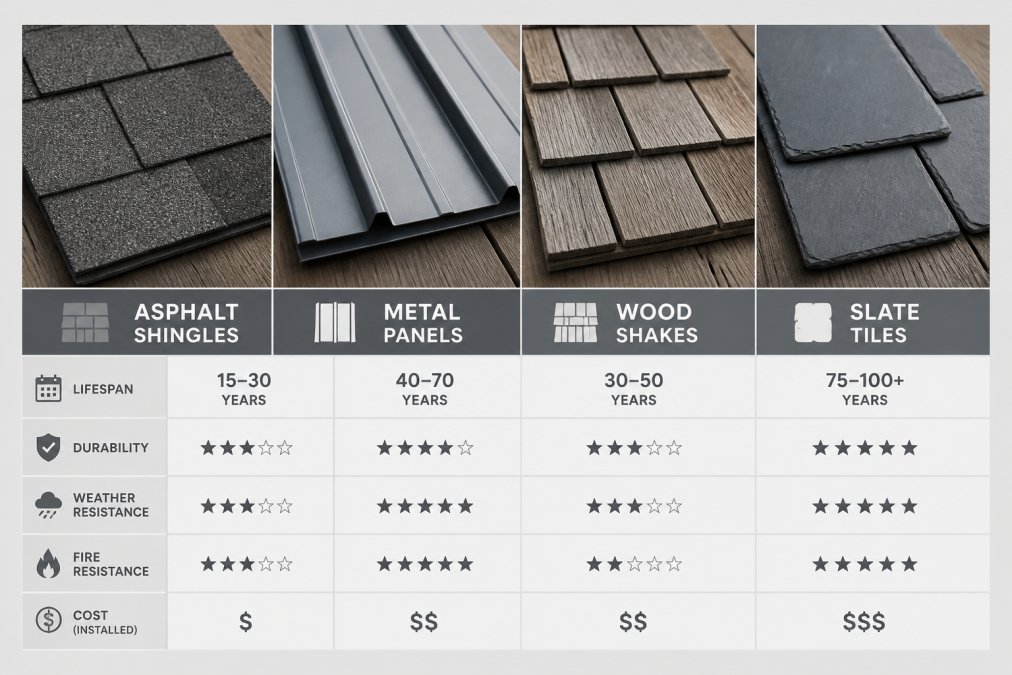
Asphalt shingles dominate the residential market because they’re affordable, proven, and easy to install. They typically last 15 to 25 years depending on climate and maintenance (nist.gov). They’re lightweight, come in dozens of colors and styles, and keep labor costs down.
However, asphalt shingles are vulnerable to UV degradation and curl, crack, and lose granules as they age. In Ohio’s freeze-thaw cycles, repeated expansion and contraction accelerates breakdown. High winds can lift shingles, and heavy snow loads stress the material. Most homeowners need replacement within 20-25 years, and if you’re staying 30+ years, the total cost of ownership often exceeds that of more durable materials.
Metal Roofing
Metal roofing has shifted from niche to mainstream. Modern standing seam panels or metal shingles perform exceptionally well in harsh weather and last substantially longer than asphalt, typically 40 to 70 years (nist.gov).
Metal handles freeze-thaw cycles better than asphalt because the material doesn’t degrade under UV exposure. Snow slides off more easily, reducing load stress, and high winds rarely damage properly installed metal roofing. Many insurance companies offer discounts for metal roofing, and metal reflects solar heat, reducing cooling costs in summer.
The trade-off is upfront cost. Metal roofing costs more to purchase and install than asphalt shingles, and installation requires skilled labor. However, if you’re staying 20+ years, durability often justifies the higher initial investment.
Wood Shakes and Shingles
Wood roofing creates a distinctive aesthetic appealing to homeowners with traditional or rustic preferences. Cedar shakes typically last 20 to 40 years with proper maintenance, but wood is heavier than asphalt and requires regular inspection, treatment, and occasional replacement of damaged shakes (nist.gov).
Wood is combustible, creating fire risk and higher insurance premiums. In humid climates, moss and algae growth is common and requires active management. Wood shakes split and warp over time, especially in freeze-thaw cycles. For most homeowners in the Greater Cincinnati area, wood roofing is more aesthetic than practical.
Slate and Tile
Slate and tile roofing represent the premium end of the residential market, lasting 50 to 100+ years and nearly impervious to weather, UV damage, fire, and pests. They create a distinctive, high-end appearance that enhances curb appeal.
However, slate and tile are extremely heavy, requiring engineered roof structures. Existing homes often need structural reinforcement, adding significant cost. Installation is specialized and expensive, and repairs require skilled craftspeople. For most homeowners, slate and tile are impractical unless you have a historic home that originally used these materials or are building new.
Average Lifespan of Residential Roofing Materials
Roofing material lifespan depends on the material itself, installation quality, maintenance, and local climate:
Asphalt shingles: 15 to 25 years. Three-tab shingles typically last toward the lower end; architectural shingles last longer.
Metal roofing: 40 to 70 years. Standing seam systems typically last longer than metal shingles.
Wood shakes and shingles: 20 to 40 years with regular maintenance.
Slate roofing: 50 to 100+ years. Some slate roofs have lasted 200+ years.
Tile roofing: 50 to 100 years. Clay tile lasts longer than concrete tile.
If you’re buying a home and plan to stay 20+ years, asphalt shingles will likely need replacement during your ownership, significantly changing the total cost of ownership calculation.
Best Roofing Materials for Ohio Weather
Ohio weather is challenging for roofing. You face freeze-thaw cycles in winter, heavy snow loads, thunderstorms with high winds, and intense summer sun. The ideal material needs to handle all these stressors without degrading.
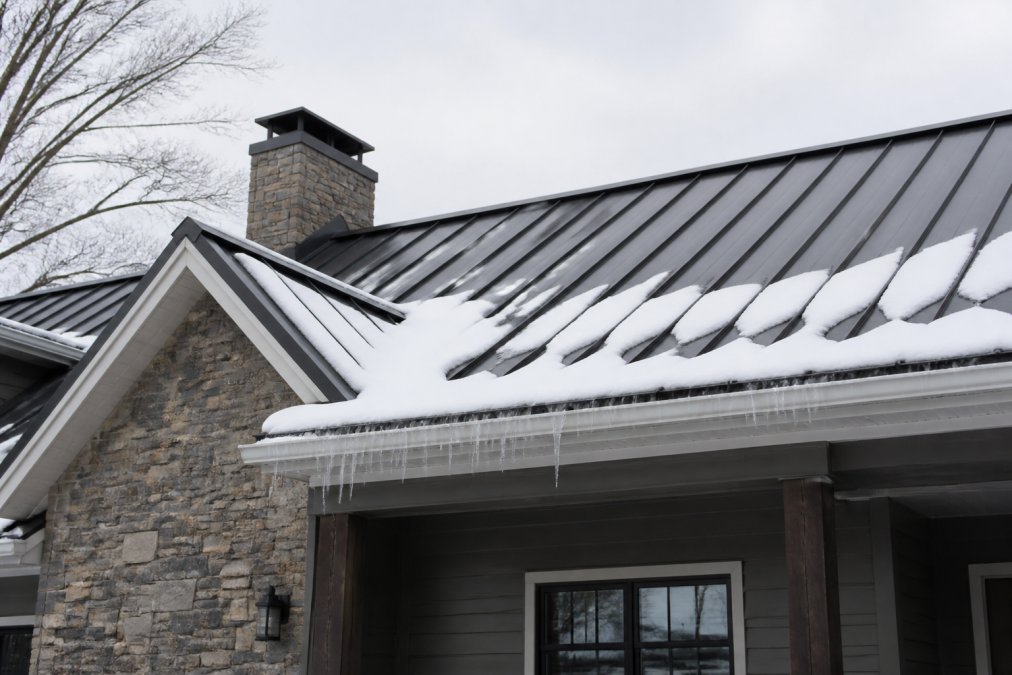
Metal roofing is the best performer in Ohio conditions. The material doesn’t degrade under UV exposure, handles freeze-thaw cycles without cracking, sheds snow effectively, and withstands high winds. If you’re in Liberty Twp or anywhere in the Greater Cincinnati region and want reliable performance through Ohio winters and summers, metal is the strongest choice.
Architectural asphalt shingles are the practical compromise. They’re more affordable than metal and perform adequately if properly installed, though expect replacement within 20 years. Slate and tile perform excellently in Ohio weather, essentially immune to the stressors that degrade other materials, but cost and structural requirements limit their practicality. Wood roofing is less ideal for Ohio, as freeze-thaw cycles are hard on wood and humidity promotes moss and algae growth.
Asphalt Shingles vs Metal Roofing Cost
Asphalt shingles have lower upfront material and installation costs, while metal roofing costs more upfront for materials and significantly more for installation due to specialized labor.
The real question is total cost of ownership. If asphalt shingles last 20 years and metal roofing lasts 50 years, and you’re staying 40 years, you’ll replace asphalt twice and metal once. Additionally, metal roofing often qualifies for insurance discounts compared to asphalt. Over a 40-year ownership period, these discounts compound significantly.
For pricing on your specific project, DGK Home Solutions provides free quotes that account for your home’s size, pitch, and existing conditions.
Key Factors to Consider When Choosing Roofing Materials
The right material for your home depends on multiple factors working together.
Climate and Weather Resistance
Your local climate is the primary driver of roofing material performance. In Ohio, freeze-thaw cycles, heavy snow, and high winds are the critical stressors.
Asphalt shingles struggle with freeze-thaw cycles, as repeated expansion and contraction causes cracking and granule loss. Metal roofing thrives in freeze-thaw environments and expands and contracts uniformly without degrading. Slate and tile are essentially climate-proof.
For the Greater Cincinnati area, climate resistance should favor metal roofing or tile.
Roof Slope and Structure
Your home’s roof pitch and structural capacity constrain your options. Shallow-pitch roofs (under 4:12 slope) are problematic for asphalt shingles, as water can pool and seep under shingles. Metal roofing and tile handle shallow pitches better.
Weight capacity is critical. Asphalt and metal are lightweight and work on most residential structures. Slate and tile are heavy and require structural reinforcement on many existing homes. Metal roofing is the most flexible, working on nearly any pitch and adding minimal structural load.
Budget and Long-Term Value
Your budget determines what’s feasible upfront, but long-term value matters more than initial cost. If you’re staying fewer than 15 years, asphalt shingles make financial sense. If you’re staying 20+ years, metal roofing’s higher upfront cost is offset by not needing replacement during your ownership.
Consider resale value. A home with a new metal or tile roof is more attractive to buyers than one with an aging asphalt roof, potentially justifying higher upfront investment.
Aesthetic Goals and Home Style
Your home’s architectural style influences what looks right. Traditional or historic homes often look best with slate, tile, or wood shingles. Modern or contemporary homes often look better with metal roofing or architectural asphalt shingles. Your roof covers a large portion of your home’s visible surface, so choosing a material that looks right matters for satisfaction and resale value.
Energy Efficiency
Metal roofing reflects solar heat, reducing cooling costs in summer by 10-25% depending on climate and home design. Asphalt shingles absorb heat, increasing cooling costs. Metal roofing is the clear winner for energy efficiency.
Your Roofing Material Decision Framework
Making this decision doesn’t require guesswork. Use this framework to systematically evaluate your options.
Step 1: Assess your timeline. How long are you staying in your home? If fewer than 15 years, prioritize upfront cost. If 20+ years, prioritize durability and long-term value.
Step 2: Evaluate structural capacity. Have a contractor assess your roof’s pitch and structural capacity to determine whether slate, tile, or other heavy materials are feasible.
Step 3: Consider climate requirements. For Ohio weather, metal roofing is the strongest performer. Asphalt is acceptable but requires understanding that replacement will likely be necessary within 20 years.
Step 4: Assess aesthetic fit. Which materials look right on your home? This narrows your options and ensures satisfaction.
Step 5: Calculate total cost of ownership. For your timeline and material options, calculate the full cost including installation, maintenance, and eventual replacement.
Step 6: Get professional assessment.A contractor experienced with multiple roofing systems can evaluate your specific home and provide honest guidance based on your needs.
| Factor | Asphalt Shingles | Metal Roofing | Slate/Tile |
|---|---|---|---|
| Lifespan | 15-25 years | 40-70 years | 50-100+ years |
| Upfront Cost | Low | High | Very High |
| Ohio Weather Performance | Adequate | Excellent | Excellent |
| Weight Capacity Needed | Low | Low | High |
| Maintenance Required | Minimal | Minimal | Moderate |
| Energy Efficiency | Poor | Excellent | Moderate |
| Aesthetic Versatility | High | High | Moderate |
Choosing residential roofing materials affects your home’s protection, your budget, and your satisfaction for decades. Metal roofing stands out as the best choice for most homeowners in the Greater Cincinnati area who plan to stay long-term. It handles Ohio weather exceptionally well, lasts 40-70 years, and provides genuine long-term value despite higher upfront costs. Asphalt shingles remain practical for budget-conscious homeowners with shorter timelines. Slate and tile are excellent but practical only for homes with structural capacity and budgets to support them.
DGK Home Solutions has guided hundreds of homeowners through this decision over more than 20 years. Our team provides honest assessments of your home’s condition and needs, explains the trade-offs of different materials, and installs your chosen system with quality and attention to detail. When you’re ready to move forward, contact DGK Home Solutions for a free quote and let our experienced team help you choose the right roofing materials for your home.
Frequently Asked Questions
What is the most durable roofing material for Ohio climates?
Metal roofing and slate are the most durable options for Ohio weather. Metal roofing resists ice dams, heavy snow, and wind damage common in the region, while slate can last 50+ years. Asphalt shingles work well too but require more maintenance in freeze-thaw cycles. Your choice depends on budget and how long you plan to stay in your home.
How do I choose between asphalt shingles and metal roofing?
Asphalt shingles offer lower upfront costs and easier installation, making them popular for budget-conscious homeowners. Metal roofing costs more initially but lasts longer, requires less maintenance, and provides better energy efficiency. Consider your budget, how long you'll own the home, and whether you prioritize lower immediate costs or long-term value.
Does the slope of my roof affect which materials I can use?
Yes, roof slope matters significantly. Steeper roofs work with most materials, including slate and wood shakes. Low-slope or flat roofs require special materials like membrane systems or metal. Your roofing contractor can assess your roof's slope and recommend compatible materials during an inspection.
How long do different roofing materials last in the Midwest?
Asphalt shingles typically last 15-25 years in Midwest conditions. Metal roofing lasts 40-70 years. Wood shakes last 20-40 years but need regular maintenance. Slate and tile can exceed 50 years. Lifespan depends on installation quality, maintenance, and weather exposure. Proper installation and ventilation extend the life of any material.
What are the best roofing materials for energy efficiency?
Metal roofing and light-colored asphalt shingles reflect heat and reduce cooling costs. Metal is particularly efficient because it reflects sunlight and dissipates heat quickly. Proper attic ventilation and insulation matter as much as material choice. Ask your contractor about cool roof ratings and energy-efficient options when selecting materials.
Can you install specialized roofing on historic homes?
Yes, historic homes often require specific materials to maintain their character. Slate, wood shakes, and traditional asphalt shingles can match original specifications. Some historic districts have guidelines about material choices. A contractor experienced with older homes can source appropriate materials and ensure installations meet both code and preservation standards.
This article was written using GrandRanker