Table of Contents
- Verify Licenses, Insurance, and Certifications
- Evaluate Experience and Track Record
- Key Questions to Ask a Commercial Roofing Contractor
- Request and Verify References
- Compare Project Estimates and Understand Costs
- Review Warranty Coverage and Contractual Obligations
- Steps to Choose a Roofing Contractor for Your Commercial Building
- Sustainability, Energy Efficiency, and Long-Term Service Agreements
Last Updated: August 4, 2026
When choosing a roofing contractor for commercial building projects, the stakes are higher than residential work. Your roof protects significant assets, affects employee safety, and impacts operational continuity. At DGK Home Solutions, we’ve spent over 20 years helping commercial property owners navigate this critical decision. This guide walks you through the exact vetting process that separates qualified professionals from contractors who cut corners.
Verify Licenses, Insurance, and Certifications
Before evaluating anything else, confirm that a commercial roofing contractor holds the required credentials to operate legally in your state and locality. This is your primary protection against liability, worker safety violations, and incomplete work.
General Liability and Workers Compensation Coverage
General liability insurance protects your property if the contractor damages your building during the project. Workers compensation insurance covers employee injuries on your site, preventing you from inheriting those costs. Request certificates of insurance directly from the contractor’s insurance provider, not from the contractor themselves. Verify that coverage limits meet your state’s minimum requirements and that your property is listed as an additional insured.
According to the National Roofing Contractors Association (NRCA), contractors without proper workers compensation insurance create significant liability exposure for building owners. Ask for proof of active coverage dating back at least three years; gaps in coverage history are a red flag.
If a contractor cannot provide proof of current insurance within 24 hours, do not proceed. This signals either disorganization or intentional avoidance of compliance requirements.
Manufacturer Certification and OSHA Compliance
A commercial roofing contractor should hold manufacturer certifications for the specific roofing systems they install. These certifications mean the contractor has completed factory training and meets the manufacturer’s installation standards, a requirement for honoring most product warranties.
Ask which manufacturers certify the contractor. Leading brands like GAF, Firestone, Carlisle, and IKO maintain searchable databases of certified installers. Verify the contractor’s status directly on the manufacturer’s website.
OSHA compliance is equally critical. Commercial roofing involves work at height, which falls under strict federal safety regulations. The contractor should maintain current OSHA training certifications for all crew members working above six feet. Request proof of training records and ask about their safety protocols before work begins.
Evaluate Experience and Track Record
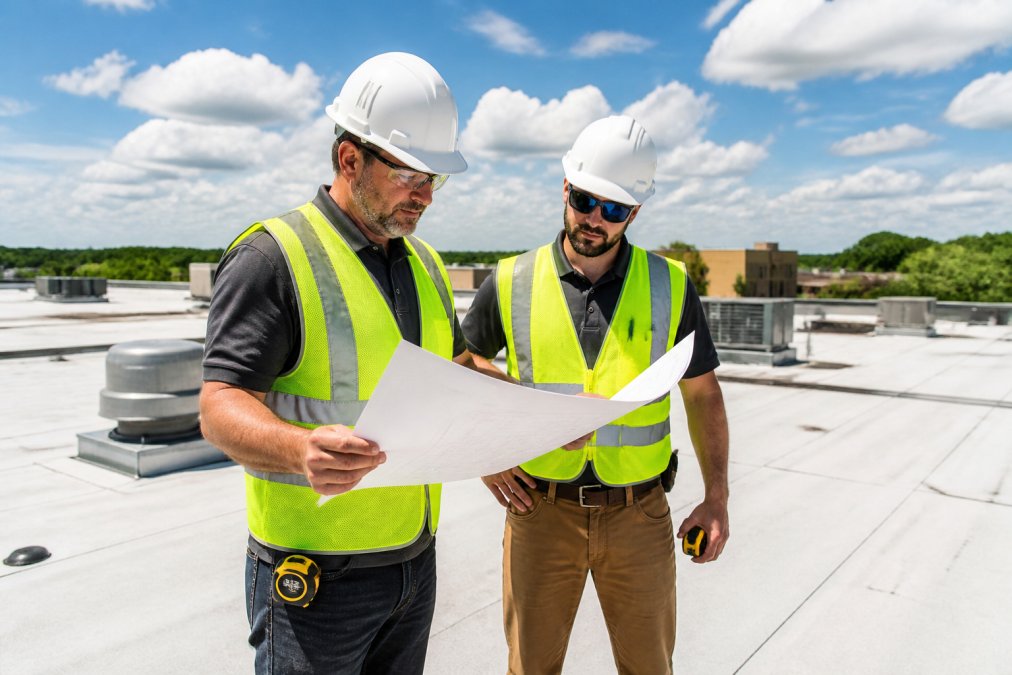
Experience matters more in commercial roofing than in most trades. Commercial systems, whether low-slope membranes, metal roofing, or complex multi-level installations, demand different expertise than residential work.
Roofing Portfolio and Project History
Request a detailed portfolio of completed commercial projects. Look specifically for buildings similar in size, complexity, and roofing system to yours. If you need a TPO membrane roof on a 50,000-square-foot warehouse, the contractor’s portfolio should showcase multiple similar projects completed within the last five years.
Ask for project completion dates, building types, square footage, and the specific roofing systems installed. A vague portfolio is worthless. Detailed project histories show the contractor tracks their own work and can speak intelligently about what they’ve built.
Request photos of completed projects showing not just the finished roof, but the installation process, flashing details, membrane seams, and edge work. These details reveal whether the contractor prioritizes quality in areas most property owners never see.
Local Presence and Service Area
A contractor based near your property in the Greater Cincinnati area or surrounding regions offers practical advantages: faster response times for emergency repairs, familiarity with local building codes, and established relationships with local inspectors and suppliers. Ask how far the contractor travels for projects and whether they maintain a permanent office and equipment storage near your location.
Key Questions to Ask a Commercial Roofing Contractor
The right questions separate contractors who understand your project from those simply bidding to win work.
Understanding Roofing Systems and Materials
Ask the contractor to explain the roofing system they recommend for your building. They should articulate why one system suits your building better than alternatives. For example: "A TPO membrane works well for your climate because it reflects UV radiation, reducing cooling costs, and the seams are heat-welded rather than glued, making them more durable in freeze-thaw cycles common in Ohio winters."
Request detailed roofing specifications in writing before the estimate. These specifications should name the manufacturer, product line, thickness, fastening method, and flashing details. Vague specifications like "commercial-grade roofing membrane" leave room for the contractor to substitute cheaper alternatives later.
Project Timeline, Safety Protocols, and Emergency Response
A realistic project timeline depends on square footage, weather, and system complexity. A 30,000-square-foot TPO installation typically requires 10-15 working days in good weather. Ask about their contingency plan for weather delays and get this in writing.
Ask about their fall protection system, equipment inspection routines, and how they manage worker safety during high-wind conditions. Discuss emergency response: What happens if a leak develops during the warranty period? How quickly will they respond? For commercial properties where a leak can shut down operations, fast response time is worth premium pricing.
Request and Verify References
References from past clients reveal how contractors actually perform once the contract is signed. Request at least three references from commercial projects completed within the last three years, ideally similar in size and scope to yours.
When you call references, ask specific questions: Did the project stay on schedule? Were there unexpected costs? How did the contractor handle problems? Would you hire them again? Ask references about post-installation service and whether the contractor has been responsive to warranty questions.
Request contact information for the project manager or crew lead who will oversee your work. Speaking directly with the person managing your project reveals whether they understand the scope and have realistic expectations.
Compare Project Estimates and Understand Costs
Comparing estimates requires more than looking at the bottom-line price. Three bids for the same project might vary by 30% or more, and the cheapest option often reflects hidden problems.
Request detailed, itemized estimates from each contractor. The estimate should break down labor, materials, equipment rental, permits, and any other costs. Compare the materials specified in each estimate. If Contractor A specifies a 60-mil TPO membrane and Contractor B specifies 45-mil, that’s a meaningful difference affecting durability and cost.
Ask each contractor to explain why their price differs from competitors. A contractor who is 20% more expensive should articulate the added value: higher-quality materials, more experienced crew, faster timeline, or extended warranty.
The lowest bid rarely represents the best value in commercial roofing. A contractor 15% more expensive often delivers superior materials and workmanship that save money over the roof’s lifespan through fewer repairs and longer performance.
Lifecycle Cost Analysis and Preventative Maintenance
Commercial roofing decisions should account for total cost of ownership, not just installation price. Ask contractors about expected maintenance needs and request a preventative maintenance plan. Ask about the contractor’s involvement in long-term maintenance. Will they provide ongoing service agreements? A contractor willing to commit to long-term service relationships demonstrates confidence in their work.
Review Warranty Coverage and Contractual Obligations
Warranty terms vary significantly between contractors and manufacturers. Manufacturer warranties typically cover material defects for 10-25 years, depending on the system and product line. Workmanship warranties, provided by the contractor, usually run 5-10 years.
Request the warranty documents in writing before signing the contract. Confirm that the contractor is registered with the manufacturer as an authorized installer. Verify that your property will be listed as the warranted owner, not the contractor.
Red Flags in Commercial Roofing Contracts
Vague scope language is a red flag. If the contract says "Install new roofing system" without specifying materials, square footage, or system details, the contractor can interpret this broadly. Insist on detailed specifications.
"Acts of God" clauses that exclude weather-related delays without specifying how delays will be handled create problems. Get clarity on what happens if rain stops work for two weeks.
Change order procedures matter. A contract should specify how additional work is authorized and priced. If the contractor discovers roof deck damage during installation, how will they propose repairs?
Lien waivers protect you from subcontractor claims. Require the contractor to provide lien waivers from all subcontractors and material suppliers before you make final payment.
Insurance requirements should be explicit. The contract should require the contractor to maintain general liability and workers compensation coverage throughout the project.
Steps to Choose a Roofing Contractor for Your Commercial Building
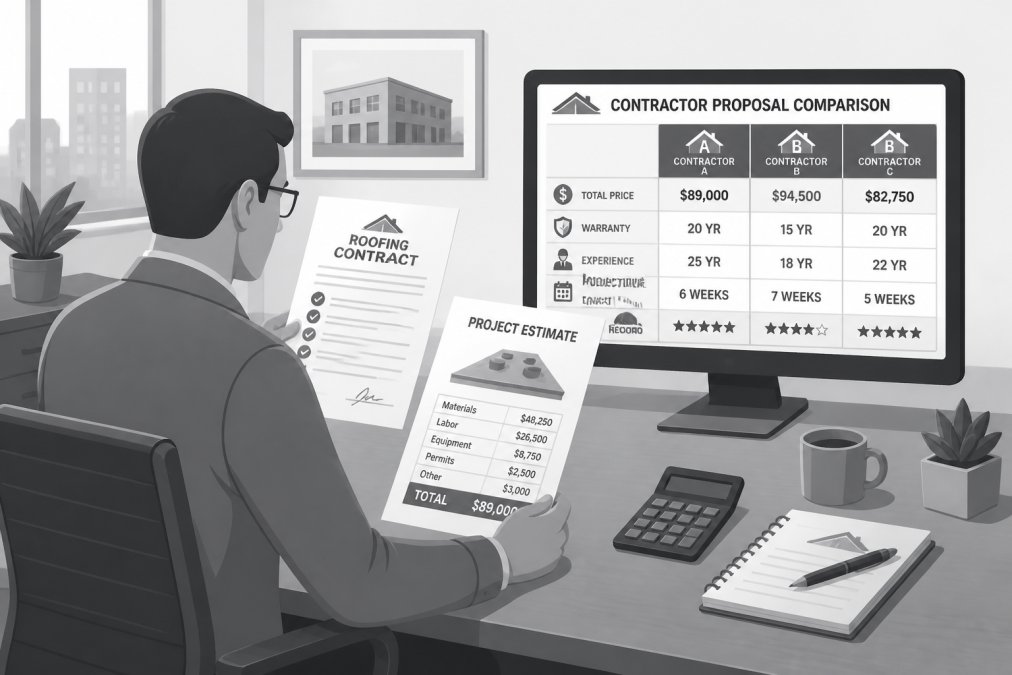
Follow this structured process to evaluate contractors systematically:
| Step | Action | Timeline |
|---|---|---|
| 1. Define requirements | Document building specifications, roofing system preferences, timeline, and budget | 1 week |
| 2. Identify candidates | Request referrals, check NRCA directory, review BBB ratings | 1 week |
| 3. Verify credentials | Confirm licenses, insurance, certifications for top 3-4 candidates | 1 week |
| 4. Request estimates | Provide identical specifications to each contractor; request detailed, itemized proposals | 2 weeks |
| 5. Evaluate proposals | Compare materials, timelines, warranties, and pricing; request clarification on differences | 1 week |
| 6. Check references | Call at least three past clients; ask specific questions about performance | 1 week |
| 7. Interview finalists | Meet with project managers; discuss safety protocols, maintenance plans, emergency response | 1 week |
| 8. Review contracts | Have legal counsel review terms; negotiate warranty and scope language | 1 week |
| 9. Make decision | Select contractor based on credentials, experience, proposal quality, and reference feedback | 1 week |
This timeline assumes moderate urgency. Emergency situations may compress steps, but don’t skip verification.
Sustainability, Energy Efficiency, and Long-Term Service Agreements
Modern commercial roofing systems offer sustainability benefits that reduce energy costs and environmental impact. Cool roof coatings, designed to reflect solar radiation, can reduce roof surface temperatures by 30-50 degrees Fahrenheit, lowering cooling costs by 10-15% in warm climates.
Ask contractors about energy-efficient options relevant to your building’s climate and use. Some contractors offer long-term service agreements that bundle maintenance, inspections, and repairs into predictable annual costs. For commercial properties where roof failures disrupt operations, service agreements provide peace of mind.
Research from the National Roofing Contractors Association’s sustainability guidelines shows that preventative maintenance extends roof lifespan by 5-10 years, offsetting higher initial costs for premium systems.
Choosing a roofing contractor for your commercial building requires systematic evaluation of credentials, experience, and contract terms. The process takes time, but the investment prevents costly mistakes and ensures your roof performs reliably for decades.
DGK Home Solutions brings over 20 years of commercial roofing expertise to the Greater Cincinnati area. We provide detailed project specifications, transparent pricing, comprehensive warranties, and long-term maintenance support. Get a free estimate from DGK Home Solutions and see how our approach to commercial roofing differs from contractors who treat every project generically.
Frequently Asked Questions
What insurance should a commercial roofing contractor have?
A qualified commercial roofing contractor must carry general liability insurance and workers compensation insurance. General liability protects your property if the contractor damages it; workers compensation covers contractor injuries on site. Request certificates of insurance before work begins, and verify coverage limits are adequate for your project scope. The NRCA recommends confirming these policies directly with the insurance provider, not just the contractor.
How do I verify a roofing contractor's experience with commercial roofing systems?
Ask to review their roofing portfolio and request references from commercial projects similar to yours in scope and roofing material type. Speak directly with past clients about workmanship quality, project timeline adherence, and how the contractor handled unexpected issues. Check their manufacturer certifications, which indicate training on specific roofing systems. Verify they understand your building's structural requirements and can explain the roofing installation process clearly.
What should I look for in a commercial roof replacement cost estimate?
A detailed estimate should itemize roofing materials, labor, equipment, site preparation, and disposal costs. It should specify the roofing membrane type, manufacturer warranty terms, and project timeline. Avoid estimates with vague line items or unusually low prices, which may indicate corners being cut. Compare estimates from multiple contractors, but prioritize value over lowest price. Understand what's included in the warranty and whether the contractor offers long-term service agreements for preventative maintenance.
What red flags should I watch for when hiring a commercial roofing contractor?
Be cautious of contractors who cannot provide proof of insurance, lack local references, or pressure you to sign contracts immediately. Avoid those who cannot clearly explain roofing systems or materials, offer vague warranties, or demand full payment upfront. Watch for contractors who disappear after signing or fail to communicate project delays. Verify they follow OSHA safety standards and have emergency response protocols. Legitimate contractors welcome questions and provide detailed written contracts with clear terms, timelines, and warranty details.
How can a commercial roofing contractor help with insurance claims?
An experienced contractor can conduct a thorough roof inspection, document damage with photos and reports, and provide detailed estimates for repairs. They can communicate directly with your insurance adjuster and help explain the scope of damage and necessary repairs. However, verify upfront that they'll actively support the claims process and won't abandon you if the insurance company disputes the damage assessment. Get this commitment in writing before signing the contract.
This article was written using GrandRanker