Table of Contents
- How to Choose the Best Siding Contractor
- Siding Contractor Licensing and Insurance: Verification Essentials
- Siding Contractor Reviews: Where to Look and What Matters
- Questions to Ask Siding Contractors Before Hiring
- Siding Contractor Checklist: Essential Steps for Finding Local Companies
- Understanding Siding Materials and Regional Considerations
- Requesting Multiple Quotes and Comparing Estimates
- Finding Reliable Local Siding Companies: Tools and Directories
Last Updated: July 27, 2026
Finding reliable local siding companies requires more than a quick Google search. The process involves vetting credentials, comparing quotes, and understanding material options specific to your region. At DGK Home Solutions, we’ve guided hundreds of homeowners through this challenge. Below, we’ll walk you through eight essential steps to identify and hire a siding contractor who delivers quality work, clear communication, and lasting results.
How to Choose the Best Siding Contractor
Selecting the right siding contractor is one of the most consequential decisions you’ll make for your home’s exterior. A poor choice can result in premature siding failure, water damage, and costly repairs within just a few years. Siding installation requires precision, proper underlayment installation, flashing expertise, and knowledge of local building codes. A contractor who rushes the job or uses substandard materials may meet code minimally but fail in real-world performance. When you invest in new siding, you’re expecting a 20-30 year lifespan. The right contractor ensures you get it.
According to Better Business Bureau guidance on contractor selection, licensing, insurance, and verifiable references aren’t optional, they’re the foundation of a trustworthy relationship. A contractor willing to provide these details signals confidence in their work and protects you legally if something goes wrong.
The best contractors welcome questions about their process and credentials. If a contractor seems defensive or vague about licensing, insurance, or references, that’s a red flag. Move to the next option.
Siding Contractor Licensing and Insurance: Verification Essentials
Before discussing pricing or materials, verify that your contractor holds proper credentials. This step alone eliminates a significant portion of unreliable operators.
What to Look for in Credentials
In Ohio, siding contractors must hold a valid contractor’s license issued by the state. The license number should be publicly verifiable through the Ohio Construction Industry Licensing Board. Ask for it in writing and verify it yourself online.
Workers’ compensation insurance is non-negotiable. This protects you from liability if a worker is injured on your property. A contractor without workers’ comp is cutting costs in a way that exposes you to legal risk. Ask for a Certificate of Insurance that names your property as an additional insured.
General liability insurance covers property damage and bodily injury claims. A minimum of $1 million in coverage is standard for siding work. Request written proof and verify the policy is current before work begins.
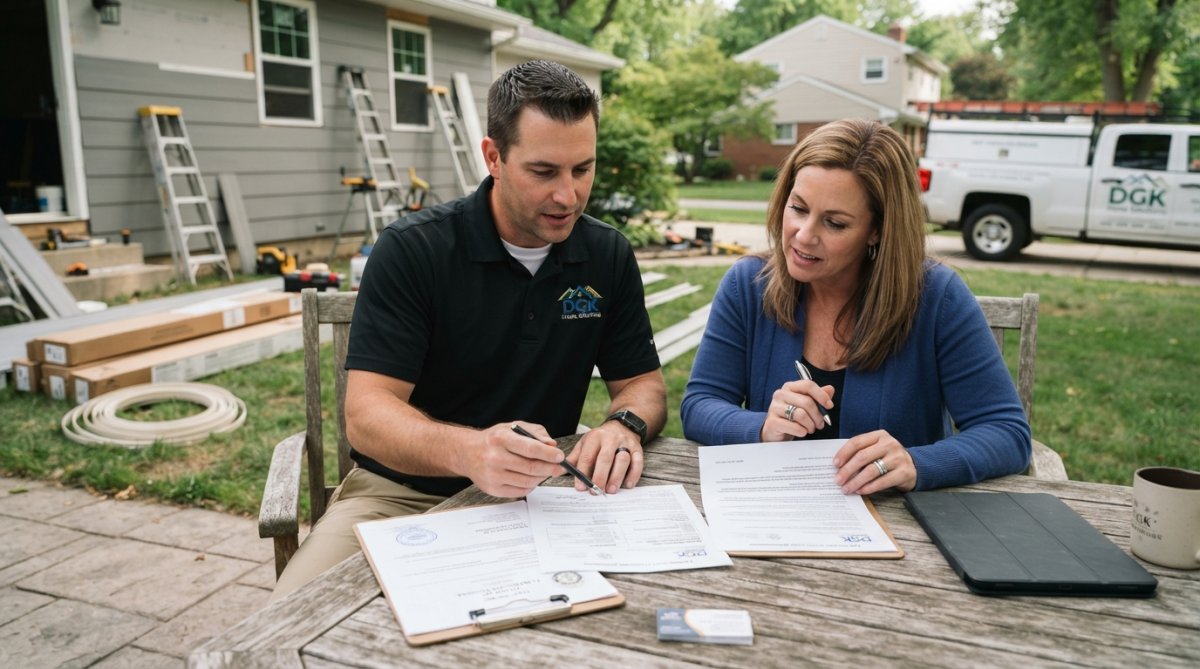
A contractor operating without proper licensing or insurance is either inexperienced or deliberately avoiding oversight. Either way, you’re exposed to risk. DGK Home Solutions maintains full licensing, workers’ compensation coverage, and general liability insurance, credentials you can verify before any work begins.
Siding Contractor Reviews: Where to Look and What Matters
Online reviews provide valuable insight into a contractor’s reliability, communication style, and quality of work. However, not all review platforms are equally trustworthy.
Red Flags in Reviews and Testimonials
Look for patterns, not isolated complaints. Multiple reviews mentioning the same issue, poor communication, incomplete cleanup, warranty disputes, signal a real problem. One negative review among dozens of positive ones might reflect a difficult customer or misunderstanding.
Be skeptical of generic reviews. "Great company, highly recommend!" tells you nothing. Credible reviews include specific details: "They finished two days ahead of schedule and explained every step of the process."
Check multiple platforms. Angi’s directory of local contractors and Yelp’s local business reviews aggregate customer feedback, with Angi focusing specifically on home services. The Better Business Bureau provides complaint history and shows how contractors respond to issues. A contractor who responds professionally to complaints demonstrates accountability.
Watch for reviews mentioning insurance claims. If a homeowner had storm damage and the contractor helped navigate the insurance process, that’s a strong signal of experience.
Avoid contractors with multiple reviews mentioning surprise costs, hidden damage, or warranty disputes. These issues suggest poor initial assessments or unwillingness to stand behind their work.
Questions to Ask Siding Contractors Before Hiring
The conversation you have with a potential contractor reveals how much they know and how seriously they take your project.
Material Knowledge and Experience Questions
Ask how many siding projects they’ve completed in the past three years. A contractor who’s installed siding on 50+ homes has real expertise. Someone claiming to be a general contractor who occasionally does siding is less reliable.
Inquire about their preferred siding materials and why. A knowledgeable contractor can explain trade-offs between vinyl, fiber cement, wood, and composite options and should ask about your climate concerns, maintenance preferences, and budget before recommending a material.
Ask specifically about their experience with your preferred material. Have they installed James Hardie fiber cement? LP SmartSide? CertainTeed products? Each manufacturer has specific installation requirements, and cutting corners voids warranties.
Warranty and Guarantee Questions
What warranty does the contractor offer on their workmanship? Industry standard is 5-10 years on labor. Anything less suggests they’re not confident in their work. Ask what’s covered: flashing failures, water intrusion, or only visible defects?
Who backs the material warranty? Most siding manufacturers offer 20-30 year warranties but require professional installation by certified contractors. Verify that your contractor is authorized to install your specific product.
What happens if a problem emerges after the warranty period? A quality contractor will still address legitimate issues because they care about their reputation.
Siding Contractor Checklist: Essential Steps for Finding Local Companies
Finding reliable local siding companies in Liberty Township and the Greater Cincinnati area requires a systematic approach. Use this checklist to evaluate each contractor.
| Step | Action | Priority |
|---|---|---|
| 1. Verify licensing | Check Ohio Construction Industry Licensing Board database | Critical |
| 2. Request insurance documents | Obtain Certificate of Insurance naming your property | Critical |
| 3. Check online reviews | Review Angi, Yelp, and Better Business Bureau profiles | High |
| 4. Ask for references | Request 3-5 recent customer contacts | High |
| 5. Assess material knowledge | Ask detailed questions about siding options and installation | High |
| 6. Request site inspection | Ensure they visit your home before providing estimates | High |
| 7. Compare warranty terms | Document workmanship and material warranty coverage | Medium |
| 8. Evaluate communication | Note how responsive and clear they are during initial contact | High |
Start by identifying 3-4 contractors who meet basic criteria: licensed, insured, and with positive reviews.
Understanding Siding Materials and Regional Considerations
Your choice of siding material significantly impacts durability, maintenance, energy efficiency, and long-term costs.
Material Options and Cost Factors
Vinyl siding is the most affordable upfront option and requires minimal maintenance. However, vinyl can become brittle in extreme cold, fade in intense sun, and typically lasts 15-20 years before replacement.
Fiber cement siding, such as James Hardie products, offers superior durability and aesthetic versatility. It resists rot, insects, and fire better than wood and holds paint longer than vinyl. The trade-off is higher cost and more complex installation. When installed correctly, it lasts 25-30 years.
Wood siding provides classic beauty but demands regular maintenance, painting or staining every 3-5 years. In humid climates, wood is susceptible to rot and insect damage.
Composite siding blends wood fibers with resin, offering wood’s appearance with improved durability. It resists rot and insects but is more expensive than vinyl.
Climate and Regional Factors for Ohio Homes
Ohio’s climate presents specific challenges. Winter temperatures drop below freezing regularly, creating freeze-thaw cycles that stress siding materials. Summer humidity can be high, particularly in the Cincinnati area, increasing rot risk for wood-based materials.
Liberty Township and surrounding areas experience significant temperature swings between seasons. Your siding material must expand and contract without cracking or separating from the house structure. Proper underlayment and flashing become critical in Ohio’s climate, where many contractors cut corners.
For most Ohio homeowners, fiber cement or high-quality vinyl installed with proper underlayment and flashing offers the best balance of durability, maintenance, and cost. DGK Home Solutions has extensive experience with both materials in Ohio’s climate.
Requesting Multiple Quotes and Comparing Estimates
Never hire a contractor based on a single quote. Comparing estimates from 3-4 contractors reveals the market range and highlights significant outliers.
What to Include in Your Estimate Requests
Provide each contractor with identical information: square footage, specific siding material, color, whether you want soffit and fascia replaced, and any problem areas. Ask contractors to itemize their quotes: material costs, labor costs, permit fees, and additional charges.
Request a detailed scope of work specifying what’s included: removal of old siding, underlayment installation, flashing installation, trim and caulking, cleanup, and permit handling.
How to Compare Quotes Fairly
The lowest quote isn’t always the best value. A contractor quoting significantly below market rate may be cutting corners on materials or planning to upsell you during the job.
Compare material specifications carefully. Are all quotes specifying the same siding product, grade, and color? Look at warranty terms alongside price. A slightly higher quote with a 10-year workmanship warranty is often better value than a lower quote with a 2-year warranty.
The best estimate is detailed, itemized, and includes clear warranty terms. It should reference the contractor’s experience with your specific siding material and address any existing damage identified during their site visit.
Finding Reliable Local Siding Companies: Tools and Directories
Multiple platforms help you locate and vet siding contractors in the Liberty Township area.
Online Platforms and Review Sites
Angi (formerly Angie’s List) maintains a comprehensive directory of local contractors with customer reviews and ratings. You can filter by service type and request quotes directly through the platform.
HomeAdvisor provides similar functionality with an emphasis on matching homeowners with pre-screened contractors. They perform background checks on listed professionals.
Yelp’s local business directory includes siding contractors with customer reviews. Google Business Profiles are increasingly important, most local siding companies maintain profiles with photos, reviews, contact information, and service area details.
Local Business Associations and Certifications
The National Association of the Remodeling Industry (NARI) maintains a directory of certified remodeling professionals. NARI membership requires meeting standards for professionalism, ethics, and business practices.
The Better Business Bureau profiles contractors and tracks complaints and resolutions. A BBB-accredited business has committed to ethical practices and BBB standards.
Local chambers of commerce often maintain contractor referral lists. The Liberty Township Chamber of Commerce or Cincinnati-area chambers can point you toward established, community-connected businesses.
When evaluating siding companies, use multiple sources. A contractor who appears on Angi, maintains a strong Google Business Profile, has positive BBB ratings, and comes recommended by your local chamber is significantly more vetted than one found through a single source.
The process of finding reliable local siding companies requires diligence, but the payoff is substantial. A quality contractor delivers not just a finished product, but peace of mind, knowing your home is protected with materials properly installed to withstand Ohio’s climate and weather patterns. DGK Home Solutions brings over 20 years of experience serving residential and commercial clients throughout the Greater Cincinnati area. We handle every aspect of siding installation with clear communication, honest assessments, and workmanship you can trust. Request a free quote today and see how we can protect your home with quality siding and professional service.
Frequently Asked Questions
What should I look for in a good local siding company?
Look for contractors with valid licensing, workers' compensation insurance, and positive reviews on BBB, Angi, and Yelp. Verify experience with your specific siding material (vinyl, fiber cement, wood, or composite), check references from past projects, and ensure they offer written warranties on both materials and workmanship. Ask about their timeline, communication process, and whether they handle permit applications.
How do I verify a siding contractor's license and insurance?
Contact your state's licensing board or local building department to confirm active contractor licenses. Ask the contractor directly for proof of workers' compensation insurance and general liability coverage, request certificates of insurance naming you as additional insured. Check the Better Business Bureau for complaint history and verify they're in good standing with local associations like NARI or NAHB.
What questions should I ask a siding contractor about experience and materials?
Ask how many years they've worked with your specific siding material, request references from similar projects completed in the last 2-3 years, inquire about their warranty terms (material and labor), and ask about their process for handling permits and building code compliance. Also ask about project timeline, how they manage weather delays, and their communication protocol for updates.
How many estimates should I get for siding replacement?
Get at least three estimates from different contractors to compare pricing, materials, and scope. Ensure each estimate includes labor costs, material specifications, timeline, warranty details, and any additional work (soffit, fascia, trim). Avoid choosing based solely on price, the lowest bid may indicate lower-quality materials or rushed workmanship.
What are red flags when hiring a local siding contractor?
Be wary of contractors who demand large upfront payments, lack proper licensing or insurance, avoid providing written estimates, have multiple unresolved complaints on BBB or Yelp, or pressure you into immediate decisions. Avoid those unwilling to discuss warranties, unable to provide references, or who don't clearly explain the scope of work and timeline.
This article was written using GrandRanker