Table of Contents
- What to Do Immediately After Roof Damage
- Review Your Homeowners Insurance Policy Before Filing
- Understanding the Roof Damage Insurance Claim Process
- Step-by-Step: How to File Your Roof Insurance Claim
- What Happens When Your Roof Insurance Claim Is Denied
- How Filing a Claim Impacts Your Insurance Premium
- Common Mistakes to Avoid When Filing a Roof Claim
- Conclusion
How to File a Roof Insurance Claim: Step-by-Step Guide
Last Updated: July 16, 2026
Knowing how to file a roof insurance claim after damage strikes can mean the difference between swift repairs and months of delays. This guide walks you through exactly how to file a roof insurance claim, from discovery through settlement, showing you the specific steps, documentation requirements, and strategies to maximize your payout while avoiding common pitfalls.
What to Do Immediately After Roof Damage
The first hours after roof damage are critical. Your immediate actions directly impact how smoothly your claim process unfolds and how much coverage you’ll ultimately receive.
If the damage is severe, missing roof sections, large holes, or structural concerns, prioritize safety. Keep family members and pets away from damaged areas and avoid climbing onto the roof yourself, especially in wet conditions.
Document the Damage with Photo Evidence
Photography is your most powerful evidence when filing a roof insurance claim. Insurance adjusters rely heavily on visual documentation to validate claims and determine payout amounts.
Take photos and videos from multiple angles. Capture wide shots showing the overall damage pattern, then zoom in on specific problem areas. Document hail marks on shingles, missing shingles, dents in gutters and flashing, and any water intrusion inside the home. Photograph the date on a calendar or newspaper in one shot to establish when you documented the damage.
Create a detailed written inventory alongside your photos. List each damaged area, the type of damage (hail, wind, missing shingles), and its location on the roof. This documentation becomes your proof of loss, which you’ll submit when you formally file your roof insurance claim.
Before your insurance adjuster arrives, take photos from every accessible angle. Once repairs begin, you lose the ability to document original damage. Insurance companies can deny claims if they can’t verify the damage actually existed.
Prevent Further Damage with Temporary Repairs
Cover holes or exposed areas with tarps, plywood, or temporary sealant. Clear gutters of debris to prevent water backup. Keep all receipts for temporary repair materials and labor, many homeowners policies cover reasonable mitigation costs. Don’t make permanent repairs yet; your insurance adjuster needs to see the original damage first.
Review Your Homeowners Insurance Policy Before Filing
Understanding your actual coverage is essential before you file a roof insurance claim. Pull out your homeowners insurance policy documents and locate the section on roof coverage. Your policy language determines what happens next.
Understand Coverage Type: ACV vs. RCV
Actual Cash Value (ACV) pays for the cost to repair or replace your roof minus depreciation. If your roof is 10 years old and has a 20-year lifespan, the insurance company depreciates its value by 50 percent.
Replacement Cost Value (RCV) pays the full cost to repair or replace your roof with materials of similar kind and quality, without depreciation deductions. If you have RCV coverage, you receive the full replacement cost regardless of your roof’s age.
Check your policy documents for the exact coverage type. This single detail determines whether your claim settlement covers your full repair bill or leaves you paying thousands out of pocket.
Check Your Deductible and Policy Limits
Your deductible is the amount you pay out of pocket before insurance coverage kicks in. Common roof damage deductibles range from $500 to $2,500, though some policies use a percentage-based deductible (typically 1-5 percent of your home’s insured value).
Policy limits determine the maximum payout for roof damage. Verify your specific limits before filing your claim.
The gap between what insurance pays and what repairs actually cost often comes from depreciation (ACV policies) or high deductibles. Understanding these numbers before you file prevents sticker shock later.
Understanding the Roof Damage Insurance Claim Process
Filing a roof insurance claim follows a defined sequence. The claim process typically takes 30 to 90 days from initial report to settlement, though complex claims can extend longer.
Know Your Claim Filing Deadline and Statute of Limitations
Most insurance policies require you to report damage promptly, typically within 30 to 60 days of discovering it. Failing to meet this deadline can result in claim denial. Document the date you discovered the damage and the date you reported it to your insurance company. Keep confirmation of your report, email confirmation, claim number, or written acknowledgment from your insurer.
Step-by-Step: How to File Your Roof Insurance Claim
This is where your preparation pays off. Follow these steps precisely to maximize your chances of a smooth claim process and fair settlement.
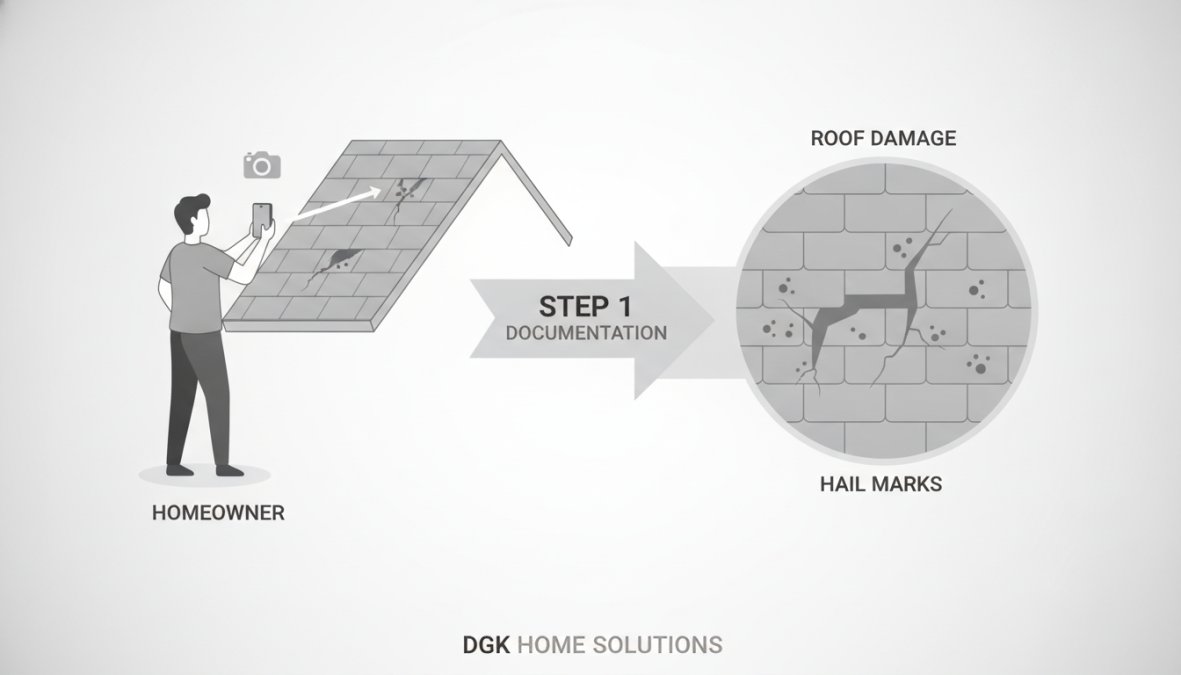
Step 1: Contact Your Insurance Company and Report the Damage
Call your insurance company’s claims line immediately after discovering roof damage. Have your policy number ready and be prepared to describe the damage briefly. The representative will open a claim file, assign you a claim number, and schedule an initial inspection.
Provide factual information about what happened, the date of the storm, the type of damage observed, and whether anyone was injured or interior damage occurred. Request the name and contact information of the insurance adjuster who will inspect your property and ask about the typical timeline for inspection scheduling.
Step 2: Prepare Your Proof of Loss Documentation
Proof of loss is a formal document detailing the damage and your claim amount. Compile all your photographs, videos, and written inventory into a clear, organized package. Create a written narrative describing what happened, when it happened, and what damage resulted.
List each damaged component with its location, description of damage, and estimated replacement cost. For example: "North-facing roof slope, approximately 15 linear feet of shingles with hail impact damage, requiring replacement at estimated cost of $3,200." Attach your photographs and any supporting documentation, weather reports confirming the storm, receipts for temporary repairs, or estimates from contractors.
Submitting incomplete proof of loss delays your claim significantly. Invest time upfront to avoid weeks of back-and-forth communication.
Step 3: Schedule Your Roof Inspection for Insurance Claim
Your insurance adjuster will inspect the damage to verify it matches your claim and determine the payout amount. Clear access to your roof if safe to do so. Trim tree branches that might obstruct the adjuster’s view. Make sure the attic is accessible so the adjuster can check for interior water damage or structural issues.
During the inspection, accompany the adjuster if possible. Point out damage you’ve documented and answer questions about what happened.
Step 4: Get a Contractor Estimate from a Certified Roofer
Obtain an independent contractor estimate to document actual repair costs. Contact a licensed, insured roofer for an on-site estimate. A professional estimate documents the scope of work, specific materials needed, and realistic costs based on current market prices.
Submit this contractor estimate with your proof of loss. If your contractor’s estimate significantly exceeds the insurance company’s valuation, this creates a documented basis for negotiating a higher settlement.
Step 5: Submit Your Claim and Track Your Claim Number
Submit your complete proof of loss package to your insurance company in writing. Email is acceptable, but send it via certified mail or hand-deliver it to ensure documentation of receipt. Keep copies of everything you submit.
Your claim number is your reference for all future communication. Use it in every phone call, email, and written correspondence. Most insurance companies provide online portals where you can monitor claim progress.
What Happens When Your Roof Insurance Claim Is Denied
Claim denial is devastating, but it’s not necessarily final. Insurance companies deny claims for specific reasons: coverage exclusions, failure to meet filing deadlines, misrepresentation on your application, evidence that damage resulted from poor maintenance rather than a covered peril, or documentation that doesn’t support the claimed damage amount.
Understanding Denial Letters and Common Reasons for Denial
When your claim is denied, the insurance company must provide a written explanation. Read this letter carefully and identify the specific reason for denial. Common denial reasons include maintenance exclusions, age-related exclusions, wear and tear claims, missing coverage, late reporting, or misrepresentation on your insurance application.
The Claim Denial Appeal Process and Your Options
Most insurance companies have a formal appeal process. Request a copy of your company’s appeal procedures and follow them precisely. Gather evidence that contradicts the denial reason and write a detailed appeal letter explaining why you disagree with the denial, referencing specific policy language that supports your position.
If the insurance company upholds the denial after your appeal, you have additional options. Some states allow you to request independent review or arbitration. You can also consult with an attorney about your rights.
Public Adjuster vs. Company Adjuster: When to Use Each
A company adjuster works for your insurance company and investigates claims to determine payout amounts. A public adjuster works for you. You hire and pay them to represent your interests during the claims process. Public adjusters typically charge 5-10 percent of the settlement increase they secure.
Hire a public adjuster if your claim was denied and you believe the denial is unjustified, the insurance company’s settlement offer seems significantly lower than contractor estimates, or the damage is extensive and complex.
Don’t hire a public adjuster immediately after filing your claim. Wait to see what the insurance company offers first. If their offer seems reasonable, you don’t need a public adjuster. If it’s significantly lower than your contractor’s estimate or if your claim is denied, that’s when hiring a public adjuster makes financial sense.
How Filing a Claim Impacts Your Insurance Premium
Filing a roof insurance claim typically increases your premiums at renewal. A single weather-related claim usually results in a modest premium increase, typically 10-15 percent at your next renewal. Multiple claims within the past three to five years can result in substantial increases.
Before filing your claim, weigh the insurance payout against the likely premium increase. If the damage is minor and your deductible is high, filing might not make financial sense. However, if the damage is substantial and your payout will be significant, filing is usually worthwhile despite the premium impact.
Common Mistakes to Avoid When Filing a Roof Claim
Delaying your report: Filing your claim weeks or months after discovering damage raises red flags with adjusters. Report damage immediately.
Failing to document thoroughly: Inadequate photographs, vague descriptions, and missing supporting documentation slow your claim and invite requests for additional information.
Making permanent repairs before claim approval: Once you repair the damage, your adjuster can’t verify what happened. Wait for claim approval before making permanent repairs.
Misrepresenting facts to your adjuster: Exaggerating damage, inventing damage that doesn’t exist, or lying about maintenance history constitutes insurance fraud.
Accepting the first settlement offer without review: Compare the settlement to your contractor’s estimate. If it’s significantly lower, request an explanation and consider appealing.
Ignoring policy language: Not reading your policy thoroughly means you might miss coverage details, exclusions, or special provisions that affect your claim.
Hiring the wrong contractor: Not all roofers are created equal. Hire a licensed, insured contractor with experience handling insurance claims.
Filing a roof insurance claim is manageable when you understand the process and prepare thoroughly. The difference between a smooth claim and a frustrating one often comes down to documentation, timing, and knowing your policy. If you’re facing roof damage and need guidance through the claims process, or if you need a professional contractor estimate to support your claim, DGK Home Solutions provides expert support. With over 20 years of experience handling insurance claims in the Greater Cincinnati area, our team works directly with adjusters and helps homeowners navigate the entire process. Get a free quote today and let us help you restore your roof properly.
Frequently Asked Questions
What is the process for filing a roof insurance claim?
The roof insurance claim process involves several key steps: document damage with photos, contact your insurance company immediately, prepare proof of loss documentation, schedule an inspection with an insurance adjuster, obtain contractor estimates from a certified roofer, submit your claim with all supporting evidence, and track your claim number throughout underwriting. Most claims are processed within 30-60 days, though complex cases may take longer. Keep detailed records of all communication with your policyholder representative.
How should I document roof damage for an insurance claim?
Thorough documentation is critical for claim settlement. Take clear photo evidence from multiple angles showing the damage (hail damage, wind damage, or storm damage). Photograph the entire affected area plus surrounding undamaged sections for comparison. Document the date and weather conditions. Create a written inventory listing all damaged materials and their locations. If temporary repairs are needed for mitigation, photograph those too. Keep receipts for any emergency work. This evidence supports your claim and helps the insurance adjuster assess coverage verification accurately.
What should I not say to a roof insurance adjuster?
Avoid admitting fault or speculating about cause. Don't exaggerate damage or provide inflated estimates. Never discuss prior claims or unrelated home issues unless directly asked. Avoid saying the damage was pre-existing or mentioning lack of maintenance. Don't accept the first settlement offer without reviewing it carefully, you have the right to appeal if you disagree. Be factual and stick to what you observed. If the adjuster's assessment seems low, you can request a second opinion or hire a public adjuster to advocate on your behalf during claim negotiations.
How long does a roof insurance claim take to process?
Most roof insurance claims take 30-60 days from submission to claim settlement, though timelines vary by insurer and claim complexity. The process includes initial report filing, damage assessment by an insurance adjuster, underwriting review, and approval. Storm damage claims may process faster if filed quickly, while disputed claims or those requiring additional investigation take longer. Some insurers have statutory deadlines (statute of limitations) to respond, typically 30-90 days. Track your claim number and follow up regularly. Delays often occur when documentation is incomplete, so submit all proof of loss and contractor estimates promptly.
What roof damage is typically covered by homeowners insurance?
Most homeowners insurance policies cover sudden, accidental damage from storms including hail damage, wind damage, and falling debris. However, coverage depends on your specific policy, deductible, and policy limits. Damage from poor maintenance, neglect, or gradual wear (depreciation) is usually not covered. Some policies exclude certain roofing materials or have age restrictions. Review your policy documents carefully to understand what's included. Coverage verification before filing helps set realistic expectations. Replacement cost value (RCV) policies pay full replacement costs, while actual cash value (ACV) policies deduct depreciation, resulting in lower claim settlements.
Will filing a roof insurance claim increase my premiums?
Filing a roof claim may impact your future premiums, though this varies by insurer and claim circumstances. A single claim for weather-related damage (hail, wind, storm) typically has less impact than multiple claims. Some insurers offer claim-free discounts or forgive the first claim. However, repeated claims can lead to premium increases or non-renewal. Before filing, weigh the claim amount against your deductible and potential premium hikes. If damage is minor and close to your deductible, you might skip the claim. Contact your insurer to ask about their specific premium impact policy before filing, and consider consulting an insurance agent about long-term rate implications.
What should I do if my roof insurance claim is denied?
If you receive a denial letter, carefully review the stated reason, common denials cite pre-existing damage, exclusions, or policy limits. You have the right to appeal by submitting additional evidence, contractor estimates, or expert assessments. Request a detailed explanation in writing. Consider hiring a public adjuster to review the decision and advocate for you during the appeal process. You may also file a complaint with your state's insurance commissioner if you believe the denial is unfair. Keep all documentation and communication records. Some policies allow for independent inspections or mediation if disputes arise over claim settlement amounts.
This article was written using GrandRanker