Table of Contents
- Signs of Gutter Damage That Matter
- Understanding Gutter Lifespan by Material
- Repair vs. Replace: The Decision Matrix
- How to Fix Leaking Gutter Seams
- Average Cost of Gutter Replacement and Repair
- Insurance, Warranties, and Long-Term Protection
- Making Your Final Decision
- Conclusion
Last Updated: August 16, 2026
Signs of Gutter Damage That Matter
Visual indicators reveal whether gutters can be repaired or need replacement. Water stains on fascia boards and peeling paint near the foundation signal that water isn’t flowing properly through downspouts. Standing water in gutter sections indicates the slope has shifted, preventing proper runoff.
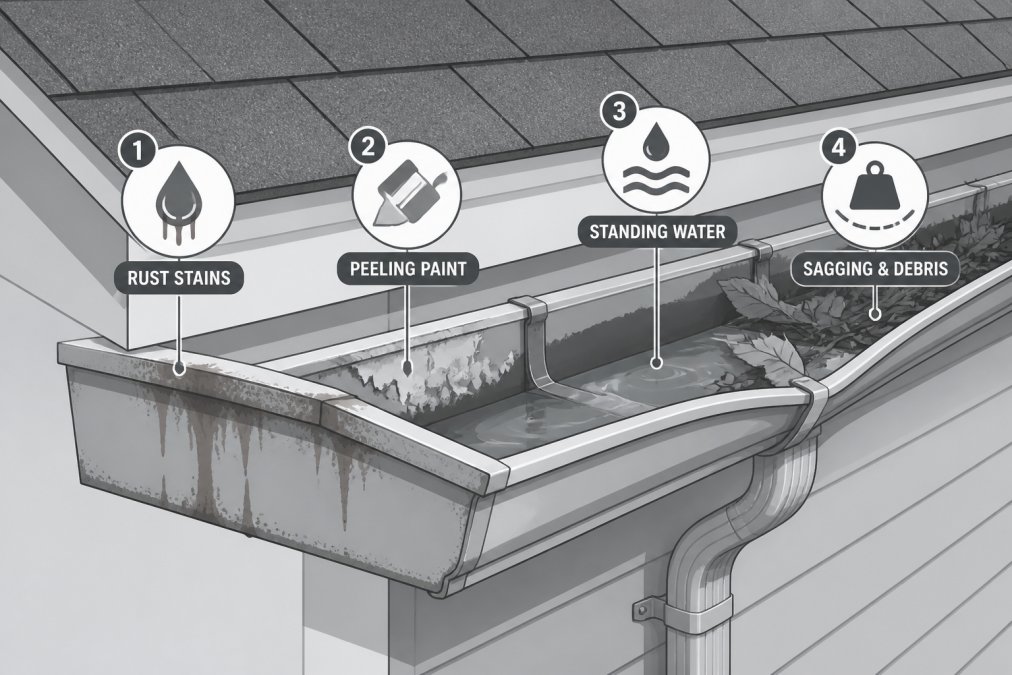
Rust and corrosion appear as orange or brown discoloration on metal gutters. Light surface rust can be cleaned and sealed, but deep corrosion creating holes means replacement is necessary. Sagging gutters indicate stress beyond repair. Leaking seams where gutter sections meet signal failed caulking; minor leaks can be resealed, but recurring problems suggest structural compromise.
Foundation erosion or cracks indicate water damage from failing gutters. Mold and mildew growth on siding or soffit reveals persistent moisture problems.
If you see water damage inside your home, stains on interior walls, soft drywall, or musty odors in the attic, the gutter problem has progressed beyond simple repair. This requires immediate professional assessment to prevent structural damage.
Understanding Gutter Lifespan by Material
Different materials fail in different ways and determine how long gutters last.
Aluminum gutters typically last 20-25 years. They resist rust better than steel but corrode in coastal areas or regions with heavy acid rain. Copper gutters last 50+ years with proper maintenance and develop a protective patina, but are expensive and prone to theft. Steel gutters last 15-20 years and are affordable but rust readily once the protective coating is damaged. Vinyl gutters last 10-15 years, don’t rust, but become brittle in cold weather and crack in extreme heat.
How climate affects durability
Climate significantly determines how quickly gutters fail. Freeze-thaw cycles create ice dams that damage gutter hangers and force water under roof shingles. Humid climates accelerate mold growth and rust formation. Coastal salt spray causes accelerated corrosion in aluminum and steel systems. Heavy rainfall areas stress gutters more; inadequate pitch or undersized downspouts cause water backup and pooling, increasing weight on hangers and promoting rust.
Common failure points in older gutters
Gutter slope often shifts as homes settle, creating low spots where water collects instead of flowing toward downspouts. Mitre joints where gutters change direction are stress points where sealant fails, allowing water to damage fascia boards. Gutter hangers deteriorate over 15-20 years as rust forms and fasteners loosen, causing sagging. Downspouts in older systems often separate or clog with debris, causing water backup and overflow.
When inspecting older gutters, pay special attention to where sections connect. Water staining on fascia directly below a joint signals imminent failure.
Repair vs. Replace: The Decision Matrix
Deciding whether to repair or replace depends on several factors working together.
| Factor | Repair Makes Sense | Replace Makes Sense |
|---|---|---|
| Gutter Age | Under 15 years | Over 20 years |
| Damage Location | Single section or joint | Multiple sections or widespread rust |
| Damage Type | Seam leaks, minor rust, loose hanger | Structural failure, deep corrosion, sagging |
| Extent | Affects 1-2 areas | Affects 50%+ of system |
| Recent Repairs | First repair attempt | Multiple repairs in past 2 years |
| Gutter Condition Overall | Mostly sound | Deteriorating throughout |
When a simple repair is sufficient
A single leaking seam is repairable. A professional can remove old sealant, clean the joint, and apply new caulking, lasting 5-10 years. Loose gutter hangers causing localized sagging can be fixed by replacing fasteners or adjusting positions. Minor surface rust can be cleaned, treated with rust inhibitor, and resealed. A clogged downspout causing water backup can be cleared with professional equipment, often solving overflow problems.
Red flags that replacement is necessary
Deep corrosion creating holes means water leaks directly onto fascia and into walls. Holes expand as rust spreads; patching is temporary. Sagging affecting multiple sections indicates systematic failure of hangers or structure. Widespread rust across 50% or more of the gutter system means the material is failing. Water damage inside your home, staining on interior walls, soft drywall, or mold in the attic, indicates the gutter system has failed. Multiple repairs in 2-3 years signal the system is failing; cumulative repair costs approach replacement cost.
If you’ve already repaired the same issue twice, replacement is almost certainly the better financial decision.
How to Fix Leaking Gutter Seams
Leaking gutter seams are often fixable with basic materials and careful technique.
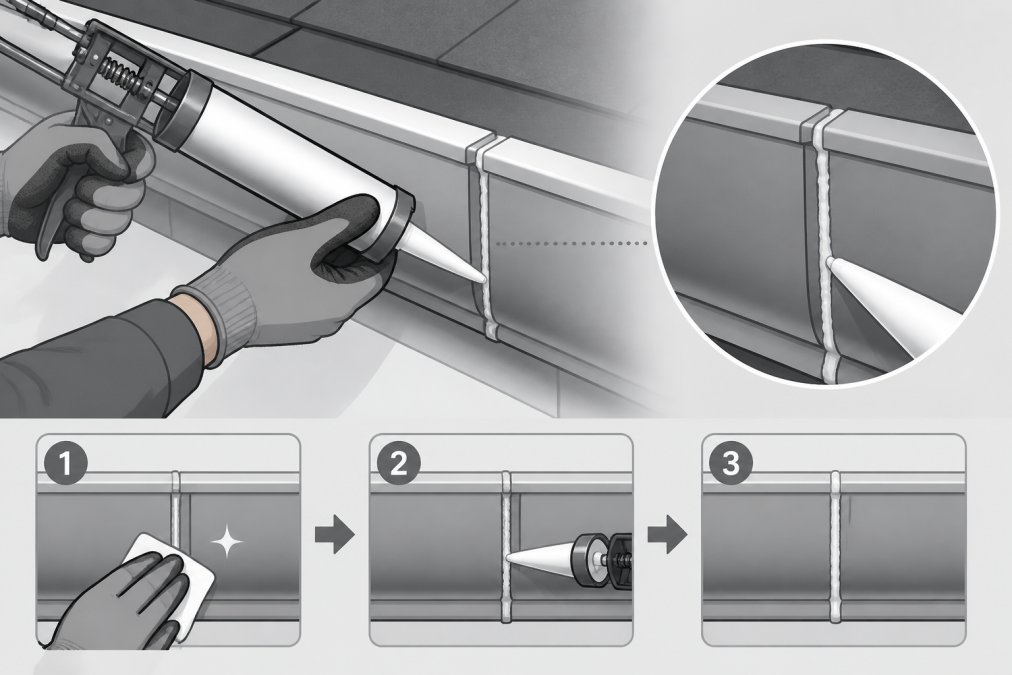
Clean the area thoroughly using a wire brush to remove debris, old caulk, and rust. The surface must be clean and dry for new sealant to bond. Rinse with a pressure washer or hose and allow several hours to dry completely. Remove all old caulking with a caulk removal tool or putty knife; incomplete removal prevents new sealant from adhering properly.
Apply gutter-specific caulk using a caulk gun with even pressure along the entire seam. Smooth the caulk with a wet finger to ensure full contact with both sides. Allow curing for 24-48 hours before water exposure.
DIY repair limitations and when to call a professional
Access is the first challenge; reaching gutters safely requires a stable ladder and proper precautions. Proper diagnosis is difficult; what appears to be a simple seam leak might indicate deeper structural problems. Quality depends on technique; incomplete caulk removal or inadequate drying causes failure within months. Professional repairs include warranties; if problems develop, the contractor addresses them at no cost.
Call a professional if the leak persists after repair, if you’re uncomfortable working at height, or if the gutter shows rust, corrosion, or structural damage. DGK Home Solutions provides professional gutter repair and inspection services throughout the Greater Cincinnati area, identifying whether seam leaks are simple fixes or signs of broader system failure.
Average Cost of Gutter Replacement and Repair
Gutter repair costs depend on repair type. Sealing leaking seams is typically least expensive. Replacing hangers or sections costs more but remains significantly less than full replacement. Gutter replacement costs vary based on linear footage, material choice, and roofline complexity.
What affects pricing and ROI analysis
Material selection is a primary cost driver. Aluminum gutters are most affordable; copper costs significantly more but lasts longer. Labor complexity affects pricing substantially; single-story homes with simple rooflines cost less than multi-story homes with complex angles. Collateral damage influences total cost; if water has damaged fascia, soffit, or roof structure, these must be repaired simultaneously.
ROI analysis should consider potential water damage costs. A $300 repair preventing $5,000 in foundation damage is justified. A $2,000 replacement extending system life 20+ years and preventing ongoing damage is also justified. Proactive replacement is less expensive than emergency replacement after failure causes water damage.
Homeowners in the Greater Cincinnati area preparing to sell benefit significantly from gutter replacement or repair. New or well-maintained gutters improve curb appeal and demonstrate proper home maintenance, potentially increasing sale price.
Insurance, Warranties, and Long-Term Protection
Most homeowners insurance policies cover sudden, accidental water damage from gutter failure. However, coverage for damage from neglect or gradual deterioration is usually excluded. Regular maintenance and documentation strengthen your position if you need to file a claim.
Professional gutter repairs typically include warranties of 5-10 years. Gutter replacement installations usually include material warranties (10-25 years) and workmanship warranties (5-10 years). Warranties typically cover defects in materials and installation quality, not damage from inadequate maintenance or external impact.
Long-term protection strategies include regular maintenance, gutter guards, and proper downspout installation directing water 4-6 feet from your foundation. Document all maintenance and repairs to support insurance claims and provide information to future buyers.
Making Your Final Decision
If gutters are under 15 years old with localized damage, a single leaking seam, loose hangers, or minor rust, repair is typically the right choice. If gutters are 20+ years old, show widespread rust, or required multiple repairs recently, replacement is the better investment.
If planning to sell within a few years, new gutters improve curb appeal and remove buyer concerns. If water damage is already occurring, replacement is necessary regardless of cost; delay increases collateral damage expenses.
For homeowners in the Greater Cincinnati area, professional assessment removes guesswork. DGK Home Solutions provides free inspections and honest recommendations based on your specific situation. Our team evaluates gutter condition, identifies whether repair or replacement makes financial sense, and explains long-term implications. With over 20 years of experience in residential and commercial gutter services, we’ve helped thousands of homeowners make this decision confidently.
The choice between repairing and replacing gutters becomes clearer when you understand your system’s condition and deterioration factors. DGK Home Solutions specializes in helping homeowners throughout the Greater Cincinnati area assess gutter systems and recommend cost-effective solutions. Whether your gutters need sealing, hanger replacement, or full replacement, our team provides honest assessment and professional service. Contact us for a free quote and let our 20+ years of experience guide your decision.
Frequently Asked Questions
How do I know if my gutters need to be replaced?
Your gutters likely need replacement if they're sagging, showing rust and corrosion throughout, have multiple leaking seams, or are over 20-25 years old. Standing water that doesn't drain, peeling paint on fascia boards, or visible cracks and holes are also clear signs. If water damage or foundation erosion is occurring around your home's perimeter, replacement is usually more cost-effective than repeated repairs.
Can you patch a leaking gutter?
Yes, leaking gutter seams can be repaired with caulking and sealant if the damage is isolated to one or two areas. However, if your gutters have multiple leaking seams, widespread rust, or structural damage, patching becomes a temporary fix. Professional inspection helps determine whether sealing seams will hold or if replacement is the better investment for long-term water damage prevention.
Is it cheaper to repair or replace gutters?
Repair is cheaper upfront, typically costing less than full replacement. However, if your gutters are aging, have multiple damage points, or fail again within months, replacement becomes more economical. Consider the gutter's age, material condition, and remaining lifespan. A professional assessment helps calculate the true ROI, frequent repairs on old gutters often cost more over time than one replacement.
What does gutter replacement cost on average?
Gutter replacement pricing depends on your home's linear footage, material choice, complexity of installation, and regional labor rates. Seamless gutters typically cost more than sectional options but last longer. For an accurate quote reflecting your specific home and needs, contact a local professional. DGK Home Solutions offers free estimates to help you understand the investment and financing options available.
This article was written using GrandRanker