Table of Contents
- What Commercial Building Exterior Repair Covers
- Facade Restoration and Structural Assessment
- Waterproofing and Building Envelope Protection
- Creating a Commercial Building Maintenance Checklist
- Understanding Commercial Facade Restoration Cost Factors
- OSHA Safety Standards for Exterior Building Work
- Choosing a Qualified Commercial Exterior Repair Contractor
- Preventative Maintenance ROI for Building Owners
Last Updated: August 11, 2026
What Commercial Building Exterior Repair Covers
Commercial building exterior repair services encompass a broad range of maintenance and restoration work designed to protect the building envelope, extend structural lifespan, and maintain property value. These services address everything from routine maintenance to emergency damage restoration, keeping the facade, roofing, waterproofing systems, and structural elements in optimal condition.
The scope of commercial building exterior repair includes facade restoration for masonry, concrete, and metal surfaces; waterproofing and sealant replacement; roofing repairs and replacements; concrete and structural repairs; and specialized services like tuckpointing and expansion joint maintenance. Many property owners delay these repairs until visible damage appears, but preventative maintenance typically costs less and prevents costlier emergency interventions down the road.
At DGK Home Solutions, we’ve found that building owners who invest in regular exterior assessments catch problems early. A small leak in flashing or deteriorating sealant can escalate into significant water intrusion and structural damage if left unaddressed. Understanding what commercial building exterior repair covers helps you prioritize maintenance and allocate budget effectively.
The building envelope, the outer shell that protects interior spaces from weather, temperature fluctuations, and environmental exposure, requires consistent attention. When the envelope fails, water infiltration, thermal loss, and structural deterioration follow quickly.
Facade Restoration and Structural Assessment
Facade restoration addresses the visible exterior surface of your building and the structural integrity beneath it. A thorough structural assessment identifies cracks, spalling, corrosion, and material degradation that compromise both appearance and weatherproofing.
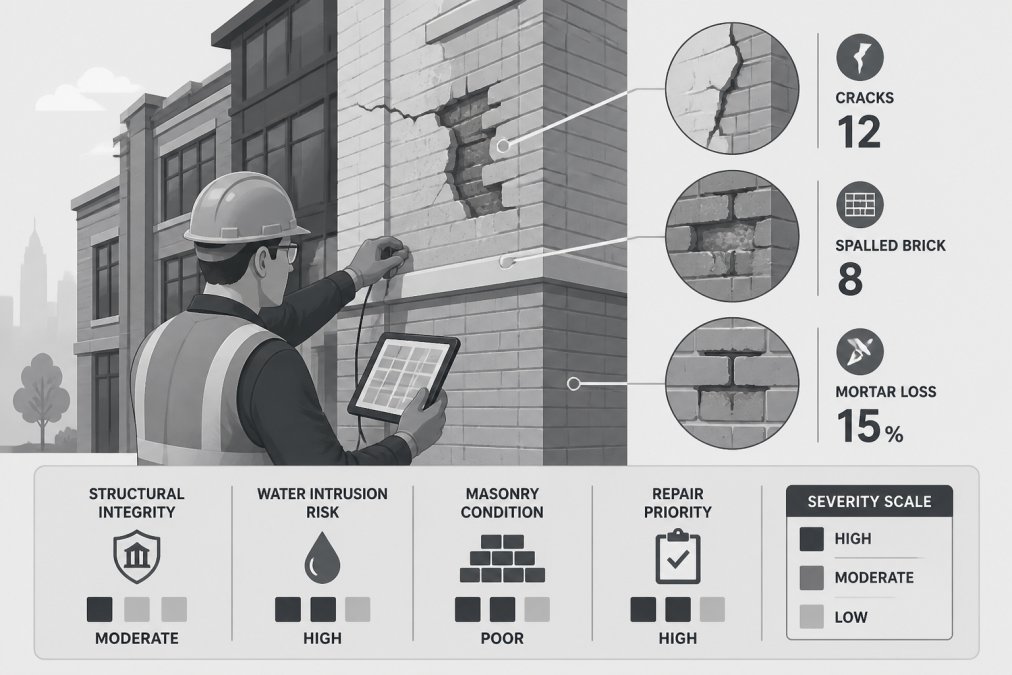
Common facade issues include spalling concrete (where surface layers break away), efflorescence (white mineral deposits on masonry), mortar deterioration, and corrosion of embedded metal components. Masonry repair often involves tuckpointing, the process of removing deteriorated mortar joints and replacing them with new mortar that matches the original. This work requires precision; improper tuckpointing can trap moisture and accelerate future damage.
Metal facades, aluminum, copper, stainless steel, develop oxidation and corrosion over time. Anodized aluminum, commonly used in curtain wall systems, can lose its protective coating, exposing the metal underneath. Restoration involves cleaning, resealing, and sometimes recoating to restore both appearance and corrosion protection.
Structural assessment goes beyond visual inspection. Professionals use thermal imaging to detect moisture behind walls, probe concrete to measure carbonation depth, and evaluate load-bearing capacity. These assessments inform decisions about repair scope and urgency. A building with minor surface cracks may need only cosmetic restoration, while one showing signs of structural movement requires immediate remediation to prevent safety hazards.
The cost and complexity of facade restoration depend on material type, damage extent, building height, and accessibility. Larger commercial properties often benefit from a phased approach, addressing the most critical areas first, then scheduling additional work as budget allows.
Waterproofing and Building Envelope Protection
Waterproofing is perhaps the most critical aspect of commercial building exterior repair. Water intrusion is the leading cause of structural damage, mold growth, and interior deterioration. A properly sealed building envelope prevents costly problems before they start.
Building envelope protection involves multiple systems working together: roof membranes, wall sealants, flashing at penetrations, below-grade waterproofing, and drainage systems. Each component must function correctly; a single failed seal can compromise an entire section.
Common waterproofing services include:
- Sealant replacement: Caulk and sealants degrade under UV exposure, temperature cycling, and weathering. Periodic replacement, typically every 5-10 years depending on material and climate, maintains the envelope seal.
- Flashing repair and replacement: Flashing at roof edges, windows, doors, and mechanical penetrations prevents water from running down walls. Corroded or improperly installed flashing is a frequent source of leaks.
- Thru-wall flashing installation: These specialized flashings direct water that penetrates the outer wythe of masonry back to the exterior, preventing it from traveling into the building.
- Below-grade waterproofing: Basement and foundation walls require specialized systems, sheet-applied membranes, hot-applied systems, or spray-applied coatings, to prevent groundwater intrusion.
- Expansion joint repair: Movement joints in large buildings allow for thermal expansion and contraction. Failed joints trap water and allow movement that stresses adjacent materials.
Moisture detection using thermal imaging and moisture meters helps identify hidden water problems. Sub-surface drainage systems, including perimeter drains and sump systems, manage water that reaches foundation level. Proper drainage is essential in areas prone to heavy rainfall or where soil conditions trap water against the building.
Creating a Commercial Building Maintenance Checklist
A structured maintenance checklist ensures nothing gets overlooked and helps you plan repairs before emergencies occur. Regular inspections catch problems while they’re still minor and manageable.
Your commercial building maintenance checklist should include:
| Inspection Item | Frequency | Priority |
|---|---|---|
| Roof membrane condition and flashing | Twice yearly (spring, fall) | High |
| Sealant and caulk condition at windows and doors | Annually | High |
| Masonry joints and mortar condition | Annually | Medium |
| Concrete surfaces for cracks and spalling | Annually | Medium |
| Gutters and downspouts for debris and damage | Twice yearly | High |
| Metal facades for corrosion and coating failure | Annually | Medium |
| Below-grade drainage and sump pump function | Twice yearly | High |
| Expansion joints for gaps and deterioration | Annually | Medium |
| Windows for air leaks and seal failure | Annually | Medium |
| Parking structure surfaces and coatings | Annually | High |
Schedule inspections during favorable weather conditions, spring and fall are ideal for most climates. Document findings with photos and notes, noting the date, condition, and any recommendations. This documentation helps prioritize spending and provides a baseline for tracking deterioration over time.
Many property managers find it helpful to hire a professional building assessment every 3-5 years. These comprehensive evaluations use specialized equipment to detect problems that visual inspection alone would miss. The cost of a professional assessment is typically far less than the cost of repairing damage discovered too late.
Establish a capital reserve fund specifically for building exterior maintenance. Many commercial property owners allocate 1-2% of annual revenue to this reserve. This approach prevents the temptation to defer necessary [repairs and](/roofing-service/) ensures funding is available when issues arise.
Understanding Commercial Facade Restoration Cost Factors
Commercial facade restoration cost varies dramatically based on several factors. Understanding what drives pricing helps you budget realistically and evaluate contractor estimates.
Key cost factors include:
Building size and height. Taller buildings require more expensive equipment, boom lifts, swing stages, or scaffolding, and longer project timelines. A 10-story building costs significantly more to access than a 3-story one.
Material type. Masonry restoration using traditional lime mortar costs more than modern Portland cement alternatives. Metal facade restoration requires specialized expertise and equipment. Concrete repairs range from simple patching to structural reinforcement with significant cost variation.
Damage extent. Cosmetic surface cleaning is far less expensive than structural repairs. Extensive spalling requiring deep concrete removal and replacement, or widespread mortar joint failure requiring full tuckpointing, drives costs up substantially.
Accessibility. Buildings in dense urban areas may require traffic control, weekend-only work, or specialized rigging. Rural or easily accessible sites cost less.
Material specifications. Matching existing materials exactly, color, composition, durability, costs more than using modern substitutes. Historic preservation standards often require authentic materials, adding expense.
Regulatory requirements. Work near pedestrian areas, over parking structures, or in sensitive locations may require additional safety measures, insurance, or permits that increase project cost.
When evaluating commercial facade restoration cost, request detailed breakdowns from contractors. Estimates should specify materials, labor hours, equipment rental, and any specialized services. The lowest bid isn’t always the best value; contractors using inferior materials or cutting corners create liability and future problems.
Avoid contractors who provide estimates without site inspection. Facade conditions vary significantly, and estimates based on photos or phone descriptions frequently underestimate actual scope. A thorough site visit is non-negotiable.
OSHA Safety Standards for Exterior Building Work
OSHA safety standards for exterior building work protect workers and the public from falls, equipment failures, and hazardous conditions. Compliance is both a legal requirement and a practical necessity.
Key OSHA standards applicable to commercial building exterior repair include:
Fall protection (29 CFR 1926.500): Workers at heights above 6 feet must use fall protection systems, guardrails, safety nets, or personal fall arrest systems. Roof work, facade work on elevated levels, and work from lifts all fall under this requirement. Proper harness fit, anchor point strength, and regular equipment inspection are critical.
Scaffolding standards (29 CFR 1926.451): Scaffolds must be engineered for the specific job, properly erected, and regularly inspected. Competent persons must oversee scaffold use and maintenance. Workers on a scaffold more than 10 feet above a lower level must be protected from falling. If a scaffold platform is more than 24 inches above or below a point of access, ladders, ramps, walkways, or similar surfaces must be used.
Ladder safety (29 CFR 1926.1053): Ladders must be properly placed, secured, and maintained. Three-point contact (two hands and one foot, or two feet and one hand) is required when climbing.
Personal protective equipment (29 CFR 1926.95): Hard hats, safety glasses, and appropriate clothing are mandatory. Respiratory protection may be required when working with certain materials or in dusty conditions. Employers must ensure that all personal protective equipment is of safe design and construction for the work to be performed and is selected to ensure that it properly fits each affected employee.
Equipment operation (29 CFR 1926.550): Boom lifts, scissor lifts, and other equipment require certified operators. Equipment must be regularly maintained and inspected. Employers must comply with the manufacturer’s specifications and limitations applicable to the operation of any and all cranes and derricks. Modifications or additions that affect the capacity or safe operation of the equipment require the manufacturer’s written approval.
Hazard communication: Workers must receive training on materials they’ll encounter, sealants, coatings, cleaning chemicals, including proper handling, storage, and emergency procedures.
OSHA safety standards for exterior building work exist because the work is genuinely hazardous. Reputable contractors carry liability insurance, maintain safety records, and train workers thoroughly. When hiring a contractor, ask about their safety record, worker training programs, and insurance coverage. A contractor unwilling to discuss safety practices is a red flag.
Choosing a Qualified Commercial Exterior Repair Contractor
Selecting the right contractor determines project success, timeline, and final quality. The wrong choice leads to cost overruns, poor workmanship, and ongoing problems.
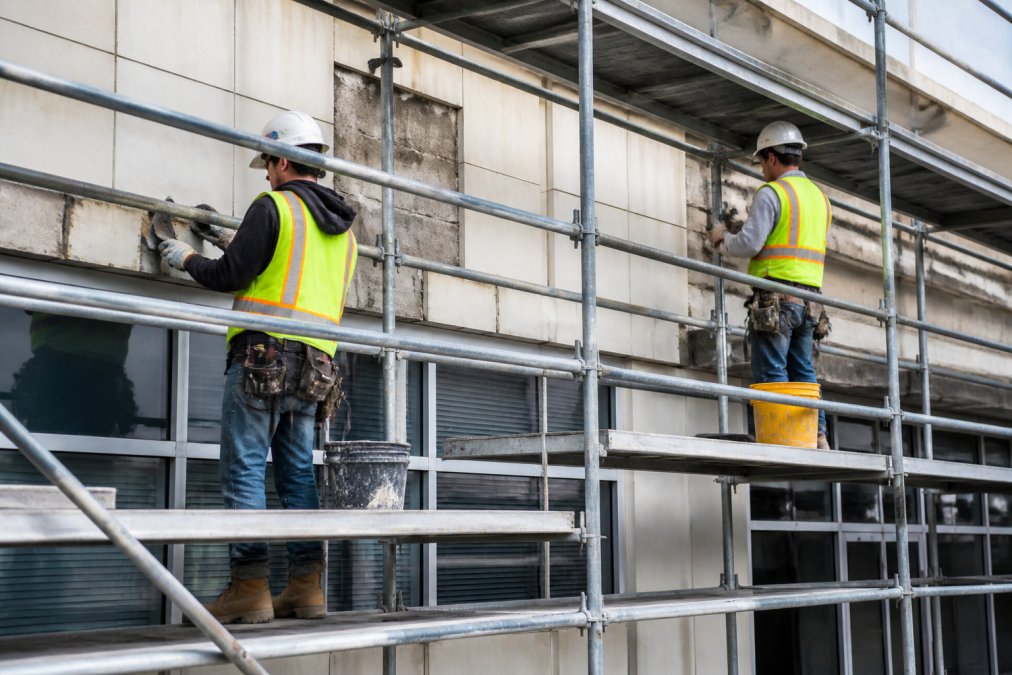
Evaluate contractors on several dimensions:
Experience and credentials. Ask how long they’ve been in business and what types of buildings they’ve worked on. Request references from similar-sized projects. Verify licenses, insurance, and bonding. For specialized work like historic restoration or complex waterproofing, verify expertise in those specific areas.
Insurance and bonding. General liability insurance protects you if someone is injured. Workers’ compensation insurance covers employee injuries. Bonding protects you financially if the contractor fails to complete the work. Never hire an uninsured or uninsured contractor.
Project management and communication. How will they handle scheduling, weather delays, and change orders? Will they provide regular updates? Do they have a clear process for addressing concerns? Poor communication creates conflict and misunderstandings.
Material quality. What brands and product specifications will they use? Will they provide warranties on materials and labor? Cheap materials deteriorate quickly; quality products cost more but last longer.
Safety practices. Ask about their safety record, worker training, and OSHA compliance. Visit an active job site if possible to observe how they operate.
Written contracts. A detailed contract should specify scope of work, timeline, payment schedule, warranty terms, and dispute resolution. Never work from a handshake agreement or vague estimate.
DGK Home Solutions brings over 20 years of experience in commercial building exterior work. We provide honest assessments of what’s needed, clear communication throughout projects, and top-quality materials and workmanship. Our team handles projects of any size and provides detailed contracts that protect both parties.
The cheapest estimate often reflects lower quality, less experienced crews, or material shortcuts. Compare estimates on scope and quality, not price alone. A slightly higher price for proven expertise and quality work typically delivers better long-term value.
Preventative Maintenance ROI for Building Owners
Preventative maintenance ROI is compelling but often overlooked. Building owners focused on immediate costs miss the significant savings that regular maintenance delivers.
Consider the economics: A small roof leak costs $500-1,500 to repair when caught early. That same leak, left unaddressed for a year, can cause $15,000-30,000 in water damage, mold remediation, and structural repair. The preventative maintenance cost is negligible compared to the damage cost.
Sealant replacement every 7-10 years costs a few thousand dollars. Deferred sealant maintenance leads to water intrusion, which can damage insulation, create mold, and compromise structural integrity, repairs that cost tens of thousands.
Regular concrete inspection and maintenance prevents spalling from accelerating. Early patching costs less than removing and replacing large sections. Masonry tuckpointing maintains weatherproofing; neglected mortar joints eventually fail completely, requiring expensive restoration.
Preventative maintenance ROI extends building lifespan. Buildings with consistent exterior maintenance remain functional and valuable for decades longer than those with deferred maintenance. The difference in resale value or ongoing operating costs is substantial.
Establish a capital reserve for building maintenance, typically 1-2% of annual operating budget. Use regular inspections to identify needs, prioritize spending, and schedule work during favorable conditions. This approach prevents the panic spending that occurs when problems become emergencies.
Many commercial property owners view building maintenance as a cost center to minimize. Smart owners view it as an investment that protects and preserves their asset. The ROI is measured in extended building lifespan, fewer emergency repairs, better tenant satisfaction, and higher property values.
Maintaining your commercial building exterior is an ongoing responsibility that directly impacts property value, tenant safety, and long-term operating costs. Whether you’re managing a small commercial property in Liberty Twp or a larger portfolio, regular inspections and timely repairs prevent costly damage and extend building lifespan. DGK Home Solutions specializes in commercial building exterior repair, offering detailed assessments, quality workmanship, and clear communication throughout every project. Get a free quote to evaluate your building’s current condition and develop a maintenance plan tailored to your property’s needs.
Frequently Asked Questions
What is included in commercial building exterior restoration?
Commercial building exterior restoration addresses the building envelope and facade to prevent water intrusion and structural damage. Services typically include masonry and tuckpointing repair, waterproofing and sealant replacement, concrete spalling repair, curtain wall restoration, anodized aluminum or metal facade cleaning, and structural remediation where needed. The scope depends on the building's age, materials, and condition. A professional assessment identifies which services your property requires to maintain structural integrity and compliance with building codes.
How often should you inspect a commercial building exterior?
Most building owners should conduct exterior inspections at least twice per year, ideally in spring and fall, to catch seasonal damage early. After severe weather events like storms, immediate inspection is critical. Annual thermal imaging inspection can detect hidden moisture and thermal issues before they cause structural problems. Regular inspections identify small repairs before they become expensive capital expenditures, extending the lifespan of your building envelope and protecting your asset value.
Does commercial exterior repair require a building permit?
Most commercial exterior repair projects require building permits, especially facade restoration, structural repairs, and waterproofing work. Permit requirements vary by jurisdiction and project scope. Your contractor should handle the permitting process and ensure all work complies with local building codes and safety standards. Unpermitted work can create liability issues, void warranties, and complicate future property sales or insurance claims. Always verify permit requirements with your local building department before starting work.
How do you choose a qualified commercial exterior repair contractor?
Look for contractors with extensive experience in commercial building maintenance, proper licensing and insurance, and a track record with projects similar to yours. Request references from recent clients and verify their experience with your building material type, whether masonry, metal, glass, or concrete. Ask about their approach to project management, communication, and how they handle unexpected issues. Verify they understand local building code compliance and can manage the permitting process. A qualified contractor will provide a detailed assessment and honest estimate without pressure tactics.
This article was written using GrandRanker