Table of Contents
- Why Regular Roof Inspections Matter for Ohio Commercial Properties
- Understanding Ohio’s Climate Impact on Commercial Roofing
- Commercial Roof Inspection Checklist for Ohio Properties
- Seasonal Maintenance Schedule: Spring and Fall Priorities
- Building a Preventative Roof Maintenance Plan
- Common Commercial Roofing Problems in Ohio
- Commercial Roof Repair vs Replacement: Cost and Timeline Factors
- Cost of Commercial Roof Maintenance and Long-Term Savings
Last Updated: August 3, 2026
Why Regular Roof Inspections Matter for Ohio Commercial Properties
Maintaining commercial roof in ohio requires regular inspections that catch problems before they become expensive repairs. Undetected leaks can cost tens of thousands in water damage, mold remediation, and structural repairs, expenses that preventative inspections would have caught for a fraction of the cost.
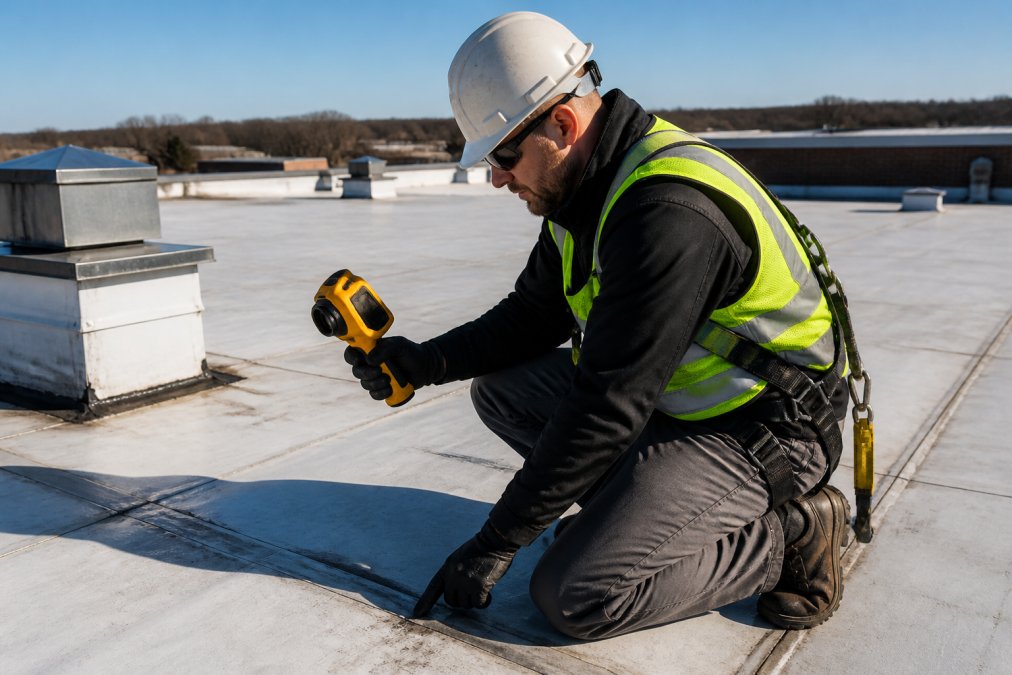
Ohio’s freeze-thaw cycles create unique stress on commercial roofing systems. Water seeps into tiny cracks during warm spells, then expands when temperatures drop below freezing, forcing those cracks wider. This cycle repeats dozens of times each winter. Without regular inspections, you won’t know where vulnerabilities are until water is actively dripping into your building.
Research from the National Roofing Contractors Association emphasizes that commercial roof inspections should happen at least twice yearly, with additional checks after severe weather events.
Schedule your first inspection in early spring to assess winter damage, then again in fall before the heavy weather season begins. This two-point annual schedule catches 80% of problems before they escalate.
Understanding Ohio’s Climate Impact on Commercial Roofing
Ohio’s weather patterns present specific challenges that differ from other regions. The state experiences dramatic temperature swings, heavy precipitation, and significant wind events, all of which accelerate roof deterioration without proper maintenance.
The Freeze-Thaw Cycle and Its Effects
The freeze-thaw cycle is Ohio’s most destructive force on commercial roofing systems. When temperatures fluctuate above and below 32°F, water trapped in roof crevices expands and contracts repeatedly, weakening seams, cracking membranes, and loosening fasteners. A roof that might last 20 years in a stable climate can deteriorate to failure in 12-15 years without proper freeze-thaw management.
Spring inspections should specifically look for evidence of freeze-thaw damage: widened cracks, separated seams, lifted flashing, and compromised membrane integrity. Fall maintenance should focus on sealing vulnerabilities before winter stress begins. Once a seam separates or a membrane cracks, water infiltration accelerates exponentially.
Seasonal Weather Challenges
Beyond the freeze-thaw cycle, Ohio experiences heavy spring rains, occasional hail storms, and significant wind events. Each weather pattern stresses your roof differently:
- Spring rains test drainage systems and expose compromised areas where water pools
- Summer heat causes membrane expansion and contraction, which can separate seams if they weren’t sealed properly
- Fall storms bring wind-driven rain and debris that damage flashing and penetrations
- Winter snow load adds weight stress, particularly on flat roofs common in commercial properties
A maintenance schedule that accounts for these seasonal challenges addresses the specific vulnerabilities each season creates.
Commercial Roof Inspection Checklist for Ohio Properties
A thorough roof inspection requires a systematic approach, checking both what you can see from ground level and what requires climbing onto the roof itself.
Visual Inspection Steps
Start with what you can observe without special equipment:
- Check all roof penetrations (HVAC units, vents, skylights, antenna mounts) for cracked or deteriorated flashing
- Inspect the membrane surface for blistering, cracking, punctures, or lifted areas; flat roofs should show no pooling water 48 hours after rain
- Examine seams and joints for separated seams, exposed fasteners, or adhesive failure
- Check gutters and drainage to ensure water flows freely toward downspouts
- Look for debris and damage including tree branches, leaves, and hail damage
- Inspect flashing integrity around roof edges, walls, and penetrations
- Assess roof coating condition for peeling, chalking, or worn areas
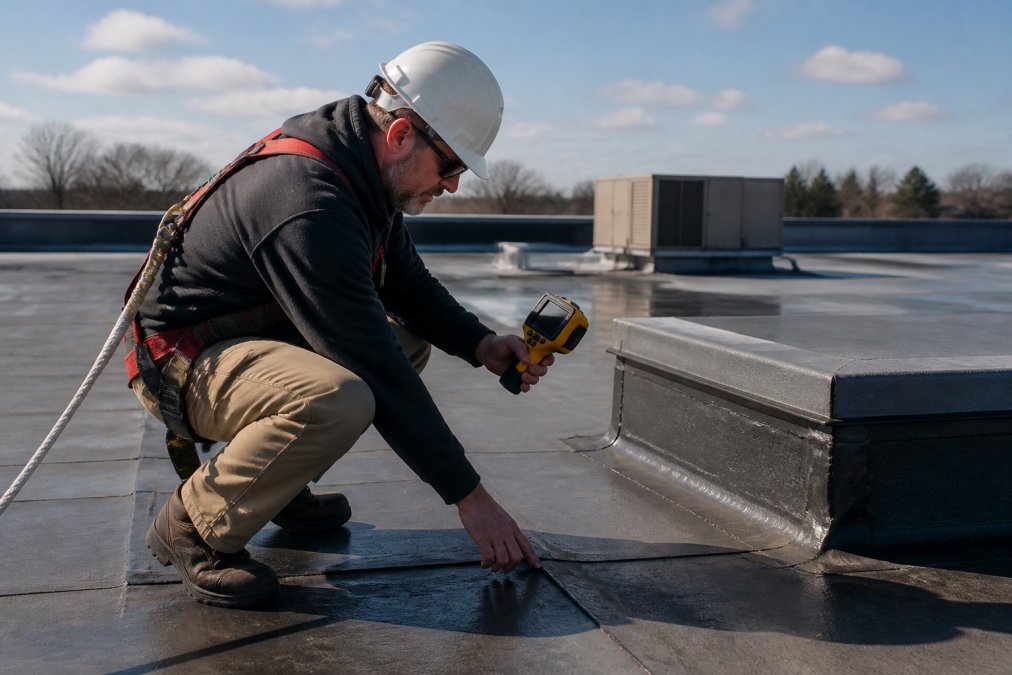
Documentation for Insurance and Asset Management
Create a standardized inspection report that includes:
- Date and weather conditions
- Photographs of problem areas with location details
- Measurements and dimensions for damaged areas
- Repair recommendations categorized as urgent, seasonal, or long-term
- Contractor estimates attached to the inspection report
- Maintenance history tracking completed repairs and dates
This documentation becomes invaluable during insurance claims. Insurers want evidence that you maintained the roof properly. A property with three years of inspection reports gets faster claim approval than one with no documentation.
Missing documentation costs money. When a [major leak occurs](/trusted-roof-leak-repair-experts-in-lawrenceburg/) and you can’t prove you maintained the roof, insurers may deny coverage or reduce payouts. Keep inspection reports and repair receipts organized and accessible.
Seasonal Maintenance Schedule: Spring and Fall Priorities
The most effective maintenance plans align with Ohio’s seasonal weather patterns. Spring and fall are critical maintenance windows because they prepare the roof for the stressful seasons that follow.
Spring Maintenance Tasks
Spring is when winter damage becomes visible. Your spring maintenance should focus on addressing freeze-thaw damage and preparing for summer heat:
- Clear all debris to prevent water pooling and allow clear membrane inspection
- Inspect and repair seam failures before spring rains exploit openings
- Check and repair flashing that has lifted or shifted
- Test drainage systems to verify proper water flow
- Inspect membrane for punctures and patch any holes
- Check HVAC and penetration seals for intact sealant
- Document conditions with photos and measurements
A small seam separation sealed in May costs $200-400. That same separation left untreated becomes a major leak by July, costing $3,000-5,000 in water damage repair.
Fall Preparation Before Winter
Fall maintenance hardens your roof against the freeze-thaw cycles and heavy snow loads coming in winter:
- Seal all cracks and gaps using appropriate roofing sealant
- Clean gutters thoroughly to prevent water pooling on the roof during winter
- Inspect and secure flashing before winter stress begins
- Check roof coating and consider recoating if coverage is below 80%
- Trim tree branches hanging over the roof
- Verify drainage system capacity to handle heavy rain and melting snow
- Inspect thermal imaging results to detect moisture in roof systems
Fall maintenance prevents the majority of winter emergency repairs. A property that invests $1,500-2,000 in fall maintenance typically avoids $10,000+ in winter emergency repairs.
Building a Preventative Roof Maintenance Plan
A preventative maintenance plan is the foundation of long-term roof asset management, systematically addressing vulnerabilities before they become failures.
Creating an Annual Service Contract
An annual service contract with a qualified roofing contractor ensures that maintenance happens on schedule. The contract should specify:
- Inspection frequency (minimum twice yearly, plus post-storm inspections)
- Specific maintenance tasks for each season
- Response time for repairs
- Documentation requirements
- Material quality standards
- Warranty coverage
A typical annual service contract costs $1,500-3,000 depending on roof size and complexity. This investment prevents emergency repairs that cost 5-10 times more.
Annual service contracts transform roof maintenance from a crisis-driven expense into a predictable, manageable cost. Properties with contracts spend 60% less annually on roof repairs than those without them.
Tracking Maintenance Records
Your maintenance records are your property’s roof history. Track:
- Inspection dates and findings
- Repair dates and costs
- Material specifications
- Weather events that caused damage
- Contractor information
Use a spreadsheet or property management software to maintain this record. This documentation serves multiple purposes: insurance claims, capital planning, contractor accountability, and warranty tracking.
Common Commercial Roofing Problems in Ohio
Understanding the problems most likely to affect your roof helps you prioritize maintenance efforts.
Water Infiltration and Drainage Issues
Water infiltration is the most common cause of commercial roof failure in Ohio. Flat roofs, common on commercial buildings, are particularly vulnerable. Water pools in low spots, especially after heavy rain or rapid snowmelt. If the roof doesn’t drain within 48 hours, water begins to penetrate the membrane through micro-cracks and seam failures.
Drainage system failures include clogged gutters, undersized downspouts, blocked interior drains, improper roof slope, and damaged gutters. The fix is straightforward: clean gutters regularly, upgrade undersized systems, and ensure adequate roof slope.
Membrane and Seam Failures
Commercial roofs use membrane systems (TPO, EPDM, or PVC) that provide the waterproof barrier. Seams are vulnerable points where two pieces of membrane join together.
Seam failures occur when adhesive deteriorates, freeze-thaw stress forces seams apart, installation was poor, or membranes shrink over time. A failed seam allows water to penetrate directly into the roof structure. Seam failures are preventable through proper maintenance, regular inspection catches separated seams before water penetrates, and resealing seams before winter prevents freeze-thaw failures.
Flashing and Penetration Damage
Flashing is the metal or membrane material that seals the roof where it meets walls, vents, HVAC units, and other protrusions. Flashing failures include lifted flashing, corroded flashing, failed sealant, and improper installation. Penetration damage includes cracked seals, loose fasteners, and damaged boots around pipe penetrations.
Regular inspection catches flashing and penetration problems before they cause leaks. Resealing flashing and tightening fasteners during maintenance prevents most failures.
Commercial Roof Repair vs Replacement: Cost and Timeline Factors
At some point, you’ll face the decision: repair the existing roof or replace it entirely.
When Repairs Make Financial Sense
Repairs are the right choice when:
- The roof is less than 15 years old
- Damage is localized
- The repair cost is less than 30% of replacement cost
- The underlying roof structure is sound
Repairs can extend roof life by 3-5 years, buying time to budget for eventual replacement.
When Full Replacement Is Necessary
Replacement is the right choice when:
- The roof is past its design life (most commercial roofs last 15-20 years)
- Widespread damage exists affecting most of the roof
- Repair costs are approaching replacement cost
- The roof structure is compromised
- Energy efficiency is a priority
Replacement provides a fresh start with a new warranty, improved energy efficiency, and predictable maintenance costs for the next 15-20 years.
Avoid the temptation to delay replacement indefinitely through continuous repairs. Eventually, repair costs exceed replacement costs. A professional assessment clarifies when that threshold has been reached.
Cost of Commercial Roof Maintenance and Long-Term Savings
Preventative maintenance requires upfront investment, but the long-term savings far exceed the cost.
Budgeting for Preventative Maintenance
A realistic maintenance budget accounts for routine inspections, seasonal maintenance, minor repairs, cleaning, and contingency for unexpected repairs. For a typical commercial roof, annual maintenance budgets range from $1,500-3,000 depending on roof size, age, and condition, approximately $0.15-0.30 per square foot annually for a 10,000-square-foot roof.
This budget is significantly less than the cost of a single major repair or emergency replacement. A 10,000-square-foot roof replacement costs $50,000-100,000. Maintaining the roof properly costs $15,000-30,000 over a 15-year lifespan.
ROI of Regular Maintenance Programs
Properties that implement preventative maintenance programs see measurable returns:
- Extended roof lifespan (15-20 years vs. 10-12 years for neglected roofs)
- Reduced emergency repairs (70-80% reduction in frequency)
- Lower insurance claims (faster approval and better rates)
- Improved building performance (no water damage, mold, or interior deterioration)
- Better resale value (buyers value documented maintenance and extended lifespan)
A 20,000-square-foot commercial roof without maintenance requires replacement at year 12 for $100,000. With preventative maintenance, it lasts to year 18, and maintenance costs total $36,000. The difference is $64,000.
| Maintenance Approach | Annual Cost | 15-Year Total | Replacement Needed | Total 15-Year Cost |
|---|---|---|---|---|
| No maintenance | $500 | $7,500 | Year 12 | $107,500 |
| Reactive repairs only | $3,000 | $45,000 | Year 14 | $95,000 |
| Preventative program | $2,000 | $30,000 | Year 18+ | $30,000 |
Maintaining commercial roof in ohio is fundamentally about protecting your property investment and avoiding costly emergency repairs. A systematic approach, regular inspections, seasonal maintenance, documented records, and professional oversight, transforms roof maintenance into a manageable, predictable expense. DGK Home Solutions provides expert residential and commercial roofing, siding, and gutter services to the Greater Cincinnati area and beyond. With over 20 years of experience, our team delivers high-quality installations, reliable upgrades, and professional repairs for projects of any size. We pride ourselves on clear communication, stress-free processes, and honest assessments to ensure your home is protected with top-quality materials and workmanship. If your roof maintenance has been inconsistent or reactive, now is the time to establish a professional preventative program.
Frequently Asked Questions
How often should I have my commercial roof inspected in Ohio?
Commercial roofs in Ohio should be inspected at least twice yearly: once in spring after winter weather and once in fall before cold months arrive. Additional inspections are recommended after severe storms, heavy snow loads, or hail events. More frequent inspections may be necessary for older roofs or those showing signs of wear. Document all inspections for warranty compliance and insurance purposes.
What should a commercial roof inspection checklist include?
A thorough commercial roof inspection checklist should cover membrane condition and seam integrity, flashing around HVAC penetrations and roof edges, drainage system functionality and debris accumulation, signs of water infiltration or moisture, ponding water on flat roof systems, roof coating condition, and structural integrity of the building envelope. Use thermal imaging for moisture detection and photograph all findings for documentation and insurance claims.
How does Ohio's freeze-thaw cycle affect my commercial roof maintenance?
Ohio's freeze-thaw cycle creates significant stress on commercial roofing materials. Water enters small cracks and expands when frozen, enlarging damage. This cycle weakens membrane roofing, causes flashing deterioration, and creates ice dams that trap water. Spring inspections are critical to catch winter damage early. Preventative maintenance including proper drainage, sealing penetrations, and regular coating applications helps mitigate freeze-thaw damage and extends roof lifespan.
What's the difference between commercial roof repair and replacement, and how do I decide?
Repair is typically cost-effective for roofs under 15 years old with isolated damage affecting less than 25% of the surface. Replacement becomes necessary when the roof exceeds its expected lifespan, shows widespread damage, or repair costs approach 50% of replacement cost. Consider the roof's age, material durability, and your long-term business plans. A professional assessment comparing immediate repair costs against capital expenditure for replacement helps determine the best financial decision for your property.
This article was written using GrandRanker