Table of Contents
- When Full Roof Replacement Isn’t Your Only Option
- Targeted Roof Repair for Localized Storm Damage
- Emergency Roof Tarping as a Temporary Shield
- Roof Coating and Restoration Services
- Partial Roof Replacement for Concentrated Damage
- Signs of Storm Damage on Asphalt Shingles
- Roof Repair vs Replacement Cost in Ohio
- How to File a Roof Insurance Claim in Ohio
- Frequently Asked Questions
Last Updated: September 3, 2026
When Full Roof Replacement Isn’t Your Only Option
Storm damage to your roof doesn’t automatically mean you need a complete replacement. After severe weather strikes a home in Liberty Twp, many homeowners assume the worst, but alternatives exist that can address the damage, protect your property, and preserve your budget. Understanding your options helps you make an informed decision about what’s actually needed versus what’s being oversold.
The key is assessing the scope of damage. If a storm has damaged one section of your roof or created localized leaks, targeted solutions can extend your roof’s life by years without the cost and disruption of a full tear-off. DGK Home Solutions has spent over 20 years helping homeowners in the Greater Cincinnati area navigate this decision, determining whether repair makes sense or if replacement is truly necessary.
This guide covers the main alternatives to roof replacement after storm damage, explains when each one works, and helps you understand the trade-offs. We’ll also address how to evaluate damage, file insurance claims, and work with contractors who won’t push you toward unnecessary work.
Storm damage assessment should happen within days, not weeks. [Water intrusion](/trusted-emergency-roofing-in-middletown-oh/) gets worse the longer it sits, and secondary damage (mold, rot) compounds your costs fast. Get a professional inspection immediately after severe weather.
Targeted Roof Repair for Localized Storm Damage
Targeted roof repair addresses specific, isolated damage without touching the rest of the roof. This approach works when storm damage is confined to one area: missing shingles from a fallen branch, flashing damage around a chimney, or localized impact damage from hail.
A contractor identifies the exact source of the leak, assesses the underlying decking, and repairs only that section. Targeted repair makes sense for roofs under 15 years old with solid underlying structure (nrca.net). If the decking is sound and the rest of the roof is in reasonable condition, this approach can extend your roof’s life by several years at a fraction of replacement cost. The repair typically takes one to three days.
The main limitation is shingle matching. If your roof is ten or more years old, the exact shingle color and style may no longer be manufactured. A patch repair will be visible, which matters if aesthetics concern you. For roofs nearing the end of their lifespan, this visibility issue is less important.
Targeted repair works best when damage is confined to one area and the rest of your roof structure is sound. If damage spans multiple sections or the decking shows rot, you’re likely beyond the repair threshold.
Emergency Roof Tarping as a Temporary Shield
When a storm tears open your roof, emergency tarping stops water intrusion immediately. A heavy-duty tarp, secured with professional-grade fasteners and sealed edges, prevents water from pouring into your attic and walls while you arrange for permanent repairs.
The tarp typically stays in place for weeks or months while you coordinate insurance claims, get estimates, and plan your next steps. Tarping is essential when you have open roof sections, especially heading into rain or winter weather. The cost is modest compared to the damage that happens without it. Interior water damage, mold growth, and structural rot accelerate rapidly once water gets inside.
The downside is that tarping is temporary. It’s a holding action, not a solution. You still need permanent repairs. But if you’re waiting for insurance adjusters, contractor availability, or financing decisions, tarping keeps the damage from getting exponentially worse.
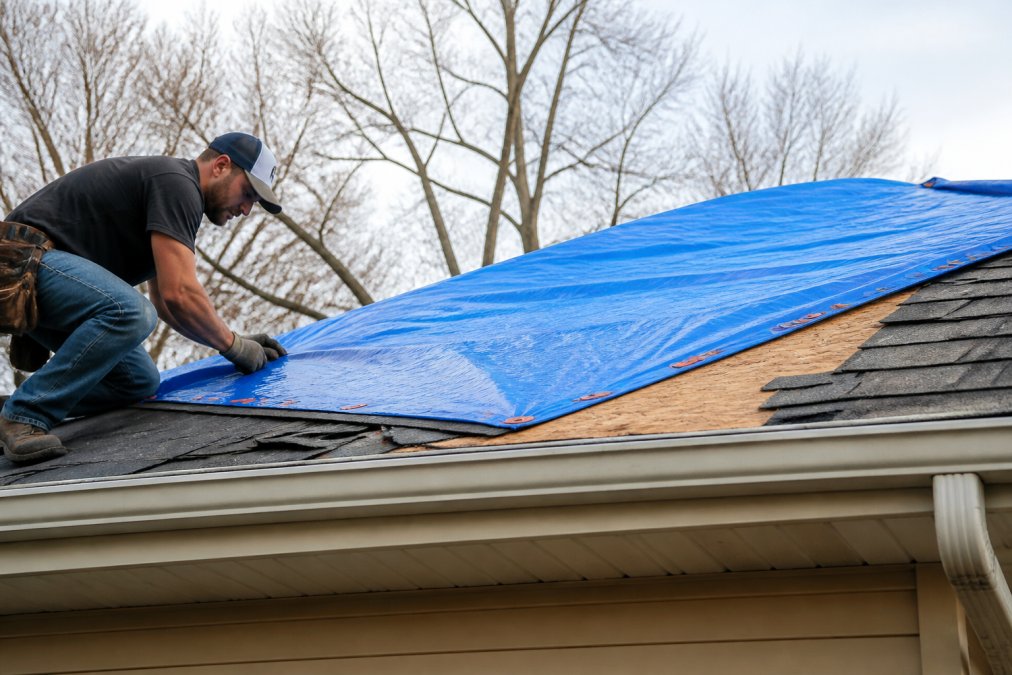
Never delay tarping to “see how bad it is.” Water damage compounds daily. Mold begins growing within 24-48 hours of moisture exposure ([the CDC](https://www.cdc.gov/mold-health/about/index.html)). Tarping is cheap insurance against catastrophic secondary damage.
Roof Coating and Restoration Services
Roof coating and restoration involves cleaning your existing roof, repairing minor issues, and applying a protective sealant that extends the roof’s lifespan. This approach works best on flat, low-slope, or metal roofs where a fluid-applied membrane can bond effectively to the surface.
The coating process starts with thorough cleaning to remove debris, algae, and weathered material. The contractor then repairs obvious damage, sealing cracks and reinforcing seams. Finally, they apply a protective coating, typically silicone, acrylic, or polyurethane-based, that creates a seamless waterproof barrier.
This approach can extend a roof’s life by 10-15 years or more and costs significantly less than replacement, often 50-70% less expensive (peer-reviewed research). Coating works when your roof has surface-level wear and minor leaks but no structural damage. If the decking underneath is rotting or if the roof has extensive membrane failure, coating won’t fix the underlying problem.
For commercial property owners and homeowners with metal roofs in Liberty Twp, coating is worth evaluating after storm damage, particularly if damage is primarily cosmetic or involves flashing and seam issues.
Partial Roof Replacement for Concentrated Damage
When storm damage is severe but concentrated in one section of the roof, partial replacement removes and replaces only that damaged section. This handles situations where a large tree limb has crushed one slope or where hail has damaged shingles across a quarter of the roof surface.
The contractor removes shingles and decking from the damaged section down to sound material, then installs new decking and shingles to match the existing roof. Partial replacement costs significantly less than full replacement while addressing substantial damage that targeted repair can’t handle. The process typically takes 2-5 days depending on the size of the damaged section and weather.
The aesthetic issue arises again with older roofs. New shingles on a ten-year-old roof will look noticeably different in color and texture. For homeowners staying in the house long-term, the mismatch becomes less noticeable as new shingles weather. Partial replacement requires careful attention to the transition between old and new sections. Poor workmanship at the seam can create a new leak point. DGK Home Solutions ensures proper overlap, sealing, and integration so the repair doesn’t become a future problem.
Homeowners with substantial damage confined to one roof section who want a permanent fix without the cost and disruption of full replacement.
Signs of Storm Damage on Asphalt Shingles
Recognizing storm damage on asphalt shingles helps you decide whether repair is sufficient or if more extensive work is needed. Missing shingles or large sections of shingles are the clearest sign. Hail impact often creates a pattern of dented or cracked shingles. Wind can lift shingle edges or tear them completely away. Look for areas where the granular coating is missing, exposing the darker asphalt underneath.
Flashing damage around chimneys, vents, and valleys is common after storms. Flashing is the metal trim that directs water away from roof penetrations. If flashing is bent, separated, or rusted, water will find its way inside. Flashing damage often isn’t visible from the ground and requires climbing onto the roof or using binoculars to spot.
Interior signs matter too. Water stains on ceilings or attic rafters indicate active leaks. Soft spots in the attic decking suggest rotting wood from prolonged moisture exposure. Mold or mildew smell in the attic is a red flag that water intrusion has been happening for a while. Heavy granule loss in gutters after a storm indicates shingles have been compromised.
Not every sign requires immediate action. A few missing granules or a small dent doesn’t warrant emergency repairs. But missing shingles, flashing separation, or visible water intrusion demand prompt professional assessment.
Roof Repair vs Replacement Cost in Ohio
The decision between repair and replacement hinges partly on cost, but also on long-term value. Repair costs depend on damage extent and your roof’s age. A simple shingle patch might cost a few hundred dollars. Flashing repair or localized section replacement could run into the thousands. Full roof replacement is a five-to-six-figure project for most homes.
The cost calculus shifts based on your roof’s remaining lifespan. If your roof is 18-20 years old, spending thousands on repairs extends a roof nearing the end anyway. For a five-year-old roof, the same repair expense makes sense because you’re protecting an asset with years of life remaining.
Insurance coverage also affects your out-of-pocket cost. Storm damage is typically covered under homeowners insurance, though your deductible applies. If your deductible is $1,000 and the damage repair cost is $800, you’re paying for the repair yourself. If the damage is $5,000, you pay the deductible and insurance covers the rest.
Contractor pricing varies based on complexity, materials, and local labor costs. Get multiple quotes for any significant damage. Honest contractors will assess your roof’s actual condition and recommend the most cost-effective solution. DGK Home Solutions provides honest assessments and works with your insurance company to clarify what’s covered, so you understand your real out-of-pocket cost before committing to work.
Compare the cost of repair or coating against the remaining lifespan of your roof. A repair that costs 20% of replacement cost makes sense if your roof has at least 5 years of life left. If your roof is already near the end of its lifespan, replacement might be the better long-term value despite higher upfront cost.
How to File a Roof Insurance Claim in Ohio
Filing a roof insurance claim after storm damage requires documentation, communication, and patience. Start by calling your insurance company immediately after the storm. Report the damage and ask about the claims process. Most insurers assign an adjuster within a few days.
Document the damage thoroughly before the adjuster arrives. Take photos and videos of all visible damage: missing shingles, dents, flashing separation, interior water damage. This documentation strengthens your claim. Don’t make permanent repairs before the adjuster inspects, as this can complicate the claim.
When the adjuster arrives, walk them through the damage and point out everything you’ve documented. Be thorough and specific. Adjuster assessments sometimes underestimate damage, so detailed documentation helps ensure nothing is missed. If you disagree with the adjuster’s assessment, you have the right to a second opinion or to hire an independent adjuster.
Your insurance estimate and the contractor’s estimate may differ. Insurance estimates are often lower than what contractors actually charge. If there’s a gap, you may need to pay the difference out of pocket or negotiate with the contractor on scope or materials.
Work with a contractor who understands the insurance claim process. DGK Home Solutions handles insurance coordination, communicating directly with your adjuster and providing the documentation they need. This reduces your stress and clarifies what you’re actually responsible for paying.
Keep all documentation: adjuster reports, photos, contractor estimates, invoices, and receipts. If questions arise later, this paper trail protects you. The timeline varies. Simple claims settle within weeks. Complex claims or disputes can take months. Don’t rush into repairs before the claim is settled unless the damage is creating an immediate safety or water intrusion emergency.
Storm damage doesn’t always require replacing your entire roof. Targeted repair, tarping, coating, or partial replacement often address the damage effectively while preserving your budget. The right choice depends on the damage extent, your roof’s age, and your long-term plans for the home.
DGK Home Solutions helps homeowners in Liberty Twp and throughout Ohio evaluate their options after storm damage. We provide honest assessments of what’s actually needed, handle insurance coordination so the process is stress-free, and deliver top-quality repairs or replacements with materials and workmanship that protect your home. Get a free quote today and let us walk you through your options.
Frequently Asked Questions
How do I know if my roof needs repair or replacement after a storm?
Inspect for localized damage like missing shingles, flashing leaks, or small punctures, these often qualify for targeted repair. If damage is widespread across multiple slopes, affects the roof decking, or your roof is over 20 years old, replacement may be necessary. A professional inspection identifies whether your roof can be repaired or requires full replacement based on the extent of structural compromise.
What are the signs of storm damage on asphalt shingles?
Look for missing or torn shingles, exposed nail heads, granule loss (bald spots), curling or lifted shingle edges, cracked shingles, and damaged flashing around vents or chimneys. Bruising or impact marks may also indicate wind or hail damage. Interior signs include water stains on ceilings or walls, which signal that water has penetrated the roof system and requires immediate attention.
Does homeowners insurance in Ohio cover partial roof repairs?
Yes, most homeowners insurance policies cover storm-related roof damage, including partial repairs. Coverage depends on your specific policy and the cause of damage. File a claim promptly after a storm by documenting damage with photos and contacting your insurer. An adjuster will assess whether repairs or replacement is recommended and determine your coverage amount based on your deductible and policy limits.
How long does a roof repair typically last compared to a full replacement?
Targeted repairs on roofs under 15 years old typically last 5-10 years, while full replacements provide 20-30 years of protection depending on materials and maintenance. Roof coatings can extend an existing roof’s life by 10-15 years. The lifespan of any repair depends on the initial roof condition, weather exposure, and whether the underlying structure is sound. Professional inspection helps determine realistic longevity for your specific situation.
How do I file a roof insurance claim in Ohio?
Document all damage with clear photos and video from multiple angles. Contact your insurance company within a few days of the storm and provide your policy number. Schedule an adjuster inspection, who will assess damage and estimate repair or replacement costs. Submit the claim with documentation, then work with your contractor to coordinate with the insurer. Many contractors assist with the claims process, handling communication and paperwork to reduce your stress.
This article was written using GrandRanker