Table of Contents
- When You Need Emergency Roof Repair Service in Cincinnati
- Cincinnati Storm Damage Roof Repair: What to Expect
- Emergency Tarping in Cincinnati: Temporary Protection
- Roof Leak Repair in Cincinnati: Detection and Solutions
- Cost of Roof Repair in Cincinnati: Pricing and Insurance
- 24/7 Response and Licensed Roofing Contractors
- Material-Specific Emergency Protocols for Roofing
- Conclusion: Protecting Your Home After Roof Damage
Last Updated: August 2, 2026
When a roof emergency strikes in Liberty Twp or the Greater Cincinnati area, waiting isn’t an option. Water intrusion from a storm, a fallen tree branch, or an active leak can cause thousands of dollars in structural damage within hours. An emergency roof repair service Cincinnati provider needs to respond fast, assess the damage honestly, and protect your home before the situation worsens.
At DGK Home Solutions, we’ve spent over 20 years helping homeowners and commercial property owners navigate roof emergencies. We understand the panic that comes with a sudden leak or visible storm damage. This guide covers what to expect when you need emergency roof repair service Cincinnati, how to document damage for insurance claims, and why response time matters.
When You Need Emergency Roof Repair Service in Cincinnati
A roof emergency isn’t always obvious. Some damage is catastrophic, a tree limb punching through your roof, shingles scattered across your yard after a storm, or water actively dripping into your living room. Other damage is subtle but equally urgent: a small leak can rot your roof decking in weeks.
Signs of an active roof leak or structural damage:
An active leak is the clearest signal you need immediate help. Water flowing into your attic, staining your ceiling, or pooling on your floor means water intrusion is happening now. The longer you wait, the more damage spreads to insulation, electrical wiring, and structural framing. Even a slow drip after rain indicates a breach that will worsen with the next storm.
Sagging roof sections, visible cracks in the roof decking, or a noticeable dip in your roofline suggest the underlying structure is compromised. This is a safety issue, a weakened roof can collapse under heavy snow load or high wind.
Storm damage requiring immediate attention:
After a significant storm, inspect your roof from the ground using binoculars. Look for missing shingles, dented metal flashing, or areas where the roof surface appears lighter. Even minor damage creates an entry point for water. Fallen trees or large branches resting on your roof require immediate removal and assessment within 24 hours of impact.
Cincinnati Storm Damage Roof Repair: What to Expect
Storm damage assessment follows a predictable process. Understanding what happens during an inspection helps you prepare for conversations with contractors and insurance adjusters.
Wind, hail, and heavy rain damage assessment:
A qualified roofing contractor inspects your entire roof system: the roof surface (shingles, metal, or tiles), flashing around chimneys and vents, underlayment, and roof decking. Wind damage appears as lifted or curled shingles exposing underlayment. Hail creates dents in metal roofing and can crack asphalt shingles. Heavy rain damage occurs when wind or hail breaches the outer layer, allowing water to penetrate the underlayment.
The inspector documents all damage with photos and written notes for your insurance claim. A thorough assessment takes 1-2 hours for a typical residential roof. The contractor provides a written estimate detailing findings and required repairs or replacement.
Structural integrity evaluation after severe weather:
The contractor evaluates whether the underlying structure is sound by checking the roof decking, framing, and attic ventilation. Water damage to the decking is common after storms. If the decking is soft, rotted, or warped, it must be replaced. Proper ventilation prevents moisture buildup in the attic, which leads to mold, rot, and premature roof failure.
Emergency Tarping in Cincinnati: Temporary Protection
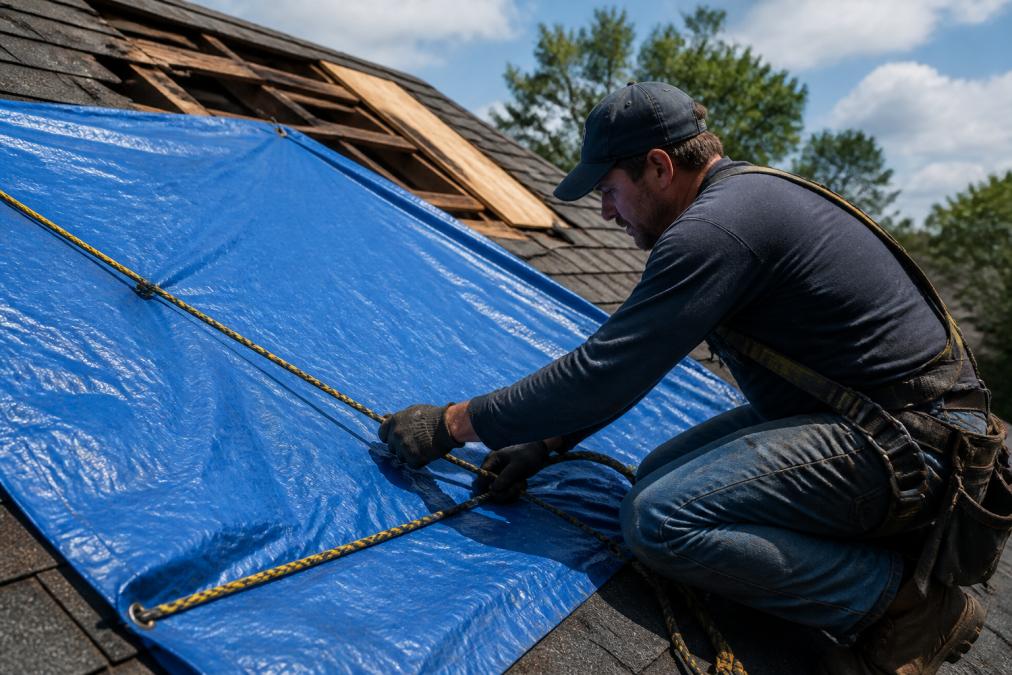
Once damage assessment is complete, the priority shifts to stopping water intrusion. If permanent repairs will take days or weeks, emergency tarping provides temporary protection.
Same-day tarping to prevent water intrusion:
A tarping crew secures heavy-duty plastic sheeting across the damaged section, overlapping it by at least 6 feet on all sides so water runs off the tarp and away from the building. The tarp is fastened with plywood strips and bolts or screws to prevent wind from lifting it.
Same-day tarping is available when you call immediately after damage occurs. Response time varies, some contractors guarantee arrival within 2-4 hours, others within 24 hours. The faster you call, the faster the tarp goes up and the less water damage occurs.
DIY temporary mitigation while waiting for professional help:
If professional help is delayed and rain is forecast, move valuable items away from the leak and place buckets or tarps on the floor to catch water. Open windows and doors to improve air circulation and reduce moisture accumulation and mold growth.
Do not walk on a wet, damaged, or steeply pitched roof, falls are the leading cause of serious injury among homeowners attempting roof repairs. If the damage is on a steep section or you’re uncomfortable on heights, wait for professionals.
Ensure your gutters are clear of debris so water can drain away from the foundation. Clogged gutters force water to overflow near the house, potentially causing basement flooding or foundation damage.
Roof Leak Repair in Cincinnati: Detection and Solutions
Once the immediate emergency is controlled, the focus shifts to finding and fixing the source of the leak. Water can travel along roof framing and attic insulation before appearing as a drip in your living room. A professional leak detection process identifies the actual breach.
How active leaks are located and stopped:
The most direct method is visual inspection during or immediately after rain. The contractor enters the attic with a flashlight and looks for water stains, wet insulation, or water actively dripping from the roof decking. If the leak isn’t visible during rain, the contractor may use a water test, spraying water from a hose over suspect areas while someone watches from inside.
Once the leak source is identified, the fix depends on the cause. A missing shingle is replaced. A crack in the decking requires decking replacement. Damaged flashing is re-sealed or replaced. A torn underlayment is patched or replaced.
Flashing repair and underlayment replacement:
Flashing is a common leak source because it’s exposed to weather and movement stress. Over time, flashing sealant fails, fasteners corrode, or the flashing bends or separates. Replacing flashing requires precision to ensure water runs off properly.
Underlayment sits beneath the shingles and serves as a secondary water barrier. Damaged or missing underlayment allows water to soak into the roof decking. Replacing underlayment requires removing shingles in the affected area, installing new underlayment, and re-shingling.
Cost of Roof Repair in Cincinnati: Pricing and Insurance
Roof repair pricing in Cincinnati varies based on damage extent, roof size, material type, and whether structural repairs are needed. Contact DGK Home Solutions for a detailed estimate tailored to your specific damage.
Insurance claim documentation and adjuster coordination:
Most homeowners policies cover sudden, accidental damage from wind, hail, and falling objects. Damage from poor maintenance, age-related wear, or gradual leaks is typically not covered.
Photograph all visible damage from the ground and, if safe, from the roof. Take close-ups of missing shingles, dents, and damaged flashing. Document the date and time of the storm. Keep receipts for temporary repairs or emergency services. When the insurance adjuster visits, walk them through the damage and provide your photos and contractor assessment.
A reputable contractor will coordinate with your insurance company, provide detailed estimates, answer adjuster questions, and explain why certain repairs are necessary. This support ensures the insurance company understands the full extent of damage and doesn’t deny coverage for legitimate repairs.
What to ask before committing to repairs:
Before signing a contract, ask:
- What is included in the estimate, and what is not?
- What is the timeline for repairs?
- What warranty is provided on materials and labor?
- Will the contractor handle insurance coordination?
- What happens if additional damage is discovered during the repair?
Clear answers prevent surprises and disputes later.
24/7 Response and Licensed Roofing Contractors
Emergency roof repair service Cincinnati providers operate around the clock because storms don’t follow business hours.
Why emergency response time matters:
Every hour a roof remains breached, water intrusion worsens. A small leak can soak insulation and begin rotting the roof decking within 24 hours. The faster a contractor arrives to assess damage and begin temporary mitigation, the less water damage accumulates. This saves thousands of dollars in secondary damage repair.
24/7 availability means you can reach a contractor at midnight, on weekends, or on holidays. Ask potential contractors about their after-hours availability before you need them.
Verification of licensing, insurance, and warranties:
Before hiring a roofing contractor, verify their credentials. Ask for their Ohio roofing license number and confirm it with the Ohio Construction Industry Licensing Board.
Confirm that the contractor carries general liability insurance and workers’ compensation insurance. Ask the contractor to provide a certificate of insurance naming you as an additional insured.
Ask about warranties. Quality contractors warrant their labor (typically 5-10 years) and pass through manufacturer warranties on materials (typically 10-30 years depending on shingle type). A written warranty gives you recourse if a leak reappears or repairs fail prematurely.
Material-Specific Emergency Protocols for Roofing
Different roofing materials require different repair approaches.
Asphalt shingle replacement and repair procedures:
Asphalt shingles are the most common roofing material in Cincinnati. Missing or damaged shingles are removed and replaced. The contractor removes fasteners from damaged shingles and the shingle above them. The damaged shingle is removed, and a new shingle is slid into place and fastened with roofing nails. Roofing cement seals the nail heads and shingle edges to prevent water intrusion.
Metal roofing and specialty roof system handling:
Metal roofing is increasingly common in Cincinnati. Standing-seam roofs are repaired by re-seaming damaged sections or replacing individual panels. Metal shingles are replaced similarly to asphalt shingles but fastened differently. A contractor experienced with your specific metal roofing system is essential.
Flat roofs use different materials: rubber membrane, asphalt tar, or foam. A rubber membrane roof is patched with adhesive-backed patches. An asphalt tar roof is patched with hot tar and gravel. Foam roofs are sealed with foam-compatible sealant. Hiring a contractor experienced with your specific roof type ensures repairs are done correctly.
| Roofing Material | Common Damage | Repair Approach | Timeline |
|---|---|---|---|
| Asphalt shingles | Missing/torn shingles, flashing damage | Replace shingles, re-seal edges | 1-3 days |
| Metal shingles | Dents, fastener corrosion, seam separation | Replace panels or re-fasten | 1-2 days |
| Standing-seam metal | Seam separation, punctures, fastener failure | Re-seam or replace panels | 2-3 days |
| Flat rubber membrane | Punctures, seam failure, blistering | Patch or replace membrane sections | 1-2 days |
| Tile or slate | Cracked/broken tiles, mortar failure | Replace tiles or re-mortar | 2-5 days |
Protecting Your Home After Roof Damage
Once emergency repairs are complete and permanent repairs are underway, focus on preventing future damage and ensuring your roof stays healthy long-term.
Schedule a follow-up inspection 6-12 months after repairs to verify that repairs are holding up and no new damage has developed. Maintain your roof going forward by cleaning gutters twice yearly, trimming tree branches hanging over your roof, and inspecting your attic after heavy storms to catch new leaks early.
If you experience another storm, document damage immediately with photos and contact your insurance company and a roofing contractor within 24 hours. The faster you respond, the faster repairs begin and the less secondary damage occurs.
When you need emergency roof repair service Cincinnati, DGK Home Solutions is available 24/7. With over 20 years of experience serving Liberty Twp and the Greater Cincinnati area, our team provides fast assessment, honest recommendations, and reliable repairs. We handle insurance coordination, answer your questions, and ensure your roof is protected with top-quality materials and workmanship.
Frequently Asked Questions
What qualifies as a roofing emergency in Cincinnati that requires immediate repair?
Active leaks, water dripping inside your home, visible structural damage, missing shingles after a storm, or holes in the roof all qualify. If water is entering your home or structural integrity is compromised, call for emergency roof repair service immediately. Roof system failure that allows water intrusion requires same-day response to prevent moisture damage and mold growth.
How quickly can an emergency roof repair service respond in Cincinnati?
Most licensed roofing contractors in Cincinnati offer 24/7 emergency response with same-day dispatch for urgent situations. Many aim to arrive within hours of your call for active leaks or storm damage. Response time varies by current demand and your location within the Greater Cincinnati area, but emergency tarping services prioritize rapid deployment to prevent further water damage.
Will my homeowner's insurance cover emergency roof repair in Cincinnati?
Most homeowner's insurance policies cover storm damage including wind, hail, and fallen tree damage. However, coverage depends on your specific policy and the cause of damage. Wear and tear or lack of maintenance typically aren't covered. A licensed roofing contractor can help document the damage and assist with your insurance claim, coordinating directly with your adjuster to streamline the process.
What should I do immediately after discovering roof damage while waiting for emergency repair in Cincinnati?
Move valuables away from the leak area, place buckets to catch water, and document the damage with photos for insurance. Avoid walking on the damaged roof yourself, it's unsafe. If you have tarps available, secure them loosely to prevent further water intrusion, but don't attempt complex repairs. Call a licensed emergency roofing contractor immediately and provide them with your photos and description of damage.
Storm damage to your roof can feel overwhelming, but you don’t have to handle it alone. DGK Home Solutions offers 24/7 emergency response, detailed damage assessment, and transparent communication throughout the repair process. Our team coordinates with insurance adjusters, explains repair options clearly, and guarantees quality workmanship. Contact DGK Home Solutions today for a free emergency assessment and get your home protected.
This article was written using GrandRanker